


The Science of Everyday Influence
The core premise of Influence PEOPLE is that influence is not an innate talent possessed by a select few, but rather a skill that can be learned and refined. Ahearn argues that individuals constantly engage in influencing others, whether consciously or unconsciously. This ranges from a manager seeking team buy-in for a new initiative to a parent motivating a child, or a colleague soliciting assistance on a project. The critical differentiator, according to Ahearn, lies in the understanding and application of effective persuasion techniques.
"We all influence people every day," Ahearn stated in a recent interview. "The question is whether we understand how to make those conversations more effective. Drawing on the science of persuasion, Influence PEOPLE offers practical ways to turn good intentions into action. It brings research into everyday situations so you can recognize opportunities to communicate more thoughtfully and help people take the next step."
Ahearn’s conviction regarding the ethical dimension of influence is deeply rooted in his years of teaching Cialdini’s principles. He emphasizes that while achieving agreement is important, the method by which it is attained, and whether the other party benefits, are equally crucial. This ethical framework forms the bedrock of the PEOPLE acronym, underscoring that true influence is characterized by its lasting positive impact and moral integrity.
Deconstructing the PEOPLE Acronym
The PEOPLE acronym serves as a mnemonic device for Ahearn’s framework, breaking down the principles of ethical persuasion into actionable components:
- Powerful: Recognizing and leveraging the inherent power dynamics in communication.
- Everyday: Highlighting that influence opportunities are ubiquitous and not confined to formal settings.
- Opportunities: Encouraging readers to identify and seize moments where influence can be applied constructively.
- Persuade: Focusing on the act of guiding others towards a desired outcome.
- Lasting: Aiming for outcomes that are sustainable and have a long-term positive effect.
- Ethical: Committing to principles of honesty, fairness, and mutual benefit.
Ahearn uses relatable scenarios to illustrate these concepts. For instance, he addresses the common frustration of receiving agreement in a meeting, only to see no subsequent action. This often leaves individuals questioning their communication or the other person’s commitment. Influence PEOPLE prompts a deeper analysis of such situations, encouraging reflection on whether the communicator truly understood the other party’s motivations, if the request was clear, and if the path to action was made manageable. This analytical approach, Ahearn suggests, can profoundly alter how one prepares for future interactions.
Beyond the Workplace: Influence at Home
The principles of ethical persuasion are not limited to professional environments. Ahearn extends his framework to personal relationships, emphasizing that family members and loved ones also deserve mindful communication. He cautions against the pitfalls of familiarity, which can lead to assumptions about others’ thoughts and needs. Cultivating intentional influence, therefore, begins with a genuine desire to understand another person’s perspective, even within the intimacy of one’s home.
"The same care belongs at home," Ahearn notes. "People we love deserve our attention and understanding. Familiarity can tempt us to assume we already know what they think or need. Becoming more intentional about influence starts with a desire to understand their perspective."
A Practical Approach to Learning
Ahearn advocates for an iterative learning process when engaging with Influence PEOPLE. He suggests reading the book with a specific relationship in mind, considering an idea or technique, and then actively seeking an appropriate opportunity to practice it. Following the application, reflection on the outcome is key. This experiential learning, where knowledge translates into tangible changes in behavior, is presented as the most effective path to mastery.
"You can approach this book a little at a time," Ahearn advises. "Read with a particular relationship in mind, consider an idea, and look for an appropriate opportunity to practice it. Then reflect on what happened. Learning becomes more useful when it changes something you actually do."
The Gift of Influence
The book is positioned not only as a personal development tool but also as a thoughtful gift. Ahearn suggests that including a personal note explaining the rationale behind choosing the book can amplify its impact. This encouragement, coupled with the book’s content, can be a powerful motivator for recipients who are recognized for their leadership potential or their desire for personal growth.
"That makes a book a particularly personal gift when you include a note explaining why you chose it," Ahearn remarked. "Perhaps you admire someone’s leadership or see their desire to grow. Tell them because your encouragement may matter as much as the pages inside the cover."
Expert Endorsements
The value and practicality of Influence PEOPLE have been recognized by prominent figures in the field of influence and psychology. Robert B. Cialdini, Ph.D., author of the foundational book Influence, described the book as offering "extraordinarily useful tips." Similarly, Roger Dooley, author of Brainfluence, lauded it as "highly reliable and endlessly practical." These endorsements lend significant credibility to Ahearn’s work, suggesting its broad applicability and effectiveness.
A Timely Resource for the New Year
With the holiday season approaching, Influence PEOPLE is presented as an ideal gift for a variety of individuals, including leaders, salespeople, business owners, and anyone interested in improving their understanding of human behavior. The book also serves as a self-improvement resource, particularly relevant for those setting personal or professional goals for the upcoming year.
Ahearn concludes by posing a thought-provoking question to his audience: "Which relationship could improve if you became more intentional about your influence?" This question encourages readers to immediately consider the potential impact of the book’s principles on their own lives and relationships.
The book is available for purchase on Amazon, with a direct link provided for interested readers to explore further details and make a purchase.
About the Author: Brian Ahearn
Brian Ahearn is a distinguished figure in the realm of ethical influence. As the Chief Influence Officer at Influence PEOPLE and a faculty member at the Cialdini Institute, he dedicates his career to empowering individuals and organizations to leverage influence effectively and responsibly. His expertise is sought after by clients seeking to enhance their results through improved communication and persuasion strategies.
Ahearn’s credentials include being one of a select group of Cialdini Method Certified Trainers globally. He underwent personal training and received endorsement from Dr. Robert Cialdini, a leading authority in social psychology whose research on influence is widely cited. This direct tutelage under Cialdini has deeply informed Ahearn’s approach to teaching and applying the science of ethical persuasion.
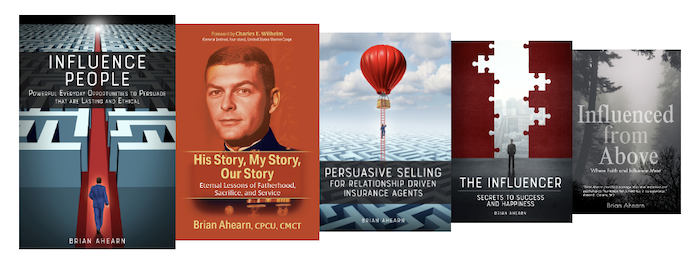
His literary contributions have garnered significant acclaim. Influence PEOPLE was recognized by Book Authority as one of the "100 Best Influence Books of All Time." His subsequent works, Persuasive Selling and Influenced from Above, achieved bestseller status on Amazon as new releases. Beyond his books, Ahearn’s influence extends to online learning platforms. His LinkedIn courses on persuasive selling and coaching have reached an audience of over 850,000 individuals worldwide. Furthermore, his TEDx Talk on "pre-suasion," a concept explored in Cialdini’s work, has amassed more than a million views, underscoring the broad appeal and relevance of his insights into human behavior and communication. Ahearn’s multifaceted career as an author, speaker, coach, and consultant positions him as a leading voice in the practical application of ethical influence in contemporary society.
