

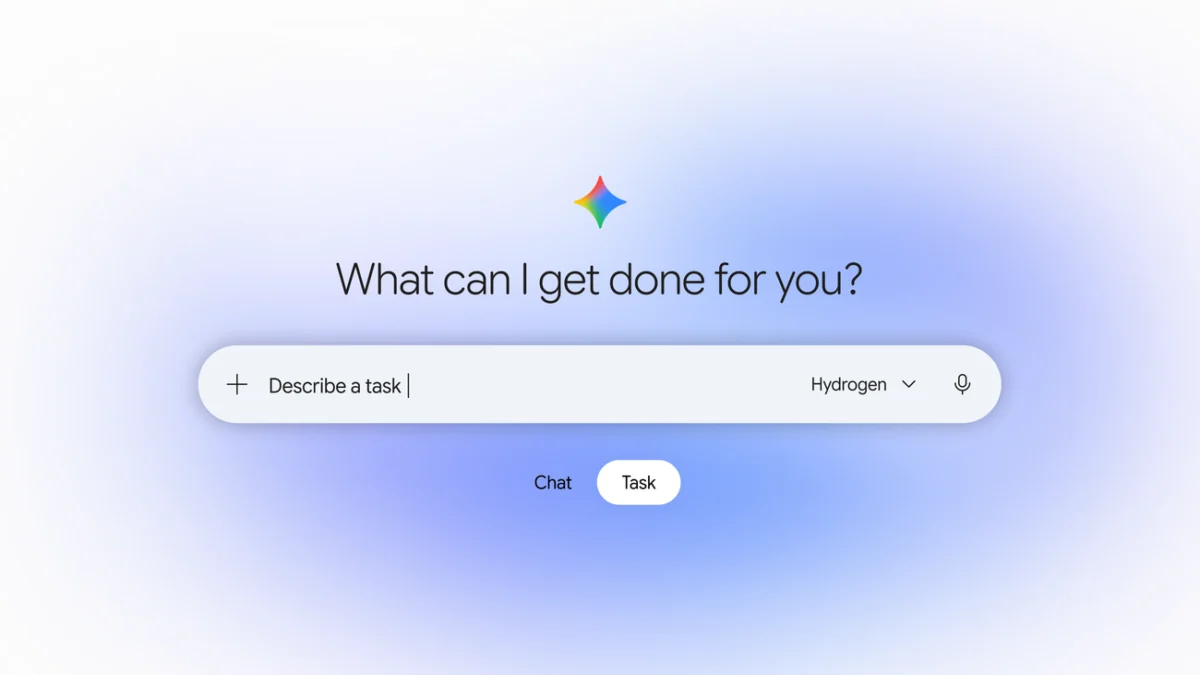
Google has officially announced a significant update to its Gemini artificial intelligence platform, transitioning the tool from a conversational assistant into a functional "agent" capable of executing complex real-world tasks. This evolution, powered by the new Gemini 4 Hydrogen model, allows the AI to autonomously make phone calls, manage financial obligations, and facilitate end-to-end e-commerce transactions. The rollout represents a strategic shift in the competitive AI landscape, moving beyond text generation toward "agentic" behavior—where software takes proactive steps to complete workflows within the user’s personal and professional ecosystem.
The update is currently being deployed to hundreds of millions of users across the United States, Japan, Korea, Canada, Australia, and India. While the core Gemini 4 Hydrogen model is available globally in these regions, a specialized suite of advanced features is launching first in the U.S. market. These features leverage Google’s existing infrastructure, including Google Maps, Gmail, Calendar, and Google Pay, to provide a unified interface for task delegation.
Functional Integration and Autonomous Task Execution
The primary differentiator of the Gemini 4 Hydrogen update is its ability to interact with third-party services via voice and data protocols. One of the most prominent features demonstrated by Google is the AI’s ability to conduct phone calls on behalf of the user. Utilizing a disclosure mechanism to identify itself as an AI to human recipients, Gemini can contact businesses—such as automotive dealerships or medical offices—to negotiate appointments based on the user’s real-time availability in Google Calendar.
In the realm of personal finance, Gemini has introduced a deeper integration with Google Password Manager and utility portals. This allows the agent to analyze historical billing data to identify anomalies in energy consumption or service charges. By processing PDF statements and email correspondence, the AI can pinpoint specific causes for price spikes, such as peak-hour energy usage, which would typically require hours of manual auditing by a consumer.
The e-commerce capabilities have also been bolstered through the Shopping Graph and the newly introduced Agent Payments Protocol (AP2). Gemini can now compare products, apply discount codes, and complete checkouts autonomously. To secure these transactions, Google has partnered with major financial institutions, including Visa and Mastercard, with American Express integration expected in the near future. These partnerships utilize digital tokens to ensure that sensitive card information is not exposed during the transaction process, while still allowing users to accrue loyalty points and purchase protections.
Chronology of Google’s AI Evolution
The release of Gemini 4 Hydrogen marks a pivotal moment in a timeline that began with the rebranding of Google’s AI efforts. In early 2023, Google introduced Bard as a direct competitor to OpenAI’s ChatGPT. By late 2023 and early 2024, the company unified its AI branding under the "Gemini" umbrella, launching the Ultra, Pro, and Flash models to serve different computational needs.

The progression toward agentic AI accelerated in mid-2024 with the introduction of "Project Astra," a vision for a universal AI assistant. The current deployment of the Hydrogen model is the functional realization of that vision, shifting the focus from "information retrieval" to "action execution." This timeline reflects a broader industry trend where the utility of Large Language Models (LLMs) is no longer measured by their prose, but by their integration into the "plumbing" of the internet—payments, scheduling, and logistics.
Technical Infrastructure and Security Protocols
To address the inherent privacy risks associated with an AI that has access to passwords and payment methods, Google has implemented a hardware-isolated security architecture. When Gemini executes a task, it operates within Google Cloud’s Agent Compute Engine. This system utilizes a hardware-isolated virtual machine (VM) dedicated to the individual user’s account.
These VMs are "sandboxed," meaning the AI operates in a restricted environment where it cannot interact with other users’ data or the broader system unless specifically authorized. Google’s security "red teams" regularly test these environments to prevent prompt-injection attacks—a common vulnerability where malicious inputs could trick an AI into leaking data or performing unauthorized actions.
Furthermore, the system is designed with "human-in-the-loop" checkpoints. For critical actions, such as finalizing a purchase or sharing private account details, Gemini is programmed to pause and request explicit user confirmation. Users also have the option to set "hard spending caps" to prevent the agent from exceeding a specific budget during autonomous shopping tasks.
Supporting Data and Market Context
The shift toward AI agents comes at a time when the global AI market is projected to contribute trillions to the global economy. According to industry analysis, the market for "AI agents"—software that can perform actions rather than just generate content—is expected to grow at a compound annual growth rate (CAGR) of over 30% through 2030.
Google’s move to integrate Gemini with more than 60 popular apps, including Instacart and various RCS-enabled messaging platforms, positions it as a central hub for the "mobile-first" economy. For example, the integration with Instacart allows users to send photos of empty food packaging directly to Gemini, which then populates a digital shopping cart. This reduces the friction of manual data entry, a key barrier in mobile commerce.
Additionally, the expansion of Google Wallet to iOS devices, announced alongside this update, indicates Google’s intent to capture a larger share of the digital payments market, regardless of the user’s hardware preference. By making Gemini the orchestrator of these payments, Google creates a "sticky" ecosystem that incentivizes users to keep their financial and personal data within the Google Cloud.

Industry and Stakeholder Reactions
While Google’s internal demonstrations highlight the convenience of the service, the broader tech community has offered a more nuanced perspective. Developers have been invited to join the Connected Apps Platform to build further integrations, a move seen by analysts as an attempt to create an "App Store for Agents."
Privacy advocates, however, remain cautious. The prospect of an AI agent having access to utility portals and medical billing records raises questions about long-term data retention and the potential for "function creep," where data collected for one task is used for another. In response, Google has emphasized its "Defense-in-Depth" strategy and encouraged participation in its AI Vulnerability Reward Program (AI VRP) to crowdsource the identification of security flaws.
From a business perspective, the "opt-out" mechanism for merchants is a critical component. Small businesses that may not be ready to interact with AI callers can choose to decline these interactions. However, industry experts suggest that as AI agents become more common, businesses that optimize their websites for "agentic readability" through protocols like the Universal Commerce Protocol (UCP) will likely see higher conversion rates from AI-driven shoppers.
Analysis of Broader Implications
The introduction of Gemini 4 Hydrogen suggests the end of the "chatbot era" and the beginning of the "agent era." For decades, the internet has been designed for human eyes, utilizing graphical user interfaces (GUIs). The rise of agents like Gemini necessitates a shift toward machine-readable interfaces. This is the logic behind Google’s push for the Universal Commerce Protocol; it is an attempt to standardize how AI agents "see" and "buy" on the web.
Furthermore, this update places significant pressure on competitors such as Apple and OpenAI. Apple’s "Apple Intelligence" seeks to provide similar cross-app functionality within the iOS ecosystem, but Google’s advantage lies in its massive existing database—the Shopping Graph, Google Maps, and a decade of Gmail data. By leveraging this "Personal Intelligence," Google can offer a level of context that newer or more isolated platforms may struggle to replicate.
The socio-economic impact of delegating "life admin" to AI cannot be overlooked. While the time-saving benefits for busy professionals and families are evident, the widespread use of AI agents to handle phone calls and customer service could fundamentally change the nature of the service economy. As bots begin to talk to other bots to schedule appointments or dispute bills, the human element of these transactions may eventually be reserved only for the most complex or sensitive escalations.
In conclusion, the deployment of Gemini 4 Hydrogen is more than a software update; it is a restructuring of the relationship between the user and the internet. By transforming Gemini into a functional agent capable of navigating the complexities of modern life—from car maintenance to grocery logistics—Google is betting that the future of AI lies not in what the technology can say, but in what it can do. As the rollout continues, the success of this initiative will depend on Google’s ability to maintain a balance between autonomous utility and the rigorous protection of user privacy.
