

The evolution of digital audio workstations (DAWs) has long been a landscape dominated by a few key players, often with significant financial barriers to entry. For years, the free and open-source software Audacity occupied a peculiar niche: accessible and widely adopted, yet frequently criticized for its dated interface, performance issues, and perceived instability. However, a significant paradigm shift has occurred with the release of Audacity 4, prompting a reassessment of its capabilities and positioning it as a formidable contender, particularly for voice actors and audio professionals working with limited budgets. This transformation marks a significant milestone, moving Audacity from a tool many advised avoiding to one that is now garnering widespread praise and recommendations.
A Troubled Past: The Legacy of Audacity’s Previous Iterations
For a considerable period, Audacity, particularly versions preceding the current iteration, was a source of frustration for many users. Its historical shortcomings were widely documented and discussed within audio production communities. The primary criticisms typically fell into three distinct categories: a visually unappealing and inefficient user interface, significant issues with disk space management, and a pervasive instability that often led to data loss and workflow disruptions.
The user interface of Audacity 3 and its predecessors was frequently described as archaic, resembling software designed for operating systems from the mid-1990s. This aesthetic was not merely a matter of visual preference; it directly impacted usability. The rendering of audio waveforms was often described as "jagged" and "low-resolution," making the precise identification and removal of subtle audio artifacts such as mouth clicks, breaths, or plosives a laborious and error-prone process. This visual ambiguity significantly hampered the efficiency of detailed audio editing, particularly for tasks requiring high precision, akin to performing delicate surgery with inadequate tools. For aspiring voice actors and seasoned professionals alike, navigating these visual deficiencies added unnecessary complexity to the editing process, detracting from the core task of refining audio content.
Beyond the visual realm, Audacity’s previous versions were notorious for their voracious appetite for disk space. Project files would frequently balloon in size, often disproportionately to the actual audio content being edited. Users reported instances where a simple recording session, even for short durations, would result in gigabytes of temporary data and unnecessary disk usage being consumed in the background. This "disk space black hole" was a significant concern, especially for users operating with limited storage capacity or managing large volumes of audio files. The unpredictable nature of this space consumption created an environment of uncertainty and required constant vigilance to avoid filling up essential storage.
Furthermore, the software was frequently plagued by bugs, crashes, and general instability. These issues were not isolated incidents but rather systemic problems that affected a broad user base. Random application crashes, unexpected data corruption, and perplexing audio driver conflicts were common occurrences. For beginners venturing into audio production, the prospect of setting up a reliable recording and editing workflow within Audacity 3 was often described as a "recipe for tears," underscoring the steep learning curve exacerbated by technical unreliability. This lack of stability meant that crucial editing sessions could be abruptly terminated, leading to lost work and significant frustration.
The Audacity 4 Overhaul: A Ground-Up Redesign
The developers of Audacity appear to have recognized the cumulative impact of these criticisms and have undertaken a comprehensive redesign of the software. Rather than implementing incremental fixes, Audacity 4 represents a fundamental reimagining of the user experience and core functionalities. This strategic overhaul has addressed the most significant pain points of previous versions, ushering in an era of improved performance, enhanced usability, and a modern aesthetic.
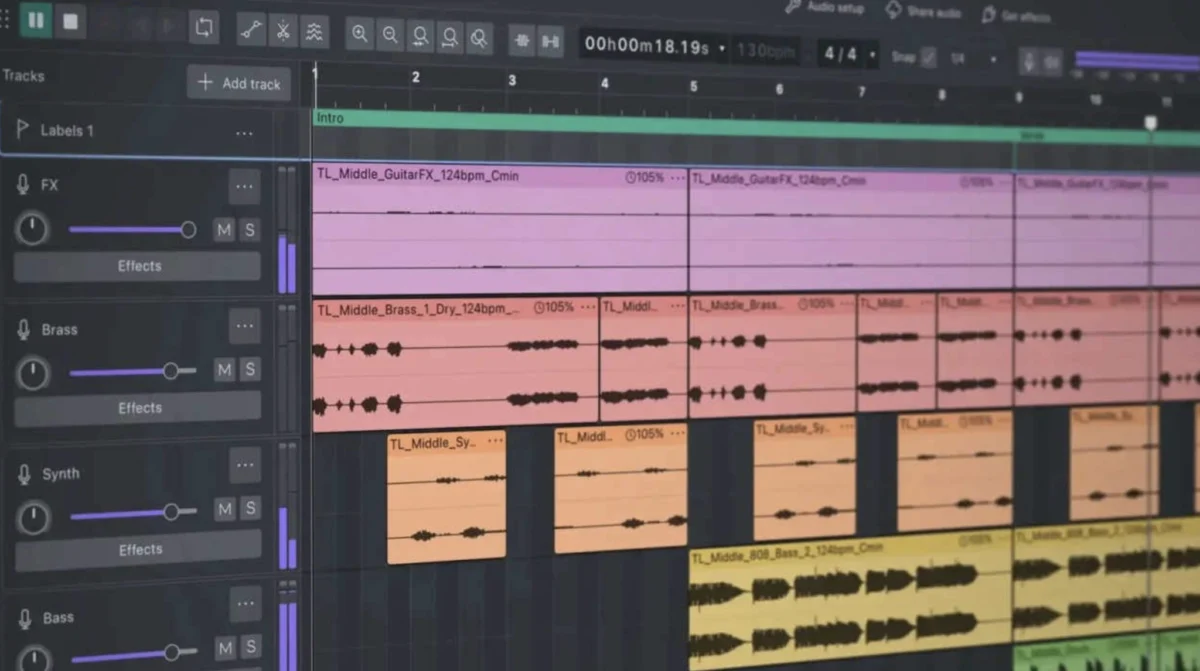
One of the most immediately apparent and impactful changes in Audacity 4 is its redesigned user interface, prominently featuring a "Dark Mode." This modern aesthetic is not just a stylistic choice; it significantly enhances the user experience, particularly for extended editing sessions. The crisp, clean rendering of waveforms allows for much greater precision in identifying and rectifying audio imperfections. The ability to edit comfortably in dimly lit environments, such as vocal booths, for extended periods without eye strain is a welcome improvement for many audio professionals. The visual scaling of waveforms has been refined, offering a superior clarity that aids in spotting subtle editing mistakes and nuances in audio dynamics.
Usability for voice actors has seen a marked improvement. Navigation through the software is now considerably more intuitive and fluid. While the article emphasizes the continued necessity of selecting the correct viewing mode, specifically "Linear dB," for accurate level and dynamic gauging, the process of switching between different views and managing track headers has been streamlined. This transition from a complex, often frustrating experience to a seamless workflow is a testament to the developer’s focus on user experience. The ability to efficiently manage multiple audio tracks and their associated metadata without encountering significant navigational hurdles is crucial for professional audio production.
A particularly celebrated advancement in Audacity 4 is the introduction of "Real-Time Dynamics," including real-time compressors. Historically, applying audio compression in Audacity involved a trial-and-error process. Users would input numerical values for compression parameters, apply the effect, observe the resulting waveform, and if unsatisfied, revert the changes and try again. This "blind faith" approach was inefficient and lacked the immediacy required for effective audio manipulation. Audacity 4 introduces a real-time visual feedback mechanism, allowing users to observe and adjust compression curves and gain reduction dynamically as the audio plays. This feature is a significant leap forward, enabling users to achieve precise and nuanced compression settings with greater confidence and speed, directly impacting the quality and polish of the final audio product.
Assessing the Current State: Strengths and Limitations
While Audacity 4 represents a monumental leap forward, it is important to acknowledge that it is not without its limitations. The article notes that Audacity still lacks a dedicated, destructible waveform editor window, a feature found in some more specialized audio editing software. Furthermore, while its feature set has expanded considerably, it may not yet rival the comprehensive capabilities of industry-standard DAWs like Adobe Audition or Pro Tools in every conceivable aspect.
However, as a full-fledged, multi-track Digital Audio Workstation, Audacity 4 now performs exceptionally well. It effectively handles multi-track recording, non-destructive editing, the integration of third-party VST plugins, and master rendering processes with a newfound efficiency and stability. The fact that it achieves this level of functionality while remaining a free and open-source application is a remarkable feat and a significant development for the audio production landscape.
The Broader Implications for Voice Professionals
The transformation of Audacity has profound implications for voice actors and audio professionals, particularly those at the nascent stages of their careers or operating with budget constraints. For years, the recommendation for aspiring voice actors was to invest in professional-grade software like Adobe Audition or Pro Tools, a significant financial commitment. Audacity, in its previous iterations, was often seen as a stopgap solution, a tool to be used out of necessity rather than choice.
The current iteration, however, fundamentally alters this perception. Hugh Edwards, a prominent figure in the voiceover training community and the author of the original article, articulates this shift clearly: "I used to tell people that using Audacity was a penalty you paid for not spending money on proper software. I take it back. With this new version, the developers have pulled off a miracle." This sentiment reflects a widespread reassessment of Audacity’s viability.
The availability of a free, yet highly capable, DAW like Audacity 4 democratizes audio production. It lowers the barrier to entry for aspiring voice actors, enabling them to acquire essential editing skills and produce professional-quality audio without incurring significant upfront software costs. This is particularly relevant in an industry where the ability to deliver polished audio is paramount. The software’s improved performance, stability, and modern interface make it a practical and effective tool for a wide range of audio tasks, from basic editing and noise reduction to more complex mixing and mastering processes.
The implications extend beyond individual users. The continued development and improvement of free and open-source software like Audacity contribute to a more competitive and innovative audio technology market. It challenges established commercial software providers to continually enhance their offerings and pricing structures, ultimately benefiting all users.
Looking Ahead: A New Era for Audacity
The journey of Audacity from a widely criticized tool to a highly recommended DAW is a compelling narrative of software development and community response. The recent overhaul has not only addressed long-standing technical and usability issues but has also repositioned the software as a serious contender in the audio production space. For voice actors and audio enthusiasts seeking a powerful, reliable, and cost-effective solution, Audacity 4 presents an undeniable proposition. Its future development will be closely watched by the audio community, with expectations high for continued innovation and improvement. The "miracle" of Audacity 4 has effectively granted official permission for users to embrace it without reservation, marking a new and exciting chapter for this venerable piece of audio software.
