

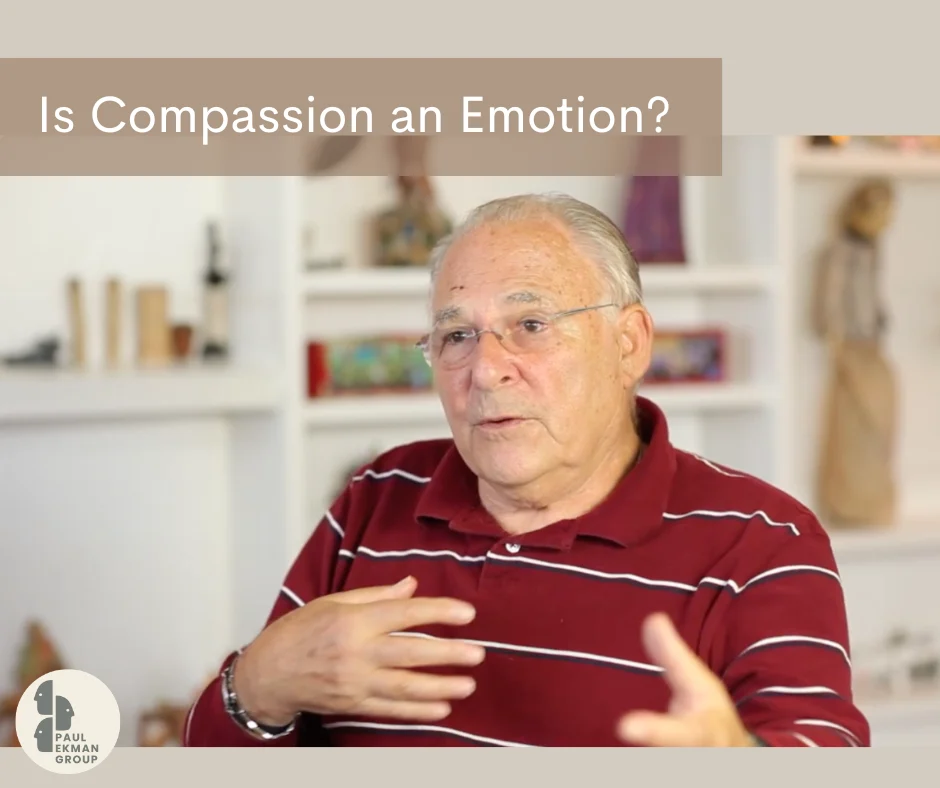
While the act of showing compassion often elicits a sense of warmth and satisfaction, it is crucial to understand that compassion itself is distinct from the broader spectrum of universal human emotions. This distinction is not merely semantic; it profoundly clarifies why compassion holds such significant weight in human interaction and societal well-being, and why its cultivation is both achievable and imperative. Unlike fleeting emotions that can stem from myriad triggers and serve diverse purposes, compassion is singular in its focus: the recognition of suffering and the intrinsic motivation to alleviate it. This focused intent, always constructive and never harmful, sets compassion apart as a deliberate force for good.
The Evolutionary Roots and Deliberate Cultivation of Compassion
At its core, compassion is defined by its reaction to suffering and its drive to mitigate it. This psychological framework highlights a specific orientation that fundamentally differentiates it from the more fluid nature of emotions. Emotions, by their very definition, can manifest in ways that are either constructive or destructive. Compassion, however, by its inherent nature, is always aimed at positive outcomes, seeking to reduce pain and distress without any intention to cause harm. This inherent constructiveness makes compassion a unique and powerful aspect of human psychology.
The human capacity for compassion can be broadly categorized into three distinct forms, each with its own origin and developmental pathway, ranging from innate biological drives to conscious, cultivated choices. These forms illustrate the multifaceted nature of our ability to connect with and respond to the suffering of others.
Familial Compassion: The Unspoken Biological Imperative
The most primal and perhaps most universally recognized form of compassion is familial compassion. This is the deep, often unbidden, concern we feel for our children and immediate biological kin. This form of compassion is not a learned behavior; it is an ingrained, involuntary biological imperative hardwired into our species. When a parent, without a moment’s hesitation, races into danger to shield a child from harm, this action is not the result of conscious deliberation or a calculated risk assessment. It is an automatic, instinctual response. Should such a parent be asked to explain their self-sacrificing act, the most honest and accurate answer would likely be, "I had to."
The evolutionary underpinnings of familial compassion underscore its universality, extending beyond the human species to other primates and mammals. Humans, however, exhibit the longest period of offspring dependency among all species. This prolonged childhood is not merely a biological characteristic; it is a crucible for extensive learning and adaptation. To support this extended developmental phase, a powerful, innate drive to protect offspring from peril is essential. This drive ensures the survival of the species by safeguarding its most vulnerable members.
Crucially, a significant portion of parental compassion is proactive rather than reactive. For instance, when a parent insists a child wear a helmet while cycling, the child is not currently experiencing pain or suffering. This action is a cognitive manifestation of parental concern, aimed at preventing potential future suffering before it even arises. The majority of compassionate actions within the family unit operate on this principle: not solely about alleviating existing distress, but about anticipating and averting it altogether. This foresight is a critical component of nurturing and ensuring the well-being of future generations. The biological imperative to protect offspring is therefore not just about immediate survival, but about fostering a safe environment for growth and development.
Stranger Compassion: A Conscious Choice and Moral Evolution
In stark contrast to the involuntary nature of familial compassion, compassion directed towards strangers is a deliberate and conscious choice. When an individual donates to a disaster relief fund, dedicates time to volunteer at a refugee camp, or offers assistance to someone they will never encounter again, these actions are not pre-programmed responses. They are the result of a conscious decision to act, a decision that could, for many, have easily been bypassed. The widespread prevalence of inaction in the face of distant suffering further highlights that compassion for strangers is not a universal, automatic trait.
While this form of compassion may not be as pervasive as familial bonds, its absence in certain individuals or societies does not diminish its profound impact when it is exercised. The world would undoubtedly be a significantly different, and likely more equitable, place if compassion for strangers were a universal practice. This distinction is another key reason why compassion cannot be equated with emotion alone. Emotions are an inherent part of the human experience, accessible to all. Compassion for strangers, however, is something that we actively choose to cultivate. It represents a moral and ethical development, an expansion of our concern beyond immediate social circles. This deliberate cultivation often requires overcoming indifference, prejudice, or simply the inertia of self-interest. The act of extending care to those outside our immediate sphere signifies a maturation of our social consciousness and a commitment to a broader sense of humanity.
The development of stranger compassion is often influenced by societal norms, cultural values, and educational initiatives. Societies that emphasize civic responsibility, altruism, and global interconnectedness tend to foster higher levels of stranger compassion. The rise of global media and instantaneous communication has also played a role, exposing individuals to suffering on a scale previously unimaginable, thereby creating opportunities for empathy and action that transcend geographical boundaries. However, this exposure also presents a challenge, as the sheer volume of suffering can lead to emotional fatigue or a sense of helplessness. Navigating this complex landscape requires not just empathy, but a sustained commitment to mindful engagement and effective action.
Sentient Compassion: The Expansive Circle of Universal Concern
Extending the circle of concern even further, we encounter sentient compassion. This is the profound regard for the suffering of all sentient beings – all creatures capable of experiencing feelings and sensations. Buddhist traditions often highlight sentient compassion as a cornerstone practice, and historical figures like Charles Darwin have referred to it as humanity’s highest virtue. This form of compassion transcends species boundaries, extending its embrace equally to all beings that possess the capacity to feel and suffer.
The commitment to sentient compassion means that one does not arbitrarily prioritize one species over another. It is a radical expansion of empathy, recognizing the intrinsic value of all life. While relatively few individuals naturally operate at this level of expansive concern without dedicated training or sustained personal practice, its existence demonstrates the potential for human moral development. Historical accounts and contemporary movements dedicated to animal welfare and environmental protection are testaments to the growing recognition and practice of sentient compassion. The challenge lies in translating this recognition into widespread action, addressing the systemic issues that contribute to the suffering of non-human beings. This includes rethinking our consumption patterns, our impact on ecosystems, and our ethical responsibilities towards the natural world.
The concept of sentient compassion challenges anthropocentric viewpoints and encourages a more holistic understanding of our place within the web of life. It calls for a re-evaluation of our relationship with the environment and all its inhabitants, fostering a sense of kinship with all living things. This expansive ethical framework can lead to more sustainable practices and a deeper appreciation for the interconnectedness of all life on Earth.
The Capacity for Greater Compassion and its Modern Challenges
While human beings universally experience a foundational set of emotions such as fear, anger, joy, and sadness, this shared emotional landscape provides the fertile ground for empathy towards one another. However, this inherent capability does not automatically translate into consistent or widespread compassionate action. For many, empathy can be narrowly confined, often restricted to those who resemble us, live in proximity, share our values, or belong to our immediate family. The ongoing moral imperative, therefore, is to consciously and deliberately widen this circle of empathy and compassion, extending it to all beings.
This expansion, however, is fraught with challenges in the modern era. Contemporary life inundates us with a constant stream of information about suffering occurring across the globe. An hour spent consuming news can present a relentless barrage of images and narratives of pain, distress, and injustice, much of which we are powerless to personally alleviate. This overwhelming exposure can lead to emotional desensitization, burnout, or a profound sense of helplessness, making it difficult to sustain compassionate engagement. The sheer scale of global suffering, amplified by digital media, presents a unique test for our capacity to remain engaged and responsive without succumbing to despair.
The Crucial Distinction: Why Understanding Compassion Matters
Recognizing compassion as a distinct entity, separate from the realm of mere emotion, is vital. This understanding illuminates why compassion is not a fixed trait but a capacity that can be strengthened through intention, dedicated training, and consistent practice. While familial compassion may manifest as an automatic, biological response, compassion for strangers and sentient beings are learned and cultivated capacities. They are not passive states but active choices, skills that can be honed and expanded.
In an era characterized by global interconnectedness and the pervasive visibility of suffering, the ability to extend compassion without becoming overwhelmed or depleted is arguably one of the most critical skills humanity can develop. This involves cultivating resilience, developing effective strategies for engagement, and finding sustainable ways to contribute to alleviating suffering. It requires a nuanced approach that acknowledges the scale of global challenges while empowering individuals to take meaningful action within their spheres of influence. The pursuit of this skill is not only beneficial for individual well-being but is essential for fostering a more just, equitable, and compassionate world. The development of compassionate action, therefore, is not just a personal journey but a collective responsibility, vital for navigating the complexities of the 21st century and building a more humane future for all.
