

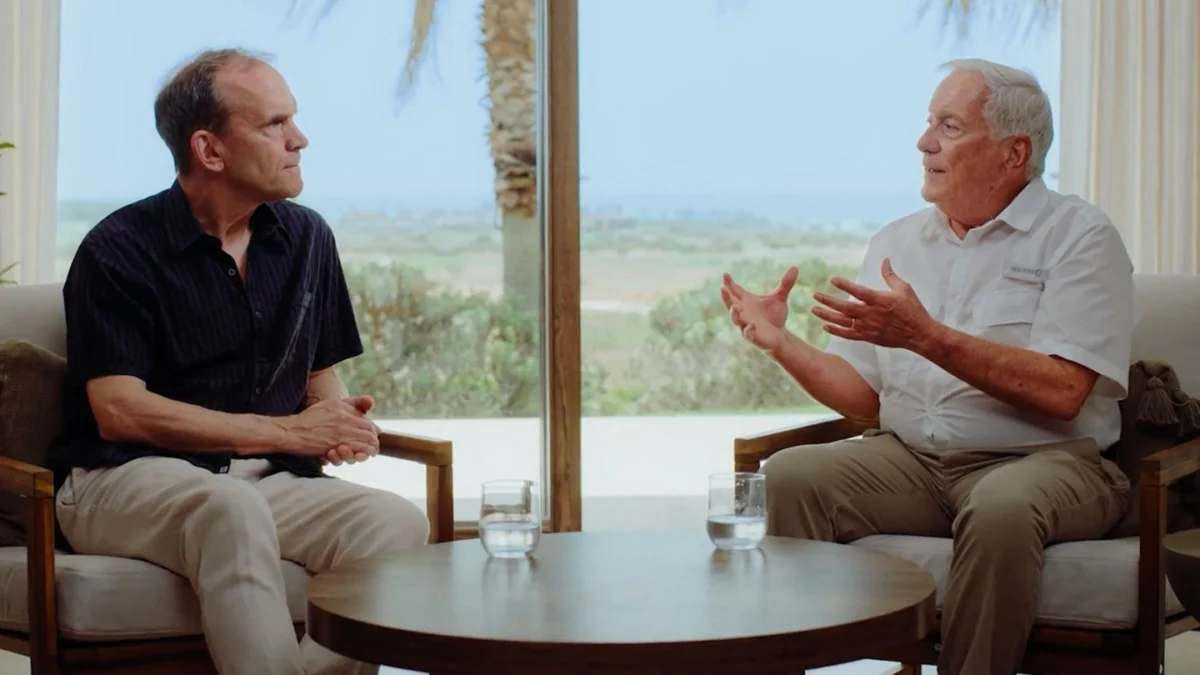
The rapid advancement of artificial intelligence has sparked a global dialogue regarding the future of human ingenuity and the role of historical wisdom in a digitized world. In the latest installment of "Dialogues on Technology and Society," Kent Walker, President of Global Affairs for Google and Alphabet, engaged in a comprehensive discussion with renowned biographer and historian Walter Isaacson. The conversation delved into the lives of historical luminaries such as Leonardo da Vinci, Benjamin Franklin, and Ada Lovelace to extract lessons on how curiosity and human judgment remain the ultimate differentiators in an era dominated by algorithmic processing. As society stands at the precipice of the "Intelligence Age," Isaacson argues that the fundamental traits that drove the Renaissance and the Enlightenment are more relevant today than ever before, providing a blueprint for navigating the complexities of modern technological shifts.
The Evolution of the Collaborative Breakthrough
A central theme of the dialogue was the deconstruction of the "lone genius" myth. Isaacson, who has spent decades chronicling the lives of figures from Steve Jobs to Jennifer Doudna, emphasized that history’s most significant breakthroughs have almost always been the result of collaborative efforts. While the popular narrative often focuses on a single individual, the reality of innovation is a "team sport" that requires the convergence of diverse perspectives and disciplines.
Isaacson noted that Benjamin Franklin, often remembered as a solitary inventor flying a kite in a storm, was actually a master of networking. Franklin founded the "Junto," a club for mutual improvement where artisans and scholars met to discuss philosophy, politics, and science. This collaborative spirit led to the creation of the first subscription libraries and volunteer fire departments, proving that innovation is as much about social engineering as it is about technical prowess.
In the context of artificial intelligence, this collaborative model is being redefined. The "team" now includes not only human experts across various fields but also the large language models and neural networks that can process vast amounts of data at speeds unattainable by the human brain. However, Isaacson cautions that the human element remains the conductor of this technological orchestra. The ability to synthesize disparate ideas—what Steve Jobs famously referred to as "connecting the dots"—remains a uniquely human capability that AI can augment but not yet replace.
Historical Parallels: From the Renaissance to the Digital Revolution
To understand the trajectory of AI, Isaacson and Walker looked back at the lives of figures who bridged the gap between the arts and the sciences. Leonardo da Vinci, perhaps the most famous polymath in history, served as a primary example. Isaacson highlighted that Leonardo’s genius was rooted in an obsessive curiosity about everything from the anatomy of a woodpecker’s tongue to the mechanics of water flow. This cross-disciplinary approach allowed him to infuse his art with scientific precision and his science with artistic intuition.
The chronology of these innovations reveals a pattern of interdisciplinary synergy:
- 15th Century: Leonardo da Vinci combines anatomy, optics, and engineering with painting, setting the stage for the Renaissance.
- 18th Century: Benjamin Franklin applies the principles of the Enlightenment to scientific discovery and civic governance, emphasizing the practical application of knowledge.
- 19th Century: Ada Lovelace, the daughter of Lord Byron, envisions "Poetical Science." She recognizes that the Analytical Engine—a precursor to the computer—could do more than just calculate numbers; it could potentially create music or art if programmed correctly.
- 20th Century: The birth of the digital age, driven by the collaboration between hardware engineers and software theorists, leading to the personal computer and the internet.
- 21st Century: The transition from the Information Age (focused on the retrieval of data) to the Intelligence Age (focused on the synthesis and application of data through AI).
Ada Lovelace’s contributions are particularly poignant in the AI age. She was the first to posit that a machine could only do what it was told to do, a concept known as "Lovelace’s Objection." While modern AI appears to "learn" and "create," the debate persists: is the machine truly original, or is it merely reflecting the patterns of its human creators? Isaacson suggests that Lovelace’s "Poetical Science" is the exact intersection where modern developers and thinkers must reside to ensure AI remains a tool for human flourishing.
The Shift from Information Retrieval to Human Judgment
With the entirety of human knowledge effectively accessible via a smartphone, the value of simply "knowing" facts has diminished. Isaacson and Walker discussed how this shift places a premium on curiosity and judgment. In previous generations, education was centered on the acquisition and retention of information. Today, when an AI can provide a factual summary of the French Revolution or solve a complex calculus problem in seconds, the human role shifts toward asking the right questions and verifying the output.
Supporting data highlights this shift in the labor market. According to reports from the World Economic Forum, "analytical thinking" and "creative thinking" are ranked as the most important skills for workers in 2023 and beyond. Furthermore, a study by McKinsey & Company suggests that while AI could automate up to 30% of hours worked across the U.S. economy by 2030, the demand for social and emotional skills, as well as higher cognitive functions, will see a significant increase.
Isaacson argued that curiosity is the engine of this new economy. "The most important thing you can have is a sense of wonder," he remarked during the dialogue. He pointed out that while AI can provide the "what," it often struggles with the "why" and the "how" in a way that resonates with human experience. Human judgment is required to navigate the ethical minefields of AI, such as algorithmic bias, data privacy, and the potential for misinformation.
Official Responses and the Corporate Responsibility of AI Development
Kent Walker, representing Google’s stance on these issues, emphasized the importance of "bold and responsible" AI development. The dialogue touched upon the need for a regulatory framework that encourages innovation while protecting societal interests. Walker noted that the historical figures discussed by Isaacson did not work in a vacuum; they were influenced by the legal and social structures of their time.
In response to the rapid deployment of generative AI, various international bodies have begun to formulate guidelines. The European Union’s AI Act and the White House’s Executive Order on Safe, Secure, and Trustworthy Artificial Intelligence represent official efforts to codify the "human judgment" Isaacson advocates for. These frameworks aim to ensure that AI systems are transparent, explainable, and under human oversight—essentially institutionalizing the skepticism and critical thinking that characterized the Enlightenment.
Industry leaders have also weighed in on the necessity of maintaining a human-centric approach. Satya Nadella of Microsoft and Sam Altman of OpenAI have both publicly stated that the goal of AI is to act as a "co-pilot" rather than a replacement for human agency. This aligns with Isaacson’s observation that the most successful technological eras are those where machines empower human creativity rather than stifle it.
Broader Impact: Education and the Future of the Workforce
The implications of Isaacson’s analysis extend deeply into the field of education. If AI can perform rote tasks and basic synthesis, the educational system must pivot toward fostering the "da Vincian" qualities of observation and cross-disciplinary thinking. Isaacson suggested that the silos between the humanities and the sciences must be broken down. Students who understand both coding and Shakespeare, or both molecular biology and ethics, will be the ones best equipped to lead in the AI age.
The economic impact of this shift is also profound. As AI takes over routine cognitive tasks, there is a projected growth in the "creativity economy." Data from the U.S. Bureau of Economic Analysis shows that the arts and culture sector contributes over $1 trillion to the U.S. GDP. As AI lowers the barrier to entry for technical tasks (like coding or graphic design), the value of the underlying creative vision and the ability to direct the technology toward meaningful ends will likely increase.
However, this transition is not without its challenges. Isaacson and Walker acknowledged the potential for a "digital divide" where those with the skills to leverage AI pull further ahead of those without. Ensuring that curiosity and the tools for creativity are accessible to all is a major societal hurdle. Isaacson’s historical perspective offers a glimmer of hope: every major technological leap, from the printing press to the steam engine, initially caused disruption but ultimately led to a more informed and connected society.
Conclusion: The Enduring Value of the Human Spirit
The dialogue between Walter Isaacson and Kent Walker serves as a reminder that while the tools of innovation change, the drivers of progress remain constant. The curiosity of Leonardo, the collaborative spirit of Franklin, and the visionary "Poetical Science" of Lovelace are not relics of the past but essential components of the future.
As AI continues to integrate into every facet of life, the ability to maintain a sense of wonder and exercise sound judgment will be the hallmark of the next generation of leaders. Isaacson’s biographies provide more than just historical accounts; they offer a manual for the "team sport" of the 21st century. The breakthroughs of the future will not be credited to a machine or a single person, but to the synergy between human intuition and artificial intelligence, guided by the timeless pursuit of understanding the world around us.
In the final analysis, the AI age does not represent the end of human creativity, but rather its greatest challenge and opportunity. By looking back at the giants of history, society can find the courage to move forward, ensuring that technology remains a reflection of our highest aspirations and our deepest curiosities.
