

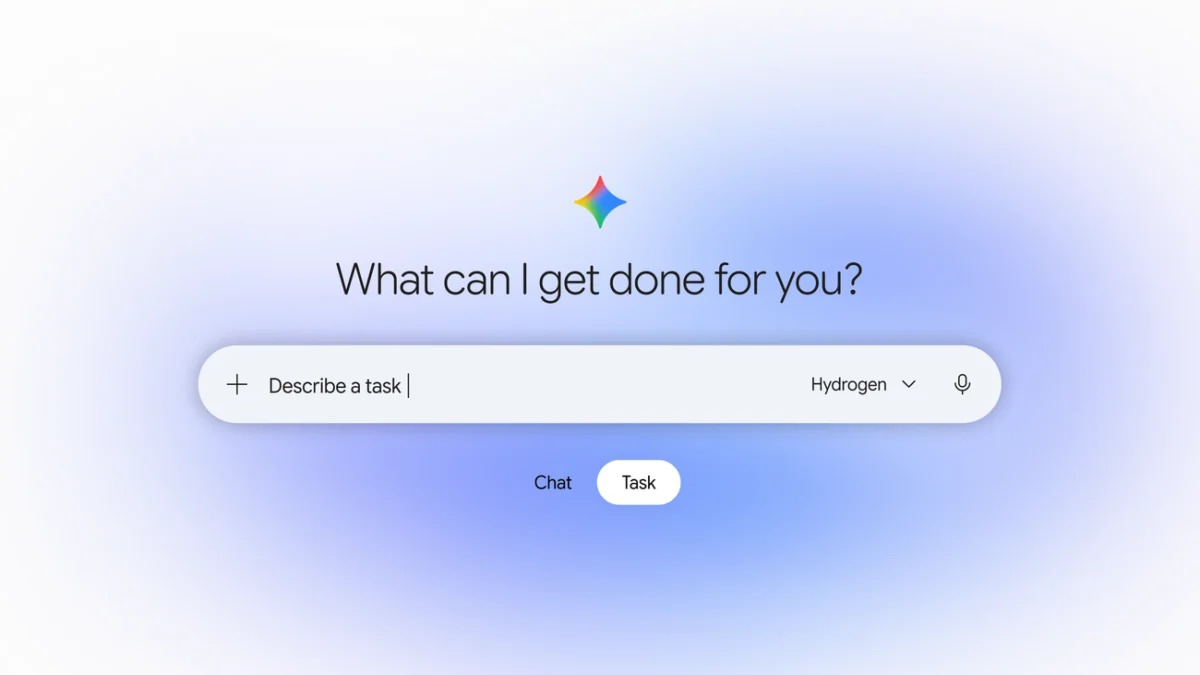
The global landscape of artificial intelligence underwent a significant shift this week as Google announced a comprehensive update to its Gemini ecosystem, introducing the Gemini 4 Hydrogen model. This latest iteration marks a pivot from generative AI as a mere conversational tool to "agentic" AI—systems capable of executing complex, multi-step tasks across various digital platforms and real-world services. The update, which is currently rolling out to hundreds of millions of users across the United States, Japan, Korea, Canada, Australia, and India, represents Google’s most aggressive move to date in integrating AI directly into the daily logistics of consumer life. By leveraging its vast ecosystem of services, including Gmail, Maps, Calendar, and Google Pay, the company aims to position Gemini as a central hub for personal productivity and financial management.
The Evolution of Agentic AI: From Chat to Execution
The introduction of Gemini 4 Hydrogen signifies the arrival of the "AI Agent" era, a concept that has been the subject of intense speculation within the technology sector for the past year. While previous iterations of large language models (LLMs) focused on summarizing text, generating images, or answering queries, agentic systems are designed to interact with the world on behalf of the user. This involves navigating websites, placing phone calls, managing financial transactions, and coordinating schedules.
Google’s strategy relies heavily on its existing infrastructure. Because a significant portion of user data—including emails, calendar events, passwords, and payment information—already resides within the Google ecosystem, the company argues that Gemini is uniquely positioned to act as a secure intermediary. This integration allows the AI to perform tasks that would otherwise require significant manual input, such as cross-referencing a car’s service history in Gmail with a user’s availability in Calendar and the proximity of service centers in Maps.
Expanded Capabilities: Automation in Daily Life
The update introduces several core functionalities that demonstrate the practical application of the Gemini 4 Hydrogen model. One of the most notable features is the ability for Gemini to conduct autonomous phone calls to businesses. Using advanced voice synthesis and natural language processing, the AI can contact service providers to schedule appointments. During these interactions, the system is programmed to disclose its identity as an AI to the recipient. For businesses, Google has provided an opt-out mechanism, though the convenience of automated scheduling is expected to be a significant draw for both consumers and service providers.
In the realm of financial management, Gemini now features deep integration with Google Password Manager and utility portals. By accessing past billing statements and analyzing usage patterns, the AI can identify anomalies in household expenses. For example, the system can pinpoint specific times of day when energy consumption peaks and correlate that data with utility pricing structures to suggest cost-saving measures.

The shopping experience has also been overhauled through the integration of the Google Shopping Graph and the new Agent Payments Protocol (AP2). Gemini can now research products, compare prices, apply discount codes, and complete the checkout process autonomously. This is supported by a burgeoning partnership with major financial institutions, including Mastercard and Visa, with American Express expected to join the framework shortly. These transactions utilize digital tokens to ensure that sensitive card information is never exposed directly to merchants.
Technical Infrastructure and the Agent Compute Engine
To facilitate these high-stakes tasks, Google has introduced a robust security architecture known as the Agent Compute Engine (ACE). Security remains a primary concern for users handing over control of their financial and personal accounts to an AI. To mitigate risks, Google has implemented a hardware-isolated virtual machine (VM) system. Each time Gemini performs a task, it operates within a dedicated, sandboxed environment that is unique to the user’s account and isolated from other processes.
This sandboxed approach is designed to prevent "prompt-injection" attacks, where malicious third-party data might attempt to hijack the AI’s instructions. Furthermore, Google’s "defense-in-depth" strategy includes real-time scanning of search results and webpages through Google Safe Browsing. For critical actions, such as finalizing a purchase or sending a text message to a contact, Gemini is programmed with a "human-in-the-loop" requirement, pausing to seek explicit user confirmation before proceeding. However, for routine tasks, users have the option to set "Always allow" permissions to streamline the experience.
Strategic Partnerships and Developer Integration
The utility of Gemini 4 Hydrogen is further extended through the Connected Apps Platform, which now supports more than 60 popular third-party applications. A key highlight of this rollout is the integration with Instacart and RCS (Rich Communication Services). Users can now send photos of empty food containers or text lists of groceries to Gemini, which then populates an Instacart order and prepares it for final checkout.
Google has also signaled its intent to standardize how AI agents interact with the broader web through the Universal Commerce Protocol (UCP). By partnering with major websites and security providers, Google aims to move away from a "bot-blocking" culture toward a more nuanced framework where verified personal assistants can navigate sites efficiently. This move is seen as an attempt to establish industry-wide standards that benefit both platform owners and AI developers.
Chronology of Google’s AI Development
The release of Gemini 4 Hydrogen is the latest milestone in a rapid series of developments following the "code red" Google declared after the rise of competing generative AI models in late 2022.

- Early 2023: Google introduces Bard, its initial foray into consumer-facing generative AI.
- Late 2023: The Gemini brand is launched, consolidating various AI projects under a single umbrella with three tiers: Pro, Ultra, and Nano.
- Early 2024: Gemini 1.5 Pro is introduced, featuring a massive context window capable of processing hours of video or thousands of lines of code.
- Mid 2024: Integration of Gemini into the Android operating system and the workspace suite begins in earnest.
- November 2024: The rollout of Gemini 4 Hydrogen and the shift toward agentic, task-oriented AI.
Market Context and Industry Reaction
Industry analysts view this update as a direct response to the "agentic" roadmaps shared by competitors like OpenAI and Anthropic, as well as Apple’s "Apple Intelligence" initiative. While OpenAI has focused on the reasoning capabilities of its models, Google’s advantage lies in its massive distribution network and the vertical integration of its services.
"The battle for the next generation of computing isn’t about who has the smartest chatbot, but who has the most useful agent," noted one Silicon Valley tech analyst. "Google’s ability to link your email, your bank card, and your local grocery store into a single execution loop is a formidable moat that few other companies can match."
However, the transition is not without its critics. Privacy advocates have raised concerns about the long-term implications of granting a single entity such granular control over personal and financial logistics. While Google emphasizes its use of isolated VMs and sandboxing, the concentration of data remains a point of contention for regulators in the European Union and the United States.
Regional Availability and Future Outlook
While the initial rollout covers several major markets, the "Advanced" features, including autonomous calling and complex financial analysis, are starting first in the U.S. before a broader international expansion. Google has also announced that Google Wallet is expanding to iOS in the U.S. starting today, further bridging the gap between different mobile ecosystems and allowing Gemini-generated receipts and tracking info to be accessible regardless of the hardware.
As Gemini continues to evolve, Google is encouraging participation in its AI Vulnerability Reward Program (AI VRP). This "bug bounty" initiative invites security researchers to test the agentic systems for flaws, reflecting the company’s acknowledgement that while the technology is transformative, it is still in an experimental phase.
The success of Gemini 4 Hydrogen will likely depend on the reliability of its execution. Google has admitted that while testing has been extensive, the system may still encounter errors when navigating complex or non-standardized websites. Users are encouraged to provide feedback through a "thumbs down" system to help the model refine its navigation strategies. As these agents become more integrated into the global economy, the shift from "AI as a tool" to "AI as a representative" marks a definitive new chapter in the digital age.
