

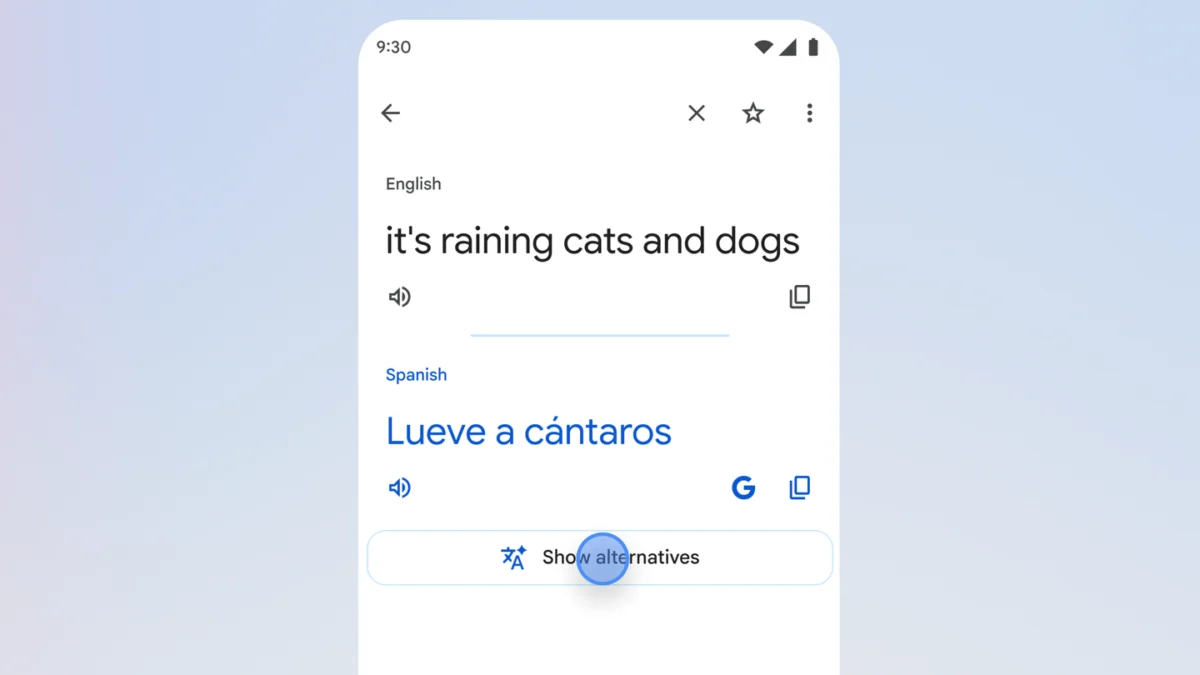
Google has officially announced a significant upgrade to its Translate platform, integrating the advanced multilingual capabilities of its Gemini artificial intelligence model to address long-standing challenges in linguistic nuance and cultural context. This latest development represents a shift in the philosophy of machine translation, moving away from literal word-for-word substitution toward a more sophisticated understanding of intent, tone, and regional variation. By leveraging the reasoning power of Large Language Models (LLMs), Google aims to provide users with the tools necessary to navigate complex social and professional interactions in foreign languages with greater accuracy and confidence.
The primary focus of this update is the introduction of features designed to help users "nail the tone" of a conversation. Whether a user is engaging in an informal hangout with friends or preparing for a high-stakes professional meeting, the AI-driven system now offers specific alternatives tailored to the social requirements of the setting. This is particularly relevant for translating idioms and colloquialisms—phrases that frequently lose their meaning when processed by traditional translation algorithms. For instance, a user attempting to translate the English idiom "It’s raining cats and dogs" will no longer receive a confusing literal translation in the target language. Instead, the system will provide culturally appropriate equivalents along with clear explanations of when and why to use them, ensuring the user avoids social faux pas or linguistic confusion.
Interactive Learning and Contextual Exploration
Beyond providing static translation options, Google is introducing two interactive features: "Understand" and "Ask." These tools are designed to transform Google Translate from a simple utility into a conversational learning assistant. By tapping "Understand," users are presented with a detailed overview of the nuances behind various translation options. This includes information on the level of formality, the emotional weight of certain words, and the cultural context that might make one phrasing more appropriate than another.
The "Ask" feature takes this a step further by allowing users to follow up with specific questions about their unique scenarios. This is a direct application of Gemini’s generative AI capabilities, enabling a dialogue between the user and the software. A traveler might ask for the specific way a phrase is spoken in a particular province of Spain compared to Mexico, or a business professional might ask how to adjust a sentence to sound more deferential in a Japanese corporate environment. This level of granular, dialect-specific advice has historically been a significant barrier for non-native speakers, and its inclusion marks a milestone in democratizing access to high-level linguistic expertise.
The Evolution of Google Translate: From Statistics to Generative AI
To understand the magnitude of this update, it is necessary to look at the chronological evolution of Google’s translation technology. Google Translate launched in April 2006 as a Statistical Machine Translation (SMT) service. At that time, it relied on analyzing vast amounts of United Nations and European Parliament transcripts to find patterns in language. While revolutionary, SMT often struggled with syntax and produced "robotic" results because it translated words in isolation or small clusters.
The first major paradigm shift occurred in 2016 with the introduction of Google Neural Machine Translation (GNMT). This system used deep learning to translate whole sentences at a time, significantly improving fluency and accuracy. However, even GNMT had limitations when it came to the "common sense" reasoning required to interpret metaphors or adapt tone based on the relationship between speakers.
The integration of Gemini in 2024 represents the third era of translation technology. Unlike its predecessors, Gemini is a multimodal, cross-functional AI that has been trained on a diverse range of data types. This allows it to understand the "intent" behind a query. By moving into the realm of generative AI, Google Translate can now simulate the role of a human translator who considers the "who, what, where, and why" of a conversation before offering a translation.
Market Context and Supporting Data
The global machine translation market is experiencing unprecedented growth, driven by the globalization of business and the increasing accessibility of high-speed internet. According to industry reports, the machine translation market was valued at approximately $800 million in 2022 and is projected to exceed $1.5 billion by 2030. Google Translate remains the dominant player in this space, supporting over 130 languages and serving more than 500 million users daily.
Internal data from Google suggests that a significant portion of translation queries are not just for single words, but for complex sentences where the user is uncertain of the social etiquette. The decision to roll out these features first in the United States and India is a strategic move based on linguistic data. India, in particular, represents a unique challenge and opportunity for AI translation due to its 22 official languages and hundreds of dialects. By testing Gemini’s capabilities in such a linguistically diverse environment, Google can refine the AI’s ability to handle code-switching (the practice of alternating between two or more languages in conversation) and regional slang.
Official Responses and Industry Impact
While Google’s official announcement emphasizes user experience, industry analysts view this as a competitive response to the rise of specialized AI translation tools like DeepL and the conversational capabilities of OpenAI’s ChatGPT. In recent months, users have increasingly turned to general-purpose LLMs to handle "translation with context," bypassing traditional translation apps. By embedding these capabilities directly into Translate, Google is working to reclaim its position as the primary portal for linguistic assistance.
Linguists and professional translators have expressed a mix of cautious optimism and scrutiny. Many argue that while AI can now mimic tone, it still lacks the "lived experience" necessary to understand the deepest layers of cultural sensitivity. However, the consensus among tech analysts is that these features will significantly lower the barrier for international trade and cross-cultural communication. For small business owners who cannot afford professional translation services, the ability to "ask" an AI for the correct dialectical phrasing could be the difference between a successful deal and a misunderstood proposal.
Broader Implications for Global Communication
The implications of this update extend beyond simple convenience. As AI becomes more adept at handling the nuances of human language, the concept of a "language barrier" begins to dissolve in new ways. The "Ask" feature, in particular, points toward a future where AI acts as a real-time cultural mediator. This could have profound effects on sectors such as:
- Education: Students learning a second language can use the "Understand" feature to grasp the "why" behind grammar and syntax, making the learning process more intuitive and less reliant on rote memorization.
- Diplomacy and Crisis Management: In fast-moving situations where professional interpreters may not be immediately available, the ability to clarify intent and tone can prevent misunderstandings that might otherwise escalate tensions.
- Digital Inclusion: For speakers of minority languages or specific dialects that have been historically underserved by tech companies, Gemini’s ability to process and explain regional variations offers a path toward greater digital representation.
However, the shift toward AI-mediated communication also raises questions about data privacy and the homogenization of language. As more people rely on Google’s suggested "tones," there is a risk that unique local expressions could be smoothed over in favor of the AI’s preferred "standard" versions. Google has addressed some of these concerns by emphasizing that the tool provides "alternatives" rather than a single "correct" answer, encouraging users to remain the final arbiters of their own speech.
Availability and Future Roadmap
The new AI-powered features are available starting today on the Google Translate app for both Android and iOS platforms in the United States and India. Google has confirmed that a web-based version of these features is currently in development and will be released in the near future.
Looking ahead, the company is expected to expand these capabilities to a wider range of languages and regions. There is also speculation among technology circles that these contextual features will eventually be integrated into Google’s wearable tech and real-time transcription services, such as those found in the Pixel Buds and Google Meet. This would enable real-time, tone-aware translation during live speech, a goal that has long been the "holy grail" of translation technology.
As Google continues to weave Gemini into its ecosystem, the update to Translate serves as a clear indicator of the company’s direction: moving away from providing mere data and toward providing actionable, contextual intelligence. In a world that is more connected yet more complex than ever, the ability to not just speak a language, but to be understood within its cultural framework, is a powerful tool for global synchronization.
