

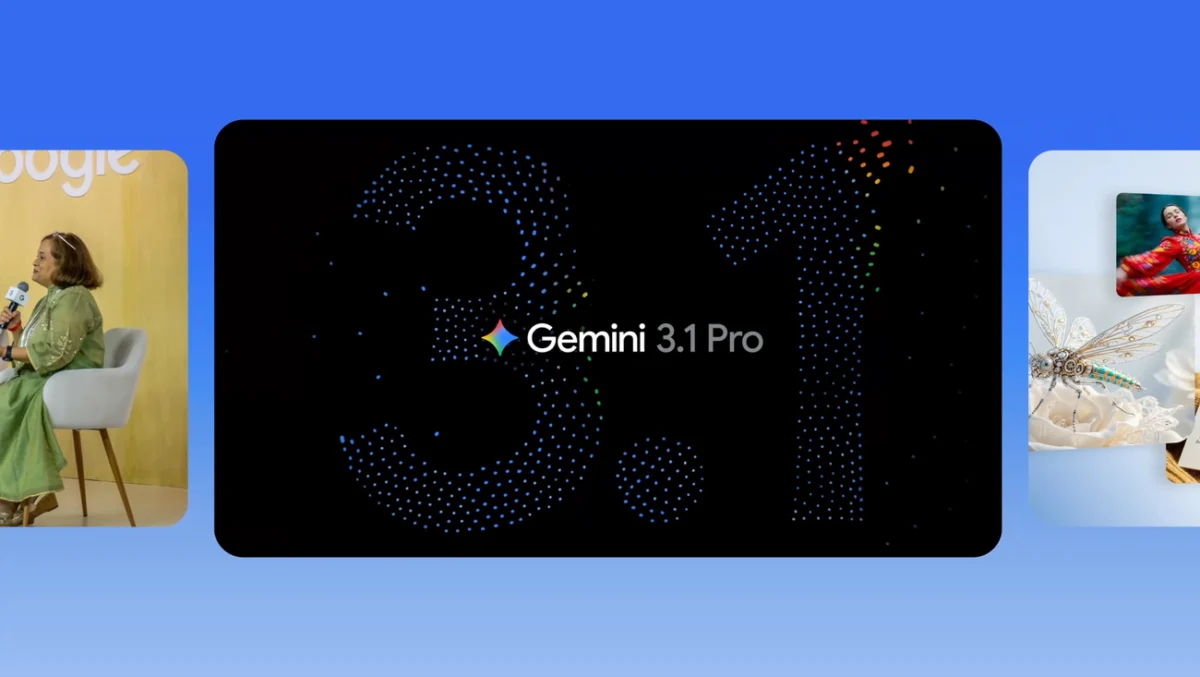
Google’s February trajectory signaled a decisive shift from experimental generative tools toward integrated, high-reasoning systems designed for real-world problem solving, underscored by a series of high-profile product launches and international policy summits. Throughout the month, the technology giant focused on three primary pillars: expanding its Gemini model family to address complex scientific reasoning, democratizing creative tools for multimodal content generation, and solidifying its role in global AI governance through the AI Impact Summit in India. These developments come as the industry faces increasing pressure to move beyond simple chatbots toward "agentic" AI capable of managing sophisticated workflows in fields as diverse as professional sports, molecular biology, and government administration.
A Strategic Chronology of February’s AI Milestones
The month began with a focus on infrastructure and international collaboration, centered on the AI Impact Summit in New Delhi. This event served as a platform for CEO Sundar Pichai to articulate a vision of "bold and responsible" AI development, specifically targeting the Global South as a primary beneficiary of emerging technologies. Following the summit, Google pivoted to consumer and developer releases, launching Gemini 3.1 Pro and the specialized Gemini 3 Deep Think model.
Mid-month, the focus shifted to creativity and accessibility. The company released Nano Banana 2, a model optimized for speed and high-fidelity image generation, alongside Lyria 3, an advanced music generation tool integrated into the Gemini ecosystem. The month concluded with a demonstration of AI’s practical utility in high-stakes environments, highlighting a partnership with Team USA for the Olympic Winter Games and participating in the Munich Security Conference to discuss digital resilience and cybersecurity.
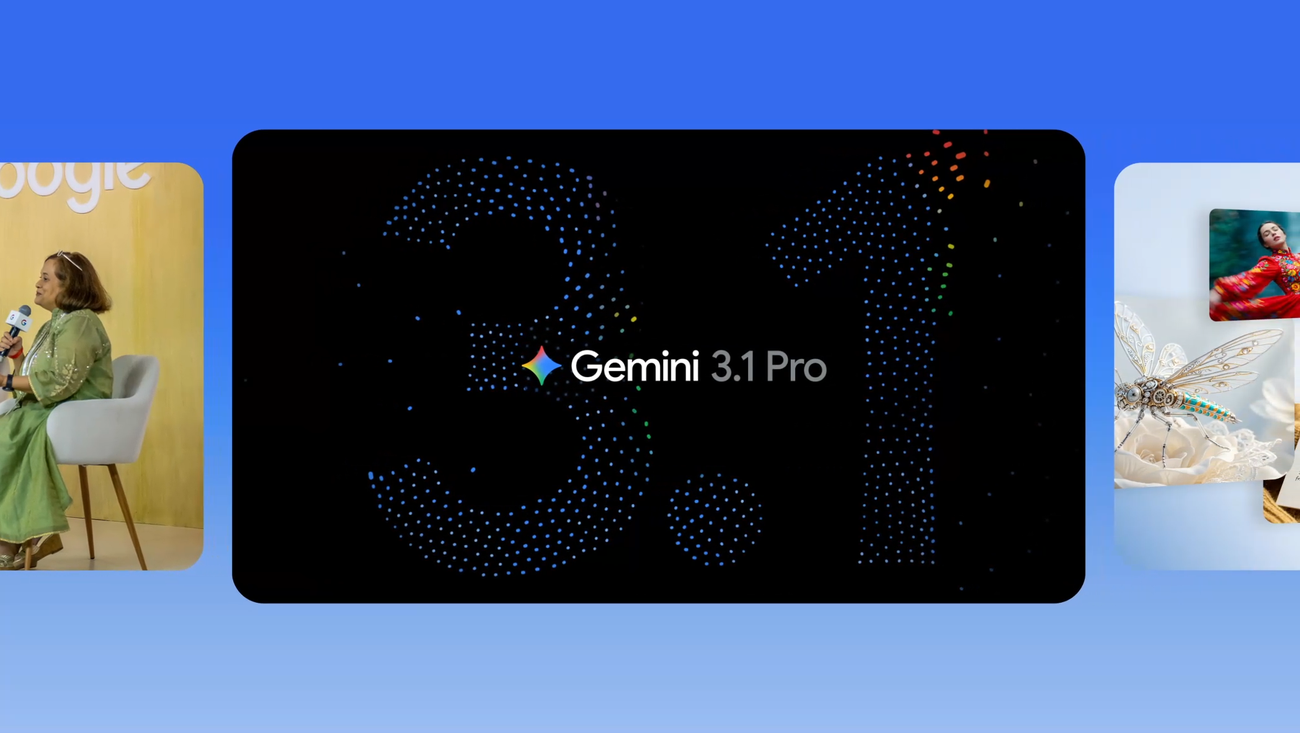
The AI Impact Summit: India as a Global Testing Ground
The AI Impact Summit in India represented more than a regional update; it was a statement of intent regarding Google’s long-term geopolitical and economic strategy. By choosing New Delhi as the venue, Google tapped into one of the world’s largest developer ecosystems and a government increasingly eager to integrate AI into public services.
Sundar Pichai’s opening remarks emphasized that AI is not merely a tool for efficiency but a foundational technology for "dreaming bigger." To support this, Google announced new national partnerships in India aimed at accelerating AI-powered science and education. These initiatives include the Global Impact Challenge for AI in Government, which seeks to identify and scale solutions for public administration, and a specific call for AI in science to help researchers manage vast datasets in genomics and climate modeling.
Supporting this software push is a massive investment in physical infrastructure. Google highlighted its "America-India Connect" subsea cable projects and data center expansions, which are designed to reduce latency and provide the computational power necessary for localized AI processing. This infrastructure is critical for the "Grow with Google" initiative, which launched new AI professional certificates to train the next generation of workers in AI-ready skills.
Technical Evolution: The Rise of Reasoning Models
The most significant technical announcement of the month was the release of Gemini 3.1 Pro and Gemini 3 Deep Think. These models represent Google’s answer to the industry-wide push for "reasoning" capabilities—AI that doesn’t just predict the next word but "thinks" through multi-step problems.

Gemini 3.1 Pro
Gemini 3.1 Pro was introduced as a smarter, more capable baseline model for complex tasks. Internal benchmarking suggests the 3.1 Pro model demonstrates more than double the reasoning performance of its predecessor, Gemini 3 Pro. This model is specifically engineered for "long-context" applications, such as synthesizing data from hundreds of pages of documents or pulling together creative projects from disparate sources. By making this model available across developer, enterprise, and consumer platforms, Google is attempting to standardize high-level reasoning as a standard feature rather than a niche capability.
Gemini 3 Deep Think
While 3.1 Pro handles general complexity, Gemini 3 Deep Think is a specialized tool developed in collaboration with Google DeepMind’s research teams. This model is tailored for the messy, non-binary environments of science and engineering. Unlike standard LLMs that may struggle with mathematical proofs or structural engineering simulations, Deep Think is designed to deliver actionable results where solutions are not "black and white." Currently available to Google AI Ultra subscribers and via a selective API waitlist, Deep Think represents a pivot toward the "expert AI" market, where precision and verifiable logic are more important than conversational fluency.
Multimodal Creativity: Nano Banana 2 and Lyria 3
In the creative sector, Google addressed the demand for faster, higher-quality visual and audio generation. The release of Nano Banana 2 marked a significant milestone in image generation efficiency. By combining the high-quality output of "Pro" models with the low-latency speed of "Flash" models, Nano Banana 2 allows for near-instantaneous image creation within the Gemini app and Google Search.
For developers, Nano Banana 2 offers a compelling price-performance ratio, enabling the deployment of visual creation tools at scale without the prohibitive compute costs usually associated with high-fidelity models. To mitigate the risks of synthetic media, Google also updated SynthID, its watermarking technology, to ensure that content generated by Nano Banana 2 can be identified and verified by digital platforms.

Simultaneously, the launch of Lyria 3 brought advanced music generation to the masses. Users can now generate 30-second tracks with custom cover art by simply providing a text prompt or an image. The addition of ProducerAI to Google Labs further expands this ecosystem, offering a "partner" for lyric refinement and melody construction, moving AI from a simple generator to a collaborative creative assistant.
Industrial Applications: Sports Analytics and Cybersecurity
Google’s February updates also showcased AI’s role in high-performance environments and global security. The partnership with Team USA and U.S. Ski & Snowboard highlighted the practical application of "spatial intelligence."
Using Google DeepMind’s research, Google Cloud developed a tool that maps an athlete’s motion from standard 2D video. This is particularly difficult in winter sports, where bulky gear often obscures body mechanics. The AI analyzes tricks and movements in near real-time, providing coaches with feedback that was previously only available through expensive, sensor-heavy laboratory setups. This "edge" in performance analysis is expected to be a key factor for athletes preparing for the upcoming Olympic Winter Games.
On the security front, Google President of Global Affairs Kent Walker addressed the 62nd Munich Security Conference (MSC). Walker called for a new framework of "digital resilience," arguing that traditional security measures are insufficient against AI-driven threats. He outlined a collaborative approach where nations and private entities work together to build secure AI infrastructure without compromising data sovereignty. This advocacy reflects Google’s broader effort to position itself as a responsible steward of AI technology in an increasingly fractured geopolitical landscape.

Supporting Data and Market Analysis
The breadth of Google’s February announcements reflects a broader trend in the AI market: the transition from "General AI" to "Applied AI." According to industry analysts, the global AI market is expected to grow at a compound annual growth rate (CAGR) of over 35% through 2030, with much of that growth driven by enterprise adoption of reasoning models and specialized industrial tools.
Google’s emphasis on "price-performance" with Nano Banana 2 and the wide availability of Gemini 3.1 Pro suggests a strategy aimed at capturing market share from competitors like OpenAI and Anthropic. By integrating these tools directly into its existing ecosystem—Search, Workspace, and Android—Google is leveraging its massive distribution network to ensure its AI becomes the default choice for both casual users and professional developers.
Furthermore, the focus on India (which is projected to have the world’s largest developer population by 2027) positions Google to lead in the next wave of global digital transformation. The $10 billion Google for India Digitization Fund, launched in previous years, continues to provide the financial backing for these February initiatives, ensuring that the company’s AI tools are deeply embedded in the country’s burgeoning tech economy.
Broader Impact and Future Implications
The developments of February 2026 suggest that Google is no longer content with merely matching the capabilities of its rivals; it is seeking to redefine the parameters of the AI race. By focusing on "Deep Think" and scientific reasoning, Google is moving into high-value sectors like pharmaceuticals, aerospace, and climate tech, where the economic impact of AI could be measured in trillions of dollars.

As these tools become more pervasive, the focus will likely shift toward regulation and safety. The updates to SynthID and Kent Walker’s remarks at the Munich Security Conference indicate that Google is aware of the potential for AI to be used for misinformation or cyberwarfare. The company’s success in the coming months will depend not only on the technical prowess of its models but also on its ability to navigate the complex ethical and regulatory landscape that its own innovations are helping to create.
In conclusion, February was a month of consolidation and expansion for Google’s AI ambitions. From the slopes of the Winter Olympics to the high-level boardrooms of New Delhi and Munich, the company demonstrated that AI is moving out of the lab and into every facet of modern life. With the release of Gemini 3.1 Pro and the specialized Deep Think models, Google has set a new benchmark for what reasoning-based artificial intelligence can achieve on a global scale.
