

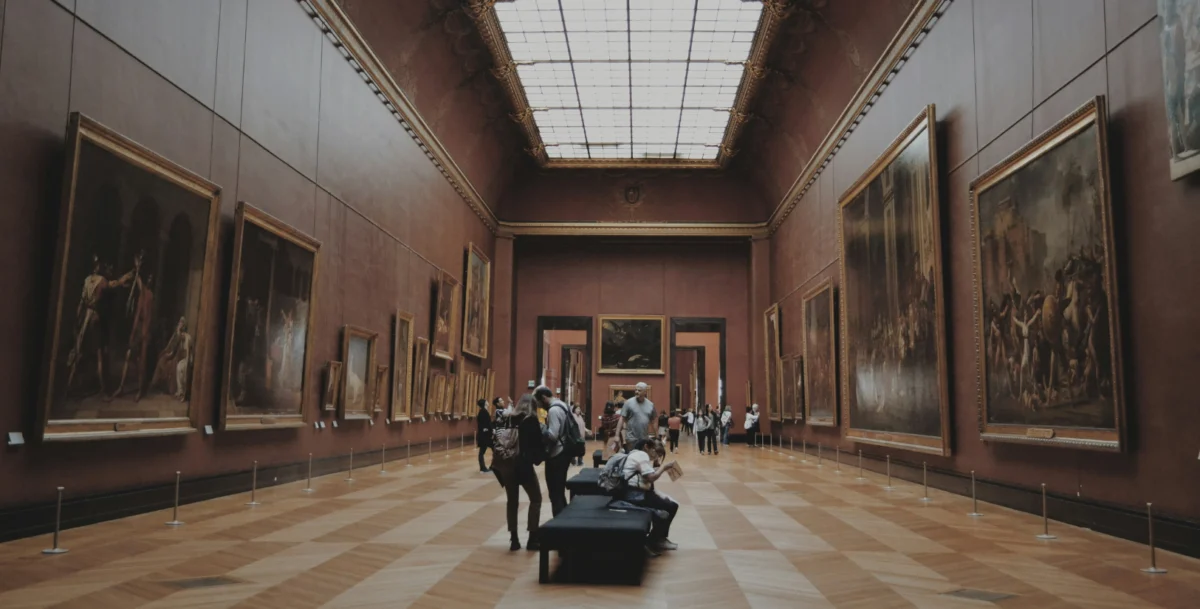
The complexities of modern decision-making often lead leaders to seek a "silver bullet" or a singular masterpiece that guarantees success. However, as explored in Episode 280 of the Anecdotally Speaking podcast, the historical relationship between art dealer Daniel-Henry Kahnweiler and the legendary artist Pablo Picasso suggests that true success lies not in the ability to predict a single winner, but in the strategic management of a broad portfolio. This episode, hosted by Shawn Callahan and Mark Schenk of Anecdote International, delves into how an unconventional 20th-century art contract provides a robust framework for contemporary business challenges, including risk mitigation, productivity, and the management of unpredictable innovation.
The Myth of the Expert Eye and the Kahnweiler Shift
In the traditional narrative of the art world, the dealer is often portrayed as a visionary with an almost supernatural "eye" for talent. The prevailing myth suggests that successful dealers spend their careers sifting through thousands of mediocre works to find the one canvas that will eventually sell for millions at auction. This model of "picking the winner" is mirrored in many corporate environments where executives attempt to identify the single "killer app" or the perfect marketing campaign before committing resources.
Daniel-Henry Kahnweiler, a German-born art dealer who opened his gallery in Paris in 1907, rejected this paradigm. Kahnweiler recognized a fundamental truth that many modern businesses struggle to accept: the future value of a creative or innovative output is inherently unpredictable. Instead of attempting to forecast which of Picasso’s works would become iconic, Kahnweiler focused on securing the entirety of the artist’s output. By doing so, he transitioned from a gambler betting on individual pieces to a strategist managing a comprehensive asset class.
The 1912 Contract: A Blueprint for Total Acquisition
The core of Kahnweiler’s success was a series of exclusive contracts, most notably those established around 1912. At a time when Picasso was moving into the revolutionary and often misunderstood phase of Analytical Cubism, Kahnweiler proposed a deal that was radical for its era. He agreed to purchase every work Picasso produced over a fixed period—initially three years.
The contract was meticulously structured to provide both security for the artist and a scalable inventory for the dealer. Kahnweiler established fixed price points based on the medium and size of the work:
- Oil Paintings: Categorized by canvas size, with set prices for each dimension.
- Gouaches and Drawings: Priced according to a standard scale.
- Exclusions: Picasso was permitted to retain five works of his choosing each year for his personal collection, a clause that allowed the artist to keep pieces of sentimental or experimental value.
This arrangement provided Picasso with a guaranteed income, freeing him from the financial pressures of the market and allowing him to focus exclusively on his creative output. For Kahnweiler, the contract ensured that he owned the "long tail" of Picasso’s career. He understood that while 90% of the works might never reach legendary status, the remaining 10% would appreciate so significantly that they would subsidize the entire operation.

Historical Context: The Birth of Cubism and the Bateau-Lavoir
To understand the risk Kahnweiler took, one must consider the state of the art world in the early 1900s. Picasso was not yet a household name; he was a struggling artist living in the Bateau-Lavoir, a dilapidated tenement in Montmartre. When he painted Les Demoiselles d’Avignon in 1907, it was met with shock and derision even by his closest peers.
Kahnweiler, however, was one of the few who recognized the intellectual rigor behind the Cubist movement. By representing not just Picasso, but also Georges Braque, Juan Gris, and Fernand Léger, Kahnweiler effectively cornered the market on an entire movement. His gallery became the epicenter of the avant-garde. This period of art history serves as a case study in "market making." Rather than waiting for a market to exist for Cubism, Kahnweiler created the market by providing the financial stability necessary for the artists to define the movement.
Chronology of the Kahnweiler-Picasso Partnership
- 1907: Kahnweiler opens his small gallery at 28 rue Vignon, Paris. He meets Picasso and views Les Demoiselles d’Avignon.
- 1908–1911: Kahnweiler begins buying works from Picasso and Braque, gradually moving toward an exclusive arrangement.
- 1912: The formalization of the "purchase-all" contract. This period marks the height of Synthetic Cubism.
- 1914: World War I breaks out. As a German national living in France, Kahnweiler is forced into exile in Switzerland. His gallery’s stock, including hundreds of works by Picasso, is sequestered by the French government.
- 1921–1923: The sequestered works are sold at the Hôtel Drouot in a series of auctions. The influx of so many works at once temporarily depressed prices, but ultimately solidified the provenance and historical importance of the collection.
- Post-1920s: Kahnweiler returns to Paris and founds the Galerie Simon (later Galerie Louise Leiris), continuing his support of the Cubist masters until his death in 1979.
Analyzing the Data: The Prolificacy of Picasso
The effectiveness of Kahnweiler’s strategy is best illustrated by the sheer volume of Picasso’s output. Picasso is widely considered one of the most prolific artists in history. The Zervos Catalogue Raisonné, the definitive record of Picasso’s work compiled by Christian Zervos, spans 33 volumes and contains over 16,000 paintings and drawings.
When including prints, sculptures, ceramics, and sketches, some estimates place Picasso’s total lifetime production at over 50,000 distinct works. Kahnweiler’s insight was grounded in the law of large numbers. In any field characterized by high uncertainty—be it art, venture capital, or pharmaceutical R&D—the probability of producing a "hit" is a function of total volume. By owning a three-year slice of Picasso’s most innovative period, Kahnweiler was statistically certain to possess masterpieces, even if he could not identify them at the moment of their creation.
Supporting Analysis: Portfolio Theory in Business
The "Kahnweiler Approach" shares striking similarities with modern financial and operational theories:
1. The Venture Capital Model
Modern venture capital firms operate on the "Power Law." They expect that out of ten investments, six or seven will fail, two will provide modest returns, and one will be a "home run" (a 100x return) that pays for the entire fund. Kahnweiler was essentially the first venture capitalist of the art world, treating Picasso’s studio as a startup incubator.
2. Prototyping and Iteration
In the podcast, Callahan and Schenk discuss how this strategy applies to productivity and innovation. In a corporate setting, the "expert" often tries to perfect a single idea before launching it. The Kahnweiler/Picasso model suggests that "quantity leads to quality." By producing a high volume of "prototypes," a company increases its chances of discovering a breakthrough.

3. Avoiding the Illusion of Certainty
Psychologically, humans are prone to the "hindsight bias," believing that successes were obvious from the start. Kahnweiler’s strategy was an exercise in intellectual humility. He admitted he did not know which painting would be the next Guernica. This humility allowed him to avoid the catastrophic risk of over-investing in a single "sure thing" that might ultimately fail.
Official Responses and Broader Implications
While there are no contemporary "official statements" from the long-deceased Kahnweiler, his memoirs and the writings of his contemporaries confirm his strategic intent. He often spoke of the necessity of "protecting the artist from the market," a sentiment that resonates with modern leadership theories regarding the creation of "psychological safety" in the workplace. When employees feel their entire "output" is valued rather than just their "wins," they are more likely to take the creative risks necessary for innovation.
The broader implications for leadership are significant. In an era of rapid technological change and market volatility, the ability to manage a portfolio of experiments is more valuable than the ability to make a single correct prediction. Organizations that adopt a "Kahnweiler mindset" focus on:
- Sustainability: Ensuring the "creator" (whether a designer, engineer, or strategist) has the resources to continue working through fallow periods.
- Diversity of Output: Encouraging a wide range of ideas rather than forcing early convergence on a single concept.
- Long-term Value: Recognizing that the true worth of an innovation may not be realized for years or even decades.
Conclusion: The Legacy of the Anecdote
Episode 280 of Anecdotally Speaking serves as a reminder that the stories we tell about history shape our current business practices. By reframing the story of Daniel-Henry Kahnweiler, Callahan and Schenk provide a compelling argument for moving away from the "expert picker" model toward a more resilient, portfolio-based approach to decision-making.
Kahnweiler did not just sell paintings; he managed risk and enabled genius. His legacy is not found in a single masterpiece, but in the 34 volumes of cataloged work that define the career of the 20th century’s most influential artist. For modern leaders, the lesson is clear: stop trying to find the masterpiece, and start building the system that allows masterpieces to emerge.
