

The linguistic landscape of South Korea is defined by a sophisticated system of honorifics and speech levels that dictate social interactions, a complexity most visible during personal milestones such as birthdays. For international observers and language learners, mastering the phrase "Happy Birthday" in Korean requires more than simple translation; it necessitates an understanding of the hierarchical structure of the Korean language, the cultural significance of specific rituals, and recent legislative changes that have overhauled how age is calculated within the country. As South Korea continues to project its cultural influence globally through the Hallyu wave, the demand for nuanced understanding of these social protocols has reached an all-time high.
The Linguistic Framework of Korean Birthday Greetings
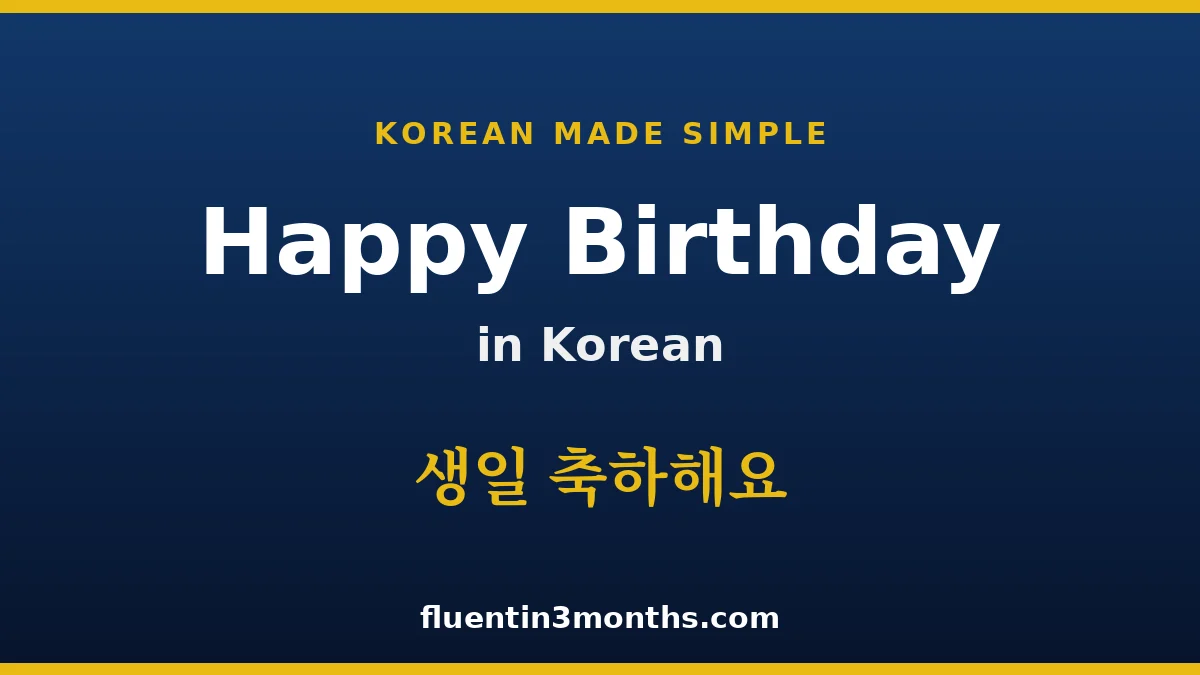
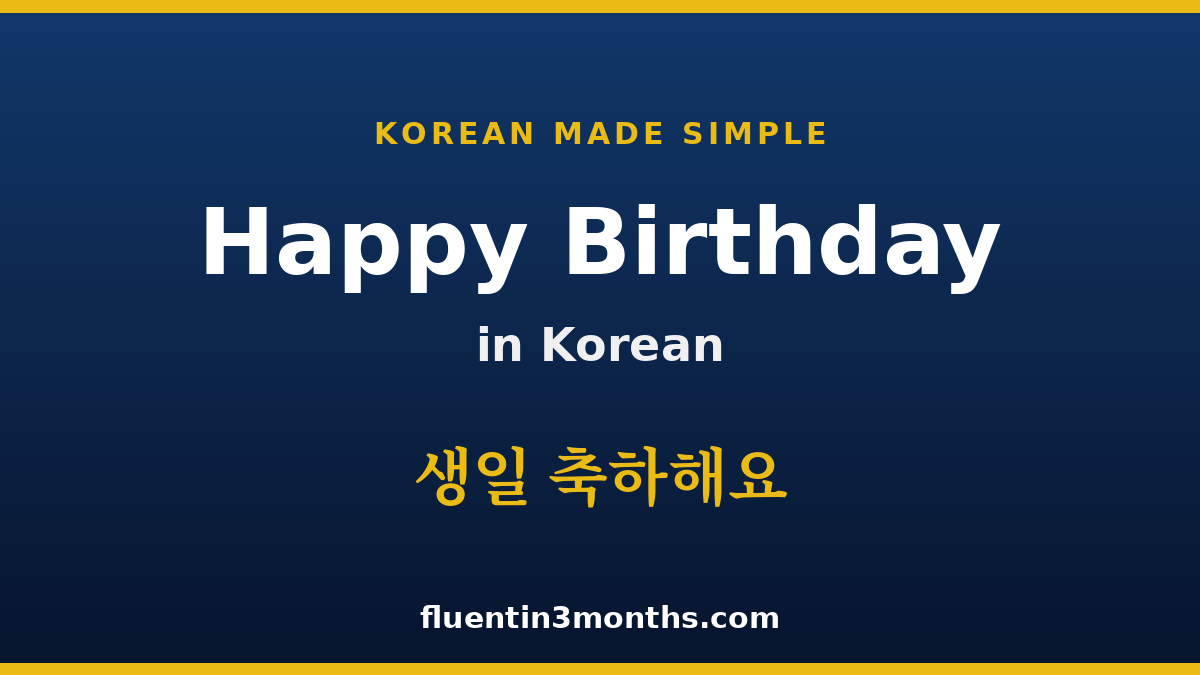
In the Korean language, the standard and most versatile way to express birthday wishes is saengil chukhahaeyo (생일 축하해요). This phrase utilizes the polite ending -yo, making it appropriate for a wide range of social scenarios, including interactions with colleagues, acquaintances, and those of a similar social standing. However, the rigid structure of Korean etiquette demands that speakers adjust their vocabulary based on the seniority and relationship of the person they are addressing.
Linguistic experts categorize Korean birthday greetings into four primary tiers. At the casual level, used among close friends or by older individuals addressing younger ones in a familiar setting, the phrase is shortened to saengil chukhae (생일 축하해). This "banmal" or informal speech is strictly reserved for established relationships where mutual consent for casual language has been reached. Using this form with a stranger or a superior is often considered a significant social faux pas.
For formal settings, such as business environments or public ceremonies, the phrase becomes saengil chukhahamnida (생일 축하합니다). This version uses the high-formal -nida ending, conveying a sense of professional respect and ceremony. The most elevated form, however, involves a complete shift in vocabulary to honorifics. When addressing grandparents, parents, or highly respected elders, the word for birthday changes from saengil to saengsin (생신), and the verb for "congratulate" is paired with the humble verb deurida (드리다), meaning "to offer." The resulting phrase, saengsin chukha-deurimnida (생신 축하드립니다), represents the pinnacle of linguistic deference in Korean culture.
The 2023 Legislative Shift: Harmonizing Korean Age with International Standards
A significant turning point in the contemporary history of Korean birthdays occurred in June 2023, when the South Korean government officially moved to standardize age calculation. Prior to this amendment, South Korea utilized three distinct systems for determining a person’s age, often leading to administrative confusion and social disputes.
The traditional system, known as "Korean Age" (seneun nai), dictated that a baby is one year old at the moment of birth, accounting for the time spent in the womb. Furthermore, everyone in the country would collectively "age up" on New Year’s Day, regardless of their actual birth date. This meant that a child born on December 31st would technically become two years old the following day.
The second system, "Year Age" (yeon nai), calculated age by subtracting the birth year from the current year, a method used primarily for the legal drinking age and military conscription. The third system was the "International Age" (man nai), used in medical and legal documents.
On June 28, 2023, the Ministry of Government Legislation enacted amendments to the Civil Act and the General Act on Public Administration to establish the international system as the definitive standard. According to government officials, this change was intended to reduce "unnecessary social and economic costs" resulting from the mixed use of age systems. While the traditional "Korean Age" remains a common fixture in social conversations and informal settings, the legal shift has simplified pension eligibility, insurance calculations, and administrative procedures. Analysts suggest that this transition reflects a broader trend of South Korea aligning its domestic policies with global norms while navigating the persistence of traditional social customs.
Rituals of Sustenance: The Significance of Miyeokguk
Beyond the spoken word, the Korean birthday is anchored by specific culinary traditions, most notably the consumption of miyeokguk (미역국), or seaweed soup. This tradition is deeply rooted in the history of maternal health and filial piety. Rich in iodine and calcium, seaweed soup has been the primary postpartum meal for Korean mothers for centuries, believed to aid in blood purification and recovery.
By eating miyeokguk on their birthday, individuals perform a symbolic act of remembering their mother’s labor and the care provided during their infancy. It serves as a annual reminder of the bond between parent and child, reinforcing the Confucian values that underpin Korean society. While modern celebrations often include Western-style cakes and parties, the presence of miyeokguk remains a non-negotiable element for most Korean households, serving as a bridge between ancestral heritage and modern lifestyle.
The First Birthday: Doljanchi and the Prediction of Fate
In the hierarchy of Korean birthdays, none is more significant than the first birthday, known as Doljanchi (돌잔치). Historically, this celebration carried immense weight due to high infant mortality rates; reaching the one-year mark was a milestone that signaled a child’s survival and future potential.
The centerpiece of the Doljanchi is the Doljabi (돌잡이) ceremony. During this ritual, the child is placed before a variety of symbolic objects, such as thread, money, books, or brushes. The first object the child picks up is believed to predict their future path: thread symbolizes longevity, money represents wealth, and a book or brush indicates a future as a scholar or intellectual. In contemporary celebrations, new objects like microphones (for entertainers) or stethoscopes (for doctors) are often added, reflecting modern career aspirations. This event is typically a large social gathering, involving extended family and friends, and remains one of the most vibrant displays of Korean cultural identity.
Linguistic Evolution and the Influence of the Global Stage
The globalization of Korean culture has led to a fascinating evolution in how these traditions are perceived and practiced. The "Korean Birthday Song," which utilizes the melody of the Western "Happy Birthday to You" but with Korean lyrics (Saengil chukha-hamnida…), is now recognized by millions of non-Koreans through K-Dramas and K-Pop content.
This global exposure has also placed a spotlight on the unique phonetic and orthographic nature of the Korean writing system, Hangul. Created by King Sejong the Great in 1443, Hangul was designed to be easily learned by the common people. The scientific nature of the script—where consonants are shaped after the speech organs—allows for a more precise pronunciation of birthday greetings than Romanized versions can provide. For instance, the transition of sounds in saengil (생일) often leads to a "linking" effect in natural speech, a nuance that is vital for those seeking fluency.
Socio-Economic Implications of Cultural Protocols
The insistence on correct birthday etiquette is not merely a matter of politeness; it has practical implications in the Korean workplace. In the "K-Office" environment, birthdays are often used as a means of reinforcing team cohesion and hierarchy. Knowing the correct honorific to use for a supervisor’s birthday or participating in the communal eating of seaweed soup can influence social standing within a corporate structure.
Furthermore, the 2023 age law change has sparked a national dialogue about the "seniority" culture. In Korea, even a one-year difference in age can dictate the level of speech used between two people. With the shift to international age, some citizens reported confusion over whether to maintain their social hierarchy based on birth year or their new legal age. Sociologists argue that while the law has changed the numbers on paper, the underlying cultural respect for seniority—which is tied more to birth order than legal status—will likely persist for generations.
Conclusion: A Synthesis of Tradition and Modernity
The act of celebrating a birthday in South Korea is a complex synthesis of linguistic precision, historical reverence, and modern legal standards. From the four distinct ways to say "Happy Birthday" to the legislative overhaul of age calculation, these practices offer a window into the values of a society that deeply respects its past while aggressively modernizing for the future.
For the international community, understanding these nuances is essential for meaningful engagement with Korean culture. Whether it is through the symbolic choice of an object at a Doljanchi or the respectful utterance of saengsin chukha-deurimnida to an elder, these traditions continue to define the social fabric of the Korean Peninsula. As the world becomes increasingly interconnected, the persistence of these unique customs ensures that the Korean birthday remains a profound expression of identity, gratitude, and community.
