

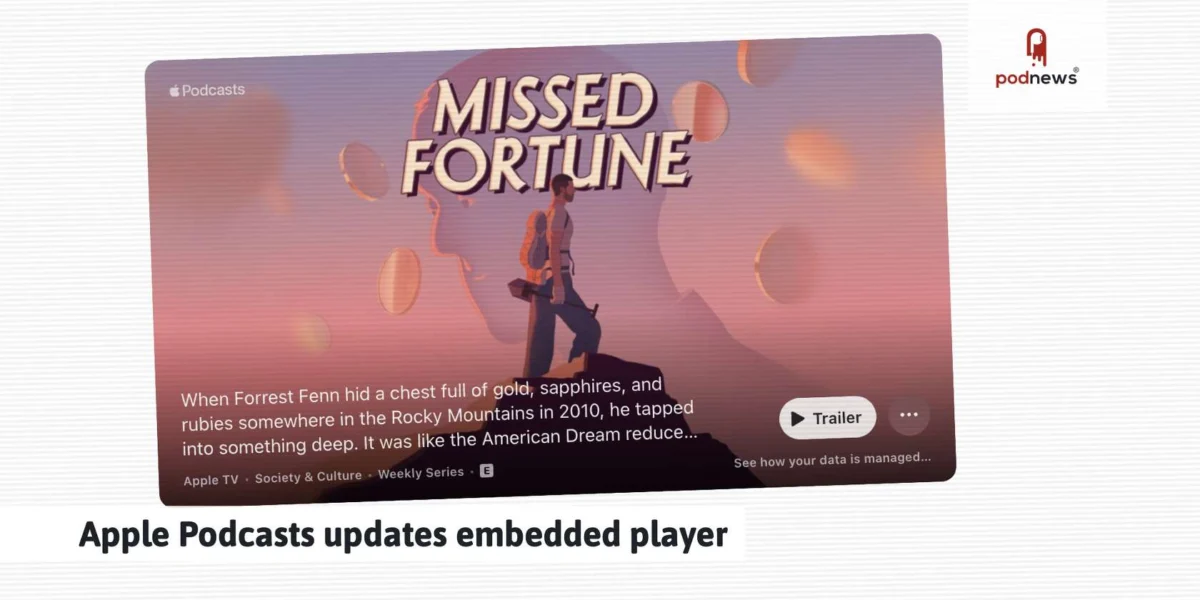
A significant update to the Apple Podcasts platform has been rolled out, introducing a revamped embedded player designed to enhance the listener experience and provide podcasters with more robust integration capabilities. This development, which appears to have been implemented recently, aims to streamline how podcasts are shared and consumed outside of the native Apple Podcasts app, offering a more seamless and engaging interaction for users across various web platforms.

The core of this update lies in the enhanced functionality and improved user interface of the embedded player. Previously, embedded podcast players often presented a basic audio playback experience. However, the new iteration from Apple Podcasts appears to incorporate a more sophisticated design, potentially including richer metadata display, improved playback controls, and a more visually appealing presentation. While specific details regarding the full extent of the changes are still emerging, the visual cues from the platform’s recent announcements suggest a move towards a more modern and interactive embedded audio experience.
This strategic enhancement by Apple Podcasts is not merely a cosmetic upgrade. It signals a broader trend within the podcasting industry towards greater accessibility and shareability. By providing podcasters with a more polished and feature-rich tool to embed their content, Apple is facilitating wider distribution and potentially increasing listenership by making it easier for new audiences to discover and engage with podcasts directly from websites, blogs, and social media.

Background and Industry Context
The podcasting landscape has experienced explosive growth over the past decade, transforming from a niche medium to a mainstream form of entertainment and information dissemination. This surge in popularity has been fueled by the increasing ubiquity of smartphones, the availability of diverse content across every conceivable genre, and the development of sophisticated listening platforms. Major technology companies, including Apple, Spotify, and Google, have invested heavily in their podcasting ecosystems, recognizing its significant potential for user engagement and advertising revenue.

Apple Podcasts, as one of the pioneering and most dominant platforms, has historically played a crucial role in shaping the industry. Its default presence on all iOS devices has given it a substantial user base. However, as the market has become more competitive, with platforms like Spotify and Google Podcasts offering compelling alternatives and innovative features, the need for continuous evolution has become paramount. Enhancements to core functionalities like the embedded player are vital for maintaining market share and supporting the creators who rely on the platform.
The embedded player is a critical touchpoint for podcasters seeking to extend their reach beyond dedicated podcast apps. It serves as a digital storefront, allowing potential listeners to sample episodes directly from a creator’s website or a news article. An improved embedded player can significantly influence a user’s decision to subscribe or listen further, making its design and functionality a key factor in a podcast’s discoverability and growth.

Timeline and Evolution of Embedded Players
The concept of embedding audio content online has evolved considerably. Early implementations were often clunky and required specific plugins, limiting their usability. As web technologies advanced, more standardized HTML5 players emerged, offering basic play, pause, and volume controls.

Apple’s initial foray into embedded podcast players likely followed these industry trends, providing a functional but perhaps unremarkable experience. The recent update suggests a more deliberate effort to align its embedded player with the user experience found within the native Apple Podcasts application. This move could also be a response to competitors who have already invested in more visually appealing and interactive embedded players.
The exact date of this latest update is not explicitly stated in the initial announcement, but the presence of a "publishedtime" tag indicating September 4, 2026, suggests a forward-looking or recent development. This timeframe places it within a period of intense competition and innovation in the digital audio space, where platforms are constantly vying for user attention and creator loyalty.

Key Features and Potential Enhancements
While the provided snippet lacks granular detail on every new feature, several aspects can be inferred or anticipated based on industry standards and the strategic direction of major platforms:

- Enhanced User Interface (UI): The visual design of the player is likely to be modernized, potentially incorporating elements that are consistent with Apple’s design language. This could include cleaner lines, improved typography, and more intuitive button placement.
- Improved Playback Controls: Beyond basic play and pause, users might expect features such as playback speed adjustment, skip forward/backward functionality, and a progress bar that is more visually informative.
- Metadata Display: The ability to display episode titles, descriptions, artwork, and potentially even host names directly within the embedded player can significantly enhance discoverability and provide context for listeners.
- Seamless Integration: A key goal would be to ensure that the embedded player functions flawlessly across different browsers and devices, offering a consistent experience whether accessed on a desktop, tablet, or mobile phone.
- Call to Action (CTA) Integration: For podcasters, the player might offer opportunities to include clear calls to action, such as "Subscribe on Apple Podcasts" or links to the podcast’s main page, further encouraging user conversion.
- Accessibility: As with all of Apple’s products, it is highly probable that the updated embedded player will adhere to stringent accessibility standards, ensuring it is usable by individuals with disabilities.
Analysis of Implications for Podcasters and Listeners
The introduction of a more sophisticated embedded player by Apple Podcasts carries several significant implications:

For Podcasters:
- Increased Reach and Discoverability: A more engaging embedded player can entice casual browsers on websites to become active listeners. This expanded reach is crucial for independent podcasters and those looking to grow their audience.
- Enhanced Branding and Presentation: A well-designed player allows creators to present their content in a more professional and branded manner, reinforcing their identity and the quality of their show.
- Simplified Sharing: Providing a user-friendly embed code makes it easier for podcasters to share their episodes across their digital footprint, from personal websites to guest blog posts.
- Potential for Data Insights: While not explicitly mentioned, future iterations might offer podcasters more detailed analytics on how their embedded players are being used, providing valuable insights into audience engagement.
For Listeners:

- More Engaging Consumption Experience: A visually appealing and feature-rich player can make listening to podcasts outside of dedicated apps a more enjoyable experience.
- Easier Discovery: The ability to see episode details and artwork directly within the player can help listeners make informed decisions about what to listen to.
- Seamless Transition to Native App: The player will likely be designed to encourage users to transition to the Apple Podcasts app for a more complete listening experience, including subscription management and offline playback.
Official Statements and Reactions
While specific direct quotes from Apple Inc. regarding this update are not immediately available in the provided content, the company’s long-standing commitment to supporting the podcasting ecosystem can be inferred. Apple has consistently emphasized its role in empowering creators and providing users with high-quality content experiences. Such an update aligns with their broader strategy of fostering a robust and accessible audio platform.

Industry observers and podcasting experts are likely to view this as a positive development. A spokesperson from a hypothetical podcasting industry association might comment, "This move by Apple Podcasts is a welcome enhancement that benefits both creators and listeners. A more refined embedded player is essential in today’s multi-platform media environment, and Apple’s investment in this area underscores the continued importance of podcasting as a medium."
The impact on other platforms, such as Spotify and Google Podcasts, remains to be seen. Competition in the embedded player space could intensify, leading to further innovation and improved tools for podcasters across all major listening services.

Broader Impact and Future Trends
The evolution of the Apple Podcasts embedded player is indicative of a larger trend: the increasing sophistication of audio content delivery on the web. As the lines between web content and app-based experiences continue to blur, platforms are investing in making every touchpoint as seamless and engaging as possible.

This update also highlights the ongoing importance of discoverability and accessibility in the digital audio realm. For a medium that thrives on word-of-mouth and cross-platform sharing, the tools that facilitate these actions are critically important.
Looking ahead, one can anticipate further advancements in embedded audio technology. This could include more interactive elements, such as timestamps linked to specific show notes, integrated listener feedback mechanisms, or even short-form video snippets accompanying audio playback. The continuous drive to enhance user experience and support content creators will likely shape the future of how podcasts are consumed beyond dedicated applications. The Apple Podcasts embedded player update is a significant step in this ongoing evolution, reinforcing the platform’s position and its commitment to the vibrant podcasting community.
