

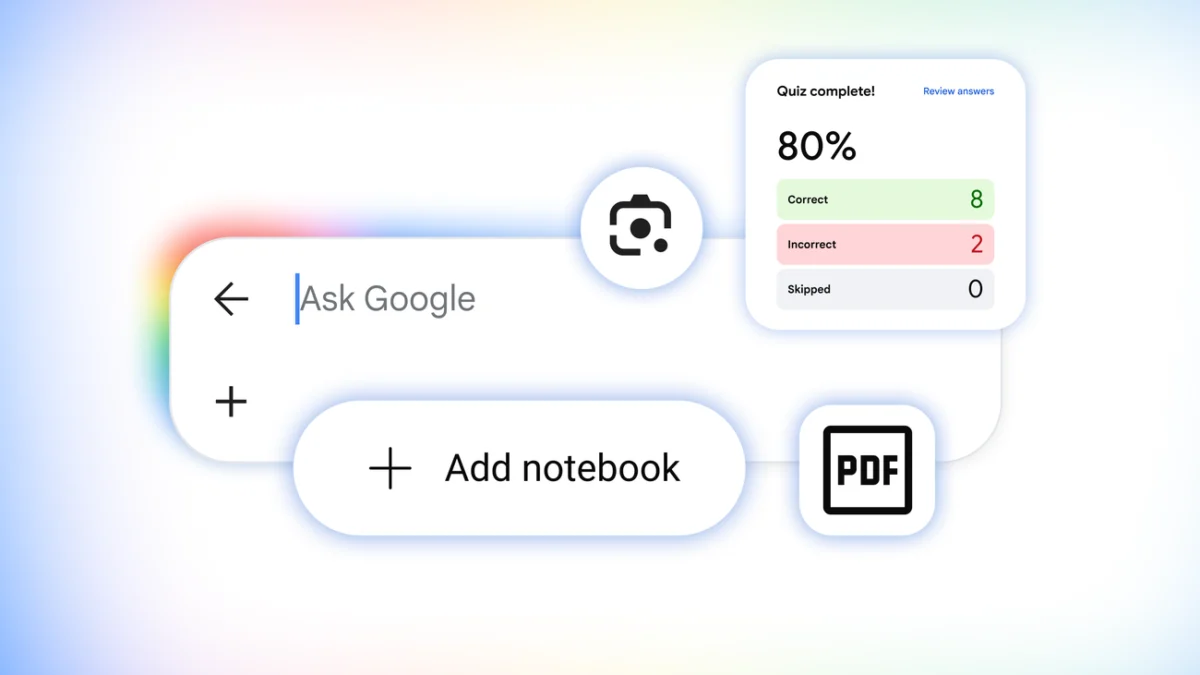
Google has announced a significant expansion of its artificial intelligence capabilities within Google Search, introducing a suite of specialized tools designed to assist students and educators as they enter the 2026 academic year. Under the leadership of Awaneesh Verma, Distinguished Product Manager for Search, the company is deploying five distinct features that leverage generative AI to transform the platform from a simple information repository into a dynamic, interactive tutor. These updates, which include interactive simulations, customized practice quizzes, and advanced document organization through Gemini Notebook, represent a fundamental shift in how the search engine facilitates the acquisition of complex knowledge.
The announcement comes at a critical juncture in the education technology sector, as traditional search paradigms are increasingly challenged by generative AI models capable of synthesis and reasoning. By integrating these tools directly into Search—specifically within "AI Overviews" and the dedicated "AI Mode"—Google aims to provide a centralized environment for academic inquiry that prioritizes safety and authoritative sourcing.
Interactive Visuals and Generative UI Capabilities
One of the most technically ambitious components of this rollout is the introduction of interactive visuals and simulations generated in real-time. Recognizing that abstract concepts in STEM (Science, Technology, Engineering, and Mathematics) often require more than textual explanations, Google Search can now produce custom simulations. For instance, a student researching pH levels is no longer limited to a static chart; the AI can generate a dynamic tool allowing users to visualize the acidity or alkalinity of various substances.
This feature is powered by what Google terms "Generative UI." This technology does not merely retrieve an existing image or video; it constructs a functional interface based on the user’s specific prompt. If a user asks to plot specific citrus fruits on a pH scale, the AI Mode creates a tailored experience for that specific query. This capability has launched globally in English within AI Mode and is currently being phased into AI Overviews, marking a transition toward "bespoke" educational content that adapts to the individual learner’s pace and specific interests.
Strengthening Test Preparation through Strategic Partnerships
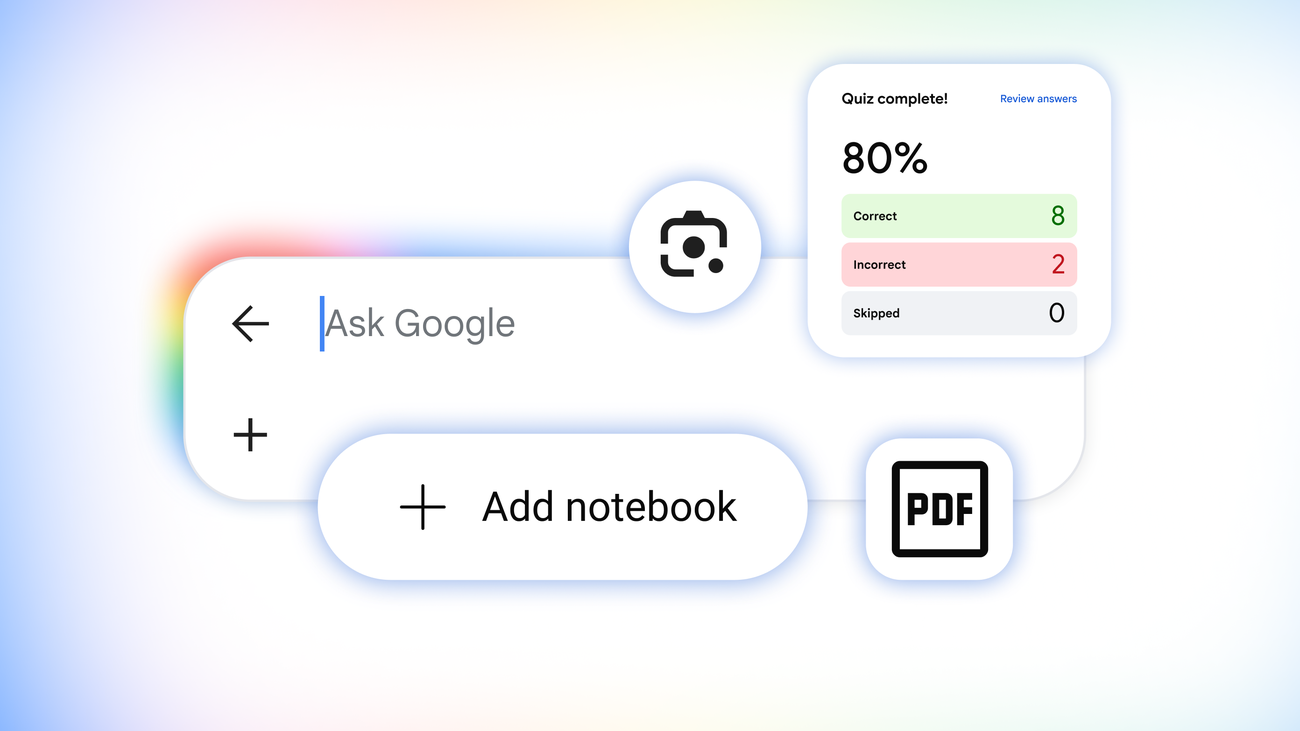
To address the high-stakes environment of standardized testing, Google has integrated customized practice quizzes into the Search ecosystem. Unlike generic AI-generated questions, these quizzes are developed in collaboration with major global education firms, including The Princeton Review, Careers360, PhysicsWallah, and Akira Enem. This partnership ensures that the practice material remains pedagogically sound and aligned with the actual curricula of exams such as the SAT, ACT, GRE, LSAT, and MCAT, as well as international assessments like India’s JEE and NEET and Brazil’s ENEM.
The interactive nature of these quizzes allows for immediate feedback. When a student selects an answer, the system provides a detailed explanation of why the response is correct or incorrect, supplemented by links to authoritative sources for deeper study. This feature is now available free of charge in English across global markets. Industry analysts suggest that this move could disrupt the traditional "test prep" market by providing high-quality, expert-vetted resources without the high subscription costs typically associated with premium tutoring services.
Lens as a Step-by-Step Academic Coach
Google Lens, traditionally used for identifying landmarks or translating text, is being repurposed as a sophisticated pedagogical tool. In the coming weeks, a new interactive learning experience within Lens will allow students to photograph complex problems—such as multi-step mathematical equations or physics diagrams—and receive "coaching" rather than just a final answer.
The AI Overview provided by Lens is designed to pinpoint specific errors in a student’s work and provide conceptual explanations for each step of a problem. This "safe by design" approach is intended to prevent students from using AI simply to bypass the learning process. Instead, the tool acts as a tutor that guides the user through the logic of the solution. If the student remains confused, they can pivot to AI Mode to ask follow-up questions, maintaining a conversational thread that references the original visual input.
Integration of Gemini Notebook for Structured Research
The tool formerly known as NotebookLM has been rebranded as Gemini Notebook and is now being integrated directly into Google Search’s AI Mode. This integration allows students to create dedicated digital workspaces for specific subjects, such as "Environmental Science" or "Renaissance History." Users can upload a variety of sources, including syllabi, lecture slides, PDFs, and web articles, into these notebooks.
The primary advantage of Gemini Notebook is its "source-grounding" capability. When a student asks a question within the notebook, the AI prioritizes the uploaded materials to generate answers, significantly reducing the risk of "hallucinations" (the generation of false information). Furthermore, any research threads initiated in AI Mode can be saved directly to these notebooks, ensuring that a student’s study sessions are cumulative rather than fragmented. This feature is rolling out in English across more than 180 countries, with support for local languages expected in the near future.
Automated Document Generation and Study Streamlining
The fifth pillar of this update is the ability to generate custom study documents from disparate sources. By utilizing AI Mode, students can ask Search to synthesize uploaded files—such as a photograph of handwritten notes and a digital textbook chapter—into a structured one-pager or a summary document.
This file generation capability supports a wide range of formats, including Google Docs, Slides, and Sheets, as well as standard PDF and text files. The objective is to reduce the "administrative burden" of studying—the time spent organizing and formatting notes—allowing students to focus on content mastery. This feature has already begun its global rollout in English and is expected to become a standard component of the AI Overview interface.
Chronology of Google’s Educational AI Evolution
The current rollout is the culmination of a multi-year strategy to pivot Google Search toward a "generative-first" experience.
- May 2023: Google introduced the Search Generative Experience (SGE) as an experimental feature in Search Labs, testing how AI could summarize complex topics.
- Late 2023: The company launched NotebookLM, focusing on "grounded" AI that only uses provided documents to answer questions, specifically targeting researchers and students.
- May 2024: At the Google I/O conference, the company announced "AI Overviews" for the general public, signaling a move away from the experimental phase.
- August 2024: The current announcement integrates these disparate technologies (Lens, Gemini, and Search) into a cohesive educational ecosystem specifically timed for the "Back to School" season.
Market Context and Supporting Data
The integration of AI into education is no longer a fringe phenomenon. According to a 2024 report by the Pew Research Center, approximately 1 in 4 teens who have heard of ChatGPT say they have used it to help with schoolwork. However, concerns regarding the accuracy of AI and the potential for academic dishonesty have remained high among educators.
By partnering with established entities like The Princeton Review, Google is attempting to solve the "trust gap" that has plagued general-purpose AI models. Furthermore, the global ed-tech market is projected to reach over $400 billion by 2025, according to Grand View Research. Google’s decision to offer these tools for free within Search is seen as a strategic move to secure user loyalty among the "Gen Alpha" and "Gen Z" demographics, who are increasingly turning to platforms like TikTok or specialized AI bots for quick answers.
Analysis of Implications and Academic Integrity
The broader implications of these tools are multifaceted. For students, the democratization of high-quality tutoring and test-prep materials could help level the playing field for those who cannot afford private coaching. The ability to "see" a concept through generative UI and receive step-by-step coaching from Lens addresses diverse learning styles—visual, auditory, and kinesthetic.
However, the rollout also raises questions about the future of traditional homework. If an AI can provide a step-by-step breakdown of any math problem, educators may need to shift their focus from "correct answers" to "process-based assessments." Google has addressed this by emphasizing that its tools are designed to "coach" rather than "solve," though the efficacy of this distinction will depend on how students choose to engage with the technology.
From a technical standpoint, the integration of Gemini Notebook into Search represents a significant move toward "personal search." Instead of searching the entire web, users are increasingly searching their own curated data sets (notes, slides, and articles) using Google’s infrastructure. This transition suggests a future where Search is not just a gateway to the internet, but a personal intelligence layer that understands a user’s specific academic context.
Official Responses and Future Outlook
While Google has not released specific internal targets for user adoption, the global nature of the rollout—spanning 180 countries—indicates a high level of confidence in the scalability of these features. Education experts have cautiously welcomed the updates, noting that the inclusion of citations and authoritative partners is a necessary step toward responsible AI usage in schools.
As the school year progresses, Google intends to expand local language support and introduce more file formats for document generation. The company’s "safe by design" philosophy will be tested as millions of students begin utilizing these tools for daily assignments. For now, the 2026 academic year stands as a major trial for whether AI can truly "level up" learning or if it will fundamentally alter the nature of academic rigor.
