

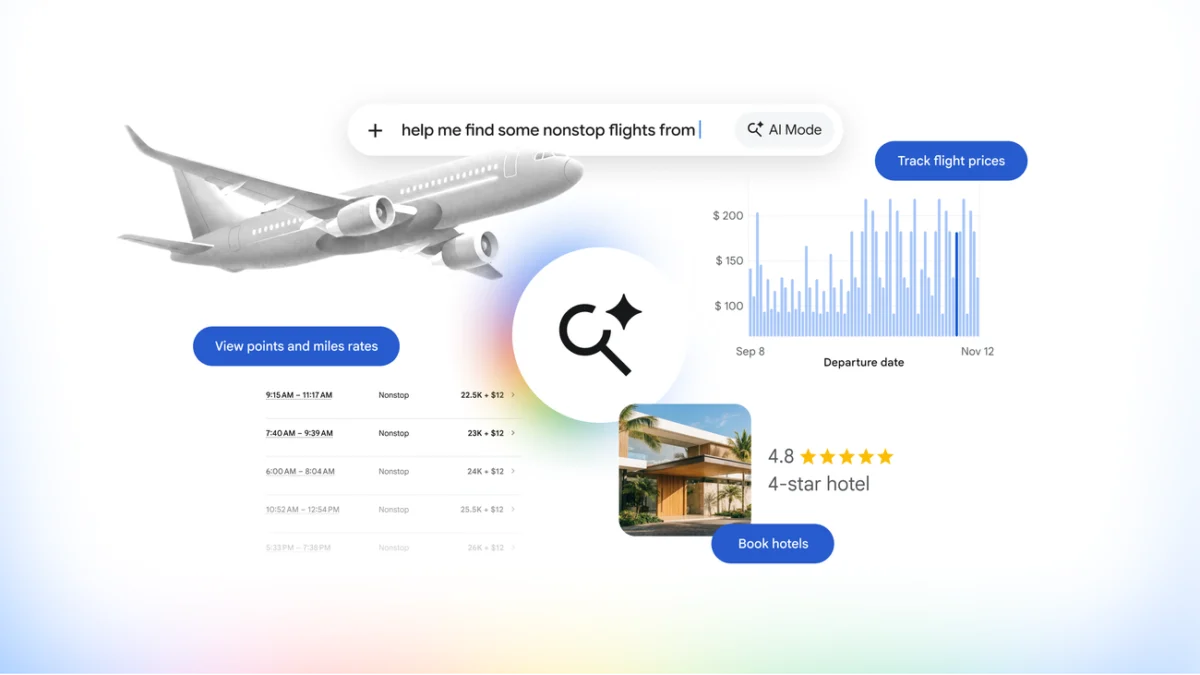
Google has announced a significant expansion of its artificial intelligence capabilities within Search, introducing three primary features designed to streamline the complex process of travel planning and execution. This update, spearheaded by James Byers, Group Product Manager for Search, represents a pivotal shift toward "agentic" search—a model where AI does more than provide information, actively performing tasks such as tracking prices and facilitating financial transactions. By integrating the robust data of Google Flights and Google Hotels directly into the AI Mode interface, the technology giant aims to reduce the friction inherent in navigating multiple tabs and platforms. These upgrades include real-time flight price tracking, the ability to view costs in loyalty points or miles, and a seamless hotel booking process that utilizes Google Pay for secure, direct-to-partner reservations.
The Evolution of AI-Powered Travel Coordination
The introduction of these tools marks a maturation of Google’s AI-driven search strategy, which began with the experimental Search Generative Experience (SGE). In the initial stages, AI in search was primarily used to summarize web content and provide broad recommendations. However, the travel sector—characterized by high-intent queries and complex logistical requirements—has emerged as the ideal testing ground for more advanced AI agents. James Byers noted that the latest upgrades are designed to help users track flight prices, evaluate rewards rates, and book accommodations without "breaking their flow" during a conversational search session.
This transition from a passive information engine to an active travel concierge is reflective of broader trends in the tech industry. As Large Language Models (LLMs) become more sophisticated, companies are focusing on "action-oriented" AI. For Google, this means leveraging its existing partnerships with over 300 airlines and travel sites to provide real-time data within a chat interface. The goal is to provide a comprehensive ecosystem where a user can move from a vague idea—such as "I want to go somewhere warm in October"—to a fully booked itinerary within a single digital environment.
Advanced Flight Price Tracking and Real-Time Alerts
One of the most significant additions to AI Mode is the integration of Google Flights’ price tracking technology. Users can now initiate price monitoring through natural language commands. By describing their desired destination and dates to the AI, users receive a list of the best current options. If the user is not ready to purchase, they can simply state, "track these flight prices for me." This command triggers an automated system that monitors fluctuations across hundreds of partner airlines.
The system is now live in more than 180 countries and territories, providing a global reach that few other AI travel tools can match. When a price drop is detected for the specified route and dates, the user receives an automated email notification. This feature addresses a common pain point in travel planning: the volatility of airfare. According to industry data, airfare prices can fluctuate dozens of times between a search and the actual departure date. By automating the surveillance of these price changes, Google is positioning its AI as a tool for financial optimization as much as logistical convenience.
Integration of Loyalty Programs: Points and Miles Calculations
Recognizing the importance of the global rewards economy, Google has also introduced the ability to view flight and hotel costs in points or miles. This feature caters to the millions of travelers who utilize loyalty programs to subsidize their travel expenses. By asking specific questions, such as "Help me find nonstop flights from Atlanta to Miami using AA miles," users can see immediate conversions based on real-time partner data.
The initial rollout of this feature includes support for several major carriers and hospitality groups, including American Airlines, Alaska Airlines, Hawaiian Airlines, Choice Hotels International, Hilton, and Wyndham Hotels & Resorts. Google has confirmed that support for additional partners, such as Hyatt, the Lufthansa Group, Accor, Flying Blue, and LATAM Airlines, will be integrated in the coming weeks. This functionality is particularly complex from a technical standpoint, as it requires the AI to access and interpret live inventory and rewards tables from third-party databases, translating them into a user-friendly conversational format.
Seamless Hotel Booking and the Merchant of Record Model
The most transformative update is the introduction of direct hotel booking within AI Mode. This feature allows users to discover, compare, and book accommodations in a single conversation. After the AI provides a visual list of options—complete with guest reviews and key comparison factors—users can select a "Continue on Google" option. This pathway allows for the selection of room types and the review of cancellation policies within the Google interface.
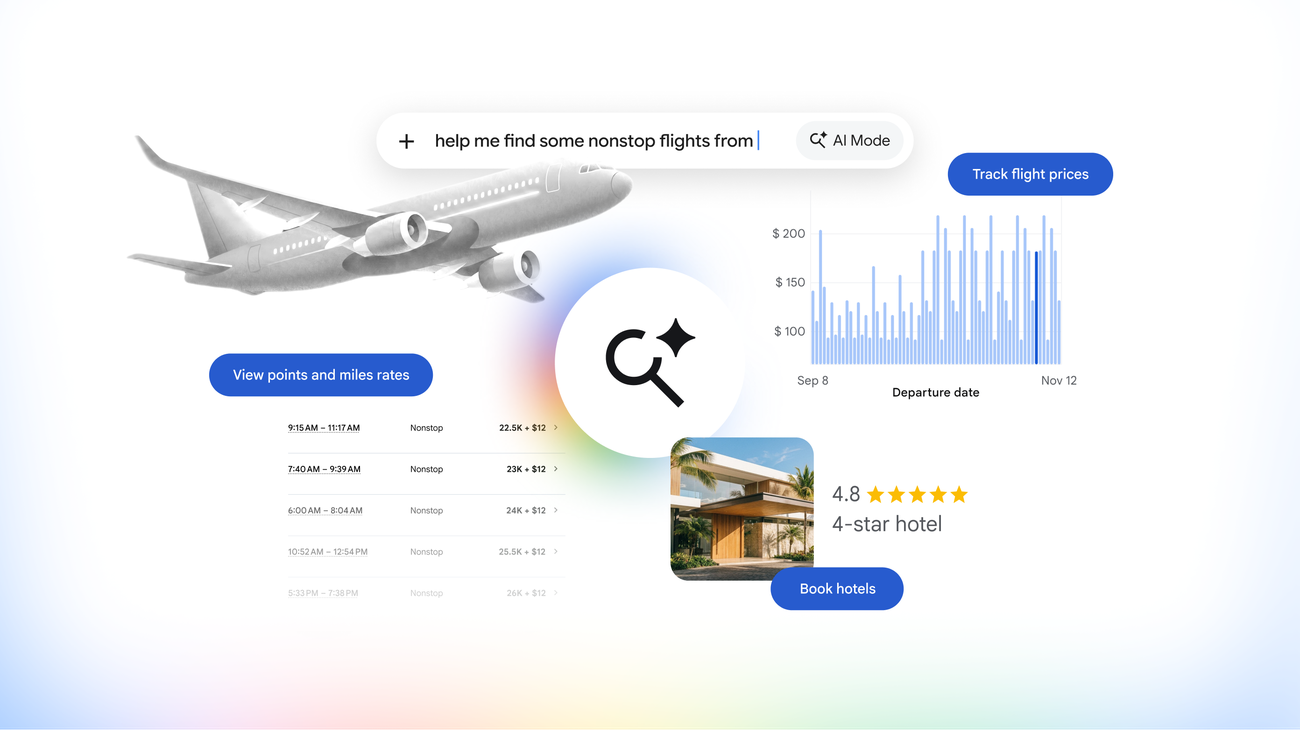
The transaction is finalized securely via Google Pay. It is important to note that under this model, the hotel or the integrated booking platform (such as Booking.com or Expedia) remains the "merchant of record." This means that while Google facilitates the interface and the payment processing, the actual contract of service is between the traveler and the provider. This distinction is crucial for customer service and liability, ensuring that travelers still have access to the established support infrastructures of major travel brands. The hotel booking feature is currently rolling out in the United States in English, with partners including Marriott International, IHG Hotels & Resorts, Priceline, and Trip.com.
A Chronology of Google’s Travel Technology Milestones
To understand the significance of these updates, one must look at the timeline of Google’s investment in travel technology:
- 2011: Google acquires ITA Software for $700 million, the foundational technology that powered many airline reservation systems. This led to the launch of Google Flights.
- 2015-2018: Google integrates hotel search and "Book on Google" features into standard search results, though the interface remained largely form-based.
- 2023: The launch of the Search Generative Experience (SGE) introduces AI-generated travel itineraries and recommendations.
- August 2024: The current update transitions these AI capabilities from "informational" to "transactional," allowing for price tracking, rewards calculation, and direct booking.
This trajectory shows a clear move toward vertical integration, where Google seeks to capture more of the "user journey" before the traveler ever reaches an airline or hotel’s direct website.
Industry Implications and Economic Context
The travel industry is a multi-trillion-dollar sector, and the way consumers book trips is shifting rapidly toward mobile and AI-assisted platforms. According to market research, over 70% of travelers now expect a personalized experience when planning their trips, and nearly 40% are willing to use AI to find better deals. By embedding these tools into Search, Google is directly competing with Online Travel Agencies (OTAs) like Expedia and TripAdvisor, while simultaneously acting as a high-intent lead generator for those very same companies.
The move to include points and miles is particularly strategic. The "points and miles" community is a highly engaged segment of the travel market. By providing transparency into rewards costs, Google is positioning itself as a neutral arbiter of value, helping users decide whether to pay with cash or loyalty currency. This could potentially influence how airlines and hotels manage their loyalty inventories, as the data becomes more visible and comparable to the general public.
Technical Analysis of Agentic AI in Travel
The shift to "Agentic AI" involves significant technical hurdles. Unlike a standard search query, which retrieves indexed web pages, an agentic query must interact with live APIs (Application Programming Interfaces). When a user asks to track a flight or book a hotel, the AI must:
- Parse Intent: Correctly identify dates, locations, and preferences from natural language.
- Verify Inventory: Communicate with partner databases to ensure the flight or room is actually available at the stated price.
- Manage State: Remember the user’s preferences throughout a long conversation to build a cohesive itinerary.
- Execute Securely: Handle sensitive payment information through Google Pay while ensuring the data is transmitted correctly to the partner’s booking system.
The success of these features will depend on the latency and accuracy of these interactions. If the AI displays a price that is no longer available by the time the user clicks "book," the trust in the system could diminish. Consequently, Google’s reliance on deep integration with partners like Marriott and Expedia is a safeguard against data staleness.
Future Outlook and Global Expansion
As hotel booking rolls out in the U.S. and flight tracking reaches 180 countries, the next phase of Google’s strategy likely involves language expansion and deeper itinerary management. Analysts suggest that the ultimate goal is a "closed-loop" system where the AI can handle disruptions, such as rebooking a flight automatically if a delay is detected, or suggesting a restaurant reservation near a newly booked hotel.
The travel sector serves as a bellwether for the broader application of AI in commerce. If Google can successfully convince users to trust an AI with their vacation plans—often one of the largest annual household expenditures—it paves the way for similar agentic features in retail, real estate, and professional services. For now, the focus remains on making the "dream hotel" and the "perfect flight" just a conversation away. Through the combination of real-time data, loyalty integration, and secure payments, Google is attempting to redefine the search bar as a comprehensive travel agency for the digital age.
