

In an era defined by the rapid integration of artificial intelligence into the domestic sphere, Google has unveiled a suite of generative AI tools designed to streamline the complexities of event planning. As social trends indicate a significant shift toward "real-life" connectivity and analog experiences, the tech giant is positioning its Search Generative Experience (SGE) and the newly highlighted "AI Mode" as essential assistants for modern hosts. By leveraging multimodal AI capabilities—ranging from visual generation to complex reasoning for culinary pairings—Google aims to transform Search from a directory of links into a functional "action engine" that manages logistics, design, and entertainment.
The Evolution of Generative Search in Domestic Planning
The shift toward AI-assisted hosting comes at a time when consumer behavior is pivoting back toward intimate, in-person gatherings. According to Google’s internal search data, queries related to "dinner party ideas," "tablescape inspiration," and "unique dinner themes" have seen a steady upward trajectory as users seek to move beyond digital interactions. To address this, Google has integrated specialized AI models, including the "Nano Banana" framework, to provide creative and logistical support that previously required hours of manual browsing or professional consultation.
This technological evolution represents a departure from traditional keyword-based searching. Where a user might have once searched for "red wine for salmon," they are now engaging in conversational queries that account for entire menus, guest preferences, and aesthetic goals. This transition into a "Personal Concierge" model reflects Google’s broader strategy to compete in the generative AI landscape, currently contested by platforms like OpenAI’s ChatGPT and Microsoft’s Copilot.
Five Strategic Pillars for AI-Assisted Event Planning
Google’s latest updates focus on five primary areas of the dinner party experience, utilizing AI to bridge the gap between abstract ideas and physical execution.
1. Creative Tablescape Visualization and Aesthetic Design
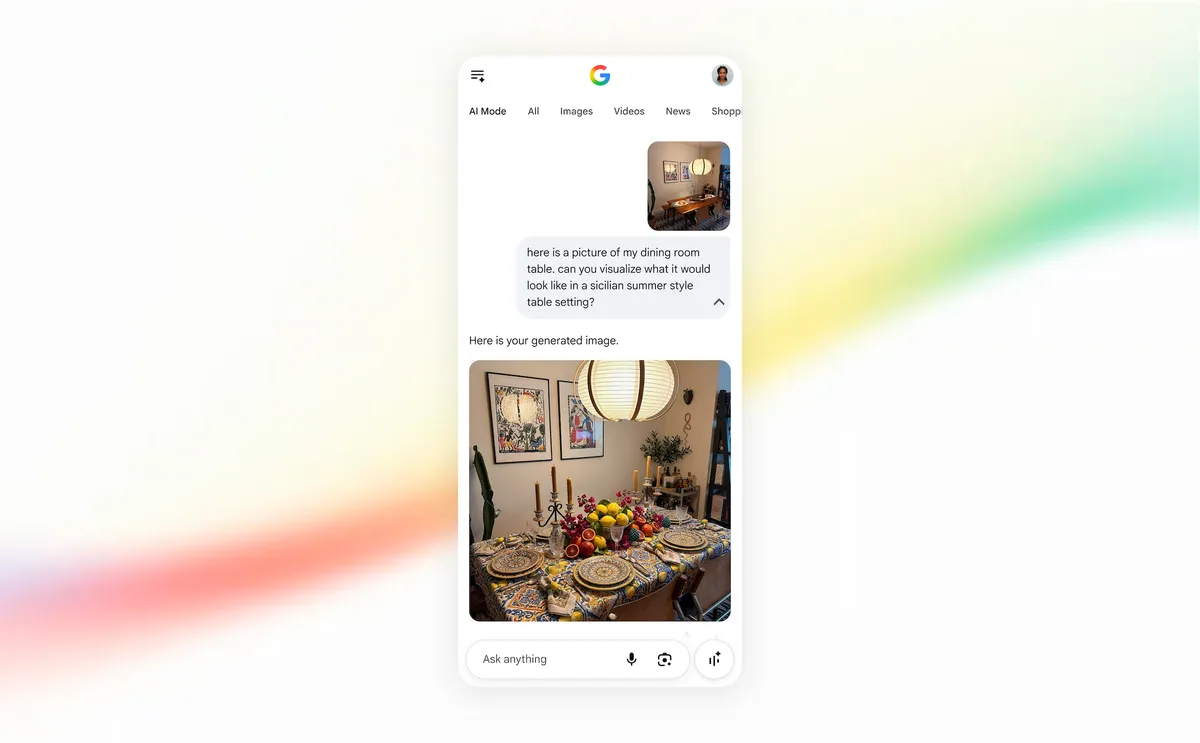
The visual identity of a dinner party—the "tablescape"—often serves as the primary atmospheric driver. Through "Nano Banana" in AI Mode, Search now allows users to generate high-fidelity visualizations of their dining space. By inputting specific themes, such as "Mid-century modern autumn harvest" or "Minimalist Japanese garden," the AI provides a visual reference that includes color palettes, floral arrangements, and place-setting suggestions.

This feature utilizes multimodal AI, which processes both text and image data to create a coherent design philosophy. For the host, this minimizes the "trial and error" phase of decorating, providing a clear blueprint that can be translated into shopping lists or DIY projects.
2. Advanced Recipe Discovery and Creator Integration
The core of the dinner party remains the menu. Google has updated its AI Mode to prioritize "recipe discovery" through a more visual and data-rich interface. When a user prompts the AI for menu suggestions, the results now feature prominent links to recipe creators, complete with high-resolution imagery, star ratings, ingredient counts, and estimated preparation times.
This move is particularly significant for the digital publishing industry. By citing specific creators and providing direct pathways to their websites, Google is attempting to balance the utility of AI-generated summaries with the need to drive traffic to original content producers. This "visual treatment" allows hosts to compare complex dishes at a glance, ensuring the menu aligns with their skill level and guest dietary requirements.
3. Intelligent Beverage and Flavor Pairings
The complexity of pairing beverages with multi-course meals often requires specialized knowledge. Google’s AI Mode now functions as a digital sommelier or cicerone. The system uses large language models (LLMs) to analyze flavor profiles—such as the acidity of a key lime pie or the umami of miso-glazed salmon—to recommend complementary drinks.
Unlike a standard search result, which might provide a generic list of wines, the AI provides a "reasoning" component. It explains why a specific dry Riesling or a citrus-forward craft soda works with the meal, empowering the host with knowledge to share with their guests. This feature extends to non-alcoholic pairings, reflecting the growing "sober curious" trend in modern hospitality.
4. Ecosystem Integration and "Connected Apps"
One of the most functional updates is the ability to connect Search directly to the Google ecosystem, specifically YouTube Music and Google Workspace. A common pain point for hosts is the transition from "planning" to "doing." Through the "Connected Apps" feature, a host can ask AI Mode to curate a playlist based on the party’s "vibe" (e.g., "70s Italian disco" or "Ambient jazz for a rainy evening") and instantly save that playlist to their YouTube Music library.

This integration reduces the friction of toggling between different applications. It suggests a future where Google Search acts as a central hub for home automation and media management, further embedding the company’s software into the user’s social life.
5. Bespoke Menu Design and Physical Assets
To finalize the presentation, Google has introduced tools to design physical artifacts for the party. Using the creative generation capabilities of AI Mode, hosts can request a designed menu that reflects their specific courses. By providing the menu details (e.g., Caprese salad, Chicken Piccata, Tiramisu), the AI generates a formatted, aesthetically pleasing document that can be printed or shared digitally. This democratizes high-end graphic design, allowing casual hosts to provide a professional-level experience for their guests without needing specialized software like Adobe InDesign or Canva.
Chronology of Implementation: From SGE to AI Overviews
The rollout of these dinner party features is part of a multi-year roadmap.
- Early 2023: Google introduced the Search Generative Experience (SGE) in Labs, testing how users interacted with AI-generated summaries.
- Late 2023: The integration of "Multimodal" capabilities allowed the AI to understand and generate images alongside text.
- Mid-2024: Google rebranded many of these features into "AI Overviews" and "AI Mode," moving them out of experimental phases and into the mainstream search results for millions of users.
- Present: The focus has shifted toward "Actionable AI," where the engine doesn’t just provide information but creates files (like menus), saves playlists, and connects to external applications.
Technical Analysis and Market Implications
The underlying technology, particularly the "Nano" series of models, is designed to be efficient and fast. By optimizing these models for specific tasks like "party planning," Google is reducing the computational cost of generative AI while increasing its daily utility.
From a market perspective, this initiative targets the "lifestyle" segment of the internet, which is currently dominated by platforms like Pinterest and Instagram. By offering utility-based tools—rather than just aspirational imagery—Google is attempting to capture the "intent" phase of the consumer journey. If a user plans their party on Google, they are more likely to use Google-integrated services to buy groceries, find local wine shops, and play music.
However, this shift has drawn scrutiny from the SEO and content creator community. While Google has added "prominent links" to recipe creators, there is an ongoing debate regarding "zero-click searches." If the AI provides the entire menu and pairing list on the search page, users may feel less inclined to click through to individual blogs, potentially impacting the ad revenue of independent food writers.
Industry Responses and Societal Impact
The response from the hospitality tech sector has been cautiously optimistic. Professional event planners have noted that while AI can handle the "logistics" of a small dinner party, it cannot replace the "human touch" or the "unforeseen problem-solving" required for larger events. Nevertheless, for the average consumer, these tools lower the barrier to entry for hosting.
Sociologists viewing the "touch grass" trend—a colloquialism for disconnecting from the internet and engaging with the physical world—suggest that AI might paradoxically be the tool that facilitates more offline time. By spending less time scrolling for recipes and more time actually cooking and talking to friends, users are leveraging technology to reclaim their social lives.
Conclusion: The Future of the "Action Engine"
As Google continues to refine its AI Mode, the "ultimate dinner party" serves as a primary use case for how generative technology can enhance domestic life. The transition from a search engine that answers questions to an assistant that performs tasks marks a significant milestone in the history of the internet.
For the modern host, the heavy lifting of organization, design, and curation is increasingly being shifted to the cloud. The success of these tools will ultimately be measured not by the complexity of the algorithms, but by the quality of the connections made around the dinner table. As AI becomes a staple in the kitchen and the dining room, the "art" of hosting is being redefined by a partnership between human creativity and algorithmic efficiency.
