

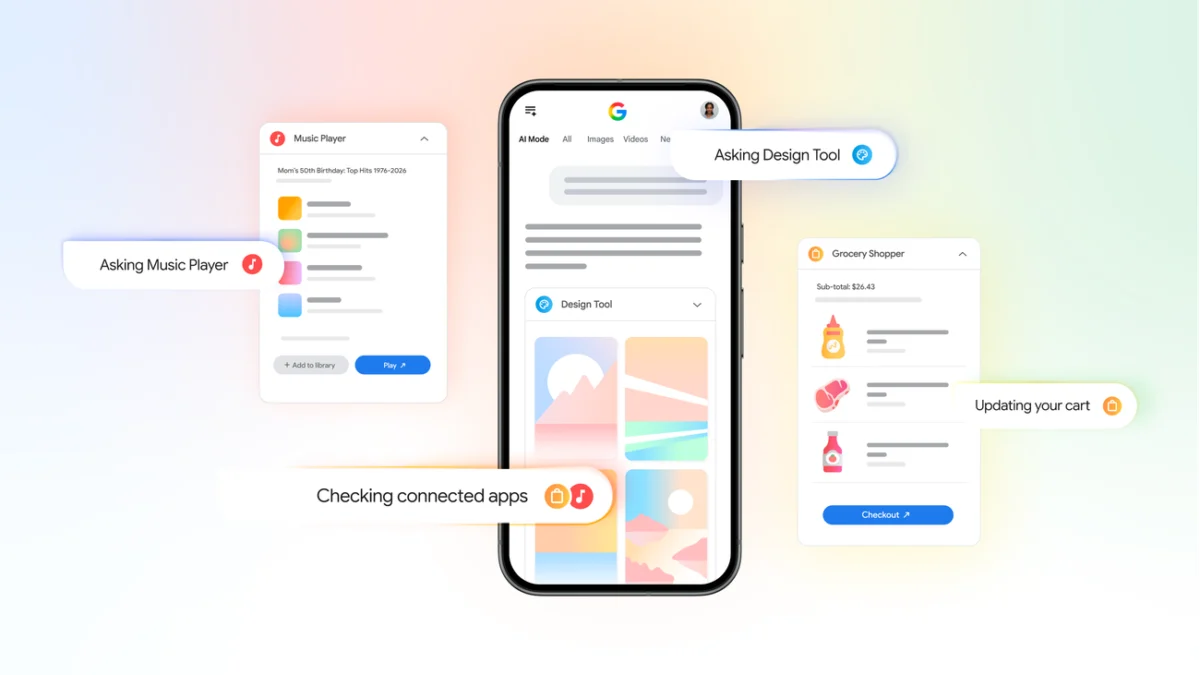
In a significant shift toward making search engines more actionable, Google has announced the integration of third-party connected apps directly within its AI Mode in Search. This new functionality, which began rolling out to users in the United States this week, allows individuals to securely link their favorite services—such as Instacart, Canva, and YouTube Music—to the Search interface, enabling them to complete complex tasks without navigating away from the search results page. The move represents a pivot from traditional information retrieval to a "search-to-action" model, where the AI serves as a central orchestrator for various digital services.
The Shift from Information to Execution
For decades, the primary function of a search engine was to index the web and provide a list of relevant links. However, with the advent of generative artificial intelligence, the paradigm has shifted toward providing direct answers. Google’s latest update takes this evolution a step further by bridging the gap between finding information and taking action. According to Chips Mistry, Senior Product Manager for Search, and Biharck Araújo, Engineering Lead for Search, the goal is to allow users to "securely link and interact with go-to services directly in AI Mode."
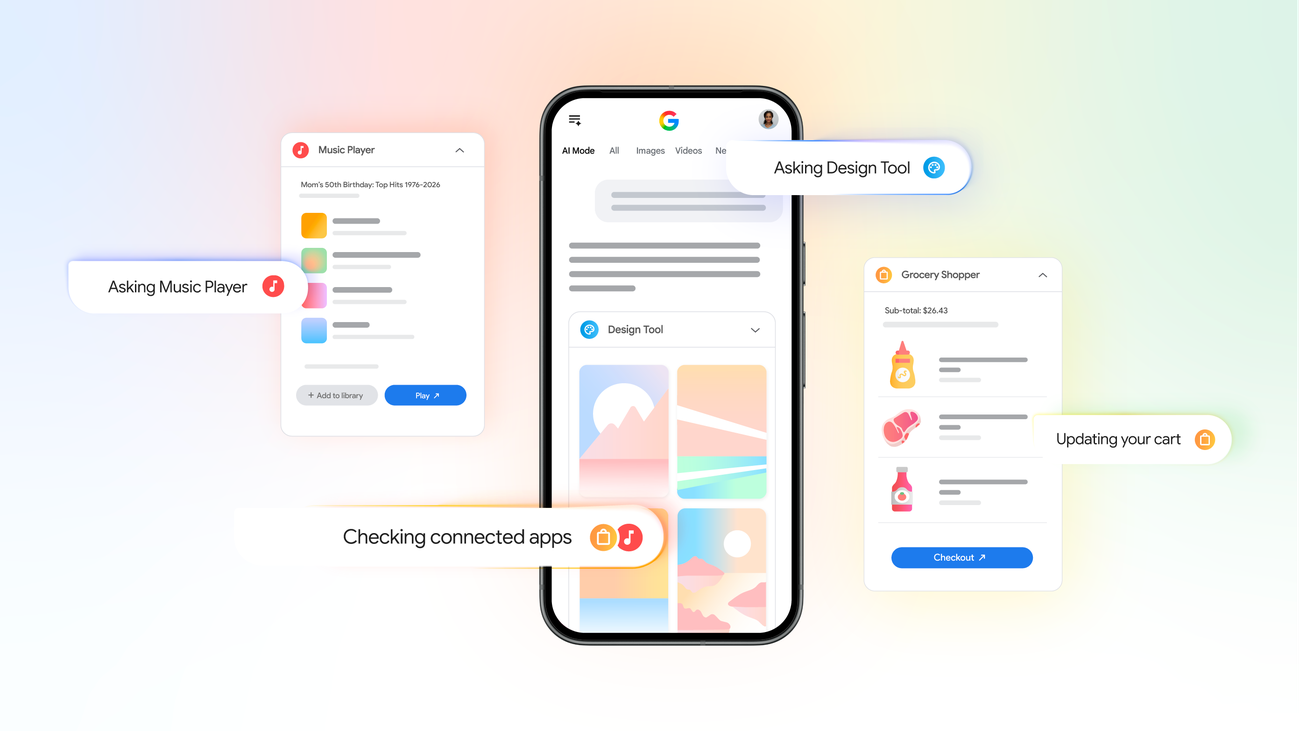
The integration focuses on three primary use cases in its initial rollout: e-commerce, creative design, and media management. For instance, a user planning a social event can use AI Mode to generate a grocery list for a barbecue. If the user has connected their Instacart account, the AI can automatically populate a shopping cart with the necessary ingredients. The user then only needs to finalize the transaction through the Instacart app or website. This reduces the friction of manually transferring data between a search query and a retail platform.
Expanding the Ecosystem: Canva and YouTube Music
Beyond e-commerce, the integration extends into creative and entertainment spheres. By connecting Canva, users can ask AI Mode to suggest design concepts or templates for specific projects, such as flyers or social media posts. The AI retrieves relevant templates based on the user’s prompt, allowing for a seamless transition into the design phase.
Similarly, the integration with YouTube Music targets the curation of digital media. Users can instruct AI Mode to build a specific soundtrack or playlist—for example, "create a 90s alternative rock playlist for a housewarming party"—and instantly save that curated list to their YouTube Music library. These features demonstrate Google’s intent to leverage its internal ecosystem while simultaneously opening its doors to major third-party developers.
A Chronology of Google’s AI Evolution in Search
The introduction of connected apps in AI Mode is the latest milestone in a rapid series of developments for Google Search. To understand the significance of this update, it is necessary to look at the timeline of Google’s AI integration over the past two years:
- May 2023: Google introduces the Search Generative Experience (SGE) at its annual I/O conference, marking the first major public experiment with LLM-powered search results.
- December 2023: The launch of Gemini, Google’s most capable AI model, which began powering various aspects of the search experience.
- February 2024: Google rebrands its Bard chatbot to Gemini and introduces "Extensions," allowing the AI to pull information from Google Workspace (Gmail, Docs, Drive), Maps, and YouTube.
- May 2024: "AI Overviews" are rolled out to the general public in the U.S., providing AI-generated summaries at the top of search results.
- Late 2024: The current rollout of "Connected Apps" in AI Mode, extending the extension framework to non-Google third-party services within the core Search product.
Supporting Data and Market Context
The move to integrate third-party apps into Search comes at a time of intense competition in the AI sector. Market data suggests that "zero-click" searches—where a user finds the answer on the search page without clicking through to a website—are on the rise. According to industry analysis by SparkToro, nearly 60% of searches now end without a click to a third-party website. By integrating apps directly, Google is attempting to provide value to both the user (convenience) and the partner (direct conversion) within this zero-click environment.
Furthermore, the e-commerce landscape is increasingly driven by AI-assisted discovery. A report from Salesforce indicates that 17% of consumers have used generative AI for shopping inspiration. By partnering with Instacart, Google is positioning itself at the top of the "purchase funnel," converting intent into a transaction before the user considers a competitor’s platform.
Technical Implementation and Security Protocols
A primary concern with connecting third-party apps to a search engine is data privacy and security. Google has addressed this by emphasizing that the linking process is "secure" and user-initiated. The system utilizes OAuth protocols, a standard for access delegation, which allows users to grant Google Search permission to interact with their third-party accounts without sharing their passwords.
The engineering team, led by Biharck Araújo, has built the framework to ensure that data exchange is limited to the specific task at hand. When a user asks the AI to add items to an Instacart cart, only the relevant grocery data is sent to the partner. Google maintains that users have full control over these connections and can revoke access at any time through their Google Account settings. This "opt-in" model is crucial for maintaining user trust, especially as AI agents become more deeply integrated into personal and financial data.
Industry Reactions and Competitive Landscape
While Google remains the dominant force in search with over 90% of the global market share, the rise of "AI-first" search engines like Perplexity AI and OpenAI’s SearchGPT prototype has forced the company to accelerate its roadmap. Perplexity, for instance, has gained traction by offering a "Pro Search" feature that can perform multi-step research and interact with various data sources.
Industry analysts view Google’s connected apps as a defensive and offensive maneuver. By opening Search to third-party developers, Google is creating a "platform play" similar to the Apple App Store. If developers see significant traffic and conversion coming through AI Mode, they will be incentivized to optimize their services for Google’s AI, further entrenching Google as the primary gateway to the internet.
Broader Implications for the Digital Economy
The implications of this update extend beyond simple convenience. For SEO (Search Engine Optimization) professionals and digital marketers, the integration of apps like Canva and Instacart suggests a future where "Optimization for AI" (OAI) becomes as important as traditional SEO. Businesses may soon find that their visibility depends not just on their website’s ranking, but on how effectively their app integrates with Google’s AI Mode.
There is also the question of the "Open Web." Critics argue that by keeping users within the Search interface to complete tasks, Google is further reducing the traffic that flows to independent websites. However, Google’s partnership model suggests a compromise: while the user stays on Google to initiate the task, the final transaction and long-term brand relationship still reside with the partner app (e.g., Instacart or Canva).
Future Outlook and Expansion
The current rollout is limited to the United States and a select group of partners, but Google has indicated that this is only the beginning. The company is actively working with a range of additional partners to expand the library of connected apps. Potential future integrations could include travel booking platforms (like Expedia or OpenTable), financial services for budget tracking, and educational tools for student research.
As AI Mode becomes more sophisticated, it is expected to handle more complex, multi-app workflows. A user might eventually be able to say, "Plan a trip to Tokyo, book a hotel near Shibuya, and add the itinerary to my calendar," with the AI coordinating across travel, hospitality, and productivity apps simultaneously.
For now, the launch of connected apps in Search marks a definitive step toward the era of the "AI Agent"—a digital assistant that doesn’t just tell you where to go or what to buy, but actually handles the logistics of the journey and the purchase for you. As this technology matures, the boundary between the search engine and the operating system will continue to blur, redefining how users interact with the digital world.
