

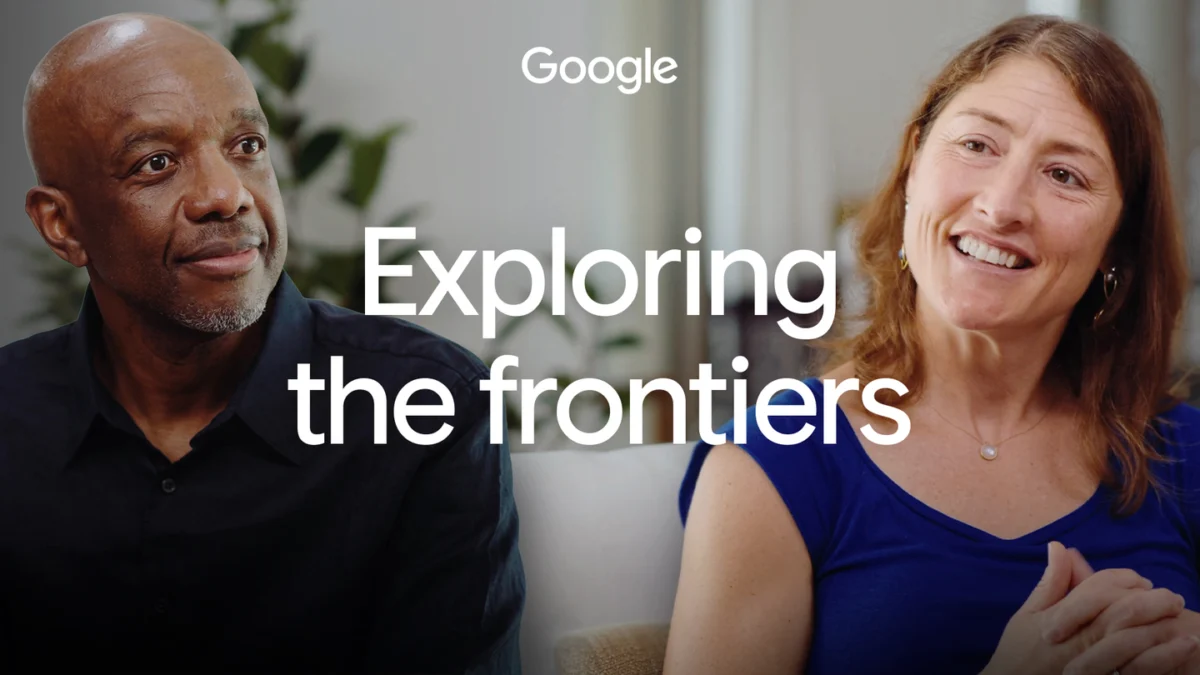
The intersection of human endurance and technological innovation recently took center stage as NASA astronaut Christina Koch and James Manyika, Google’s Senior Vice President of Research, Labs, Technology & Society, engaged in a comprehensive discussion for the "Dialogues on Technology and Society" series. The conversation bridged the gap between the physical frontiers of space exploration and the digital frontiers of artificial intelligence, offering a profound look at how these two fields are increasingly interdependent. As humanity prepares for its return to the lunar surface through the Artemis program, the dialogue highlights the evolving role of the explorer in an era defined by rapid computational advancement and global connectivity.
A Legacy of Record-Breaking Exploration
Christina Koch has established herself as one of the most significant figures in modern space exploration. An engineer and physicist by training, Koch’s career is defined by a series of historic milestones that have redefined the boundaries of human presence in low-Earth orbit. During the dialogue, Koch reflected on her mission aboard the International Space Station (ISS), where she spent 328 consecutive days. This duration set a record for the longest single spaceflight by a woman, providing NASA with invaluable data on the physiological and psychological effects of long-term space habitation—a critical component for future Mars missions.
Beyond her endurance in orbit, Koch was a central figure in the first all-female spacewalk, conducted alongside fellow astronaut Jessica Meir in October 2019. This event was not merely a symbolic achievement but a necessary operational task to replace a failed power controller. Koch’s participation in 398 days total in space across her career serves as a testament to the rigorous training and technical expertise required of the modern astronaut corps. Her upcoming role as a mission specialist on Artemis II will further cement her legacy, as she is slated to become the first woman to journey around the Moon.
The Overview Effect and the Lifeboat Analogy
One of the most poignant moments of the discussion involved Koch’s description of viewing Earth from the vantage point of the ISS and the projected view from the Artemis II mission. At a distance of 250,000 miles, the perspective of Earth shifts from a vast, indestructible landscape to what Koch describes as an "electric blue lifeboat." This cognitive shift, often referred to by astronauts as the "Overview Effect," emphasizes the fragility of the planet’s atmosphere and the interconnectedness of its biological systems.
James Manyika noted the relevance of this perspective to the current challenges facing society, including climate change and resource management. The "lifeboat" analogy serves as a powerful metaphor for the necessity of global cooperation and the responsible use of technology. From the perspective of space, political borders vanish, replaced by the stark reality of a singular, vulnerable ecosystem. Koch emphasized that this realization often drives astronauts to become staunch advocates for environmental stewardship and scientific literacy upon their return to Earth.
The Synergy of Human Intelligence and Artificial Intelligence
A central theme of the dialogue was the vital partnership between human explorers, robotics, and artificial intelligence. Manyika, who oversees Google’s most advanced research initiatives, explored how AI is no longer a peripheral tool but a core component of mission success. In the vacuum of space, where communication delays can range from seconds to minutes, the need for autonomous systems is paramount.
Koch explained that while human intuition and problem-solving remain irreplaceable, AI serves as an essential force multiplier. On the ISS, and eventually on the lunar surface, AI systems assist in monitoring complex life-support systems, navigating lunar terrain, and processing the massive datasets generated by scientific experiments. The collaboration is symbiotic: humans provide the goals and the ethical framework, while AI provides the computational speed and pattern recognition necessary to handle the hazards of the space environment.
Manyika highlighted that the technologies developed for space often find their way back to Earth. The "spin-off" effect of NASA’s research, combined with Google’s advancements in machine learning, has the potential to revolutionize fields such as precision medicine, disaster response, and sustainable agriculture. The dialogue underscored that the pursuit of the "next frontier" in space is inextricably linked to the technological evolution occurring in laboratories across the globe.
Chronology of Christina Koch’s Contributions and the Artemis Program
The progression of Koch’s career mirrors the broader trajectory of NASA’s transition from the Space Shuttle era to the current Artemis era. Understanding the timeline of these events provides context for the significance of her dialogue with Manyika:
- 2013: Koch is selected as one of eight members of NASA’s 21st astronaut class.
- March 2019: Koch launches to the International Space Station for her first mission.
- October 2019: Koch and Jessica Meir conduct the first all-female spacewalk, a six-hour and 38-minute operation.
- February 2020: Koch returns to Earth after 328 days, having completed 5,248 orbits of the planet.
- April 2023: NASA announces the crew for Artemis II, naming Koch as a mission specialist alongside Reid Wiseman, Victor Glover, and Jeremy Hansen.
- 2025 (Projected): The Artemis II mission is scheduled to launch, marking the first crewed flight of the Orion spacecraft and the first human journey to the lunar vicinity in over 50 years.
This timeline illustrates the steady accumulation of data and experience necessary to push human presence further into the solar system. Artemis II is not a landing mission, but a critical test flight that will pave the way for Artemis III, which aims to land the first woman and the first person of color on the lunar South Pole.
Supporting Data: The Impact of Long-Duration Spaceflight
To understand the weight of Koch’s experiences, one must look at the data surrounding her missions. During her 328-day stay, Koch participated in hundreds of experiments. These included studies on protein crystal growth, which has implications for cancer treatment, and biological research on how plants grow in microgravity.
The physiological data collected from Koch is particularly significant. NASA’s Human Research Program monitors changes in bone density, muscle atrophy, and vision impairment caused by fluid shifts in the body. By staying in orbit for nearly a year, Koch provided a vital data point that bridges the gap between the standard six-month ISS mission and the two-to-three-year commitment required for a mission to Mars. Furthermore, her mission contributed to the understanding of how the female body specifically responds to the space environment, a field of study that was historically underrepresented in early spaceflight data.
The Search for Life: "Are We Alone?"
The conversation inevitably turned to the most profound question in astrobiology: "Are we alone?" As a scientist, Koch approached this question with a mixture of empirical rigor and philosophical wonder. She noted that the search for life is a primary driver for missions to Mars and the icy moons of Jupiter and Saturn, such as Europa and Enceladus.
James Manyika added the perspective of data science, noting that AI is currently being used to sift through the "noise" of deep space signals and the vast amounts of imagery captured by the James Webb Space Telescope. The search for exoplanets and technosignatures is now a "big data" problem. While the discovery of extraterrestrial life remains elusive, both Koch and Manyika agreed that the tools currently being developed—from autonomous rovers to deep-learning algorithms—put humanity in the best position in history to find an answer.
Advice for the Next Generation of Explorers
Concluding the dialogue, Koch shared insights directed at the future generation of scientists, engineers, and explorers. Her advice was rooted in the grit required to succeed in the astronaut corps: "Do what scares you." She emphasized that growth occurs at the edge of one’s comfort zone and that failure is often a prerequisite for discovery.
Furthermore, she highlighted the importance of a "support-first" mentality. In the confined environment of a spacecraft, technical skill is secondary to the ability to work as a cohesive team. Koch’s reflections suggest that the future of exploration will be defined not just by the rockets we build, but by the culture of inclusivity and mutual support we foster within the scientific community.
Broader Impact and Implications
The dialogue between Christina Koch and James Manyika serves as a reminder that the "Space Age" and the "Information Age" are no longer separate eras. The implications of their discussion extend into several key areas of policy and society:
- STEM Education: Koch’s visibility as a female leader in a historically male-dominated field continues to inspire a more diverse pipeline of talent into Science, Technology, Engineering, and Mathematics.
- AI Ethics: As Google and other tech giants integrate AI into critical infrastructure, the lessons learned from the high-stakes environment of NASA missions—where reliability is a matter of life and death—provide a framework for developing "human-in-the-loop" systems.
- Geopolitics: The Artemis program is an international endeavor involving the Artemis Accords, a set of principles for cooperation in the civil exploration and use of the Moon, Mars, and other astronomical objects. This mirrors the global nature of AI development, which requires international standards for safety and security.
As NASA prepares for the launch of Artemis II, the insights shared by Koch and Manyika reinforce the idea that exploration is a fundamental human drive. Whether peering through a telescope, coding a neural network, or orbiting the Moon, the goal remains the same: to expand the boundaries of what is known and to ensure that the "lifeboat" of Earth remains secure for generations to come.
