


The rapid integration of artificial intelligence into the modern workplace has placed leaders and employees in an intricate dynamic, characterized by a wide spectrum of responses ranging from fervent enthusiasm to deep-seated skepticism and even overt resistance. This phenomenon is particularly acute in the realm of AI adoption, where a superficial understanding often gives way to profoundly divergent viewpoints within a single organization. The current landscape suggests that merely recognizing the technological imperative of AI is insufficient; success hinges on the strategic art of human-centric communication.
The contemporary corporate environment is awash with the promise and peril of AI. While some within the workforce envision AI as a transformative force capable of solving humanity’s grand challenges—from curing diseases to mitigating climate change—others harbor concerns rooted in dystopian narratives reminiscent of science fiction, or pragmatic fears of job displacement and the erosion of critical human skills. This stark contrast in perception creates a significant communication challenge for organizational leaders tasked with steering their enterprises through this technological revolution. Without a unified narrative and a robust communication strategy, the path to large-scale AI adoption is fraught with obstacles, risking not only inefficiencies but also a fractured workforce.
The Accelerating Imperative of AI Adoption
The advent of sophisticated AI models, particularly in recent years, has dramatically accelerated the conversation around artificial intelligence, pushing it from the periphery of specialized tech departments to the forefront of strategic business discussions. Organizations that once had the luxury of long runways for technological reinvention now face an environment where industry evolution can seemingly occur overnight. This increased velocity, driven by geopolitical shifts, supply chain vulnerabilities, and continuous technological disruption, demands an agile and proactive approach to emerging technologies like AI.
For many organizations, the specter of "fear of missing out" (FOMO) looms large. Having navigated, and sometimes struggled through, previous technological shifts like the dot-com boom or the mobile revolution, leaders are acutely aware of the detrimental risks of not adapting. The competitive landscape rewards early, effective adopters, creating immense pressure to integrate AI tools rapidly. However, this urgency often leads to a pitfall where AI enablement becomes an end in itself, rather than a means to a clearly defined strategic objective. Questions such as "Do we genuinely need this AI tool?" "What are the tangible benefits and potential drawbacks of automating this workflow?" or even "Should this AI agent really be granted a company credit card?" are often overlooked in the rush, leading to fragmented implementation and a lack of coherent strategy.
Decoding Employee Sentiments: The Data Speaks

Understanding the diverse reactions percolating through the ranks is paramount for leaders aiming to achieve widespread AI adoption. General polls and academic studies offer broad insights, but truly effective communication requires a granular understanding of how an organization’s own employees perceive AI. Recent research highlights a significant divide in these sentiments, often correlated with specific job functions and levels of responsibility.
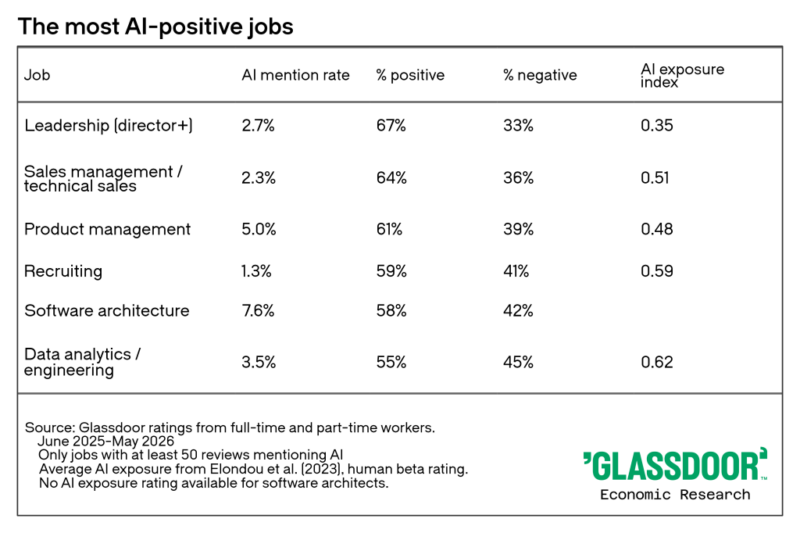
A pivotal August 2026 study by Glassdoor, analyzing employer reviews, revealed distinct patterns in AI sentiment across various roles and industries. On the positive end, roles with strategic oversight or those heavily involved in digital transformation exhibited high levels of optimism. For instance, Leadership (Director+) showed 67% positive mentions regarding AI, followed by Sales Management/Technical Sales at 64%, Product Management at 61%, Recruiting at 59%, Software Architecture at 58%, and Data Analytics/Engineering at 55%. These roles often see AI as an enabler for enhanced decision-making, improved efficiency, and competitive advantage. Leaders view it as a tool for strategic growth, while sales and product teams foresee augmented capabilities in market analysis, customer engagement, and innovation.
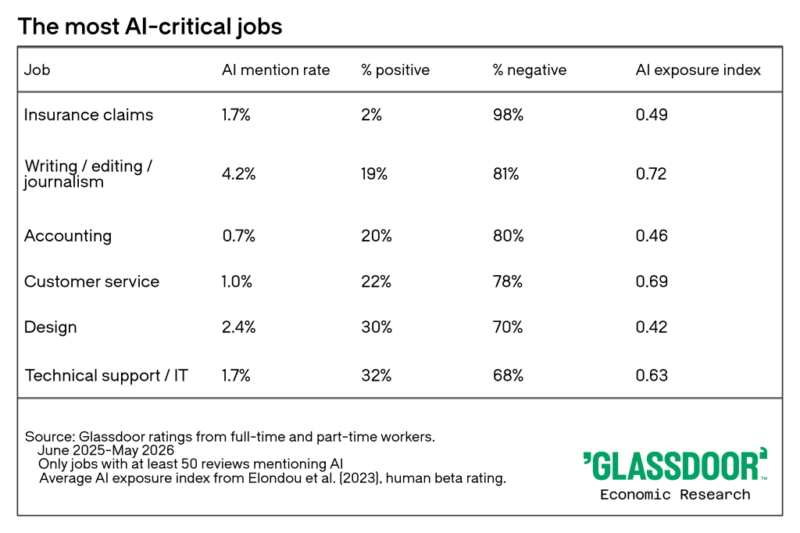
Conversely, roles that traditionally rely on nuanced human judgment, precise language, complex interpersonal relationships, or meticulous data handling tended to express more critical views. The Glassdoor study highlighted significant negative sentiment in these areas: Insurance Claims registered a striking 98% negative outlook, likely due to concerns about algorithmic bias, fairness, and the irreplaceable human element in sensitive claim processing. Writing/Editing/Journalism saw 81% negative sentiment, fearing automation of creative tasks and potential erosion of originality or factual integrity. Accounting stood at 80% negative, concerned with accuracy, audit trails, and the potential for errors in financial calculations. Customer Service (78% negative) grappled with the loss of human connection and empathy, while Design (70% negative) worried about creative originality and aesthetic judgment. Technical Support/IT (68% negative) faced challenges related to complex troubleshooting, security vulnerabilities, and the need for adaptable human problem-solving.
This data underscores a critical insight: AI is not viewed monolithically. For many, the fear is not just about job loss, but about the devaluation of their unique human skills, the imposition of tools they don’t understand, or the erosion of established work practices.
The Misalignment in Practice: A Call for Coherent Strategy
Beyond mere perception, the actual implementation of AI within organizations often suffers from a profound lack of strategic alignment. A study from the University of Konstanz revealed that "In many organizations, the major AI revolution has not unfolded as a planned transformation process so far. Instead, many employees are experimenting with AI, while employers are still lagging behind when it to establishing clear policies, providing training and implementing secure AI solutions." This paints a picture of a grassroots, often unguided, adoption process where individual employees or teams are left to experiment with AI tools without clear organizational guardrails, training, or strategic direction.
The implications of this misalignment are far-reaching. A Gallup poll further highlighted this gap, finding that "only 25% of workers say their company has communicated a clear plan for AI integration." This means the vast majority of businesses are providing inadequate guidance, issuing confusing mandates, or offering no support whatsoever for their AI initiatives. Such an unfocused approach can lead to several detrimental outcomes:
- Skills Atrophy: Over-reliance on AI for tasks previously performed by humans can lead to a degradation of critical skills among employees.
- Sloppy Brand Assets: Without clear guidelines and quality control, AI-generated content can lack brand consistency, accuracy, or originality.
- Runaway Token Spend: Unmonitored or unoptimized use of AI tools, particularly those with usage-based pricing, can lead to significant and unforeseen operational costs.
- Security Risks: Unsanctioned experimentation with AI tools can expose sensitive company data to external vendors or introduce new vulnerabilities.
- Decreased Morale: Employees facing unclear expectations, insufficient training, or the perception of being replaced by technology can become disillusioned, leading to decreased productivity and higher attrition rates.
In essence, the rush towards AI adoption without a coherent, communicated strategy risks alienating a significant portion of the workforce and undermining the very benefits AI is supposed to deliver. Leaders must move beyond merely announcing AI initiatives; they must articulate a vision that resonates, acknowledge challenges, actively solicit and incorporate feedback, and provide a clear, achievable path forward. When the vision is incomplete, incoherent, or perceived as inauthentic to organizational values, progress grinds to a halt, roadmaps veer off course, and top talent becomes disengaged.
The Illuminate™ Framework: A Human-Centered Approach to Change
Fortunately, there is a proven methodology for navigating this complex terrain. The Duarte Illuminate™ change communication framework offers a structured, human-centric blueprint for inspiring and sustaining organizational transformation, particularly relevant in the age of AI. It recognizes that technological adoption is fundamentally a human endeavor, requiring a compelling narrative, effective communication skills, and empathetic leadership. This framework emphasizes that qualities like empathy, storytelling, and the ability to move a reluctant audience to action cannot be automated by AI; they remain deeply human and indispensable for driving change.
The Illuminate™ methodology outlines a 5-stage process designed to move organizations from ingrained ways of doing things to a "new bliss" of transformation.
Stage 1: The Dream – Envisioning a Shared Future
The initial stage of the Illuminate™ framework is about sparking inspiration and painting a vivid picture of a desirable future. Leaders, acting as "torchbearers," must articulate a compelling vision for AI adoption that transcends mere efficiency gains and connects with employees’ aspirations. This involves a crucial juxtaposition: highlighting "what is" – the current challenges, inefficiencies, or limitations – against "what could be" – the transformative potential that AI offers. This contrast builds tension and helps audiences acknowledge and ultimately crave a "new bliss" – a better way of working, an enhanced product, or a revolutionary mindset.
For AI adoption, this might mean moving from a "what is" where teams are bogged down by manual data tracking, repetitive content brainstorming, and inefficient research in a decaying information environment, to a "what could be" where, with proper AI Standard Operating Procedures (SOPs) and IT-supported integration, teams can eliminate extraneous steps, boost system maintenance, and deliver high-quality results at an accelerated pace. The "new bliss" then becomes a scenario where AI-enabled teams enjoy freer schedules, establish deeper customer connections, explore creative projects with newly available bandwidth, and continuously refine their workflows.
Crucially, this stage demands active listening from leaders. Before any official announcements, leaders should test the waters, gauge hopes and fears, and adapt their vision based on genuine feedback. Addressing concerns head-on, such as the 20% of negative Glassdoor replies fearing job losses or 13% worried about AI distracting from core business, is vital for building trust and buy-in.
Stage 2: The Leap – Committing to Action
Once the dream has been clearly articulated and embraced, the organization enters the Leap stage, characterized by a collective commitment to action. This is where the AI message is amplified across teams through "action-oriented words" and phrases that denote consensus and shared purpose. AI processes begin to roll out, and initial implementation becomes part of the organizational adventure. Maintaining a steady pace and celebrating early progress are essential to counteracting FUD (fear, uncertainty, and doubt).
Leaders should foster an environment where AI strategy is viewed as an incubator rather than a rigid, top-down mandate. This empowers workers to experiment, share their AI approaches, and contribute to the company’s evolution. Duarte’s own experience, including "vibe-coding" experiments and weekly "AI Office Hours," provides a practical example. These initiatives nurtured curiosity, created spaces for knowledge sharing, pooled strategies to optimize resource use (e.g., cutting "token spend"), and produced clearer outputs. Teams united to maintain prompt libraries, update brand guidelines, and test guardrails, seeing AI as a collaborative "thought-partner." This stage is about translating vision into tangible, collaborative steps, building momentum through participation and shared ownership.
Stage 3: The Fight – Navigating Obstacles and Resistance
No journey of transformation is without its challenges, and AI adoption is particularly prone to unforeseen problems. The Fight stage acknowledges this inevitability, preparing leaders and teams for issues such as inadequate prompts leading to unusable output, accuracy problems, AI "hallucinations," or "AI-optimized" workflows that paradoxically take longer than manual processes. The constant stream of news stories, both laudatory and critical of AI, can also fuel internal resistance.
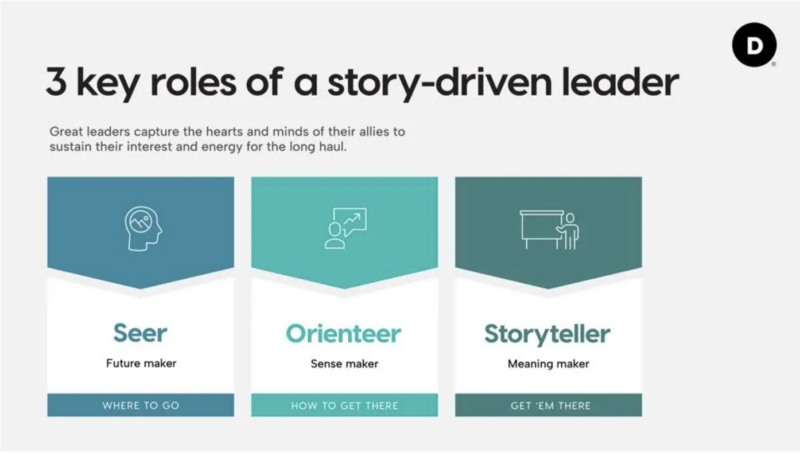
Rather than glossing over these hardships or suppressing dissent, effective leaders treat resistance and exasperation as valuable feedback opportunities to check in with teams and modify their change plan. Nancy Duarte, CEO of Duarte, reflected on her experience launching an AI vision, emphasizing that successful implementation requires leaders to embody three critical personas:

- The Seer: The "future maker" who keeps the ultimate destination in focus when the path becomes fuzzy.
- The Orienteer: The "sense maker" who charts a new course when existing pathways stall, providing practical guidance.
- The Storyteller: The "meaning maker" who helps teams understand the struggle, celebrate small victories, and stay engaged for the long haul, especially when competitors seem to gain an advantage.
This stage demands adaptive leadership, regular, transparent communication, and the willingness to either persevere through difficulties or pivot when a path proves unsustainable. "Battle speeches" at key turning points can be critical for morale, reinforcing the collective purpose and resilience.
Stage 4: The Climb – Sustaining Momentum Through the Messy Middle
The Climb stage represents the "messy middle" of transformation, where initial excitement wanes, initiatives lose steam, and deadlines shift. This is often the most trying period, marked by fatigue, burnout, and discouragement. Workloads compete against new AI obstacles, AI-generated results might prove lackluster, and new workflows can inadvertently create new problems. Adoption slows, and teams may backslide into old habits, leading to doubts: "Will we ever truly achieve AI adoption?"
During the Climb, leaders are simultaneously still engaged in the "Fight," but the emphasis shifts to sustaining momentum. It requires a holistic understanding of the situation, gathered through open lines of communication such as 1:1s with team leaders, anonymous surveys, and live Q&As. The goal is to continuously remind people "how far they’ve come and why the destination is still worth reaching."
Each "temperature check" offers an opportunity to revitalize the message, acknowledge the hard work of those staying the course, and gain insights into what is hindering progress. Leaders must reassure stragglers that they are not alone, that transformation is a marathon, not a sprint, and that the investment of time, energy, and resources is indeed paying off. It’s also a critical juncture to avoid the "sunk cost fallacy" – where past investments justify continued, ineffective efforts. Comprehensive organizational insights allow leaders to diagnose problems accurately, knowing when to abandon an unproductive change effort and when perseverance will yield results.
Stage 5: The Arrival – Institutionalizing and Evolving
Finally, the organization reaches the Arrival stage, where the balance between vision, delegation, and execution is harmonized. The "new bliss" becomes a tangible reality: teams are AI-optimized, workflows are efficient, and outputs are consistently high-quality. While private grumbles from dissenters may persist, the overarching message has prevailed.
However, "mission accomplished" in AI adoption is not a static endpoint. Unlike launching a new product or migrating to a new CRM, being AI-enabled requires ongoing commitment and continuous adaptation. New models, capabilities, vulnerabilities, and ethical considerations are constantly emerging. Like cybersecurity, AI demands regular re-education, updated procedures, and continuous vigilance.
This ongoing nature does not diminish the achievement. Retooling how teams engage with their work, adopting new SOPs, and successfully defining and achieving strategic AI goals are significant accomplishments worthy of celebration. Leaders should create opportunities for teams to reflect on and process their journey—through open mic sessions, fireside chats, or ceremonies that foster a shared narrative and enrich workplace culture. This "mythmaking" solidifies the transformation within the organizational identity.
After establishing this "new normal," leaders can then refocus on refining AI agility within their teams and begin to pull their next transformative initiative from the clouds, ready to apply the lessons learned from this journey.
The Indispensable Role of Communication in a Fluid Future
In an era defined by accelerated uncertainty, where geopolitical friction, supply chain disruptions, and technological leaps are baked into daily life, organizations can no longer afford to leave change to chance. When everyone is pulled in different directions, team alignment requires a message that is not only meticulously crafted but also effectively delivered and resiliently supported against the headwinds of constant flux.
Whether an organization is proactively seizing an emerging opportunity like AI or repositioning to navigate a crisis, committing to a proven framework for change communication is paramount to easing the transition. Duarte’s Illuminate™ methodology provides precisely this – a trusted framework that lends clarity, composure, and conviction to change initiatives. By investing in strategic communication, leaders can rally their teams with a story they can embrace and help put the future into a compelling and achievable perspective.
