

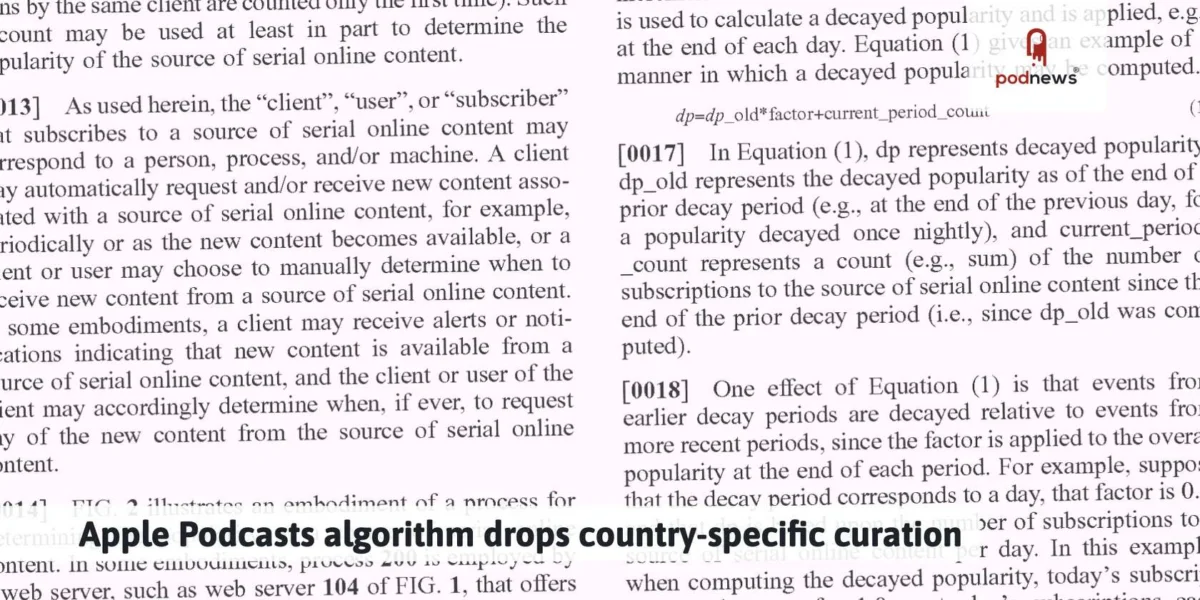
An Apple patent, originally intended for a trending chart within Apple Podcasts, has resurfaced, sparking renewed debate among podcast industry professionals about the methods of content discovery, the influence of platform gatekeepers, and the evolution of podcast analytics. The patent, detailed in an image accompanying a recent industry report, showcases a system designed to identify and rank trending podcasts, a feature that was once a visible element of the Apple Podcasts platform. While the specific implementation and current status of this patent within Apple’s ecosystem remain unclear, its existence highlights the tech giant’s historical efforts to shape user experience and content visibility on its dominant podcasting platform.

The resurgence of interest in this patent is not isolated. It arrives at a time when the podcast industry is grappling with the complexities of discoverability. For creators, breaking through the noise and reaching new audiences is a perpetual challenge. For listeners, navigating the ever-expanding universe of podcasts can be overwhelming, often leading them to rely on curated lists, algorithmic recommendations, or word-of-mouth. Apple Podcasts, as the largest podcast directory by a significant margin, holds immense power in influencing which shows gain traction and which remain niche. The existence of a patent for a trending chart suggests a deliberate strategy to manage and potentially influence this discovery process.
Background: The Evolving Landscape of Podcast Discovery

The early days of podcasting were characterized by a more organic discovery process. Directories were smaller, and word-of-mouth played a more significant role. As the medium exploded in popularity, so did the number of podcasts. This growth necessitated more sophisticated methods for helping users find content. Platforms like Apple Podcasts, Spotify, Google Podcasts, and others began investing heavily in algorithms, curated playlists, and editorial features to guide listeners.
Apple Podcasts, in particular, has historically wielded considerable influence. Its prominent placement within the iOS ecosystem has made it the default listening app for millions of users. Features such as charts, new and noteworthy sections, and personalized recommendations have been instrumental in shaping the success of many podcasts. The patent for a trending chart indicates Apple’s consideration of a data-driven approach to highlighting popular content, moving beyond simple download numbers to potentially more nuanced indicators of audience engagement and growth.

The Mechanics of Trending Charts
Trending charts in any digital media landscape typically aim to reflect what is currently capturing public attention. In the context of podcasts, this could involve a variety of metrics. While download numbers are a fundamental indicator, a sophisticated trending algorithm might also consider:

- Growth Rate: How quickly a podcast’s listenership is increasing.
- Engagement: Metrics like completion rates, listener retention, and sharing activity.
- Social Buzz: Mentions and discussions across social media platforms.
- New Listener Acquisition: The rate at which a podcast is attracting first-time listeners.
- Timeliness: The relevance of the podcast’s content to current events or cultural moments.
Apple’s patent likely detailed a system that weighed these factors to identify podcasts experiencing a surge in popularity. Such a system could be beneficial for listeners seeking to discover relevant and engaging new content. However, it also raises questions about potential biases and the influence it could exert on creators.
Potential Implications and Industry Reactions

The resurfacing of this patent has prompted discussions among podcast creators, platform representatives, and industry analysts. While the exact implementation is unknown, the underlying concept of a platform-driven trending mechanism can have significant implications:
- For Creators: A well-designed trending system could provide a much-needed visibility boost, helping smaller or newer podcasts gain exposure. However, if the algorithms are opaque or heavily favor established players, it could exacerbate the existing challenge of discoverability for independent creators. There’s also the concern that creators might start optimizing their content solely for the algorithm, potentially impacting creative integrity.
- For Platforms: Trending charts can enhance user engagement by providing a curated and dynamic content discovery experience. They can also be a valuable tool for platforms to promote specific shows or genres, potentially influencing content consumption patterns. This control over visibility is a significant aspect of platform power.
- For Listeners: Trending charts can simplify the discovery process, acting as a curated guide to popular and potentially high-quality content. However, over-reliance on such charts might lead to a narrower listening experience, potentially missing out on diverse or niche content that doesn’t fit the trending criteria.
While specific statements from Apple regarding this patent are not available, industry observers have commented on the broader implications. Sarah Koenig, a prominent podcast producer, has previously expressed concerns about the "black box" nature of some platform algorithms, emphasizing the need for transparency. "As creators, we want to understand how our work is being discovered and amplified," Koenig might say. "Knowing what metrics are being prioritized would allow us to better serve our audience and the platform."

Similarly, a representative from an independent podcast network, who preferred to remain anonymous, stated, "Any tool that helps listeners find great content is welcome. However, we need assurance that these systems are fair and don’t inadvertently create an uneven playing field. The power of a platform like Apple’s is immense, and with that comes a responsibility to foster a diverse and accessible podcast ecosystem."
The Evolution of Apple Podcasts’ Discovery Features

Apple Podcasts has continuously evolved its discovery features since its inception. Early versions relied on simpler categorization and editorial highlights. Over time, they introduced more personalized recommendations, genre-specific charts, and curated collections. The introduction of the "Listen Now" tab, which combines personalized recommendations with new and noteworthy content, represents a shift towards a more dynamic and algorithmically driven user experience.
The patent for a trending chart could have been an early exploration into a more sophisticated form of algorithmic curation. It’s possible that elements of this patent have been integrated into existing features, or that the concept has been refined and evolved internally. The visual representation accompanying the report suggests a system that could potentially display trends over different time periods (e.g., daily, weekly), allowing users to see what’s currently gaining momentum.

Data Point: The Dominance of Apple Podcasts
To understand the significance of any feature or patent related to Apple Podcasts, it’s crucial to acknowledge its market position. As of recent industry reports, Apple Podcasts consistently holds the largest market share among podcast listening apps, particularly in the United States. For instance, reports from Edison Research often place Apple Podcasts at the forefront of smartphone podcast app usage. This dominance means that any discovery mechanism implemented by Apple has the potential to significantly impact the discoverability of podcasts globally.

A hypothetical timeline of Apple’s engagement with trending features might look like this:
- Early Years: Basic charts based on overall download popularity.
- Mid-2010s: Exploration of more nuanced metrics, potentially leading to patent filings for advanced trending algorithms.
- Late 2010s/Early 2020s: Integration of algorithmic recommendations, curated collections, and personalized "Listen Now" features, possibly incorporating elements of trending data in less explicit ways.
- Present: Continued refinement of discovery algorithms, with a focus on user engagement and personalization, while the specific implementation of a public "trending chart" remains a subject of speculation.
The Future of Podcast Discovery

The debate surrounding Apple’s patent for a trending chart underscores a larger conversation within the podcast industry. As platforms become more sophisticated, the methods by which podcasts are discovered and promoted will continue to be a critical factor in their success. The ideal scenario for creators and listeners alike involves a balance between algorithmic efficiency, editorial curation, and transparency.
While the exact impact of this particular patent remains to be seen, its existence serves as a reminder of the ongoing innovation and strategic considerations that shape the podcasting landscape. The quest for effective discovery mechanisms is far from over, and the role of major platforms like Apple in this process will continue to be a focal point of discussion and development. As the industry matures, greater transparency and collaborative approaches to content discovery will be essential for fostering a healthy and vibrant podcast ecosystem for all stakeholders.

The resurgence of this patent also invites a broader reflection on the nature of "trending" in a medium as diverse and niche as podcasting. What constitutes a "trend" when a single category can encompass millions of shows? The challenge lies in developing systems that can accurately reflect genuine audience interest without creating echo chambers or unfairly disadvantaging emerging voices. The conversation around Apple’s patent is, therefore, not just about a piece of intellectual property, but about the future of how we find and share stories in the audio medium. The industry will be watching closely to see how these discovery mechanisms continue to evolve.
