

Rites of passage, whether the singing of Auld Lang Syne at midnight on New Year’s Eve, the blowing out of birthday candles, or the ceremonial smashing of champagne on a ship’s hull for its maiden voyage, universally mark the commencement of a new chapter. In the corporate sphere, particularly for sales organizations, the annual sales kickoff (SKO) serves a similar pivotal role. Far more than a mere meeting, an SKO is a strategic cornerstone designed to define, align, and galvanize efforts for the year ahead, christening new sales cycles with purpose and momentum. Much like orchestrating a memorable event, a truly successful SKO demands meticulous reflection, astute foresight, and a compelling narrative that resonates with every participant. With significant investments in time, resources, and travel, particularly for large global teams, the stakes for these events are exceptionally high, underscoring the critical need for preparation and flawless execution to reinvigorate sellers, launch strategic initiatives, and build an unstoppable momentum.
The Evolving Landscape and Strategic Imperative of Sales Kickoffs
Historically, sales kickoffs might have been perceived as annual pep rallies, primarily focused on announcing sales targets and celebrating past achievements. However, the modern business environment, characterized by rapid technological advancements, shifting market dynamics, and evolving customer expectations, has transformed SKOs into multifaceted strategic events. Today, a successful SKO is recognized as a vital component of organizational health and growth, moving beyond simple goal-setting to encompass culture building, skill development, product education, and strategic alignment across all levels of the sales hierarchy. Industry analyses often suggest that well-executed SKOs can contribute to a measurable uplift in sales productivity and pipeline generation, with leading consultancies emphasizing that companies investing strategically in these events report higher levels of employee engagement and reduced sales force attrition. The objective is no longer solely to "talk up the goal," but to equip the sales force with the processes, tools, and emotional conviction necessary to achieve and exceed those goals.
Foundation for Success: Prioritizing the Sales Audience
A common pitfall in SKO planning stems from leadership’s natural inclination to prioritize organizational health, future trajectory, and the bottom line. While these are legitimate concerns, allowing them to exclusively dictate the SKO message can alienate the very audience it seeks to inspire. The critical error lies in assuming that frontline sellers share the same high-level strategic concerns as senior management. The result is often a deluge of data-heavy slides, abstract projections, and a palpable lack of engagement that leaves audiences feeling disconnected rather than energized.

The antidote to this challenge lies in a fundamental principle: Put Your Audience First. Before drafting any content or structuring any agenda, planners must deeply consider the mindset, experiences, hopes, and concerns of their sales force. This involves a comprehensive audience analysis, moving beyond superficial demographics to understand their daily realities. Key questions to explore include: What challenges did they face last year? What are their anxieties about new initiatives? What motivates them beyond financial incentives? What tools or support do they genuinely need?
For instance, introducing a new AI-enabled sales workflow, while undeniably a productivity win for the organization, can be met with skepticism or fear of job displacement by sellers. An audience-first approach would anticipate these reservations, framing the initiative not as a mere efficiency gain for the company, but as a transformative tool that directly benefits the seller. Instead of focusing on "increased organizational productivity," the message should emphasize "saving 8-10 hours a week on clerical tasks," allowing more time for high-value relationship building and strategic customer engagement. Practical applications of this principle also extend to event logistics, ensuring appropriate timing, comfortable amenities (food, hydration, coffee), and a balanced mix of passive learning and active participation, such as small group breakouts for hands-on experimentation with new technology rather than lengthy live demonstrations. This approach fosters a sense of shared investment and ownership, making the transition smoother and more successful. Engaging directly with team leaders and even a sample of sellers through interviews or surveys can provide invaluable insights, helping to craft messaging that resonates deeply and programming that truly adds value. Tools like Duarte’s Audience Needs Map™ are specifically designed to facilitate this audience-centric perspective, translating insights into actionable communication strategies.
Crafting a Singular Message: The Duarte Big Idea™
In an era of information overload, the risk of overwhelming an SKO audience with an exhaustive list of topics—from intricate financial reports to detailed product roadmaps and expansive industry forecasts—is significant. While all these elements hold importance, they must serve a singular, overarching purpose: the one crucial takeaway leaders want their audience to remember and act upon. This is where the concept of a "Big Idea" becomes indispensable.
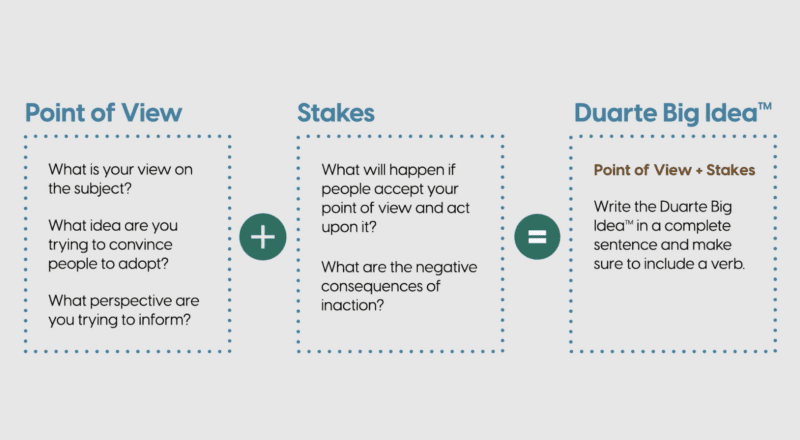
The Duarte Big Idea™ is a powerful, scalable framework designed to distill complex messaging into a clear, concise, and unforgettable statement. It articulates the presenter’s unique Point of View (POV) on a subject, combined with a clear understanding of what is at stake for the audience, all encapsulated within a single, digestible sentence. This formula (Point of View + Stakes = Big Idea) acts as the organizational "north star" for the entire event. For example, for the AI workflow initiative, a Big Idea might be: "This new AI workflow will cut clerical tasks for sellers by 20% and free up between 8-10 hours a week for high-value account holders, empowering you to build deeper relationships and drive unparalleled growth."
This principle, a cornerstone of The Duarte Method™ and trusted by Fortune 50 companies for high-stakes presentations, ensures that every piece of content, every breakout session, and every keynote address reinforces this central message. Anything that does not directly serve the Big Idea should be re-evaluated for inclusion or communicated through alternative channels. The process of developing a Big Idea forces leaders to ruthlessly prioritize, asking: "What is the absolute essence of what I need to communicate?" This clarity not only enhances message retention but also provides a coherent framework for all SKO programming, from keynote addresses to training modules.
Structuring for Engagement: The Power of the 3-Act Narrative
Once the audience is understood and the Big Idea is firmly established, the next critical step is to structure the SKO content in a way that maximizes engagement and emotional resonance. The universal appeal of storytelling, particularly the classic 3-Act Structure (Beginning, Middle, End), offers a powerful framework. This structure, deeply embedded in human cognition and evident in everything from ancient myths to modern blockbusters like Star Wars, provides a familiar narrative arc that audiences instinctively follow, allowing them to connect emotionally with the journey being presented.
- The Beginning: This act sets the stage, acknowledging the current reality, empathizing with the audience’s existing feelings, challenges, and needs (as identified in the audience-first analysis). It positions the sales team as the heroes of this unfolding story.
- The Middle: This is where the core action takes place – the "messy middle" of growth and transformation. Here, new initiatives are introduced, potential roadblocks and challenges are addressed, and the tension of change is built. This section is where the bulk of the strategic content, training, and operational plans reside.
- The End: The resolution, where the hero (the seller) emerges transformed. The new reality, or "new bliss," is vividly painted, tension is released, and a clear call to action empowers the audience to embrace the envisioned future.
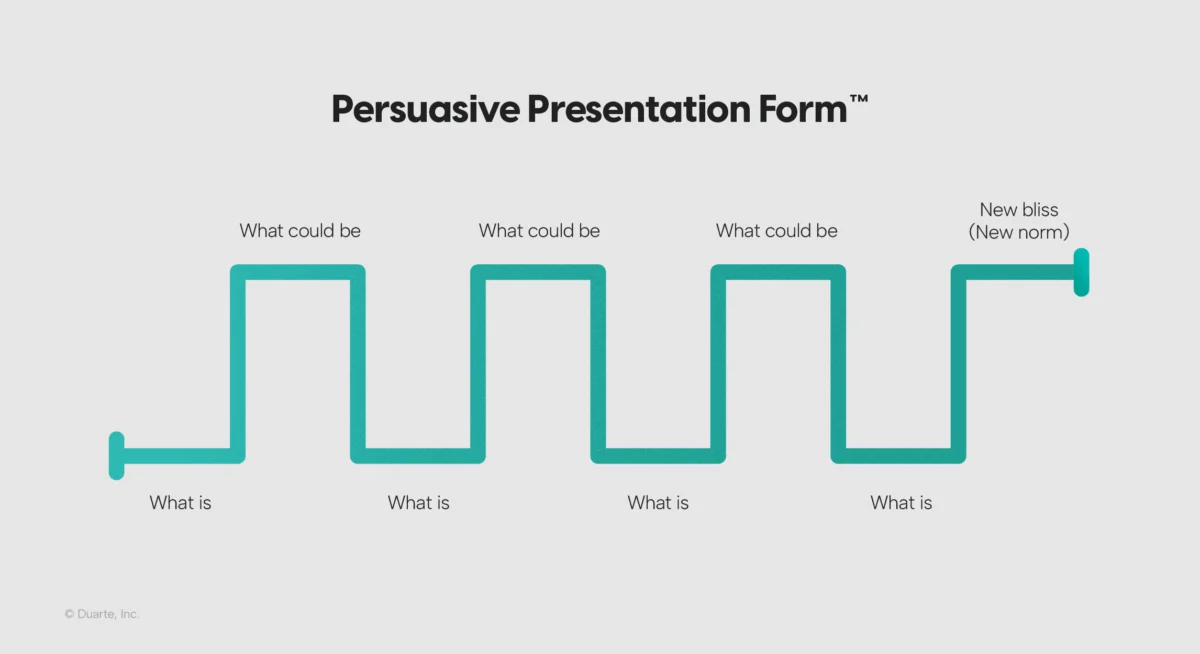
Within this 3-Act structure, The Duarte Method™ employs the Persuasive Presentation Form™ (also known as the Presentation Sparkline™), a dynamic call-and-response pattern that oscillates between "what is" (the current state, often with its inherent problems or discomfort) and "what could be" (the envisioned future, offering solutions and benefits). This oscillation builds dramatic tension, demonstrating a clear understanding of the audience’s present struggles while simultaneously inspiring them with a compelling vision of a better future. For example, acknowledging potential reservations about a new AI workflow ("Change is hard; there will be bumps") before pivoting to the tangible benefits ("you’ll find more space in your day to nurture high-value accounts") effectively addresses concerns head-on while motivating adoption. This approach ensures credibility and makes the audience more receptive to the proposed changes, fostering perseverance by illustrating the payoff. Visualizing this structure, perhaps using sticky notes to map out talking points, can help refine the flow and ensure a natural, impactful cadence.
Forging Deeper Connections: The Personal Narrative
The final, often most impactful, element of a successful SKO is the infusion of a Personal Story. While data and strategy are crucial, human beings are wired for connection, and a well-placed personal anecdote can transcend facts, forging an emotional bond between speaker and audience. This doesn’t necessitate deep vulnerability, but rather a genuine glimpse into the speaker’s own experiences, thoughts, or emotions that relate to the message.
A personal story, even a brief one, can:

- Build credibility and trust: Showing a human side makes leaders more relatable.
- Increase message memorability: Stories are inherently easier to recall than abstract data.
- Create emotional resonance: Tapping into shared human experiences fosters empathy and connection.
- Illustrate complex concepts: A personal example can make abstract ideas tangible and understandable.
Consider the AI workflow example again: a leader sharing a personal story about how the new tools unexpectedly freed up time, allowing them to spend more quality time with their family, not only humanizes the technology but also provides a powerful, relatable testament to its benefits. This anecdote moves beyond a mere productivity statistic, connecting the new workflow to a universal desire for work-life balance and personal well-being. Practicing these stories in smaller settings and soliciting feedback can help leaders refine their delivery, ensuring the story lands authentically and effectively. When skillfully woven into the broader narrative, personal stories transform a good SKO into a truly great one, moving hearts and minds toward embracing the collective vision.
Implications for Organizational Success
The meticulous application of these four elements—an audience-first approach, a clear Duarte Big Idea™, a compelling 3-Act narrative structure, and authentic personal storytelling—collectively elevates a sales kickoff from a routine event to a transformative strategic endeavor. The implications for organizational success are profound:
- Enhanced Sales Performance: A clear, resonant message empowers sellers with purpose and actionable strategies, directly translating to improved pipeline generation and quota attainment.
- Increased Engagement and Retention: When sellers feel understood, valued, and genuinely inspired, their commitment to the organization and its goals strengthens, leading to higher morale and reduced turnover.
- Cohesive Culture: A unified narrative fosters a stronger sense of team and shared purpose, aligning individual efforts with collective organizational objectives.
- Effective Strategic Deployment: New products, services, and sales methodologies are adopted more readily and effectively when presented within a compelling, audience-centric framework.
- Sustainable Growth: By equipping the sales force with both the strategic clarity and emotional motivation needed to navigate market complexities, well-executed SKOs lay the groundwork for sustained business growth and market leadership.
In conclusion, the modern sales kickoff is a critical strategic investment. By embracing these foundational principles of communication and human connection, organizations can ensure their SKOs are not just annual events, but powerful catalysts that launch new chapters of success, drive alignment, and ignite the full potential of their sales teams. For organizations seeking to dial in their next kickoff event, specialized expertise, from crafting keynote presentations to training sales teams during breakout sessions, can ensure the message is airtight and the entire organization is aligned around one compelling story.
