

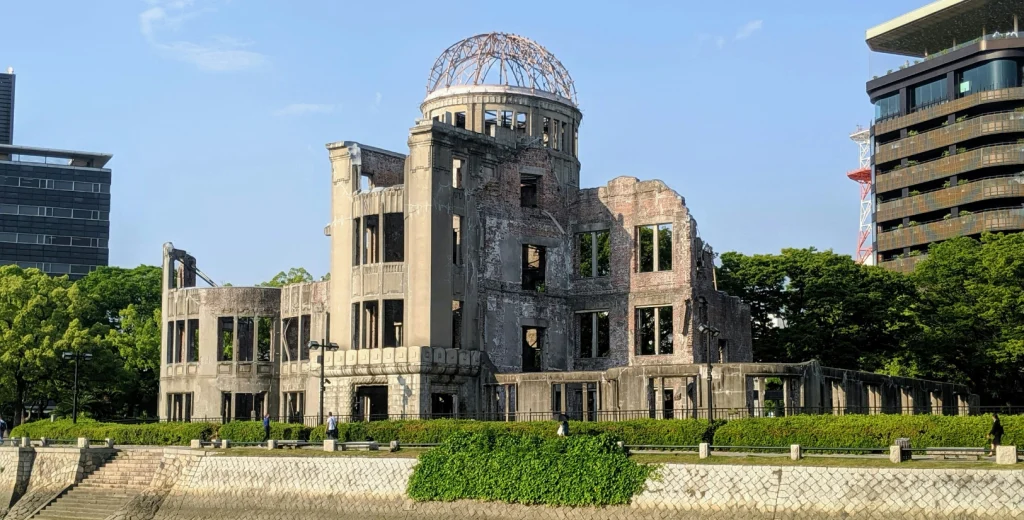
The intersection of historical narrative and modern leadership development has found a poignant case study in the life of Tsutomu Yamaguchi, the only person officially recognized by the Japanese government as a survivor of both the Hiroshima and Nagasaki atomic bombings. In the latest installment of the Anecdotally Speaking podcast, Episode 284, hosts Mark and Shawn utilize Yamaguchi’s harrowing experience to explore how the internal stories individuals construct around their experiences define their resilience, leadership efficacy, and sense of meaning. This analysis serves as a cornerstone for understanding how narrative framing influences decision-making and organizational integrity in high-stakes environments.
The Dual Catastrophe of August 1945: A Chronological Overview
To understand the magnitude of the narrative discussed by Anecdote International, one must first examine the historical reality of August 1945. Tsutomu Yamaguchi was a 29-year-old engineer employed by Mitsubishi Heavy Industries. In the summer of 1945, he was finishing a three-month business trip to Hiroshima. On the morning of August 6, 1945, as he was preparing to leave the city, the B-29 bomber Enola Gay dropped the "Little Boy" atomic bomb.
Yamaguchi was approximately three kilometers from the hypocenter when the blast occurred. He recalled seeing a "blinding flash" before being hurled into the air by the shockwave. The immediate physical toll was severe: he suffered significant burns across his upper body, ruptured eardrums, and temporary blindness. Despite these injuries, Yamaguchi managed to find shelter and, remarkably, made his way to the Hiroshima railway station the following day. Amidst a city in total collapse, he boarded a train filled with other burned and traumatized survivors, returning to his hometown of Nagasaki.
By August 9, 1945, Yamaguchi had received basic medical treatment and, driven by a sense of professional duty, reported to the Mitsubishi office in Nagasaki. As he sat in his supervisor’s office, attempting to describe the scale of the devastation he had witnessed in Hiroshima, his superior expressed disbelief, questioning how a single bomb could level an entire city. It was at this precise moment of skepticism that the second atomic bomb, "Fat Man," was detonated over Nagasaki. Once again, Yamaguchi was within three kilometers of the blast. Once again, he survived.
Supporting Data and the Hibakusha Legacy
The story of Tsutomu Yamaguchi is not merely an anomaly of luck; it is a significant data point in the study of the hibakusha—the survivors of the atomic bombings. According to records from the Radiation Effects Research Foundation, the Hiroshima blast killed an estimated 140,000 people by the end of 1945, while the Nagasaki blast claimed approximately 74,000 lives.
While there were approximately 165 individuals thought to have experienced both bombings (known as nijuu hibakusha or "double-bombed people"), Yamaguchi remained the most prominent. It was not until 2009, just one year before his death at the age of 93, that the Japanese government officially recognized him as a survivor of both blasts. This delay in recognition highlights the complex socio-political landscape survivors navigated for decades, often facing discrimination and health uncertainties.
Data regarding Yamaguchi’s longevity—living nearly a century despite being twice exposed to extreme radiation—continues to be a subject of interest for medical researchers. His life serves as a testament to human endurance, but for leadership experts like those at Anecdote International, the primary interest lies in the psychological framework Yamaguchi adopted.
The Psychological Framing: Luck versus Misfortune
The central theme of the Anecdotally Speaking podcast is the concept of "meaning-making." Mark and Shawn pose a fundamental question to their audience: Was Tsutomu Yamaguchi the unluckiest man in history for being present at both bombings, or was he the luckiest man for surviving both?
The facts of the events remain static—the dates, the locations, the injuries, and the survival are objective truths. However, the "story" told about those facts changes the output of the narrative. In a leadership context, this is known as cognitive reframing. Leaders who view challenges as insurmountable misfortunes often struggle with morale and stagnation. Conversely, those who frame even the most dire circumstances as opportunities for resilience or "survival against the odds" can galvanize teams and foster a culture of persistence.

The podcast explores how this internal storytelling influences decision-making. When a leader tells themselves a story of victimhood, their decisions tend to be defensive and risk-averse. When the story is one of agency and resilience, decisions are more likely to be proactive and innovative.
Leadership Communication and Narrative Integrity
Beyond the personal resilience of Yamaguchi, the podcast discusses the technical aspects of storytelling that leaders can employ to manage organizational change. A key technique highlighted is "foreshadowing." In the context of Yamaguchi’s story, his initial experience in Hiroshima served as a horrific foreshadowing of what was to come for Nagasaki. In a corporate setting, foreshadowing involves preparing an audience for upcoming changes or challenges by seeding information and context early, thereby reducing the shock and resistance that often accompany major transitions.
The discussion also touches upon a critical challenge for modern executives: communicating decisions they may not personally endorse. Mark and Shawn argue that maintaining authenticity and integrity requires a leader to bridge the gap between corporate requirements and personal belief through transparent storytelling. By acknowledging the complexities of a situation and the rationale behind a difficult choice, leaders can maintain the trust of their workforce even when the news is unfavorable.
The Role of Audience Participation in Meaning-Making
One of the more nuanced points raised in Episode 284 is the role of the audience in the storytelling process. Meaning is not something a speaker "gives" to a listener; rather, it is co-created. When a leader shares a story of resilience, the employees interpret that story through the lens of their own experiences.
Anecdote International’s methodology emphasizes that for a story to be effective in a professional environment, it must leave space for the listener to draw their own conclusions. By presenting the facts of Yamaguchi’s life and allowing the listener to weigh the concepts of luck and fate, the storyteller engages the audience’s critical thinking skills. This engagement is vital for "sales enablement" and "leadership development," as it ensures that the lessons learned are internalized rather than merely heard.
Broader Impact and Implications for Global Organizations
The work of Anecdote International, as a global training and consulting firm, reflects a growing trend in the corporate world: the return to "humanity" in the workforce. With a network of over 60 partners across 28 countries, the organization’s focus on storytelling suggests that data and logic alone are insufficient for modern leadership.
In an era of rapid technological change and remote work, the "human" element—the ability to connect through shared narratives—has become a premium skill. The translation of these learning programs into 11 languages indicates that the need for narrative-based leadership is a universal requirement, transcending cultural and geographic boundaries.
The story of Tsutomu Yamaguchi, as utilized in this podcast, serves as more than a historical footnote. It is a tool for "story banking," a practice where leaders collect and categorize narratives to be used in specific business scenarios such as change management, resilience training, or cultural integration.
Conclusion: The Enduring Power of the Survived Story
Tsutomu Yamaguchi eventually became a vocal advocate for nuclear disarmament, using his "lucky/unlucky" status to influence global leaders, including addressing the United Nations. His transition from a silent survivor to a global storyteller mirrors the journey many leaders must take: moving from experiencing a crisis to interpreting it, and finally, using that interpretation to influence others.
As organizations navigate the complexities of the 21st century, the lessons from Anecdotally Speaking Episode 284 provide a clear directive. The stories we tell ourselves—and the stories leaders tell their teams—are not just reflections of reality; they are the architects of it. Whether an event is viewed as a catastrophic failure or a miraculous survival depends entirely on the narrative framework applied. In the world of leadership, as in the life of Tsutomu Yamaguchi, the facts are only the beginning; the meaning is where the power resides.
