


Securing budget approval is not merely a bureaucratic hurdle but the foundational act that unlocks innovation, enables market entry for new offerings, strengthens internal support systems, and projects an organization’s vision onto the global stage. This cascade of strategic outcomes originates from the persuasive articulation of why decision-makers should invest in a particular idea. When a project receives the coveted green light, it signifies readiness to cultivate plans and nurture them into tangible realities. However, the ability to perceive a flourishing garden within a barren patch of dirt—to translate abstract potential into concrete, compelling vision—is a skill often overlooked in the traditionally numbers-driven world of corporate finance.
The Intricate Landscape of Budgetary Decisions
Budget approvers operate within a framework anchored by fiscal responsibility and the overarching health of the company. Their decisions are not abstract; they are rooted in quantifiable data, projected returns, and meticulous risk assessments. Tasked with ultimate accountability for a project’s success or failure, the pressure to make the optimal choice is immense. This inherent focus on the bottom line often narrows budget conversations to dollar amounts, profit margins, and expense management, making it challenging for innovative proposals to fully convey their broader impact. According to a 2023 report by Gartner, only about 50% of IT projects are completed on time and within budget, with many facing challenges related to initial scope definition and stakeholder buy-in, underscoring the criticality of a robust initial pitch. The budget review process, typically involving multiple stages from departmental requests to executive committee approvals, is a gauntlet where proposals are scrutinized for financial viability above all else.
For budget seekers, the challenge lies in transcending mere financial data to paint a holistic picture that dashboards and spreadsheets alone cannot convey. While the rigorous balancing of expenses is indispensable—numbers must indeed add up to secure progression—it is equally crucial to weave a narrative that elevates leaders beyond granular project allocations and fiscal calendars. This narrative should illuminate the full, vibrant potential of their approval, akin to Dorothy’s transition from monochrome Kansas to the technicolor marvel of Oz, revealing a future far richer than mere financial returns. This strategic storytelling secures not just funding, but also invaluable time, essential resources, and critical organizational backing—the triumvirate of ingredients for any successful endeavor. To effectively navigate this complex terrain and garner the necessary traction, three narrative techniques stand paramount.
1. Elevating Budget-Approvers to Heroes of ROI

The objective of a budget proposal extends beyond simply detailing where money will be spent; it must convincingly illustrate how that investment will reappear in the form of substantial Return on Investment (ROI). While precise prognostication of the future is impossible, a well-crafted narrative about the project’s vision helps align budget-approvers’ expectations and enables them to foresee the potential returns. Much like film producers meticulously review scripts and storyboards before committing significant capital, decision-makers require a clear, imaginative preview of the "final cut" of a project. They need to understand the journey from initial investment to tangible, beneficial outcomes.
Consider the parallels with the film industry. Before Christopher Nolan embarked on ambitious, high-budget projects like a reimagined The Odyssey (hypothetically, with a $250 million budget), he honed his craft and built trust with smaller, critically acclaimed films. His 2006 adaptation of Christopher Priest’s novel, The Prestige, was produced for a modest $40 million. This film, set in Victorian London, chronicles the intense rivalry between two magicians and famously opens with Michael Caine’s character describing the three acts of a magic trick: the Pledge (the ordinary object), the Turn (making it do something extraordinary), and the Prestige (making it reappear).
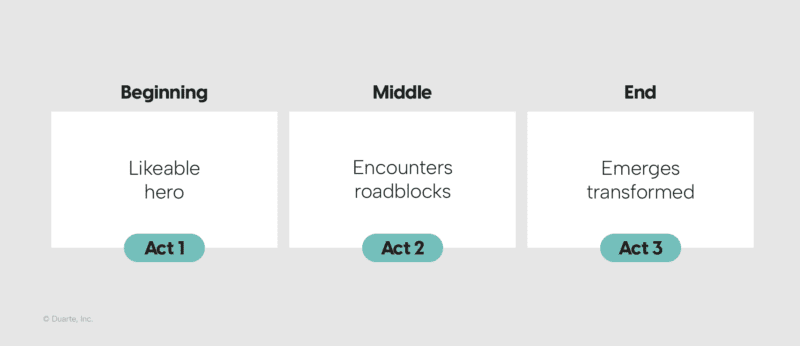
This magical framework offers a potent analogy for budget proposals. The "pledge" of your budget proposal presents the current state or the initial investment required. The "turn" outlines the innovative process, the strategic execution, or the transformative work enabled by the funding. The "prestige" reveals the spectacular reappearance of value—the ROI—that addresses the hopes and alleviates the fears of the budget-approvers. This 3-act structure, a cornerstone of effective storytelling advocated by communication experts like Duarte, applies universally to persuasive narratives, from well-researched recommendations to inspiring audiences to embrace new ideas.
To highlight this effect, consider a purely data-driven project description:
“With a $40 million budget, the film is projected to gross upwards of $100 million at the box office, achieve a runtime of 130 minutes, and ultimately aggregate a 76% on Rotten Tomatoes based on 208 reviews.”
This statement, while precise and data-backed, is utterly devoid of life, failing to ignite imagination or connect with any deeper organizational aspirations.
Now, contrast this with a narrative employing the 3-Act Structure:
“With your pivotal approval of our $40 million budget, this film will become a stunning reimagining of Christopher Priest’s award-winning novel, featuring stellar performances by Hugh Jackman, Christian Bale, Scarlett Johansson, Michael Caine, and David Bowie in his most authentic role since Labyrinth. The adaptation demands painstaking detail, but its cross-over appeal into fantasy and science fiction genres, combined with the collective star-power of its cast, will attract diverse audiences. Given the caliber of craft and talent dedicated to this project, we believe it possesses the potential to delight and challenge generations of viewers, earn significant critical accolades, and deliver over 200% ROI at the box office and through ancillary revenues.”
The difference is palpable. The second example positions the budget-approver as the central hero, the catalyst who sets the transformative process in motion. It acknowledges the challenges inherent in ambitious projects ("painstaking detail") and transmutes a mere dollar amount into a vivid, fully formed vision of the finished product. While the first example hyper-focuses on ROI purely in terms of metrics, the second masterfully integrates projected ROI with loftier dimensions such as legacy, cultural impact, and brand enhancement. It is the distinction between presenting a story via a sterile chart and crafting one destined for the silver screen, designed to captivate and convince. The true magic, of course, lies in convincing approvers that this vision is not only attainable but that you are the one to bring it to fruition.
2. The Art of the "Called Shot": Building Confidence and Credibility
In the realm of budget conversations, a persuasive narrative demands the unwavering confidence of a seasoned professional. This is not to advocate for making unsubstantiated claims, risking a debacle akin to the infamous Fyre Festival. Rather, it emphasizes that genuine, reflective budget-seekers inherently understand their capabilities and how they will surmount challenges. The task is to instill this same conviction in the budget-approvers. Before achieving any significant goal, one must first wow decision-makers into believing in one’s capacity to deliver. This requires a blend of assuredness and the demonstrable skills to back it up, a concept perfectly encapsulated by Babe Ruth’s legendary "called shot."
In Game 3 of the 1932 World Series, with the New York Yankees facing the Chicago Cubs at Wrigley Field, an intense rivalry fueled a hostile crowd. As Babe Ruth stepped up to bat in the 5th inning, having already taken two strikes from Cubs pitcher Charlie Root, he made an audacious pointing gesture towards the center field stands. On the very next pitch, Ruth famously hit a towering home run, contributing to the Yankees’ eventual sweep of the series. While the precise details of Ruth’s gesture have been debated through eyewitness accounts, books, and grainy footage, the legend was cemented by reporter Joe Williams’ iconic headline: "RUTH CALLS SHOT AS HE PUTS HOME RUN NO. 2 IN SIDE POCKET."
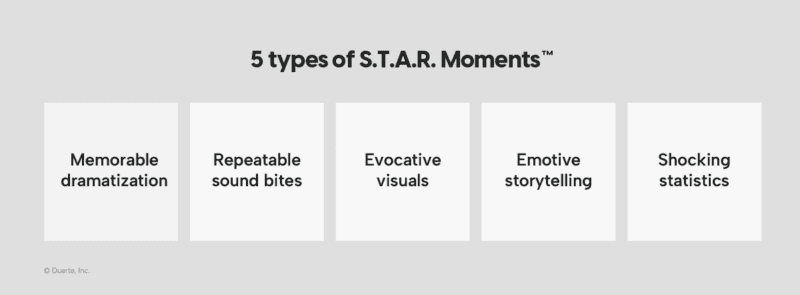
This incident exemplifies what communication experts at Duarte refer to as a S.T.A.R. moment (Something They’ll Always Remember). These are strategic opportunities to create lasting impact and differentiate a presentation. Successfully deployed in contexts ranging from Academy Award-winning documentaries to high-stakes keynote presentations, a S.T.A.R. moment can be instrumental in winning over budget-approvers and securing funding. Before entering any budget discussion, a critical self-reflection is warranted: How can I convince budget-approvers that my next swing will be a homerun? This involves considering the five types of S.T.A.R. moments: memorable dramatization, repeatable sound bites, evocative visuals, emotive storytelling, and shocking statistics.
While a degree of bravado can be effective, true confidence is forged through deep thinking, rigorous practice, and thorough preparation. Babe Ruth, batting .341 in 1932 with 41 home runs already under his belt when he made his "called shot," possessed an undeniable track record. Similarly, a budget-seeker has a singular opportunity to demonstrate competence, build trust, and earn credibility. Focusing excessively on detailed industry analysis or personal accomplishments risks disengaging the approvers. Instead, a S.T.A.R. moment should be crafted by integrating multimedia elements into the budget proposal, delivering a crisp, clear narrative that positions the approver as an integral part of the project’s success.
The fundamental shift in perspective is crucial. Instead of asking, "Here’s what I can do," the narrative should pivot to, "With your help, here’s what we can do." By centering the approver within the S.T.A.R. moment, you implicitly invite them to participate in the project as more than a mere signatory. This participatory framing fosters a deeper connection, preparing decision-makers to engage with the project on an emotional level and champion its success.
3. Inspiring Belief Beyond the Balance Sheet: The Pursuit of "New Bliss"
Beyond captivating approvers with strategic confidence, crafting a message infused with empathy and emotional resonance can forge profound connections. This involves channeling human elements that transcend dry details and plot points, allowing audiences to perceive something larger and more significant—a phenomenon explaining why films and sporting events resonate deeply, and even why commercials can elicit tears.
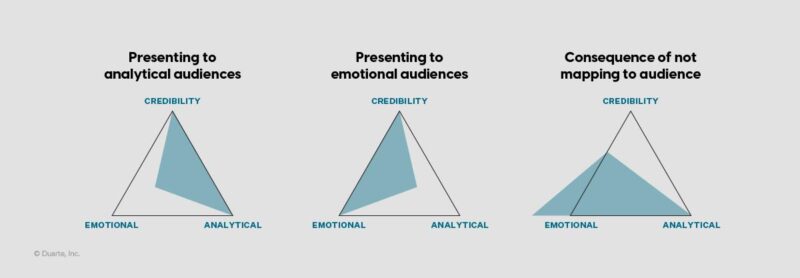
One powerful method for engaging both analytical and emotional audiences is to skillfully balance the financial imperatives of a budget request with the "new bliss" that its potential offers. At Duarte, "new bliss" refers to the enhanced state or profound benefits audiences stand to gain after navigating the "messy middle" of working towards a goal or implementing organizational change. For budget-seekers, illustrating the compelling tension between "what is" (the current state or challenge) and "what could be" (the transformative future enabled by the project) guides approvers to actively desire the "new bliss" outlined in the proposal.
Integrating structured storytelling with empathetic insights allows a budget proposal to address financial realities while simultaneously encouraging decision-makers to envision a brighter future. Perhaps a Chief Financial Officer, while seeking assurances on expenditure, secretly yearns for more personal time, frequently missing family events. Or perhaps the leadership team harbors anxiety about the company’s competitive standing. There might also be a collective desire to develop a product, service, or solution that is not only profitable but genuinely beneficial to people. These unspoken motivations and aspirations represent powerful levers for emotional connection.
While a budget story centered solely on maximizing profit is one approach, a more impactful narrative highlights how a vision for a more efficient workflow could grant everyone, including the CFO, more valuable personal time. Or how an innovation could reinvigorate public interest in the brand, securing its long-term relevance. Or how, with appropriate funding, a clear pain point in the customer experience could be eliminated, fostering loyalty and satisfaction. This nuanced approach helps stakeholders develop a personal commitment to the project, extending far beyond a mere administrative approval. According to a 2022 survey by PwC, 79% of consumers believe that businesses have a responsibility to address social issues, indicating that purpose-driven narratives can resonate deeply not just with customers, but also with internal stakeholders.
Achieving this perfect balance necessitates rooting the story in audience-first empathy. By acknowledging the internal lives, aspirations, and even anxieties of budget approvers, the narrative can be structured to seamlessly weave sound financial reasoning with details that register on an emotional level. Beyond securing time and money, organizational backing is perhaps the most significant predictor of a project’s success. Cultivating this support on a large scale requires transforming mere buy-in into genuine belief through a story that resonates across all organizational tiers. However, caution is advised; excessive sentimentality risks overshadowing the tangible stakes and financial prudence required.
Integrating Narrative into the Budget Cycle and Broader Implications
The application of these narrative techniques is not confined to a single pitch meeting but can be integrated throughout the entire budget cycle. From initial departmental submissions to final executive presentations, consistently framing proposals with a hero-centric ROI story, strategic S.T.A.R. moments, and an appeal to "new bliss" can progressively build momentum and consensus. Early-stage discussions can focus on the aspirational "new bliss," while later stages can reinforce the "called shot" confidence and detailed ROI narrative. This iterative approach ensures that the emotional connection and strategic vision are maintained as the proposal moves through different layers of scrutiny.
The implications of mastering this blend of data and narrative extend far beyond individual project approvals. Organizations that consistently empower their teams to tell compelling budget stories foster a culture of innovation, strategic alignment, and proactive problem-solving. It cultivates an environment where ideas are not just funded but genuinely embraced and championed. This leads to higher rates of successful project implementation, improved employee morale, and a stronger external brand reputation built on tangible achievements and a clear sense of purpose. Conversely, organizations that fail to move beyond purely numerical presentations risk stifling creativity, missing critical market opportunities, and fostering an environment where valuable ideas are overlooked due to a lack of persuasive articulation.
By delivering a budget story that is meticulously structured, deeply empathetic, and strategically punctuated by well-placed S.T.A.R. moments, budget-seekers can transform a daunting request into an irresistible proposition. This approach paves the way for approvals that are not just rubber-stamped, but enthusiastically endorsed, propelling projects and organizations forward into a future rich with potential.
