

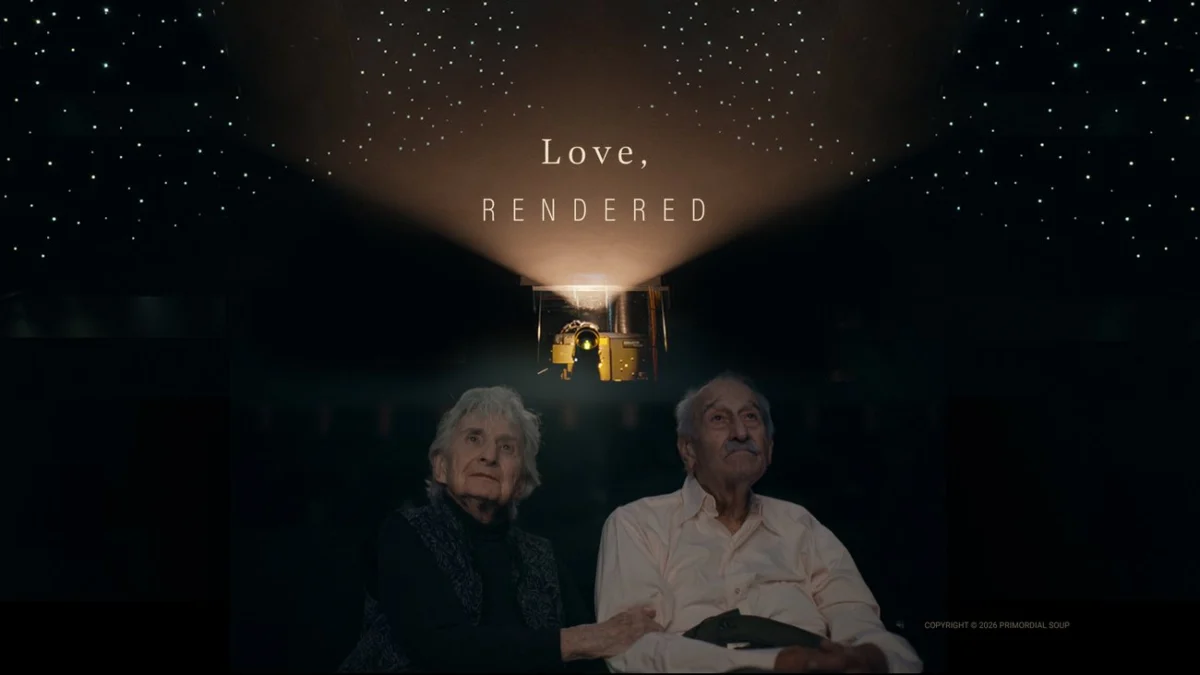
The Narrative Core of Love, Rendered
At the heart of the documentary is the relationship between Burt and Ethelle Shatz, whose 70-year marriage serves as the emotional anchor for a high-tech experiment. As Burt’s memory began to fade due to age-related cognitive impairment, the couple faced the permanent loss of their shared history. One specific memory—their first meeting at a Cleveland student co-op—remained a vivid cornerstone of their identity but existed solely in their minds. Because the meeting occurred in an era before the ubiquity of smartphone cameras and digital archiving, there was no visual record of the event.
The project was spearheaded by director Liz Garbus, known for her Academy Award-nominated documentary work, alongside producers Dan Cogan and Darren Aronofsky. Aronofsky’s creative venture, Primordial Soup, partnered with Google DeepMind to explore whether AI could serve as a restorative lens for such lost moments. The objective was to move beyond the "uncanny valley"—the phenomenon where artificial human likenesses provoke a sense of unease—and instead capture the "human essence" of the couple’s younger selves.
A Technical Methodology for Memory Reconstruction
The production of "Love, Rendered" required a sophisticated multi-stage technical workflow led by Google DeepMind engineers. Michael Chang, the technical lead on the film, characterized the project as both an emotional and technical challenge. The process began with the collection of extant family artifacts, including faded physical photographs and home movies from later years in the couple’s life.

To recreate the 1950s meeting, the team employed a two-part technical approach:
- Image Restoration and Synthesis: Engineers used generative models to "de-age" current images of the couple and restore low-resolution photographs from their early years. This involved training models to recognize the specific facial structures, bone density, and expressions of Burt and Ethelle to ensure that the AI-generated versions were recognizable as the same individuals.
- Mannerism Mapping and Animation: Once static images were perfected, the team used video generation models to animate them. This was not a random animation; it was guided by "micro-mannerisms." Researchers analyzed how Burt and Ethelle move in the present day—the specific way a head tilts or a hand gestures—and mapped those idiosyncratic movements onto their younger, AI-rendered avatars.
Crucially, the technology was guided by human intervention. Ethelle Shatz acted as a primary consultant and co-creator during the rendering process. She provided real-time feedback to the engineers, correcting details that the AI could not know, such as the specific curve of a staircase in the co-op or the height of a shoe heel. This "human-in-the-loop" system ensured that the final product was not just a computer-generated image, but a reflection of a lived experience.
Reminiscence Therapy and the Science of Recall
The film’s conceptual foundation lies in "reminiscence therapy," a clinical practice used primarily for patients with dementia and Alzheimer’s disease. This therapy utilizes sensory cues—songs, scents, and visual stimuli—to trigger "reminiscence bumps," periods of life that are often most vividly remembered.
Director Liz Garbus noted that the inspiration for the film came from her previous work on the documentary "Coma," where she observed fMRI (functional Magnetic Resonance Imaging) scans of patients in minimally conscious states. These scans showed significant neural activity when patients were exposed to familiar voices or images of loved ones. Similarly, Darren Aronofsky cited the viral footage of a former ballerina with Alzheimer’s who, upon hearing the music from "Swan Lake," began to perform the choreography from her wheelchair.

"Love, Rendered" posits that AI can act as a new form of sensory cue for those whose memories are no longer accessible through traditional means. By providing a visual "anchor" for a fading memory, the technology aims to stimulate neural pathways and facilitate emotional connection between partners facing the isolation of cognitive decline.
Project Chronology and Development
The development of "Love, Rendered" followed a strict timeline of research, production, and exhibition:
- Initial Concept (2022-2023): Primordial Soup and Google DeepMind began discussions on the intersection of storytelling and generative AI. The search for a subject led to the Shatz family, whose long-term marriage provided a deep well of unrecorded history.
- Data Collection and Model Training (Late 2023): Engineers at DeepMind began processing the Shatz family archives. This period involved testing various image-to-video models and refining the restoration algorithms to handle 70-year-old photographic grain.
- Production and Co-Creation (Early 2024): Liz Garbus filmed the present-day interactions of Burt and Ethelle while the technical team worked in parallel. Ethelle’s sessions with the DeepMind team took place during this phase, where she refined the AI’s output.
- Post-Production and Refinement: The final "memory" sequences were integrated into the documentary narrative, blending traditional cinematography with AI-generated scenes.
- Premiere (September 2024): The film premiered at the Telluride Film Festival, receiving attention for its ethical approach to AI and its emotional resonance.
Broader Implications for Digital Legacy and Healthcare
The implications of the technology showcased in "Love, Rendered" extend far beyond filmmaking. As generative AI becomes more accessible, the potential for personal "digital legacy" preservation increases. Google has already begun integrating simplified versions of these tools into its consumer products. For instance, the Gemini app now allows users to upload old photographs and request restorations or colorizations, bringing a version of the DeepMind workflow to the general public.
In the medical field, the success of this project suggests a future where personalized AI-generated content could be used in geriatric care settings. If a patient’s specific, unrecorded memories can be visualized, it may provide a powerful tool for caregivers to reduce the anxiety and agitation often associated with late-stage memory loss.
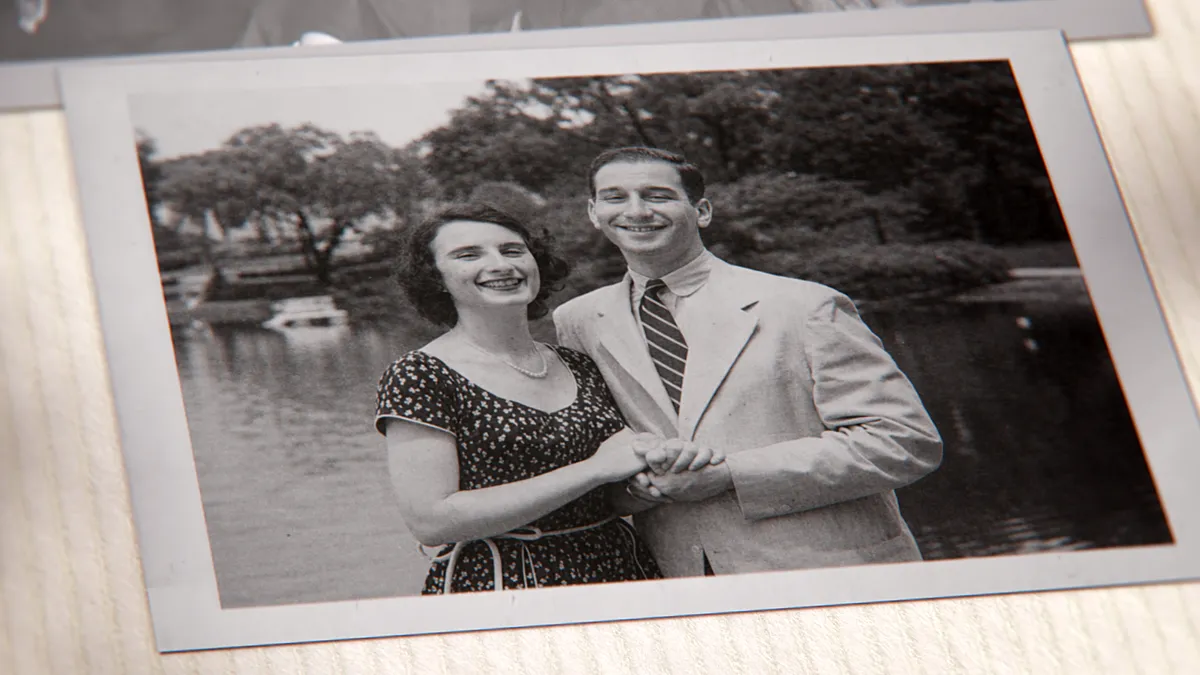
However, the project also raises important considerations regarding the "authenticity" of memory. Critics and ethicists have pointed out that AI-generated images are essentially "hallucinations" based on data, not objective recordings. The filmmakers address this by emphasizing that "Love, Rendered" is an exploration of subjective truth. The goal was not to create a forensic recreation of the past, but to generate a visual that felt true to the participants.
Official Responses and Industry Impact
The film has sparked a dialogue within the tech and film industries regarding the responsible use of AI. Michael Chang of Google DeepMind emphasized that the project was designed to show AI as a "tool—like a paintbrush or a hammer—that does nothing until it is guided by human hands." This sentiment was echoed by Darren Aronofsky, who has been a vocal proponent of exploring how new technologies can enhance traditional storytelling without replacing the human element.
Industry analysts suggest that "Love, Rendered" may set a precedent for the documentary genre, particularly for historical or biographical films where archival footage is scarce. Instead of relying on traditional dramatic reenactments with actors, filmmakers may increasingly turn to AI to reconstruct scenes using the actual likenesses of their subjects.
As the global population ages—with the World Health Organization estimating that 55 million people currently live with dementia—the demand for technologies that can preserve human connection is expected to grow. "Love, Rendered" serves as a proof-of-concept for a future where technology does not just look forward toward the new, but looks backward to protect the old. Through the marriage of Burt and Ethelle Shatz, Google DeepMind and Primordial Soup have demonstrated that while memory may be fragile, the stories that define a life can be rendered permanent through the thoughtful application of artificial intelligence.
