

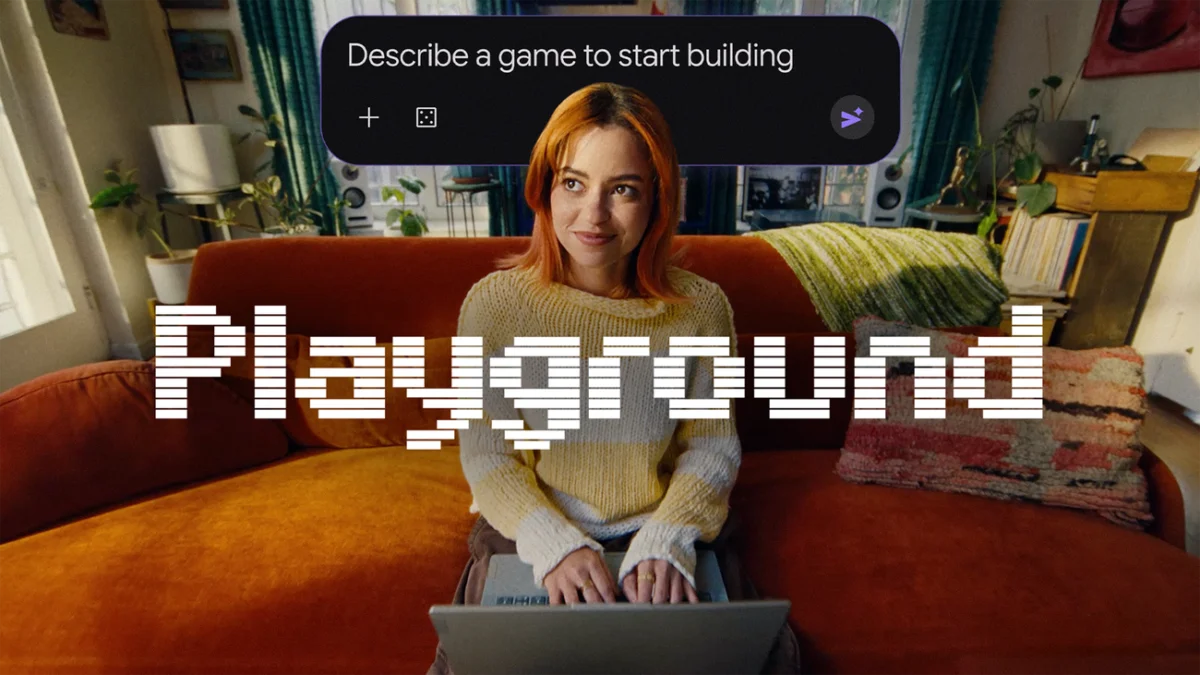
The initiative, led by Maryam Karimzadehgan, a software engineer within Google’s AI Innovation and Research division, aims to capitalize on the burgeoning global gaming community, which now encompasses billions of players worldwide. Historically, the creation of video games required a mastery of complex engines like Unreal Engine or Unity, alongside proficiency in programming languages such as C++ or C#. Playground seeks to bypass these prerequisites, offering a conversational interface where the user acts as a director rather than a programmer.
The Evolution of Generative AI in Creative Industries
The debut of Playground arrives at a pivotal moment in the evolution of generative artificial intelligence. Over the past twenty-four months, the technology has transitioned from producing static content—such as text via Large Language Models (LLMs) and images via diffusion models—to generating dynamic, logic-based environments. Google’s entry into this space follows a series of internal advancements in AI, including the development of the Gemini family of models, which likely provide the underlying logic for interpreting user intent within the Playground ecosystem.
Industry analysts note that this move is part of a broader trend toward "No-Code" and "Low-Code" development. By integrating AI into the creative pipeline, Google is positioning itself to compete in a market currently dominated by user-generated content (UGC) giants such as Roblox and Epic Games’ Fortnite Creative. However, unlike those platforms, which still require some level of familiarity with proprietary scripting languages or visual nodes, Playground’s reliance on pure natural language marks a new frontier in accessibility.
Core Functionalities: From Prompt to Playable Product
The Playground user experience is centered on a "blank canvas" philosophy. Users can initiate the creation process by typing descriptions of their desired game. For instance, a user might prompt the system to "create a 2D platformer where a sloth navigates a city skyline while avoiding pigeons." The AI then interprets these instructions to generate the physics, art assets, and win-loss conditions necessary for a functional game.
Key features of the creation suite include:
- Conversational Iteration: Users can refine their creations in real-time. If a game is too difficult, a creator can simply instruct the AI to "lower the gravity" or "increase the player’s movement speed."
- Remixing and Starter Prompts: For those who may not have a fully formed concept, the platform provides "starter prompts" that serve as templates. These can be "remixed"—a process where a user takes an existing game’s logic and applies new themes or rules to it.
- Instant Testing: The platform allows for immediate transition between the creation interface and the gameplay mode, facilitating a rapid feedback loop that is often missing in traditional development cycles.
Social Integration and Multi-Device Accessibility
Recognizing that the value of gaming lies in social interaction, Google has built Playground as a browser-based platform. This architectural choice ensures that games are instantly accessible across a variety of hardware, including smartphones, tablets, and laptops, without the need for high-end GPUs or lengthy installations.
The platform includes a comprehensive "Explore" gallery where creators can publish their work for the public. To foster a competitive and social environment, Google has integrated "Play Games" profiles, allowing users to claim unique handles, track their progress on global leaderboards, and follow specific creators. Select genres within the platform also support multiplayer functionality, a feature that significantly increases the complexity of the AI’s task in managing real-time data synchronization across multiple users.
Safety remains a primary concern for Google in the rollout of this experimental tool. All published games undergo automated safety screenings to ensure compliance with Google’s Community Guidelines. Furthermore, the platform incorporates user-reporting mechanisms to mitigate the risk of inappropriate content, a challenge that has historically plagued other UGC platforms.
Strategic Partnership: The Integration of Unity Spark
Perhaps the most significant technical development accompanying the launch is the announced integration with Unity Spark. While Playground is currently designed for approachable, prompt-based creation, the upcoming Unity Spark integration is intended to bridge the gap between amateur hobbyists and professional developers.
Unity, one of the world’s most widely used game engines, will provide the backend for "Spark," unlocking high-fidelity 3D capabilities and robust, professional-level mechanics. This partnership suggests a strategic pipeline: a creator can start a project using simple text prompts in Playground and eventually migrate that project into the Unity ecosystem to add immersive 3D elements and complex logic. This "tiered" approach to development could potentially revolutionize how indie developers prototype their ideas, reducing the "time-to-market" for new concepts.
Unity Spark is currently in a closed beta testing phase. Early demonstrations suggest that the integration will allow Playground games to utilize the Unity runtime, which is optimized for performance across millions of devices.
Market Context and Data-Driven Insights
The global video game market is projected to reach a valuation of over $300 billion by 2030, according to recent industry reports. Within this market, the segment for user-generated content is the fastest-growing. Roblox, for example, reported over 70 million daily active users in late 2023, highlighting a massive appetite for platforms that allow players to also be creators.
Data from recent consumer surveys indicates that 64% of "Gen Z" and "Alpha" gamers spend more time in creative or "sandbox" modes than in traditional linear campaigns. By launching Playground, Google is tapping into this demographic shift. Furthermore, the decision to gate certain levels of creation access behind Google AI subscriptions (such as Gemini Advanced) suggests a new monetization strategy for Google’s consumer AI products, linking creative tools directly to their premium subscription ecosystem.
Professional and Educational Implications
The launch of Playground has sparked a debate among professional game developers regarding the future of the craft. While some see AI-driven creation as a threat to entry-level design roles, others view it as a powerful tool for rapid prototyping. In a professional studio setting, a designer could use Playground to "sketch" a gameplay mechanic in minutes—a process that would traditionally take a team of engineers several days.
From an educational perspective, Playground offers a unique entry point for STEM (Science, Technology, Engineering, and Mathematics) learning. By allowing students to see the immediate impact of their "instructions" on a digital environment, it teaches the logic of systems and rules-based thinking without the steep learning curve of syntax-heavy coding.
Future Outlook and Availability
Playground is currently available to users in the United States who are 18 years of age or older. Access is being rolled out in tiers, with priority and enhanced features given to those with existing Google AI subscriptions. As the platform moves out of its "experimental" phase, Google plans to expand its geographic reach and refine the AI’s ability to handle increasingly complex requests.
The long-term success of Playground will likely depend on the quality of the community-generated content and the seamlessness of the Unity Spark integration. If Google can successfully transition users from simple 2D prompts to sophisticated 3D experiences, it may well establish a new standard for how software is conceived and built in the age of artificial intelligence.
As the gaming industry continues to evolve, the line between player and developer is becoming increasingly blurred. Playground represents a bold step toward a future where the only limit to digital creation is the user’s imagination, effectively turning every gamer into a potential architect of their own virtual worlds. For now, the tech community watches closely as the first wave of "prompt-engineered" games begins to populate the Playground gallery, marking the start of a new chapter in interactive media.
