

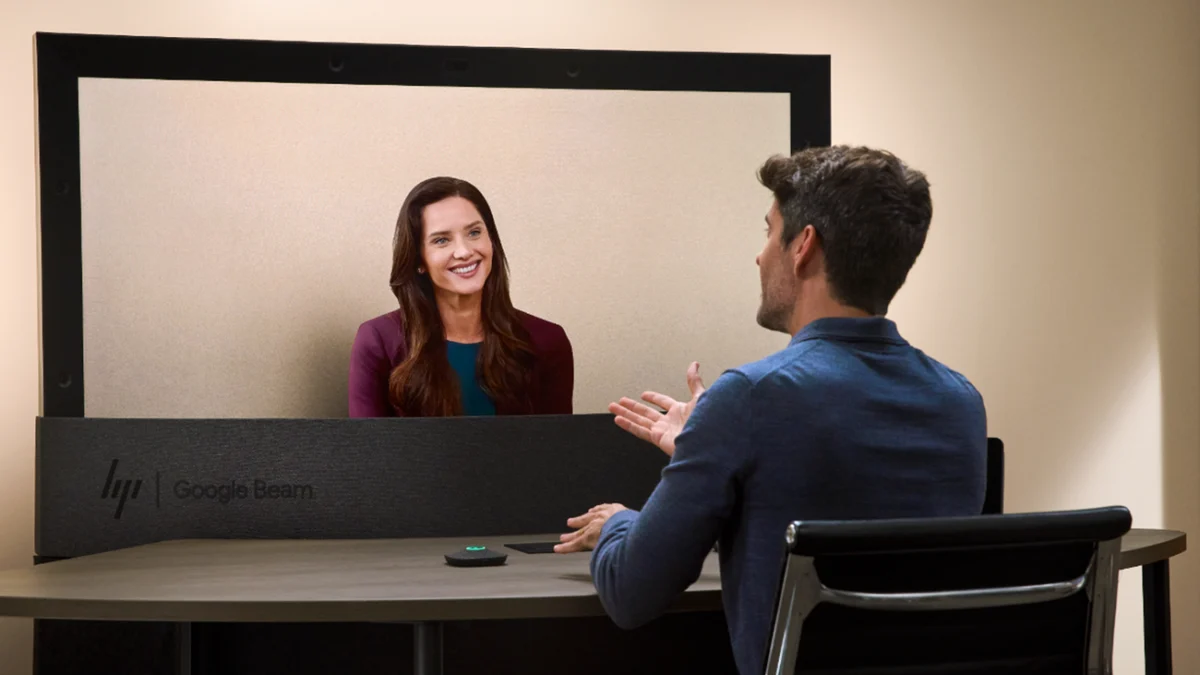
Google has officially announced a significant global expansion of its Beam technology, a sophisticated "copresence" communication platform designed to simulate face-to-face interactions through advanced 3D imaging and spatial audio. This strategic rollout marks a transition for Google Beam from an experimental internal tool to a commercially available enterprise solution. The expansion includes a deployment across six major international markets, a strategic manufacturing and distribution partnership with HP, and the launch of a first-of-its-kind "extended network" through the flexible workspace provider Industrious. By integrating with established video conferencing platforms such as Google Meet and Zoom, Google aims to bridge the gap between physical and digital collaboration, addressing the persistent challenges of the hybrid work era.
The expansion comes at a pivotal moment for the technology sector, as organizations grapple with the limitations of traditional 2D video conferencing. While standard video calls became the lifeline of global business during the pandemic, "Zoom fatigue" and the loss of non-verbal cues have remained significant hurdles for long-term remote collaboration. Google Beam, which evolved from years of research into light-field displays and computer vision, seeks to solve these issues by creating a life-sized, three-dimensional representation of participants, allowing for natural eye contact and body language recognition.
A Strategic Global Rollout and Ecosystem Development
The core of today’s announcement is the formal availability of Google Beam hardware in six key regions: the United States, Canada, the United Kingdom, France, Germany, and Japan. This geographic selection targets major economic hubs where multinational corporations are increasingly adopting hybrid work models. To facilitate this massive logistical undertaking, Google has established a robust ecosystem consisting of 18 dedicated channel partners. These partners, which include specialized audiovisual (AV) integrators and global distributors, are tasked with the deployment, installation, and ongoing technical support of Beam units, ensuring that enterprise customers have a seamless experience from procurement to daily use.
A critical component of this scaling strategy is the partnership with HP. The hardware is being brought to market as "HP Dimension with Google Beam." This collaboration leverages HP’s extensive experience in enterprise hardware manufacturing and global supply chain management, while Google provides the proprietary software, AI algorithms, and sensor technology that power the 3D experience. By branding the device under the HP Dimension line, the companies are positioning the tool as a professional-grade piece of office infrastructure rather than a niche consumer gadget.
Quantifying the Impact: Data-Driven Results
To justify the investment in high-fidelity copresence technology, Google conducted an intensive eight-week internal study to measure the efficacy of Beam compared to traditional communication methods. The results suggest that the "feeling of presence" provided by the technology translates directly into measurable productivity and emotional connectivity gains. According to the study, Google employees using Beam reported a 50% increase in their sense of connection to their colleagues.
Furthermore, the technology appears to streamline communication clarity. Participants found it 33% easier to ensure their feedback was correctly understood, likely due to the restoration of subtle facial expressions and hand gestures that are often lost or flattened in 2D video. Perhaps most importantly for corporate efficiency, the study recorded a 21% decrease in the need for follow-up meetings. This suggests that the high-fidelity nature of Beam interactions allows for more "one-and-done" conversations, reducing the overall meeting load on employees.
Real-World Applications: From Recruiting to Client Relations
Beyond internal testing, Google has partnered with several high-profile organizations to pilot Beam in various professional contexts. Bain & Company, a global management consulting firm, has been an early adopter, utilizing the technology to revolutionize its recruitment and interview processes. In the consulting industry, where client-facing interpersonal skills are paramount, traditional video interviews often fail to capture a candidate’s full presence and charisma.
Keith Bevans, Executive Vice President and Partner at Bain & Company, emphasized the importance of this technological shift. "One of the most challenging things for us to assess with candidates is how they’ll be with clients," Bevans noted. "There are so many nuances in body language and eye contact, and Google Beam allows us to virtually understand how people will engage in person, which is critically important for their success at Bain and the success of our mission with our clients."
By using HP Dimension with Google Beam, Bain has been able to conduct high-stakes interviews across continents without the environmental impact or financial cost of international travel, all while maintaining the integrity of an in-person evaluation. Other major corporate entities, including Netflix and Capital Group, have also joined the roster of early customers, signaling broad interest across the entertainment and financial sectors.
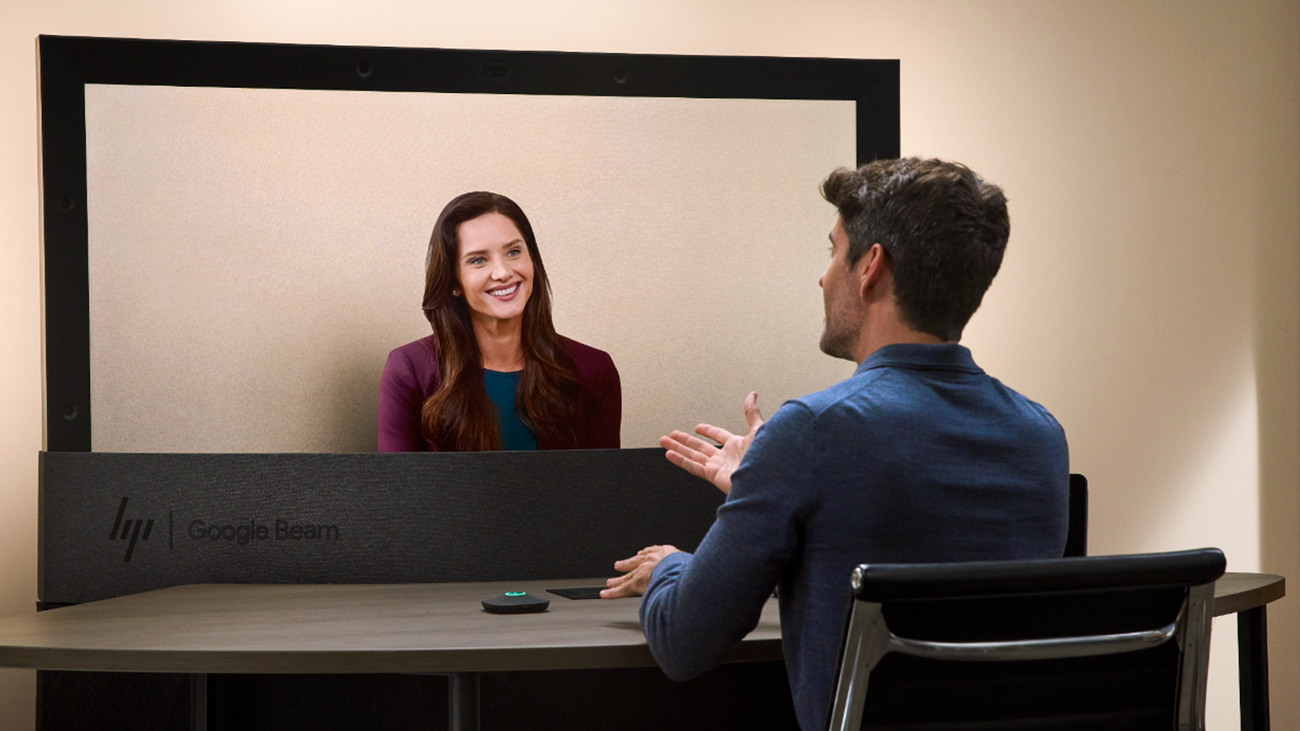
The Industrious Partnership: Democratizing Access via the Extended Network
Recognizing that the cost and space requirements of high-end copresence hardware might be a barrier for smaller firms or distributed teams, Google has partnered with Industrious to create the "Beam Extended Network." Industrious is a leading operator of premium flexible workspaces, and this partnership represents a new model for technology-as-a-service.
Starting in October, HP Dimension with Google Beam units will be installed in select Industrious locations across major U.S. cities, including New York City, Chicago, Atlanta, and Palo Alto. This allows startups, freelancers, and smaller businesses to book Beam sessions on an as-needed basis, similar to how they might book a conference room. This "pay-per-use" or membership-access model democratizes the technology, moving it beyond the boardrooms of Fortune 500 companies and into the broader business community.
During a pilot phase earlier this year, Industrious observed that distributed teams used the technology for a variety of high-value interactions, such as manager-employee check-ins, client consultations, and creative brainstorming sessions. The feedback indicated that the more natural flow of conversation facilitated by Beam helped alleviate the "distance tax" often felt by remote workers.
Technical Foundations and the Evolution of Copresence
The technology behind Google Beam is the result of nearly a decade of advancement in computer vision, machine learning, and display technology. Unlike traditional 3D systems that require bulky glasses or headsets, Beam utilizes a specialized auto-stereoscopic display. This creates a 3D effect visible to the naked eye by sending different images to each of the viewer’s eyes.
A sophisticated array of sensors and cameras captures the user from multiple angles in real-time. This data is then processed by Google’s AI models to reconstruct a digital, yet photorealistic, 3D volume of the person. This volume is streamed with ultra-low latency to the recipient’s device. The integration with Zoom and Google Meet is a strategic move to ensure that Beam does not become a siloed communication tool. Users can initiate a Beam call within the workflow of their existing calendar and conferencing apps, making the transition to 3D as simple as joining a standard video call.
Broader Implications for the Future of Work and Sustainability
The expansion of Google Beam carries significant implications for the global corporate landscape. As companies face increasing pressure to meet Environmental, Social, and Governance (ESG) goals, the ability to reduce corporate air travel without sacrificing the quality of human connection is a major value proposition. Business travel is one of the largest contributors to corporate carbon footprints; technology like Beam offers a viable "green" alternative for everything from internal executive meetings to external sales pitches.
Moreover, the technology addresses the "equity" issue in hybrid work. Remote participants often feel like "second-class citizens" when they are merely a small box on a screen at the end of a long boardroom table. Beam’s life-sized representation gives remote participants a physical "seat at the table," potentially leveling the playing field for career development and influence within an organization.
Chronology of Development
The journey to today’s announcement has been one of gradual scaling and rigorous refinement:
- Early Research Phase: Google begins exploring light-field technology and 3D telepresence under the "Project Starline" codename.
- 2021-2022: Initial prototypes are revealed at Google I/O, showcasing the potential for immersive video calls. Internal testing begins at Google offices in the U.S.
- Early 2024: Pilot programs are launched with enterprise partners like Bain & Company and Industrious to test real-world use cases.
- Mid-2024: Google announces the partnership with HP to commercialize the hardware as HP Dimension.
- October 2024: The official expansion into six countries begins, accompanied by the rollout of the Industrious Extended Network.
Conclusion
The expansion of Google Beam represents a significant bet on the future of "spatial" communication. By moving beyond the screen and into the realm of copresence, Google and its partners are attempting to redefine what it means to "be there." While the technology is currently positioned for high-value enterprise applications, the partnership with Industrious suggests a future where immersive connection is a standard utility for the global workforce. As organizations continue to navigate the complexities of distributed teams, the ability to foster genuine human connection across distances will likely remain a competitive necessity. Further details on specific use cases and technical specifications can be found through Google’s dedicated Beam portal, signaling that this is only the beginning of a broader shift in how the world communicates.
