

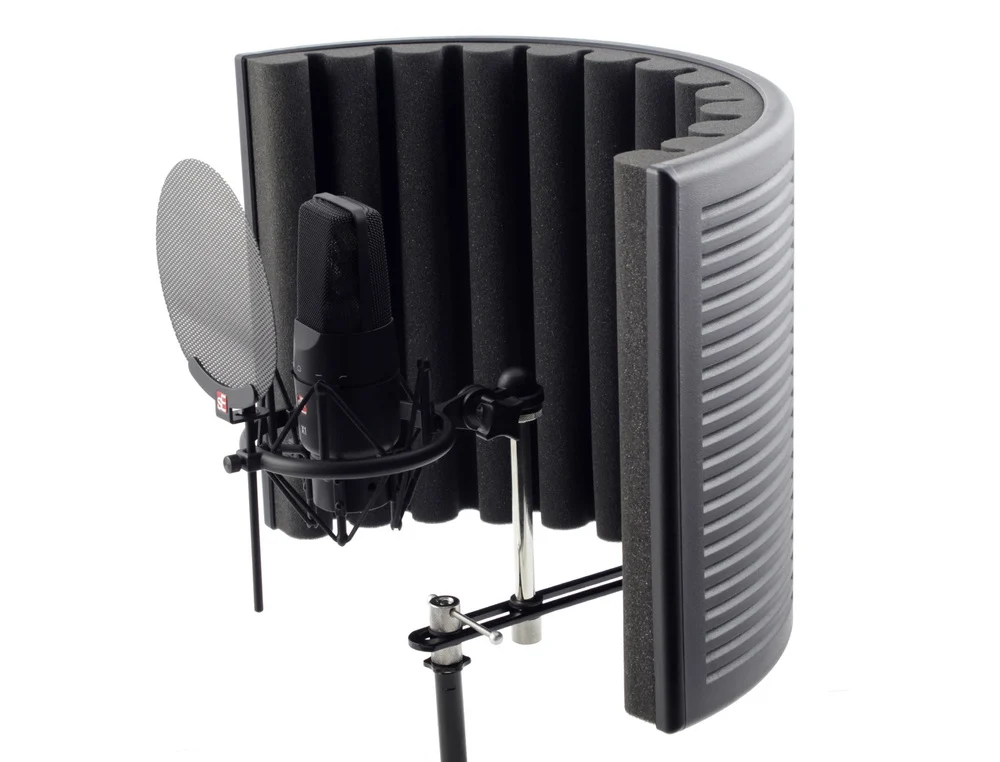
The persistent question echoing through the hallowed halls of home recording studios, particularly among aspiring voice artists, is whether a sound reflection filter is a necessary component of their setup. This inquiry, frequently posed to industry mentors and educational platforms like Gravy For The Brain, necessitates a comprehensive examination of its validity. This article aims to provide a definitive answer by dissecting the fundamental principles of home studio acoustics, microphone technology, and the purported efficacy of these ubiquitous accessories.
The Genesis of the Home Recording Studio: A Quest for Sonic Purity
At its core, a home recording studio, regardless of its scale or sophistication, is designed to achieve a singular objective: to create a controlled and reproducible acoustic environment. This ideal space is characterized by several key attributes: zero sound ingress (preventing external noise from contaminating the recording), zero sound egress (containing the recorded sound within the studio), and crucially, the minimization of unwanted sound reflections within the recording space. These reflections, often referred to as room tone or reverb, can muddy a recording, reducing clarity and professionalism. The ultimate aim is to isolate the primary sound source – the voice or instrument – ensuring it is captured with pristine fidelity, free from the acoustic signatures of the recording environment.

To achieve this, individuals often resort to constructing dedicated recording booths, adapting existing rooms within their homes, or transforming less conventional spaces like garages into functional recording environments. The meticulous process of establishing such an acoustically treated space is a foundational element of professional audio production.
Understanding Sound Reflections: The Unseen Adversaries
The battle against unwanted sound reflections is central to achieving high-quality audio. Sound waves, upon encountering surfaces, behave in predictable ways. Hard, flat surfaces, such as bare walls, windows, or unadorned furniture, tend to reflect sound waves with minimal absorption. This leads to echoes and reverberation, which can be detrimental to a clean recording.
Conversely, materials with absorptive properties, like thick curtains, heavy duvets, or specialized acoustic foam tiles, are designed to dissipate sound energy rather than reflect it. This principle extends to less conventional, yet effective, sound absorbers. For instance, a dense bookshelf filled with books can absorb sound, whereas a large, smooth glass surface will reflect it. Even the presence of a furry pet, while not a recommended studio treatment, demonstrates the principle of sound absorption due to its soft, porous nature. It is imperative to note that the latter is presented as a hypothetical illustration of acoustic principles and not as a practical studio solution, with explicit warnings against the misuse of animals for such purposes.

The Rise of the Reflection Filter: A Marketed Solution
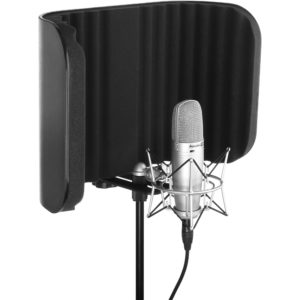
In response to the common problem of room reflections, a product category known as the "sound reflection filter" emerged. These devices typically consist of a semi-circular or circular baffle, lined with sound-absorbing material, designed to be mounted around a microphone. Marketed as a direct solution to combat room reflections, these filters aim to create a localized "dead zone" around the microphone, ostensibly isolating the audio capture from the surrounding acoustic environment. Prominent examples include the Auray Sound Reflection Filter and the sE Electronics Sound Reflection Filter, which are widely advertised and often seen in home studio setups.
The fundamental premise behind these filters is that by blocking a significant portion of the sound waves originating from the sides and rear of the microphone, they can effectively prevent room reflections from entering the microphone capsule. The visual representation of these filters often suggests a professional and effective approach to acoustic treatment.
The Crucial Factor: Microphone Polar Pickup Patterns
To accurately assess the effectiveness of sound reflection filters, it is essential to understand how microphones capture sound. Microphones are not omniscient listening devices; they possess directional characteristics, defined by their "polar pickup patterns." These patterns dictate the sensitivity of the microphone to sound arriving from different directions relative to its front.
The most common polar pickup patterns include:
- Omnidirectional: Picks up sound equally from all directions (360 degrees).
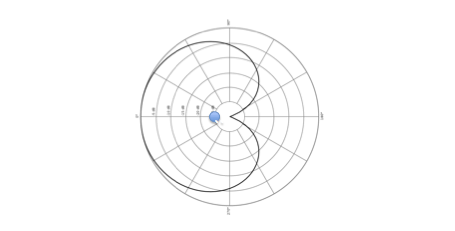
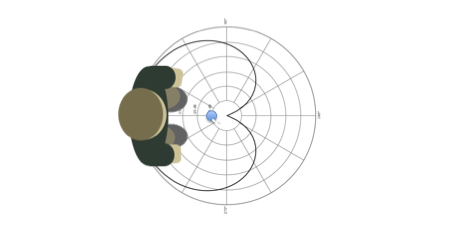
- Cardioid: Picks up sound primarily from the front, with significant rejection from the rear and sides. This pattern resembles a heart shape when viewed from above, hence its name.
- Figure-of-Eight: Picks up sound equally from the front and the rear, with significant rejection from the sides.
- Supercardioid and Hypercardioid: These are tighter variations of the cardioid pattern, offering even greater front rejection but with a small lobe of sensitivity at the rear.
Many professional microphones, such as the Neumann U87, offer switchable polar patterns, allowing users to adapt the microphone’s sensitivity to various recording situations. However, for voice-over work and general vocal recording, the cardioid pattern is overwhelmingly favored. This preference stems from its inherent ability to reject sound from the sides and rear, thereby minimizing the capture of unwanted room reflections and ambient noise. By focusing its pickup on the frontal area, a cardioid microphone naturally isolates the desired sound source.
The Cardioid Pattern in Practice: A Visual Explanation
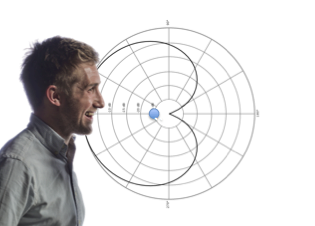
To illustrate the cardioid pickup pattern, consider a top-down view. The microphone is represented by a central circle, with the front of the microphone indicated by a distinct marker. The cardioid pattern emanates from the front, narrowing towards the sides and virtually disappearing at the rear. When a voice artist speaks into the microphone, their voice falls within this directional "bubble."
This pattern extends into three dimensions. From a side view, the pickup pattern forms a more three-dimensional, heart-shaped envelope in front of the microphone. This allows for some flexibility in vocal placement – slightly to the left, right, above, or below – while still ensuring optimal capture.
Now, let’s introduce the concept of sound reflections. These are sound waves bouncing off surfaces in the room and reaching the microphone from various angles. Even with a cardioid microphone, some reflections will inevitably enter the pickup pattern, particularly from the sides. The rear rejection is substantial, but not absolute.
The Revelation: Reflection Filters and the Cardioid Pattern
When a sound reflection filter is introduced into this scenario, its placement is typically around the microphone. The filter’s absorbent material is designed to absorb or block sound waves approaching from the sides and rear. However, herein lies the critical observation: the cardioid pickup pattern already significantly rejects sound from these directions.
Visualizations demonstrating the interaction of the cardioid pickup pattern, sound reflections, and a reflection filter reveal a striking reality. The reflections arriving from the sides, which a cardioid microphone picks up to a limited extent, are partially absorbed by the filter. However, the reflections arriving from the rear, which the cardioid pattern largely rejects, are almost entirely unaffected by the filter. Crucially, the primary sound source – the voice artist – is positioned directly in front of the microphone, squarely within the most sensitive part of the cardioid pickup pattern.
The overwhelming conclusion drawn from empirical observation and acoustic principles is that the sound reflection filter adds minimal, if any, benefit when used with a directional microphone, particularly one set to a cardioid pattern. The filter’s contribution to reducing unwanted reflections is largely redundant, as the microphone’s inherent directional characteristics already perform a similar function. Extensive testing, including comparative recordings made with and without reflection filters, consistently shows negligible differences in the final audio output, leading to the conclusion that these devices are often an unnecessary expenditure.
The Unvarnished Truth: Do You Need a Reflection Filter?
Based on the scientific principles of microphone operation and acoustic behavior, the answer is a resounding no. For most home studio users employing directional microphones, particularly in a cardioid pattern, a sound reflection filter is a superfluous accessory. They represent a significant financial outlay with little to no demonstrable improvement in recording quality.
The Psychology of Purchase: Why Do They Sell?
The widespread adoption of sound reflection filters, despite their limited efficacy, can be attributed to several factors. Inexperienced voice artists, or those less technically inclined, often purchase them due to their prominent presence in marketing materials and their visual appeal. Seeing other, perhaps more established, professionals using them can create a perception of necessity. Furthermore, anecdotal advice from individuals who themselves may not fully grasp the underlying acoustic principles can perpetuate the myth. In essence, these filters are often bought based on perceived value and visual cues rather than proven performance enhancement. While they do not actively harm the recording process, their inability to provide a tangible benefit renders them a poor investment.
The Real Path to Professional Sound: Acoustic Treatment
If the reflection filter is not the solution, what is? The pursuit of professional-sounding recordings hinges on addressing the fundamental issue: the acoustic environment itself. Creating a truly sound-treated recording space is paramount. This involves more than simply placing a baffle around a microphone.
Effective acoustic treatment requires a multi-faceted approach, which may include:
- Building a dedicated vocal booth: This is the most comprehensive solution, offering a controlled acoustic environment isolated from the rest of the building.
- Adapting existing spaces: This involves strategically modifying rooms to minimize reflections. Techniques include using sound-absorbing materials on walls and ceilings, such as acoustic panels, bass traps, and diffusers. Even strategically placed furniture, bookshelves filled with books, and heavy drapes can contribute to a more controlled acoustic space.
- Utilizing portable acoustic treatment solutions: While less effective than a fully treated room, some portable panels or gobos can offer a degree of improvement in specific situations.
The critical takeaway is that achieving high-quality audio is not about a single accessory but about creating an optimal acoustic environment. This often requires an investment of time, effort, and financial resources into proper soundproofing and acoustic treatment. Resources like the "How to Build A Home Studio" webinar and comprehensive courses on home studio setup offer detailed guidance on these essential practices.
In conclusion, while the allure of a quick fix like a sound reflection filter is understandable, the evidence strongly suggests that investing in proper acoustic treatment for your recording space is the genuine pathway to achieving professional-grade audio. Focus on controlling the room, and your microphone, especially when used with its inherent directional capabilities, will deliver the pristine sound you seek.
