


The arduous journey of securing budget approval stands as a foundational hurdle for countless organizational endeavors, ranging from pioneering product innovation and market expansion to the critical development of internal support systems and the projection of a company’s narrative on a global stage. This cascade of potential outcomes is intrinsically linked to the ability of project proponents to articulate a compelling rationale for why decision-makers should invest in their specific vision. When a green light is granted, it empowers teams to transform strategic blueprints into tangible realities. However, the challenge often lies in translating nascent ideas into a compelling future vision for those who operate primarily within the rigorous confines of financial data.
In contemporary corporate environments, budget-approvers are not merely contemplating abstract future possibilities. Their operational paradigm is fundamentally rooted in quantifiable metrics and financial accountability. As the ultimate custodians of a project’s fiscal success or failure, they face immense pressure to make judicious choices. The twin anchors of company health and fiduciary responsibility consistently draw their focus to the bottom line, often resulting in budget discussions that become disproportionately fixated on immediate dollar amounts and short-term returns. This emphasis on numerical precision, while essential, can inadvertently overshadow the broader strategic implications and long-term value propositions of innovative projects.
Consequently, project proponents, often referred to as budget seekers, are increasingly tasked with illuminating the comprehensive picture—a narrative depth that raw dashboards or spreadsheets alone cannot convey. While the meticulous balancing of expenses and ensuring financial viability remain non-negotiable prerequisites for any project to advance, a new imperative has emerged: the cultivation of a strategic story. This narrative must possess the power to transcend mere project allocations and fiscal calendars, enabling leaders to grasp the full, vibrant spectrum of what their approval could truly signify for the organization, akin to a transformative revelation.
The Evolving Landscape of Corporate Finance and Project Funding
The landscape of corporate finance has undergone significant transformations, particularly in an era characterized by rapid technological advancement, intense market competition, and often volatile economic conditions. Historically, budget allocation was largely a quantitative exercise, where proposals were judged almost exclusively on their projected financial returns, cost efficiencies, and risk assessments. While these criteria remain paramount, a growing consensus among business leaders and strategic consultants suggests that a purely data-driven approach is often insufficient for capturing the imagination and securing the deep commitment required for truly transformative projects.
Recent surveys indicate a significant disconnect between project initiators and senior management. A 2023 study by the Project Management Institute (PMI) revealed that nearly 25% of projects fail primarily due to inadequate funding or a lack of executive sponsorship, even when initial financial projections appear sound. This underscores the need for more effective communication strategies that bridge the gap between technical details and strategic vision. Furthermore, a report from Gartner highlighted that organizations with strong internal communication around strategic initiatives are 50% more likely to achieve their strategic goals. This data points to the critical role of narrative in fostering understanding and alignment.

The typical budget approval cycle often begins with departmental or team-level proposals, which then ascend through various layers of management, undergoing multiple reviews and iterations. This chronology of scrutiny often includes initial concept presentations, detailed financial breakdowns, risk assessments, and finally, a presentation to a senior leadership committee or board. At each stage, the project’s viability is questioned, its scope debated, and its potential impact weighed. It is during these critical junctures that a compelling narrative can distinguish a proposal from its competitors, transforming it from a mere request for funds into an urgent strategic imperative.
To navigate this complex approval process successfully, and to secure the time, resources, and overarching organizational backing—the fundamental ingredients of any successful endeavor—project leaders are increasingly employing sophisticated narrative techniques. These methods aim not just to present facts, but to bring the project to life, fostering traction and earning the essential funding for future initiatives.
Beyond the Balance Sheet: Framing ROI as an Organizational Triumph
One of the most potent narrative techniques involves repositioning budget-approvers as the central heroes of the project’s return on investment (ROI). It is no longer sufficient for project proponents to merely account for the expenditure of funds; leaders demand to see these investments reappear in quantifiable and qualitative forms of value. While predicting the future remains inherently challenging, the strategic narrative crafted around a project’s vision is instrumental in aligning budget-approvers’ expectations and providing a compelling glimpse of the ultimate outcome. Much like film producers meticulously review scripts and storyboards before committing significant capital to a production, corporate decision-makers require a vivid portrayal of the "final cut" of a project.
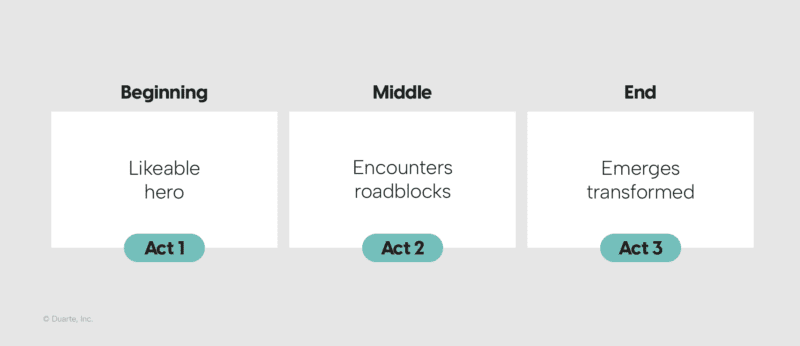
Consider the cinematic analogy of director Christopher Nolan, known for securing substantial budgets for his ambitious projects. Before embarking on a potential $250 million reimagining of The Odyssey, Nolan famously honed his craft with The Prestige, a critically acclaimed film produced on a comparatively modest $40 million budget. Set in Victorian London, the 2006 film intricately weaves a rivalry between two magicians, commencing with a voiceover by Michael Caine elucidating the three fundamental parts of a magic trick: the Pledge (the ordinary object), the Turn (making it disappear), and the Prestige (making it reappear).
This narrative structure—beginning, middle, and end—offers a powerful framework for budget proposals. The "pledge" of a budget proposal should articulate the current state and the investment required. The "turn" addresses the challenges and strategic execution. And the "prestige" vividly portrays the desired future state and the ROI, both financial and strategic, that will "reappear." Leading communication firms, such as Duarte, advocate for this three-act structure in business storytelling, from presenting data-backed recommendations to inspiring audiences to embrace new ideas.
To illustrate the stark difference, consider two hypothetical pitches for a film project:
-
Proposal A (Data-Centric): "With a $40 million budget, the film is projected to gross upwards of $100 million at the box office, achieve a runtime of 130 minutes, and ultimately aggregate a 76% score on Rotten Tomatoes based on 208 reviews." This description, while precise and data-backed, is devoid of emotional resonance or strategic vision.
-
Proposal B (Narrative-Driven, 3-Act Structure): "With your pivotal approval of our $40 million budget, this cinematic venture will deliver a stunning reimagining of Christopher Priest’s award-winning novel, featuring stellar performances by Hugh Jackman, Christian Bale, Scarlett Johansson, Michael Caine, and David Bowie in a role reminiscent of his iconic performance in Labyrinth. The adaptation demands meticulous attention to detail, but its inherent cross-over appeal to fantasy and science fiction genres, combined with the collective star power of its cast, will attract diverse global audiences. Given the caliber of craft and talent committed to this project, we confidently project its potential to captivate and challenge generations of viewers, garner significant critical accolades, and achieve over 200% ROI at the box office and beyond, establishing a lasting cultural legacy."
The second example strategically positions the budget-approver as the catalyst for this ambitious undertaking, acknowledges the inherent challenges of the creative process, and transforms a raw dollar amount into a fully formed vision of the finished product. While the first example hyper-focuses on ROI purely in terms of metrics, the second masterfully integrates projected financial returns with loftier dimensions such as legacy and cultural capital, significantly elevating the pitch. This demonstrates the fundamental difference between presenting a story via a chart and crafting one destined for the silver screen. The underlying "magic," of course, lies in convincingly demonstrating the capability to deliver on this grand vision.
Cultivating Confidence: The Art of the ‘Called Shot’ in Fiscal Pitches
In the high-stakes arena of budget discussions, project leaders must exude the unwavering confidence of a seasoned performer. This does not equate to making unsubstantiated claims or deferring critical details; the cautionary tale of the Fyre Festival debacle serves as a stark reminder of such pitfalls. Instead, it speaks to an authentic confidence rooted in a deep understanding of one’s capabilities and a proven track record of overcoming challenges. The primary audience for this conviction comprises the budget-approvers, who require assurances of competence and credibility. Before objectives can be met, decision-makers must be inspired to believe in the proposer’s ability to achieve them. This demands both strategic swagger and the demonstrable skills to back it up. The legendary "called shot" by baseball icon Babe Ruth offers a compelling analogy.
During Game 3 of the 1932 World Series, with the New York Yankees facing the Chicago Cubs at Wrigley Field, an atmosphere of intense animosity permeated the stadium. As Babe Ruth stepped up to bat in the 5th inning, the crowd was overtly hostile. After taking two strikes from Cubs pitcher Charlie Root, Ruth famously made a pointing gesture towards the outfield stands. On the very next pitch, he launched a colossal home run, a moment that cemented his legend and propelled the Yankees to sweep the series.
The 1932 World Series might have faded into obscurity had it not been for the enduring legend of Ruth’s called shot. Despite ongoing debates among eyewitnesses, historians, and analyses of grainy footage, a headline from reporter Joe Williams irrevocably captured the popular imagination: "RUTH CALLS SHOT AS HE PUTS HOME RUN NO. 2 IN SIDE POCKET."
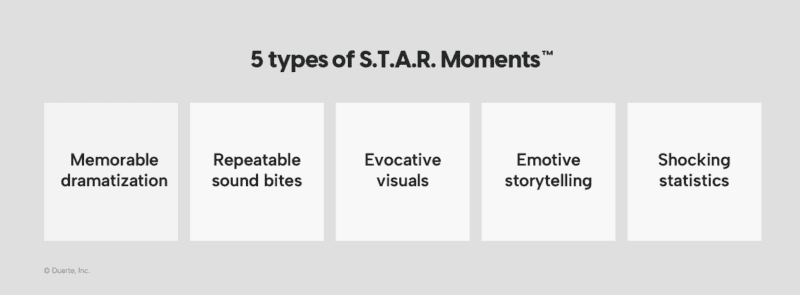
In professional communication, moments designed to stand out and be inherently memorable are often termed "S.T.A.R. moments," an acronym for Something They’ll Always Remember. These moments, deployed effectively in diverse contexts ranging from Academy Award-winning documentaries to influential keynote presentations, can be instrumental in persuading budget-approvers to fund a project to fruition. Before engaging in a critical budget discussion, project leaders should critically assess: "How do I convincingly convey that my next swing will be a home run?"
S.T.A.R. moments can manifest in various forms: memorable dramatizations, repeatable sound bites, evocative visuals, emotive storytelling, or shocking statistics. For instance, instead of merely stating a market trend, a project leader might present a concise, impactful anecdote from a customer, accompanied by a striking visual, to underscore the urgency and potential impact of a new product.
While a degree of bravado can occasionally play a role, true and sustainable confidence is forged through rigorous deep thinking, extensive practice, and thorough preparation. Ruth’s infamous gesture was not a mere gamble; he was batting an impressive .341 in 1932 and had already accumulated 41 home runs before that pivotal 5th-inning at-bat. As a budget seeker, one typically has a singular opportunity to demonstrate competence, foster trust, and establish credibility when the moment to "swing" arrives.
Spending excessive time elaborating on intricate industry analyses or detailing personal accomplishments risks disengaging budget-approvers. Instead, a powerful S.T.A.R. moment can be constructed by presenting the budget proposal with integrated multimedia elements that facilitate a crisp, clear narrative, inherently positioning the approver as a central figure. Before entering the meeting room or initiating a video call, project leaders should reflect on which phrase best encapsulates their budget story: "Here’s what I can do" or, more effectively, "With your help, here’s what we can do." By centering the approver within the S.T.A.R. moment, project leaders subtly encourage their active participation in the project, transforming them from a mere signatory to a committed partner. This approach fosters an emotional connection, inspiring decision-makers to passionately invest in the project’s potential and champion its success.
The Human Element: Tapping into Emotional Resonance for Strategic Buy-in
Beyond the allure of magic and mystique, the art of crafting a message with empathy and emotional weight can perform the critical heavy lifting of forging a deep, lasting connection. Infusing stories and situations with complex human feelings transcends mere factual details and plot points. It is this capacity that enables audiences to perceive something far greater in cultural phenomena like films and sporting events, and it explains why individuals are occasionally moved to tears by commercial advertisements.
A highly effective strategy for engaging both analytical and emotional audiences is to meticulously balance the financial aspects of a budget request with the concept of "new bliss"—the desired, improved state that audiences stand to gain. Within frameworks like the Duarte Method, "new bliss" represents the ultimate positive outcome that emerges after navigating the "messy middle" of working towards a goal or implementing significant change within an organization. For budget seekers, illustrating the inherent tension between "what is" and "what could be" serves as a powerful guide, leading approvers to deeply desire the "new bliss" outlined in the budget proposal.
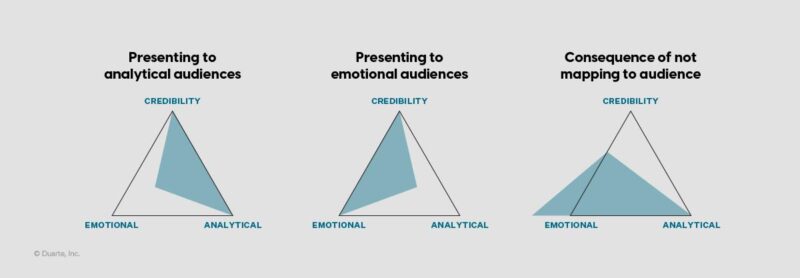
Integrating structured narrative techniques into a budget proposal allows it to address financial realities while simultaneously encouraging decision-makers to envision this "new bliss." For instance, a Chief Financial Officer (CFO) might require robust reassurances regarding expenditures but may also harbor a personal desire for increased work-life balance. Leadership might be grappling with anxieties about the company’s current standing within its industry. Alternatively, they may aspire to create a product, service, or solution that is not only profitable but genuinely beneficial to people.
While centering a proposal solely on its potential to generate substantial revenue is a valid approach, a more profound impact can be achieved by crafting a budget story that highlights how a vision for a more efficient workflow could lead to more family time for employees (including the CFO). Or how a particular innovation could reinvigorate public interest in the brand, securing its market leadership. Or how, with appropriate funding, a project aims to eliminate a significant pain point from the customer experience, enhancing loyalty and brand perception. This nuanced approach helps stakeholders develop a personal commitment to the project, extending far beyond the mere act of granting approval.
Achieving this perfect balance necessitates rooting the story in audience-first empathy. By acknowledging the internal motivations, concerns, and aspirations of budget approvers, project leaders can structure their narratives to seamlessly integrate sound financial reasoning with details that resonate on an emotional level. Beyond securing financial resources and allocated time, organizational backing stands as a paramount indicator of a project’s potential for success. Securing this buy-in at scale demands transforming mere acceptance into profound belief through a story that reverberates across all organizational strata. However, it is crucial to temper sentimentality to avoid losing sight of the significant stakes involved.
Ultimately, delivering a budget story that is meticulously structured, deeply empathetic, and strategically punctuated by well-placed S.T.A.R. moments ensures that proposals are rubberstamp-ready, paving a clear and confident path forward for organizational growth and innovation. This evolution in budget communication signifies a broader trend towards more holistic and human-centered leadership, where visionary narratives complement rigorous financial analysis to drive meaningful progress.
