

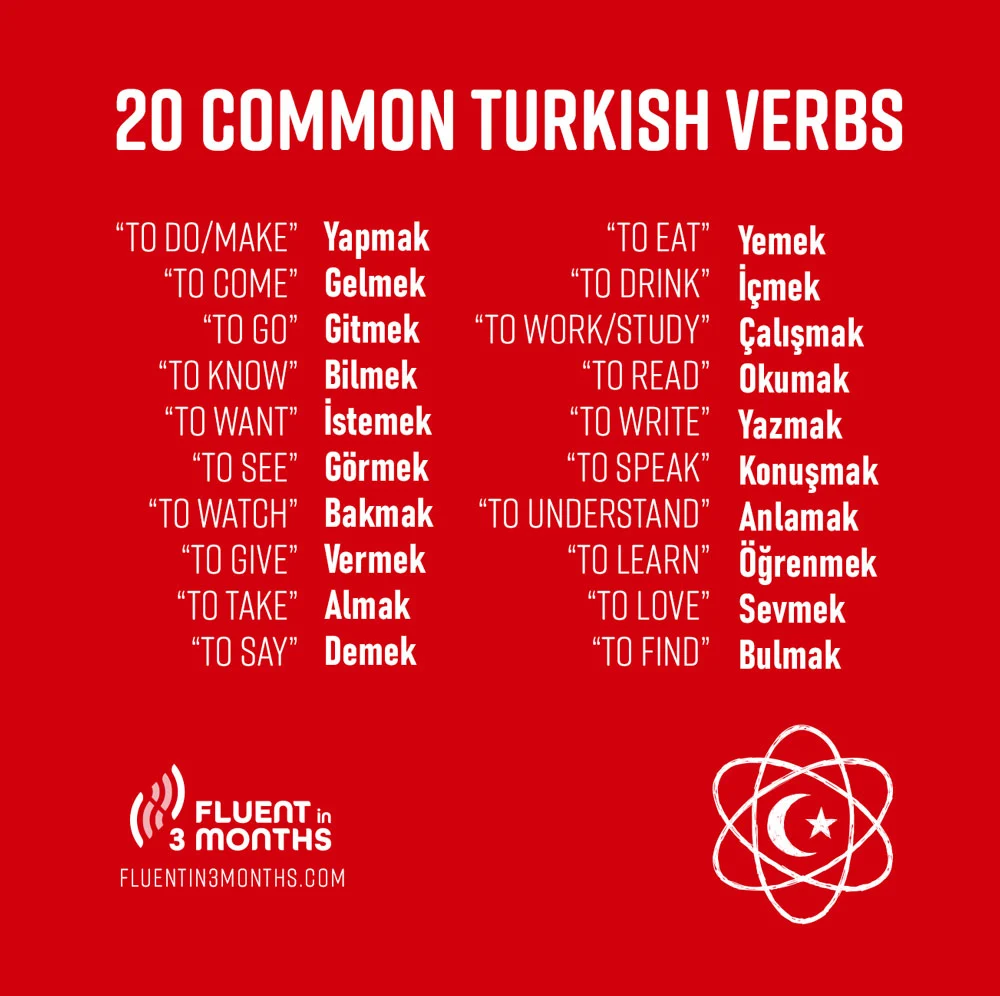
The acquisition of the Turkish language has seen a significant global surge over the last decade, driven by Turkey’s growing geopolitical influence, a robust tourism sector, and the international success of its television industry. For new learners, the most effective pedagogical approach involves prioritizing high-frequency vocabulary—the "building blocks" that allow for functional communication in daily life. Rather than attempting to memorize the entirety of the Turkish lexicon, linguistic experts suggest that mastering a core set of nouns, verbs, and adjectives can provide the necessary foundation for navigating social interactions and understanding the primary themes of conversation. This strategic focus on common words aligns with the Pareto Principle, which suggests that approximately 80% of daily communication can be achieved through 20% of a language’s vocabulary.
The Linguistic Landscape of Modern Turkish
Turkish is an agglutinative language belonging to the Turkic language family, spoken by more than 80 million people natively and millions more as a second language. Unlike Indo-European languages, Turkish relies heavily on suffixes to convey grammatical relationships, meaning a single root word can evolve into a complex sentence through the addition of various endings. Despite this structural difference, the transition to the Latin alphabet in 1928—a core component of Mustafa Kemal Atatürk’s reforms—has made the language significantly more accessible to Western learners. Today, Turkish is categorized as a "Category II" language by the United States Department of State, indicating it is of moderate difficulty for English speakers, requiring approximately 1,100 class hours to reach professional proficiency.
The Foundation of Social Interaction: Greetings and Etiquette
In Turkish culture, social harmony and hospitality (misafirperverlik) are paramount. Consequently, the first step for any learner is mastering the nuances of greetings and polite formulas. Turkish distinguishes between formal and informal address, a distinction that is vital for maintaining social decorum.
Standard Greetings and Farewells
The most common greeting is "Merhaba" (Hello), which is appropriate in almost all settings. For more informal interactions, "Selam" (Hi) is frequently used among peers. Time-of-day greetings are also essential: "Günaydın" (Good morning) and "İyi akşamlar" (Good evening) serve as standard markers of polite society. When departing, "Görüşürüz" (See you later) is the standard informal farewell, while "Hoşça kal" (Stay pleasantly) is used by the person leaving, and "Güle güle" (Go smiling) is said by the person staying.
The Complexity of Politeness
Turkish contains several "formulaic expressions" that have no direct equivalent in English but are indispensable for daily life. "Kolay gelsin" (May it come easy to you) is said to anyone working, whether they are a bank teller or a street cleaner. Similarly, "Elinize sağlık" (Health to your hands) is a mandatory compliment given to a cook after a meal. "Geçmiş olsun" (May it be past) is used for illness or any unfortunate event, and "Afiyet olsun" (Enjoy your meal) is the standard "bon appétit."
The Lexical Core: Nouns and Common Objects
Building a functional vocabulary requires a focus on the nouns that describe one’s immediate environment. In Turkish, these are categorized into food, family, places, and time.
Culinary Vocabulary
Given the central role of food in Turkish culture, learners must prioritize terms like "Yemek" (Food/To eat), "Su" (Water), "Ekmek" (Bread), and "Çay" (Tea). It is important to note the presence of "false friends" in this category. For instance, the Turkish word "Pasta" does not refer to noodles but to "cake." The correct term for Italian-style pasta is "Makarna."
Kinship and Family Structures
Turkish kinship terms are notably more specific than those in English. The language distinguishes between maternal and paternal relatives. For example, a paternal uncle is "Amca," while a maternal uncle is "Dayı." Similarly, a paternal aunt is "Hala," and a maternal aunt is "Teyze." This specificity reflects the historical importance of extended family structures in Anatolian society.
Navigating the Urban Environment
For travelers and expatriates, identifying key locations is a priority. Basic terms include "Ev" (House), "Okul" (School), "Hastane" (Hospital), "Restoran" (Restaurant), and "Havaalanı" (Airport). Mastery of these terms, combined with basic directional adjectives, allows for rudimentary navigation in major hubs like Istanbul or Ankara.
Temporal Concepts and Chronology
Understanding time is essential for scheduling and recounting events. Turkish time-related vocabulary follows a logical progression:
- Units of Time: "Gün" (Day), "Hafta" (Week), "Ay" (Month), "Yıl" (Year).
- Specific Markers: "Bugün" (Today), "Dün" (Yesterday), "Yarın" (Tomorrow), "Şimdi" (Now), and "Sonra" (Later).
Linguistic analysts note that Turkish speakers often use the present continuous tense to describe future plans, making the word "Şimdi" particularly versatile in casual conversation.
The Mechanics of Action: Common Verbs
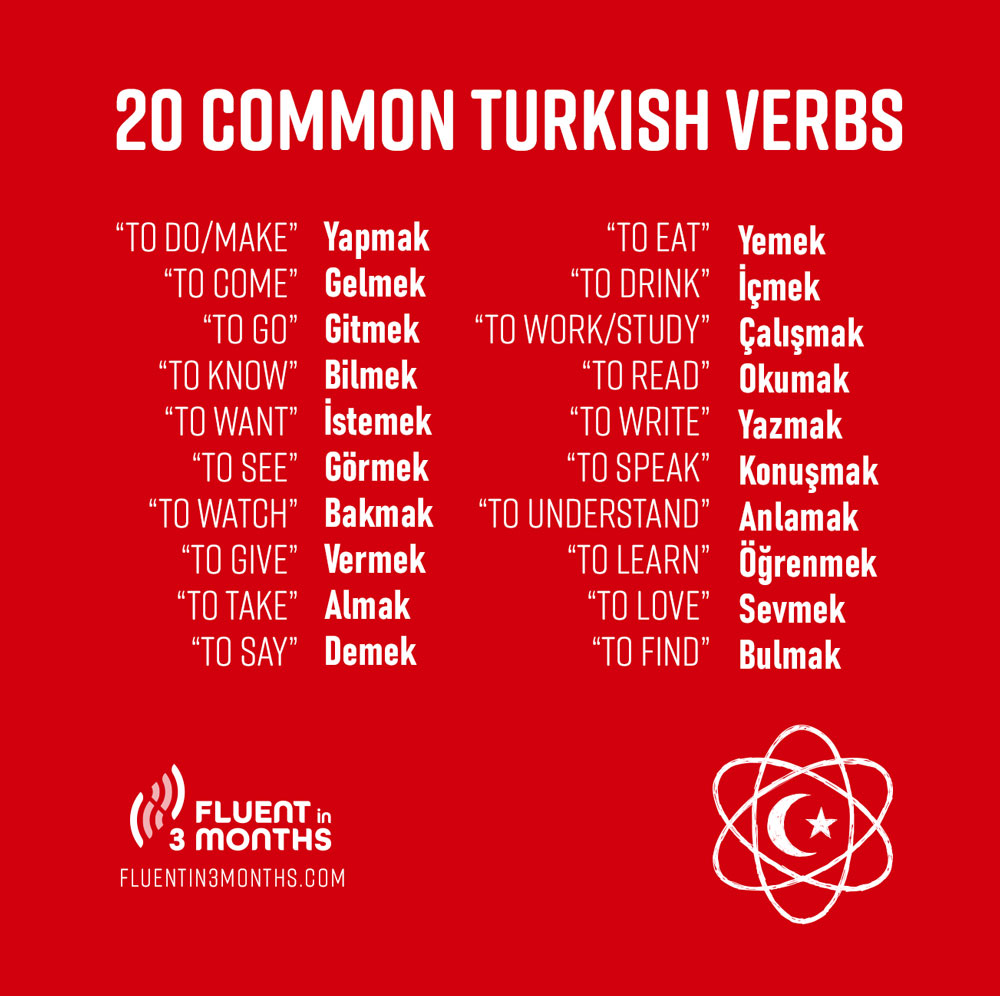
Verbs are the engine of the Turkish language. In their infinitive form, they end in either "-mak" or "-mek," depending on vowel harmony.
- Functional Verbs: "Yapmak" (To do/make), "Gitmek" (To go), "Gelmek" (To come).
- Cognitive Verbs: "Bilmek" (To know), "Anlamak" (To understand), "Öğrenmek" (To learn).
- Communication Verbs: "Konuşmak" (To speak), "Demek" (To say), "Yazmak" (To write).
The Absence of "To Be" and "To Have"
A unique feature of Turkish grammar is the absence of standalone verbs for "to be" and "to have." Instead, these concepts are expressed through suffixes and the words "var" (there is/exists) and "yok" (there is not/does not exist). For example, to say "I have a book," a Turkish speaker says "Benim bir kitabım var" (My one book exists). This structural shift is often the most significant hurdle for learners accustomed to European languages.
Describing the World: Adjectives and Colors
Adjectives in Turkish always precede the noun they modify. This rule is consistent and lacks the exceptions found in languages like French.
- Size and Quality: "Büyük" (Big), "Küçük" (Small), "İyi" (Good), "Kötü" (Bad).
- Value and Age: "Yeni" (New), "Eski" (Old – for objects), "Yaşlı" (Old – for people), "Ucuz" (Cheap), "Pahalısı" (Expensive).
- The Color Spectrum: "Kırmızı" (Red), "Mavi" (Blue), "Yeşil" (Green), "Siyah" (Black), and "Beyaz" (White).
Supporting Data and Market Trends
According to data from the Yunus Emre Institute (YEE), the Turkish government’s cultural outreach arm, enrollment in Turkish language courses has increased by over 300% in certain regions, including the Middle East, the Balkans, and Latin America, between 2010 and 2023. The "Turkish Proficiency Exam" (TYS), which provides an internationally recognized credential, saw a record number of applicants in the 2023-2024 academic cycle.
Digital platforms have mirrored this trend. Language learning applications like Duolingo and Babbel report that Turkish remains one of the fastest-growing languages on their platforms. The rise is attributed not only to tourism but also to the "Soft Power" of Turkish dramas (Diziler). Industry reports indicate that Turkey is now the second-largest exporter of television series globally, trailing only the United States. This cultural export has created a unique "immersion effect," where viewers subconsciously pick up high-frequency phrases like "Tabii ki" (Of course), "İnşallah" (God willing), and "Canım" (My dear).
Official Responses and Educational Analysis
Linguistic experts at Istanbul University emphasize that the key to retention in Turkish is understanding "Vowel Harmony." This phonetic rule dictates that the vowels in a suffix must harmonize with the vowels in the root word. Dr. Mehmet Yavuz, a specialist in Turkish linguistics, states, "Once a student internalizes the rhythmic nature of the language and the logic of its suffixes, their vocabulary expansion becomes exponential. It is a mathematical language; it is highly regular and lacks the irregular verb tables that plague learners of Spanish or French."
The Turkish Ministry of National Education has also expanded its "Turkish for Foreigners" programs, integrating more digital resources to assist the millions of refugees and expatriates currently residing in the country. This institutional support has standardized the curriculum, focusing on the Common European Framework of Reference for Languages (CEFR) levels A1 through C2.
Broader Impact and Implications
The mastery of basic Turkish vocabulary has implications far beyond simple conversation. Economically, it facilitates trade in a region where Turkey serves as a bridge between East and West. For the individual, it unlocks a rich literary and historical tradition that spans from the Orkhon inscriptions to the modern novels of Orhan Pamuk.
Furthermore, the shift toward learning Turkish reflects a changing global hierarchy where regional languages are gaining prestige. As Turkey continues to expand its diplomatic and economic footprint, the demand for Turkish literacy is expected to remain on an upward trajectory. For the learner, the journey begins with these fundamental words—the simple "Merhaba" or "Teşekkür ederim" that opens the door to a culture known for its depth, history, and unwavering hospitality. By focusing on the most common words, students can move past the initial frustration of grammar and enter a world of meaningful cross-cultural connection.