

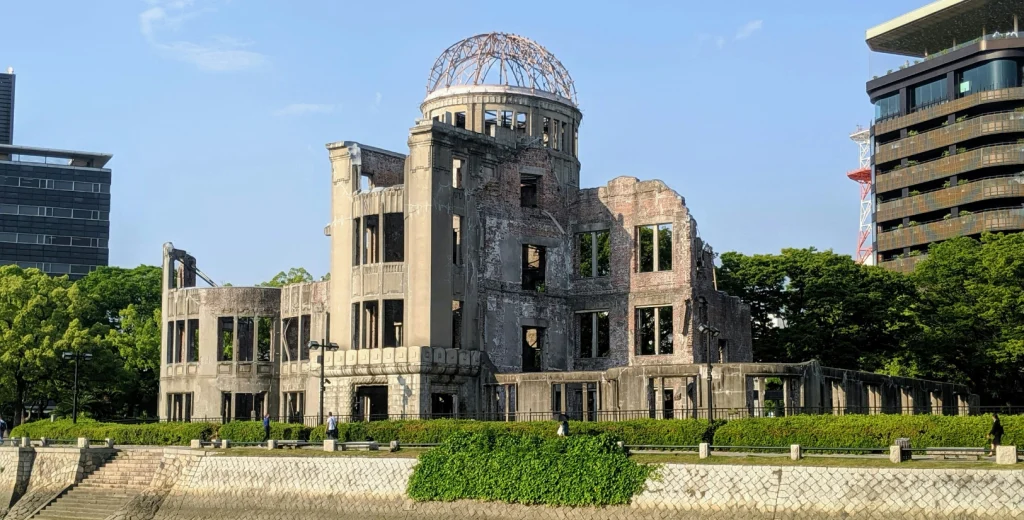
The historical record of the 20th century contains few accounts as statistically improbable or as psychologically significant as the life of Tsutomu Yamaguchi. A 29-year-old naval engineer for Mitsubishi Heavy Industries in 1945, Yamaguchi holds the singular distinction of being the only person officially recognized by the Japanese government to have survived the atomic bombings of both Hiroshima and Nagasaki. While the raw data of his ordeal remains a matter of historical record, the interpretation of those facts—whether his life represents a pinnacle of misfortune or a miracle of survival—serves as a foundational case study in the power of narrative framing. This intersection of historical trauma and the human capacity for meaning-making was the central focus of the 284th episode of the Anecdotally Speaking podcast, where experts Mark and Shawn analyzed how the stories individuals tell themselves dictate their resilience, leadership efficacy, and capacity for decision-making during periods of systemic change.
The Chronology of a Dual Survival
To understand the magnitude of Yamaguchi’s experience, one must examine the precise timeline of August 1945. Yamaguchi had spent the summer of 1945 in Hiroshima on a three-month business trip for Mitsubishi. August 6 was intended to be his final day in the city before returning to his family in Nagasaki.
At approximately 8:15 a.m. on August 6, 1945, as Yamaguchi was walking toward the Mitsubishi shipyard, the B-29 bomber Enola Gay released the "Little Boy" atomic bomb over Hiroshima. Yamaguchi was located roughly three kilometers (1.9 miles) from ground zero. The resulting blast produced a blinding flash—what the Japanese later termed pika—and a shockwave that threw Yamaguchi into a nearby potato patch. He suffered major burns to the left side of his body, ruptured eardrums, and temporary blindness. Despite the devastation, which resulted in the immediate deaths of an estimated 70,000 to 80,000 people, Yamaguchi managed to find shelter and seek basic medical treatment for his wounds.
The following day, demonstrating a level of resilience that would later define his narrative, Yamaguchi navigated the charred remains of the city to reach the Hiroshima railway station. In a testament to the chaotic but functioning infrastructure of the era, he boarded a train filled with other burned and traumatized survivors, arriving in his hometown of Nagasaki on August 8.
On the morning of August 9, despite his significant injuries and bandages, Yamaguchi reported to the Mitsubishi office in Nagasaki to provide a report to his supervisor. Ironically, at the very moment he was attempting to describe the scale of the destruction in Hiroshima—a description his supervisor reportedly found "impossible" and "exaggerated"—the second atomic bomb, "Fat Man," was detonated over Nagasaki at 11:02 a.m. Yamaguchi was again located approximately three kilometers from the epicenter. Once more, he survived the initial blast, though his previous wounds were aggravated and he was subjected to further radiation exposure.
Statistical Context and Survival Data
The probability of surviving two nuclear detonations is nearly impossible to calculate, given the variables of shielding, distance, and environmental factors. In Hiroshima, the 15-kiloton blast destroyed five square miles of the city. In Nagasaki, the 21-kiloton plutonium bomb was even more powerful, though the city’s hilly topography somewhat mitigated the spread of the blast.
According to data from the Radiation Effects Research Foundation, individuals within a 1.2-mile radius of the hypocenter in both cities faced a mortality rate of over 90% within the first few weeks. Yamaguchi’s position at the three-kilometer mark placed him in a zone where survival was possible but highly unlikely without immediate medical intervention. His ability to survive not only the thermal radiation and the pressure wave but also the subsequent acute radiation syndrome (ARS) is a subject of medical interest. He suffered from high fevers and constant vomiting for weeks, yet he eventually recovered, living to the age of 93.
Narrative Framing: Luck Versus Misfortune
The Anecdotally Speaking podcast highlights a critical distinction in how Yamaguchi’s story is told. One perspective characterizes him as the unluckiest man in history—a man pursued by nuclear catastrophe across two different cities. However, Yamaguchi eventually adopted a narrative of profound purpose. In his later years, he became a vocal advocate for nuclear disarmament, framing his survival as a mandate to testify against the use of atomic weapons.
In the context of organizational leadership, this shift in narrative is known as "sense-making." Leaders often face objective facts that are inherently neutral or negative; the "story" they wrap around those facts determines the psychological response of their teams. Mark and Shawn note that when leaders describe a crisis as a "catastrophe," they often trigger a freeze response in their workforce. Conversely, framing the same crisis as a "trial by fire" or a "pivotal turning point" can foster resilience and collective action.

Storytelling Techniques in Leadership
The podcast discussion delves into specific storytelling techniques that enhance leadership communication. One such technique is "foreshadowing." In Yamaguchi’s life, the first bombing served as a grim foreshadowing of the second, but in a corporate setting, foreshadowing allows leaders to prepare their teams for upcoming shifts in the market or internal restructuring. By seeding hints of change early, leaders reduce the shock of the eventual event, allowing for a more measured and strategic response.
Furthermore, the role of audience participation in meaning-making is emphasized. A story is not a monologue; it is a co-creative process. When a leader shares a narrative of resilience, the employees must see themselves as protagonists within that story for it to be effective. This requires authenticity. The podcast addresses a common leadership dilemma: communicating a corporate decision that the leader may not personally agree with. To maintain integrity, a leader must find a "truth" within the narrative—perhaps focusing on the long-term stability the decision provides—rather than delivering a script they do not believe in.
Official Recognition and Global Impact
For decades, the Japanese government recognized Yamaguchi only as a hibakusha (explosion-affected person) of the Nagasaki bombing. It was not until March 2009 that the government of Japan officially recognized him as a "double hibakusha." This official certification was more than a bureaucratic gesture; it was a validation of his unique historical narrative.
Upon receiving the certification, Yamaguchi stated, "My double radiation exposure is now an official government record. It can tell the younger generation the horrifying history of the atomic bombings even after I die." This statement reflects the transition from personal trauma to public service. His story became a tool for international diplomacy, leading to his 2006 appearance in the documentary Twice Survived: The Doubly Blessed Survivors of Hiroshima and Nagasaki, which was screened at the United Nations.
Broader Implications for Modern Organizations
The lessons derived from Yamaguchi’s survival extend far beyond historical curiosity. Modern organizations operate in an era of "permacrisis," where economic shifts, technological disruptions, and global health events occur with increasing frequency. The ability of a leader to curate a narrative of resilience is now a core competency.
Resilience as a Narrative Choice
Resilience is often misunderstood as an innate trait. However, psychological research suggests it is a process of adaptation. By choosing to see himself as "blessed" rather than "cursed," Yamaguchi practiced a form of cognitive reframing that allowed him to maintain mental health despite his physical scars. Leaders can mirror this by highlighting "wins" within "losses," focusing on the skills gained during a failed project rather than the failure itself.
Authenticity in Communication
The podcast underscores that authenticity is the currency of leadership. When leaders use storytelling to bridge the gap between executive decisions and frontline execution, they must remain grounded in reality. Yamaguchi did not deny the horror of the bombs; he acknowledged the pain while emphasizing the survival. Effective leaders similarly acknowledge the difficulty of a transition while pointing toward the potential for a positive outcome.
Conclusion
The life of Tsutomu Yamaguchi serves as a powerful reminder that while individuals cannot always control the events that befall them, they maintain absolute sovereignty over the meaning of those events. His journey from the ruins of Hiroshima to the devastation of Nagasaki, and finally to the halls of the United Nations, illustrates the transformative power of narrative.
As explored in Episode 284 of Anecdotally Speaking, storytelling is not merely a tool for entertainment; it is a vital mechanism for leadership and survival. By understanding the mechanics of how stories are built—using techniques like foreshadowing and audience engagement—leaders can guide their organizations through the most turbulent of times. The facts of a situation are the bones, but the story is the soul that gives those facts direction and purpose. In the end, Tsutomu Yamaguchi’s legacy is not just that he survived, but that he chose a story that allowed his survival to change the world.