

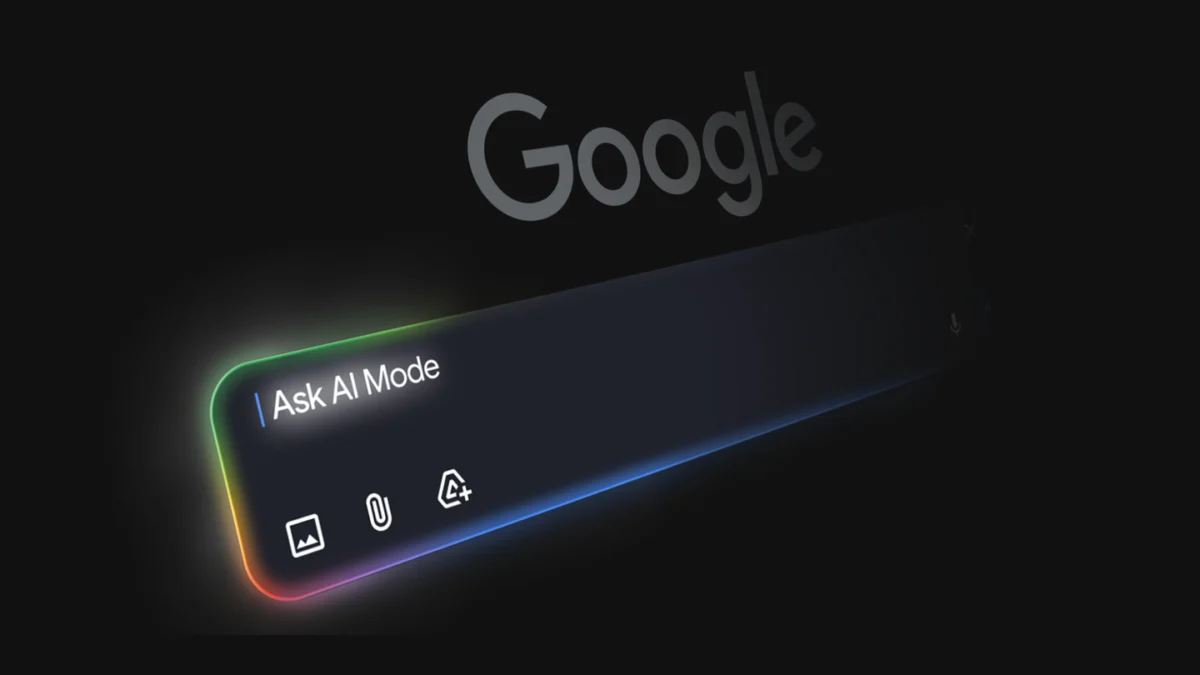
Google has officially transitioned Canvas in AI Mode from a limited testing phase to a general release for all users in the United States, providing an English-language workspace designed to facilitate complex project management, document drafting, and software development. This expansion marks a significant evolution in the company’s integration of generative artificial intelligence into its core search ecosystem, moving beyond simple query responses toward a more "agentic" and collaborative environment. The updated toolset now includes specialized support for creative writing and interactive coding, allowing users to build functional prototypes and structured documents directly within a side panel while maintaining access to live search results and Google’s expansive Knowledge Graph.
The rollout of Canvas in AI Mode represents a strategic shift in how digital information is organized and manipulated. Unlike standard chatbot interfaces that operate through a linear exchange of prompts and responses, Canvas offers a persistent, dynamic space where users can refine projects over multiple sessions. By selecting the Canvas option from the tool menu in Google’s AI Mode, users are presented with a dedicated workspace that can pull real-time data from the web to populate dashboards, draft essays, or generate executable code. This development is specifically positioned to assist with multi-stage tasks such as academic preparation, travel logistics, and professional workflow automation.
The Evolution of Google’s AI Integration and Search Architecture
The introduction of Canvas is the latest milestone in a timeline that began with the unveiling of the Search Generative Experience (SGE) in early 2023. Following the initial launch of Gemini (formerly Bard), Google has progressively integrated generative capabilities into its primary search interface to address the growing demand for more comprehensive answers to complex queries. In May 2024, during the annual Google I/O conference, the company signaled a move toward "AI Overviews" and more sophisticated planning tools. The current iteration of Canvas represents the maturation of these concepts, shifting from a passive information-delivery model to an active production environment.
Throughout the summer of 2024, Google conducted iterative testing with a subset of users to determine which functionalities were most critical for productivity. Feedback from these early adopters highlighted a need for a space that could handle non-linear tasks—projects where a user might need to go back and forth between research and execution. The resulting Canvas interface allows for this fluidity, enabling a user to research scholarship requirements in one moment and generate a tracking dashboard for those same requirements in the next, without losing context or history.
Technical Capabilities: Coding, Writing, and the Knowledge Graph
The most significant technical additions to the current release are the enhanced coding and creative writing modules. When a user prompts Canvas to create a tool—such as a budget calculator or a data visualization dashboard—the system generates a working prototype in the side panel. This is not merely a static text output; users can toggle to view the underlying code, allowing for manual adjustments or collaborative refinement through conversational follow-ups. This feature lowers the barrier to entry for non-programmers while providing a rapid prototyping environment for experienced developers.
The creative writing functionality operates on a similar principle of iterative refinement. Users can draft long-form documents, such as essays or reports, and use the AI to adjust the tone, length, or structure of specific sections without regenerating the entire piece. This "in-place" editing is a departure from previous AI interactions where a new prompt often resulted in a completely new version of the text, making it difficult to maintain consistent formatting or specific stylistic choices.
Powering these features is the integration of the Google Knowledge Graph, a massive database of billions of facts about people, places, and things. By anchoring AI-generated content in the Knowledge Graph and live web indices, Google aims to reduce the frequency of hallucinations—instances where AI generates factually incorrect information. When Canvas pulls data for a scholarship dashboard or a travel itinerary, it cross-references real-world entities to ensure that deadlines, locations, and prices reflect the most current information available online.
Practical Applications in Education and Project Management
The timing of the broad release coincides with the "Back to School" season, a period where student and educator demand for organizational tools typically surges. Google has highlighted the use of Canvas for academic tracking as a primary use case. For example, a student can describe a need for a dashboard to track academic scholarships. The AI then populates a table or interactive list including eligibility requirements, application deadlines, and award amounts, sourced from various university and foundation websites.
In addition to academic uses, the tool is being positioned for complex personal logistics. Travel planning, which often involves juggling flight times, hotel bookings, and activity schedules, can be centralized within a Canvas project. Because the workspace is persistent, users can return to their travel plans weeks after the initial creation, adding new discoveries or adjusting the itinerary as flight prices or availability change. This persistence addresses a major pain point in traditional search, where users often have to repeat searches or manage dozens of open tabs to keep track of a single project.
Market Context and Competitive Landscape
Google’s expansion of Canvas occurs within a highly competitive landscape for AI-driven productivity tools. The market for "AI Agents"—tools that can perform tasks rather than just answer questions—is expected to grow significantly over the next five years. Industry analysts point to the emergence of similar "canvas" or "workspace" features from competitors such as OpenAI (with its ChatGPT "Canvas" interface) and Anthropic (with its "Artifacts" feature).
According to data from market research firms, the global AI productivity software market is projected to reach an estimated valuation of over $100 billion by 2030. Google’s advantage in this sector lies in its existing ecosystem. By embedding Canvas directly into Search, Google leverages its dominant market share in information retrieval to capture users who might otherwise turn to standalone AI platforms. Furthermore, the integration with Google Workspace (Docs, Sheets, Drive) provides a seamless transition from search-based research to professional-grade document production.
Official Responses and Strategic Vision
While Google has not released specific internal user metrics for the Canvas beta phase, company executives have frequently emphasized the goal of making AI a "helpful partner" in the search process. Elizabeth Reid, Vice President and Head of Google Search, has previously stated that the objective is to take the "legwork" out of searching, allowing the engine to do the heavy lifting of organizing and summarizing so that users can focus on decision-making and creativity.
The broader strategy, as articulated in recent Alphabet Inc. earnings calls, involves a massive capital investment in AI infrastructure. In the first half of 2024 alone, Alphabet reported billions in capital expenditures directed toward data centers and custom AI chips (TPUs) to support the computational demands of features like Canvas. This financial commitment underscores the company’s belief that the future of the internet lies in interactive, generative experiences rather than static link-based indexing.
Security, Privacy, and Ethical Considerations
As with any tool that generates code and handles personal project data, the rollout of Canvas brings questions regarding data privacy and security to the forefront. Google has maintained that the data processed within AI Mode is subject to its standard privacy protections, though users are encouraged to be mindful of the information they input into generative prompts.
The coding feature, in particular, necessitates robust sandboxing to ensure that generated scripts do not pose security risks to the user’s local environment. Google’s approach involves running prototypes within the controlled environment of the Canvas side panel, allowing users to verify functionality before exporting or implementing the code elsewhere. Furthermore, the company continues to refine its "About this result" and sourcing features to provide transparency regarding where the AI is obtaining the information used to populate Canvas dashboards.
Implications for the Future of Digital Workflows
The broad availability of Canvas in AI Mode suggests a future where the boundary between a search engine and a productivity suite becomes increasingly blurred. For the average user, the search bar is no longer just a portal to other websites; it is becoming a workspace in its own right. This has profound implications for web traffic and the "open web" ecosystem. If users can gather, organize, and act upon information within a Google-hosted side panel, the necessity of clicking through to third-party websites may decrease, a trend that has already sparked debate among digital publishers and SEO professionals.
However, from a utility perspective, the ability to jumpstart projects with a working prototype or a structured document significantly reduces the "blank page" problem. By providing a middle ground between a raw search query and a finished project, Canvas functions as a bridge that automates the organizational overhead of modern digital life.
As Google continues to roll out these features globally and in additional languages, the impact on global productivity and information literacy will likely be a subject of intense study. For now, the U.S. release serves as a large-scale implementation of a new paradigm in human-computer interaction, where the search engine acts not just as a librarian, but as an assistant, a researcher, and a coder.