

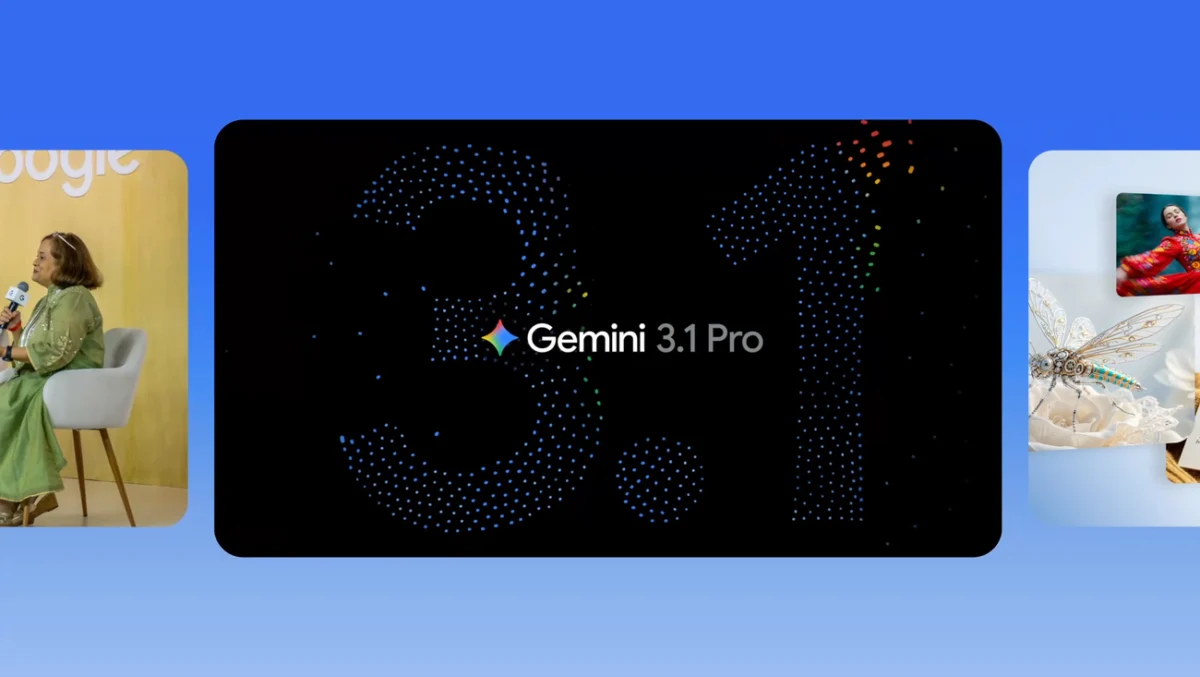
The month of February 2026 marked a pivotal expansion in the global artificial intelligence landscape as Google unveiled a comprehensive suite of model upgrades, infrastructure investments, and strategic international partnerships. These announcements, headlined by the debut of Gemini 3.1 Pro and the versatile Nano Banana 2, represent a concerted effort by the technology giant to transition generative AI from experimental phases into specialized, high-performance applications across science, creative industries, and elite athletics. Central to this strategy was the AI Impact Summit held in New Delhi, India, where the company emphasized the democratization of AI tools and the necessity of building digital resilience in an era of rapidly evolving cybersecurity threats.
The AI Impact Summit: India as a Global Innovation Hub
The cornerstone of Google’s February initiatives was the AI Impact Summit in India, an event that drew world leaders, researchers, and entrepreneurs to discuss the future of the digital economy. CEO Sundar Pichai’s opening remarks set the tone for the summit, where he characterized artificial intelligence as the most profound technology currently under development. Pichai advocated for a "bold and responsible" approach to AI, suggesting that the current development cycle requires unprecedented cooperation between the private sector and government entities to ensure equitable access.
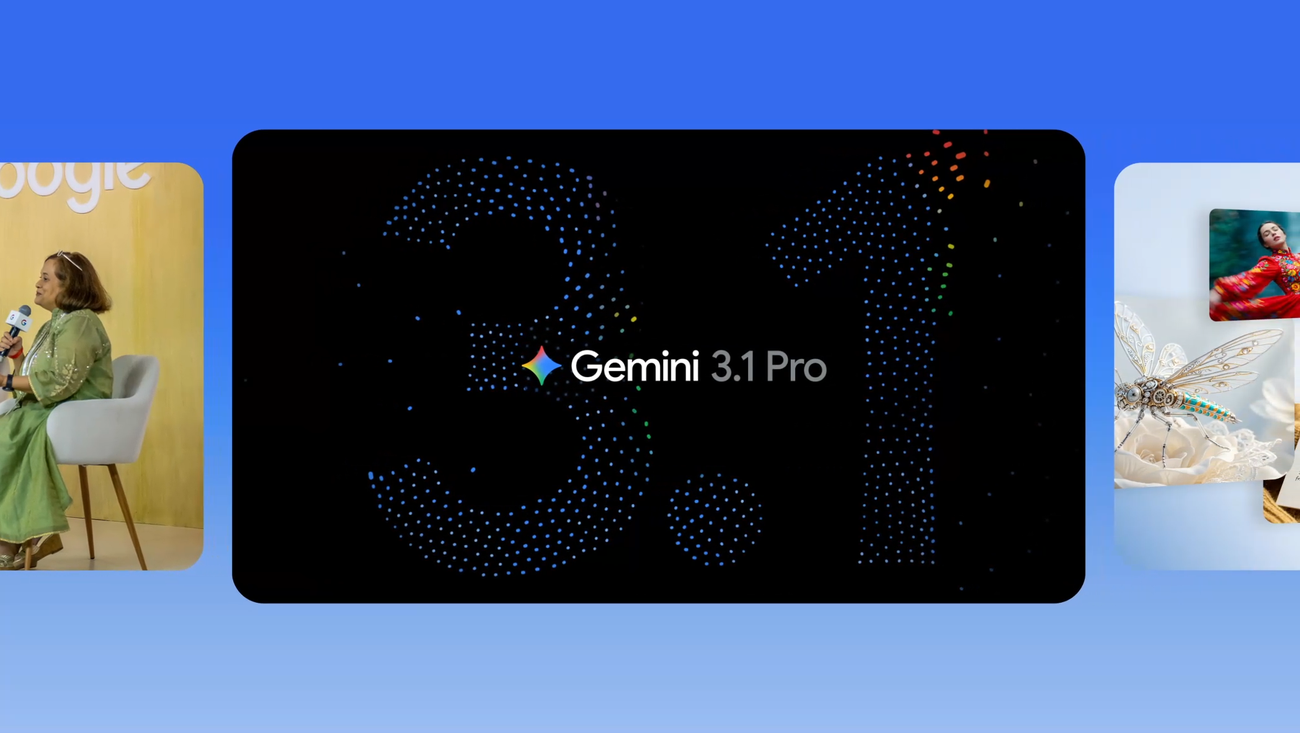
To support this vision, Google announced several high-level partnerships within India. These include new national collaborations aimed at accelerating scalable AI solutions in the fields of education and environmental science. The company also launched specific "Impact Challenges" designed to spark innovation within government agencies and scientific research institutions. These initiatives are backed by major infrastructure investments, including the expansion of the America-India Connect subsea cable system, which is intended to bolster the cloud infrastructure required to process complex AI workloads across four continents. Furthermore, to address the growing demand for technical expertise, Google introduced a new AI Professional Certificate program aimed at training the next generation of the global workforce in machine learning and data analysis.
Evolutionary Steps in Model Architecture: Gemini 3.1 Pro and Nano Banana 2
In terms of technical advancements, the release of Gemini 3.1 Pro serves as a significant milestone for Google’s Large Language Model (LLM) development. According to internal benchmarks and technical documentation, Gemini 3.1 Pro demonstrates more than double the reasoning performance of its predecessor, the 3 Pro model. This upgrade focuses on "complex problem-solving," a metric that measures the model’s ability to synthesize disparate data points into a cohesive view and provide clear, visual explanations for highly technical topics. The 3.1 Pro iteration is now available across developer platforms and for enterprise consumers, positioning it as a primary tool for workflows requiring high-fidelity analytical capabilities.
Simultaneously, Google addressed the need for efficiency and speed with the introduction of Nano Banana 2. This model is designed to bridge the gap between "Pro" level image generation quality and "Flash" level processing speeds. By optimizing the model’s architecture, Google has enabled high-quality visual generation within the Gemini app and Google Search that occurs in near real-time. For developers, Nano Banana 2 offers a favorable price-performance ratio, allowing for the deployment of sophisticated visual creation tools at a massive scale without the latency typically associated with high-resolution generative models.

A critical component of this visual update is the integration of SynthID. As generative media becomes more prevalent, Google has reinforced its commitment to transparency by improving this watermarking tool. SynthID embeds imperceptible digital signatures into AI-generated content, helping users and platforms identify synthetic media and mitigate the risks associated with deepfakes or misinformation.
Specialized Intelligence: Deep Think and the Advancement of Science
For the scientific community, the most impactful announcement was the major upgrade to Gemini 3 Deep Think. Developed in collaboration with research teams at Google DeepMind, this specialized model is tailored for the complexities of engineering and the physical sciences. Unlike general-purpose models that may struggle with "messy" or non-binary data, Gemini 3 Deep Think is engineered to navigate scenarios where solutions are not clearly defined.
The model’s performance in mathematical and scientific discovery has been enhanced to move beyond abstract theory into practical, actionable results. This makes it a valuable asset for researchers working on climate modeling, genomic sequencing, and advanced materials science. Currently, the Deep Think upgrade is available to Google AI Ultra subscribers, with early access via the Gemini API being extended to select research institutions and enterprises to test its limits in rigorous lab environments.

The Intersection of AI and the Creative Economy
Google’s February update also prioritized the creative sector with the release of Lyria 3 and ProducerAI. Lyria 3 represents the company’s most advanced music generation technology to date, capable of transforming a text prompt, a photograph, or a video snippet into a 30-second musical track complete with custom cover art. This tool is integrated directly into the Gemini app, lowering the barrier to entry for high-quality audio production.
Complementing Lyria 3 is the addition of ProducerAI to Google Labs. ProducerAI functions as a collaborative partner for musicians and songwriters, offering tools to refine lyrics, adjust melodies, and build out comprehensive song structures from simple initial concepts. These tools are being integrated into a unified workspace called "Flow," where users can generate, edit, and animate both images and videos. The "Flow" interface has been redesigned to allow for seamless asset management, enabling creators to use high-fidelity images as building blocks for immediate video generation.
Real-World Applications: From the Super Bowl to the Olympic Slopes
The practical utility of Google’s AI was demonstrated through two distinct high-profile examples: sports analytics and national advertising. Ahead of the upcoming Olympic Winter Games, Google Cloud and Google DeepMind revealed a sophisticated AI video analysis tool developed for Team USA and U.S. Ski & Snowboard.

The tool utilizes spatial intelligence research to map an athlete’s motion directly from standard 2D video footage. Traditionally, motion capture required specialized suits and sensors, which are impractical for winter athletes wearing bulky protective gear. The Google-developed platform bypasses these limitations, processing motion data in minutes to provide near real-time feedback on an athlete’s "tricks" and form. This allows coaches and athletes to make data-driven adjustments that were previously impossible outside of a controlled laboratory setting.
On the commercial front, Google leveraged the massive audience of the Super Bowl to showcase the human element of AI. The "New Home" advertisement depicted a family using Gemini to visualize and plan their living spaces. The ad was critically acclaimed, earning the top spot in the Kellogg School of Management’s annual Super Bowl Advertising Review. This marketing push underscores Google’s intent to move Gemini from a niche technical tool to a household utility.
Security, Policy, and Digital Resilience
As AI capabilities expand, so do the security challenges associated with them. At the 62nd Munich Security Conference (MSC), Google’s President of Global Affairs, Kent Walker, addressed the international community regarding "digital resilience." Walker argued that traditional security frameworks are increasingly inadequate in the face of AI-driven threats.

Google’s proposal at the MSC centered on a collaborative approach to security. The company outlined a vision where partners can build resilient digital infrastructures without sacrificing sovereignty over their data. This involves shared intelligence on emerging threats and the development of open-standard security tools that can detect and neutralize AI-powered cyberattacks. The focus on resilience reflects a broader industry shift toward viewing AI not just as a tool for creation, but as a critical component of national and corporate defense strategies.
Timeline and Broader Industry Implications
The February announcements represent a rapid acceleration in Google’s product release cycle. Following the initial launch of the Gemini ecosystem in late 2024 and early 2025, the transition to version 3.1 and the introduction of specialized models like Deep Think and Nano Banana 2 suggest that the company is moving toward a more fragmented, "task-specific" AI strategy.
Industry analysts suggest that by offering a range of models—from the high-reasoning Gemini 3.1 Pro to the lightweight and fast Nano Banana 2—Google is attempting to capture the entire spectrum of the AI market. This strategy directly challenges competitors like OpenAI and Microsoft by providing a more diverse set of tools for different hardware requirements and budget constraints.

As the first quarter of 2026 continues, the impact of these February updates will likely be felt in how enterprises integrate AI into their daily operations. With the infrastructure investments in India and the new security protocols discussed in Munich, Google is positioning itself not just as a provider of AI models, but as the foundational architect of the global AI-enabled economy. The focus now shifts to the developer community and scientific researchers to see how these new reasoning and creative capabilities will be utilized to solve the "real-world challenges" Google has pledged to address.