

The Evolution of AI-Driven Ecological Monitoring
The trajectory of SpeciesNet began in 2019 when it was integrated into Wildlife Insights, a collaborative platform designed to streamline conservation data. However, the decision to release the model as a free, open-source tool on GitHub a year ago marked a pivotal shift in the democratization of conservation technology. By making the underlying code accessible, Google has enabled local research groups to not only use the model but also adapt and refine it for specific regional needs. This transition comes at a critical time as the United Nations and various global environmental bodies warn of a "biodiversity crisis," with species extinction rates accelerating due to habitat loss, climate change, and human encroachment.
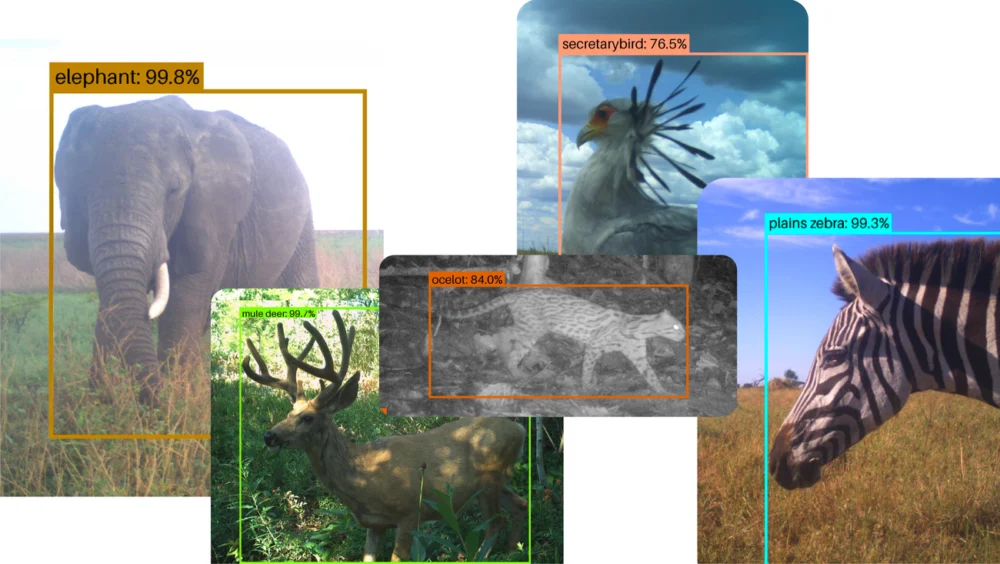
The technical architecture of SpeciesNet is designed to handle the inherent "noise" of wilderness photography. Unlike laboratory-grade images, camera trap photos are often characterized by poor lighting, obscured subjects, or extreme weather conditions. The model is trained to identify species from multiple angles and can detect animals even when only a small portion of their body is visible in the frame. This robustness is essential for generating reliable data sets that can stand up to scientific scrutiny and inform government policy.

Clearing the Decades-Long Backlog in the Serengeti
One of the most profound applications of SpeciesNet has been observed in Tanzania’s Serengeti National Park through the Snapshot Serengeti project. Since 2010, the project has maintained an extensive network of camera traps in collaboration with the Tanzanian Wildlife Research Institute. In its early years, the project relied on a massive network of online volunteers to manually tag images. However, the volume of data quickly outpaced the human capacity to process it, leading to a significant backlog of unanalyzed information.
Under the leadership of Todd Michael Anderson at Wake Forest University, the project utilized SpeciesNet to process a staggering 11 million photos. Data that would have taken years—if not decades—to categorize manually was processed in a matter of days. This rapid analysis provides a long-term view of fauna behavior and population density in one of the world’s most biodiverse regions. The ability to look back at 15 years of data with AI-driven precision allows researchers to identify subtle shifts in migration patterns and predator-prey dynamics that were previously obscured by the sheer weight of the data backlog.
Monitoring Behavioral Shifts in the Amazon and Beyond
In South America, the Humboldt Institute has integrated SpeciesNet into its monitoring of the Colombian Amazon, a region undergoing rapid environmental transformation. The launch of Red Otus, a national-scale network covering both public and private lands, represents a significant expansion of Colombia’s conservation infrastructure. By analyzing tens of thousands of images, researchers have uncovered evidence of "behavioral plasticity" among wildlife—changes in daily routines as a response to human activity.

Analysis facilitated by SpeciesNet suggests that several mammal species in Colombia are becoming increasingly nocturnal. This shift is interpreted by biologists as a defensive mechanism to avoid human interaction or hunting pressures. Similarly, data indicates that birds in developed or semi-developed areas are appearing later in the morning, potentially a strategy to avoid predators that are more active at dawn. These insights are vital for urban planning and the creation of "wildlife corridors," as they provide empirical evidence of how infrastructure impacts animal psychology and survival strategies.
Efficiency Gains in North American Forest Management
In the United States, the Idaho Department of Fish and Game (IDFG) serves as a primary example of how state agencies are leveraging AI to supplement traditional survey methods. While aerial surveys are effective in the open plains of southern Idaho, they are less reliable in the dense, mountainous forests of the north. To compensate, the IDFG deploys hundreds of camera traps to monitor populations of black bears, coyotes, mule deer, and elk.
The challenge for the IDFG has always been the annual review of millions of images. By implementing SpeciesNet, the agency has established a workflow where the AI performs the initial sort, grouping images by species and filtering out "blank" triggers caused by moving vegetation or shadows. Human experts then conduct a final review of the AI’s findings. This hybrid approach has drastically reduced the "man-hours" required for data processing, allowing wildlife managers to focus on habitat restoration and population stability efforts rather than manual data entry.
Customization for Australia’s Unique Biodiversity
The open-source nature of SpeciesNet has been particularly beneficial for the Wildlife Observatory of Australia (WildObs). Australia is home to a high percentage of endemic species—animals found nowhere else on Earth—many of which were not included in the original global training set of the model. Because the code is open-source, WildObs researchers were able to take the foundational SpeciesNet architecture and "fine-tune" it using local data sets.
This localized training has enabled the identification of iconic and threatened species such as the cassowary and the red-legged pademelon. For Australian conservationists, the ability to track these specific populations in real-time is essential for managing the threats posed by invasive species and frequent bushfires. The WildObs initiative demonstrates the "force multiplier" effect of open-source software: a global tool can be adapted to solve highly specific, local ecological challenges.
Supporting Data and Technical Implications
The impact of SpeciesNet can be quantified through its performance metrics and the scale of its reach. The model currently supports identification for nearly 2,500 species, covering a vast majority of the medium-to-large terrestrial vertebrates tracked by conservationists. Since its open-source release, the GitHub repository has become a hub for the global "computational ecology" community.
| Metric | Detail |
|---|---|
| Species Categories | ~2,500 (Mammals, Birds, Reptiles) |
| Processing Speed | Millions of images in < 72 hours (Cloud-based) |
| Launch Date | 2019 (via Wildlife Insights); 2023 (Open-source) |
| Key Partners | 50+ Global Research Organizations |
The implications of this technology extend beyond simple identification. By providing a standardized method for data processing, SpeciesNet allows different research groups to share and compare data more easily. In the past, different organizations used different labeling conventions, making meta-analysis difficult. SpeciesNet provides a "common language" for camera trap data, which is essential for international conservation treaties and global biodiversity assessments.
Broader Impact on Global Conservation Policy
The integration of AI into wildlife conservation represents a paradigm shift in how humanity interacts with the natural world. As SpeciesNet continues to evolve, its developers and partners are looking toward the future of "real-time" ecology. The goal is a system where camera traps equipped with edge-computing capabilities can identify species and transmit data instantly via satellite, providing an early-warning system for poaching or the sudden decline of a species.
From a policy perspective, the data generated by SpeciesNet provides the "ground truth" needed to justify environmental protections. When a government or corporation proposes a development project, conservationists can now present years of AI-verified data showing the presence of endangered species or critical migratory paths. This moves conservation from a reactive stance to a proactive, data-driven discipline.

As Google Research scientists and program managers like Tanya Birch and Dan Morris have noted, the success of SpeciesNet is ultimately a testament to the power of collaboration. By providing the technological "engine," Google has empowered local experts who possess the biological and geographical knowledge to make that data actionable. In an era of rapid environmental change, the speed of SpeciesNet is not just a convenience—it is a necessary component in the global effort to preserve the planet’s remaining wilderness. The continued growth of this open-source ecosystem suggests that while the challenges facing wildlife are immense, the tools available to protect them are becoming more powerful, accessible, and intelligent every day.