

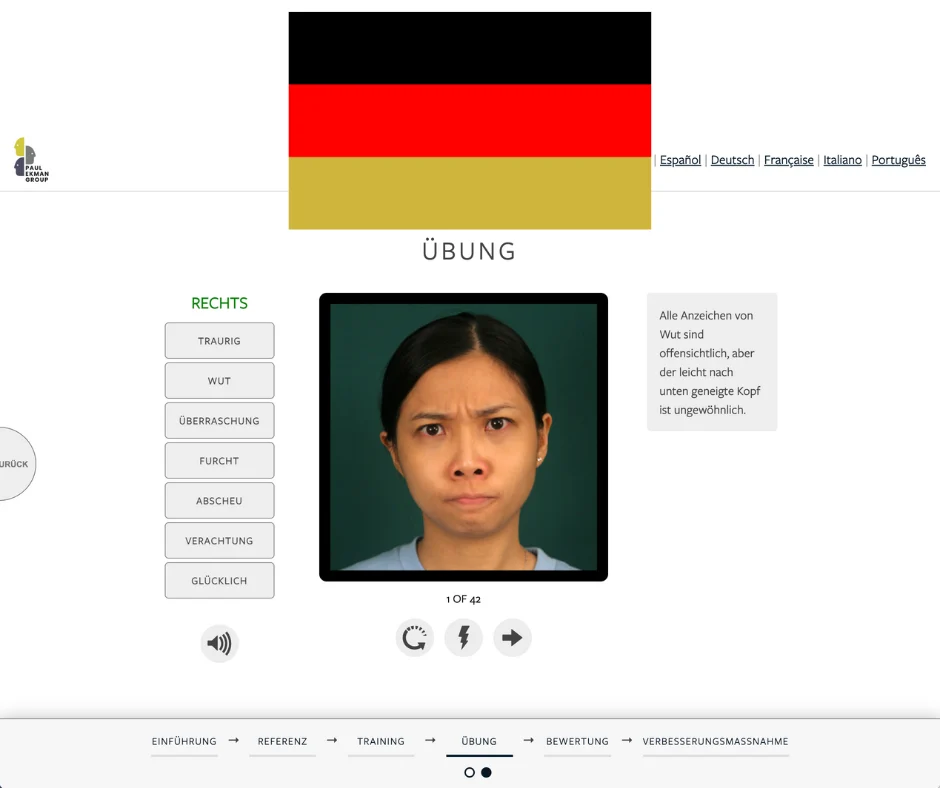
The Paul Ekman Group has significantly broadened the accessibility of its renowned micro-expression training tools, announcing the immediate availability of its comprehensive online courses in German, French, and Italian. This expansion marks a pivotal moment in the organization’s mission to democratize the science of emotions and enhance emotional intelligence worldwide, making scientifically validated methods for recognizing subtle facial cues available to a much wider, non-English speaking audience. The newly translated offerings now join existing Spanish and Portuguese versions, further solidifying the Paul Ekman Group’s commitment to global inclusivity in emotional science education.
The Genesis of Global Accessibility: A Strategic Imperative
The decision to translate the micro-expression training tools into German, French, and Italian stems from a deep-seated commitment to the universal nature of human emotions, a principle that has guided the work of Dr. Paul Ekman for decades. Dr. Ekman’s groundbreaking research, initiated in the 1960s, established that certain basic emotions are expressed universally through facial movements, irrespective of cultural background. This foundational discovery underpins the entire methodology of the Paul Ekman Group’s training programs.
Historically, access to these specialized skills was largely confined to those proficient in English. However, recognizing that language can be a significant barrier to learning and professional development, the Paul Ekman Group embarked on a strategic initiative to break down these linguistic divides. The initial rollout of Spanish and Portuguese translations proved highly successful, demonstrating a substantial demand for localized training. The latest expansion into German, French, and Italian represents a calculated response to this burgeoning global interest, targeting key linguistic markets in Europe with significant professional and academic communities.
The timeline for this expansion has been meticulous. Development and rigorous quality assurance for each language have been ongoing for an extended period, ensuring that the nuanced scientific content and interactive training modules are accurately conveyed. The Paul Ekman Group has emphasized that each translation has undergone extensive review by subject matter experts and language specialists to maintain the fidelity of Dr. Ekman’s original work and pedagogical approach.
Unlocking the Power of Micro-Expressions: A Deeper Dive into the Science
Micro-expressions are fleeting, involuntary facial movements that occur within fractions of a second, typically lasting between 1/25th and 1/2 second. They are the body’s immediate, unconscious response to an emotion, often revealing a person’s true feelings even when they attempt to conceal them. These expressions are distinct from macro-expressions, which are longer-lasting and consciously controlled.
The ability to detect and interpret micro-expressions offers profound advantages across a multitude of disciplines and personal interactions. For law enforcement and security personnel, it can be a critical tool in threat assessment, interrogation, and establishing rapport. In the fields of education and psychotherapy, understanding a student’s or patient’s underlying emotional state can lead to more effective communication, intervention, and therapeutic outcomes. Business leaders and managers can leverage this skill to foster better team dynamics, negotiate more effectively, and understand customer needs with greater precision. On a personal level, enhanced recognition of micro-expressions can deepen interpersonal relationships by fostering greater empathy, understanding, and trust.
The core of the Paul Ekman Group’s training lies in its systematic approach to teaching individuals to identify the subtle muscular movements associated with each of the seven universal emotions: happiness, sadness, anger, fear, surprise, disgust, and contempt. The training packages, which include all seven core micro-expression training tools, are designed to progressively build recognition skills through a combination of high-definition video examples, interactive quizzes, and performance tracking.
Supporting Data and Global Impact
The demand for emotional intelligence training has seen a dramatic surge in recent years. A 2023 report by the Global Emotional Intelligence Market Analysis indicated a compound annual growth rate (CAGR) of over 15% for the emotional intelligence training sector, with a significant portion of this growth attributed to corporate training initiatives. Furthermore, research published in the Journal of Applied Psychology has consistently demonstrated a positive correlation between emotional intelligence and job performance, leadership effectiveness, and overall organizational success.
The Paul Ekman Group’s existing reach is substantial. With tools previously utilized in over 230 countries, the organization has already established a significant global footprint. The addition of German, French, and Italian is projected to unlock access for an estimated additional 300 million native speakers, representing a substantial portion of the European population. This demographic shift is expected to fuel further growth and solidify the Paul Ekman Group’s position as a global leader in emotion science education.
The existing Spanish and Portuguese translations have reportedly seen a significant uptake, with user engagement metrics indicating a high degree of satisfaction and reported skill improvement. While specific figures are proprietary, anecdotal evidence suggests that professionals in Latin America and Portugal have found immense value in the localized content. The Paul Ekman Group anticipates similar, if not greater, success with the new European language offerings.
Official Statements and Community Engagement
While specific official statements from company executives regarding this particular expansion are not publicly detailed in the original announcement, the underlying mission of the Paul Ekman Group consistently emphasizes a commitment to making this vital knowledge accessible. A spokesperson for the organization, in a general context regarding their translation initiatives, has previously stated: "Our goal is to empower individuals worldwide with the ability to understand and navigate the complexities of human emotion. Language should never be a barrier to this essential human skill."
The expansion into these new languages is also a direct response to community feedback. The organization actively encourages users and potential learners to suggest future language additions. This proactive approach to community engagement ensures that the Paul Ekman Group remains attuned to the evolving needs of its global audience. A dedicated email address for language requests, [email protected], underscores this commitment to user-driven development.
Broader Implications and Future Trajectory
The strategic multilingual expansion of the Paul Ekman Group’s micro-expression training tools has several far-reaching implications.
Firstly, it democratizes access to a highly specialized skill set that was previously more exclusive. By offering training in native languages, the organization significantly lowers the barrier to entry for individuals who may not have had the opportunity or resources to pursue English-language training. This can lead to a more diverse and globally representative cohort of individuals skilled in recognizing micro-expressions.
Secondly, this initiative has the potential to elevate the standard of emotional intelligence and interpersonal communication across Europe. As more professionals and individuals gain access to this training, it can foster a more empathetic and understanding society, leading to improved professional outcomes and healthier personal relationships. The impact on fields such as mental health, education, and international business could be substantial, facilitating more nuanced cross-cultural communication and understanding.
Thirdly, the success of this expansion could pave the way for further linguistic diversification. If the German, French, and Italian offerings meet or exceed expectations, it is highly probable that the Paul Ekman Group will continue to invest in translating its tools into other major global languages, further cementing its role as a pivotal player in the global dissemination of emotion science. The stated intention to expand to "further languages" indicates a long-term vision for comprehensive global coverage.
The ongoing work to make emotional science universally accessible is a testament to the enduring relevance of Dr. Ekman’s foundational research. As the world becomes increasingly interconnected, the ability to understand and respond effectively to the subtle nuances of human emotion is not merely an advantage, but a necessity. The Paul Ekman Group’s proactive approach to language accessibility is a critical step in equipping individuals across the globe with these vital tools for navigating the complexities of human interaction.
The announcement concludes with a direct call to action, inviting users to explore the training in their preferred language. For existing customers, the option to select their language of choice is now integrated into the main menu of each Paul Ekman training tool upon logging into their accounts. This seamless integration is designed to provide an immediate and user-friendly experience. The organization expresses gratitude to its global community, reinforcing its commitment to a shared journey of learning and discovery, regardless of linguistic background.