

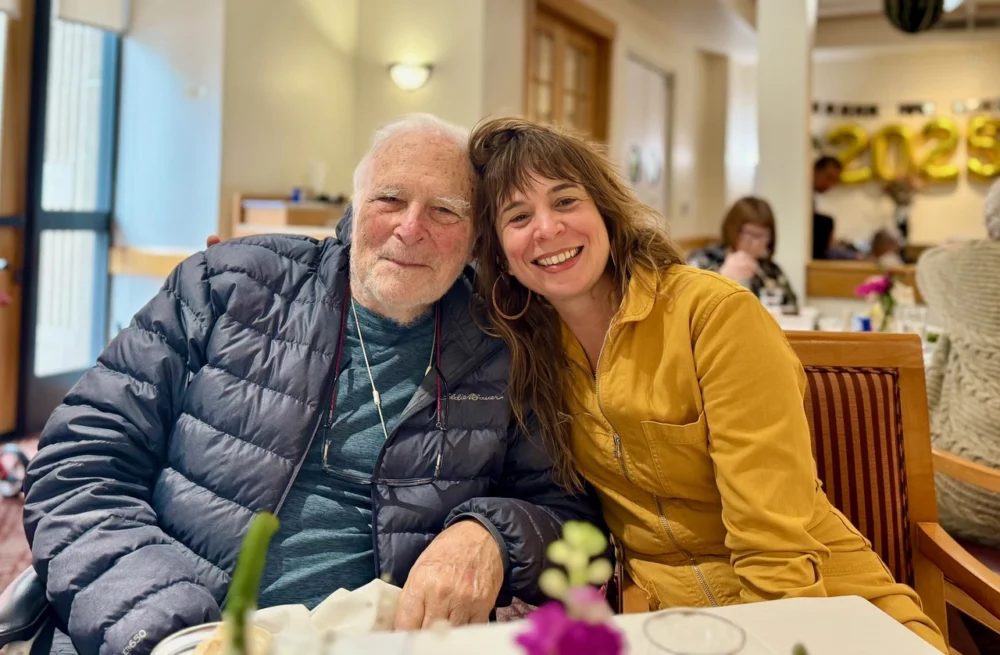
The passing of renowned psychologist and emotion researcher Dr. Paul Ekman marks the end of an era in the study of human affect. Dr. Ekman, whose groundbreaking work on universal facial expressions and the science of deception became foundational to numerous fields, is remembered by his daughter, Eve Ekman, not only as a towering scientific figure but as a devoted father, husband, and friend. His life, characterized by a profound personal evolution and an unwavering commitment to alleviating human suffering, offers a compelling narrative that extends far beyond the laboratory.
Born into challenging circumstances marked by childhood trauma and loss, Dr. Ekman’s early experiences deeply informed his lifelong dedication to understanding the complexities of human emotion. This personal crucible forged a powerful drive to become the kind of supportive and present parent he had not experienced himself. As Eve Ekman recounts, her father poured himself into their upbringing with a “fierce loyalty and genuine delight,” acting not just as a parent but as a trusted friend and collaborator. His mentorship extended to practical life lessons, from the intellectual rigor of questioning assumptions to the nuanced skill of parallel parking on San Francisco’s famously steep hills, all while fostering a deep appreciation for music and an open, vulnerable heart.
Dr. Ekman’s marriage of 41 years to his wife, Eve, a distinguished academic at UC Berkeley, was a cornerstone of his life. He cherished her support and acknowledged with “dumbfounded delight” her decision to build a life with him, a partnership that was characterized by shared adventures and mutual admiration. Her passing in 2020 was a significant loss, yet his capacity for love and connection remained a defining trait throughout his life.
A Transformative Encounter in Dharamsala
The latter quarter-century of Dr. Ekman’s career was marked by a profound shift, catalyzed by a pivotal meeting in Dharamsala, India, in 2000. This historic gathering brought together Dr. Ekman, His Holiness the Dalai Lama, and a diverse group of scientists and contemplatives to explore the nature of “Destructive Emotions.” For Dr. Ekman, who had publicly acknowledged his own past struggles with anger, this experience was nothing short of transformative.
This encounter provided him with an "unmistakable, embodied sense" of what it might feel like to live with reduced reactivity and anger. He often spoke of this moment, admitting its ineffable quality, a sentiment that underscored the deeply personal impact of the dialogue. The Dalai Lama’s philosophy, which advocates for the use of Buddhist practices to reduce suffering by fostering emotional understanding, a calm mind, and kindness in an interconnected world, resonated deeply with Dr. Ekman.
Bridging Science and Contemplative Traditions
The scientific rigor that defined Dr. Ekman’s career was now directed towards integrating his extensive research with the contemplative traditions he came to deeply respect. This period saw the development of the “Cultivating Emotional Balance” (CEB) training program, an evidence-based intervention co-created by Dr. Ekman and Alan Wallace. CEB, designed to equip individuals with tools for understanding and managing emotions, has been offered globally, reflecting Dr. Ekman’s commitment to making these insights accessible.
Eve Ekman, a clinical social worker with experience in trauma care, played a crucial role in this transition, working alongside her father and bringing a practical, grounded perspective to their collaborative efforts. Her background in high-level trauma centers informed her commitment to applying scientific knowledge in tangible, everyday ways.
Further testament to this integration was the creation of the “Atlas of Emotions,” a free online resource commissioned by the Dalai Lama. Launched in 2016 and soon to celebrate its ten-year anniversary with a relaunch, the Atlas provides a comprehensive vocabulary for describing emotional experiences, aiming to enhance self-awareness and empathy. Both CEB and the Atlas of Emotions embody Dr. Ekman’s late-career focus on empowering individuals to understand their emotions, thereby reducing personal and collective suffering.
Addressing Scientific Discourse and Legacy
The narrative surrounding Dr. Ekman’s legacy has, at times, been framed by controversy, particularly concerning the interpretation and replication of his early work on universal facial expressions. Eve Ekman expressed concern that a recent obituary in The New York Times focused on a singular critique rather than the extensive body of peer-reviewed research that has validated, expanded, and refined the field.
Dr. Ekman himself welcomed scientific disagreement as an integral part of the research process. However, his daughter argues that prioritizing a selective critique over the hundreds of studies and dozens of laboratories that built upon his foundational findings misrepresents the breadth of his scientific contributions and the evolution of emotion research as a whole. His work, she asserts, significantly advanced global understanding of human emotion across disciplines as diverse as psychology, neuroscience, medicine, anthropology, national security, animation, and everyday life.
A Life Dedicated to Service and Transformation
Paul Ekman’s life was a testament to the principle of science in service of reducing human suffering. This commitment was evident not only in his meticulous research but also in his genuine desire to foster self-understanding and personal growth in others. He shared his own vulnerabilities, worked to repair relationships, and evolved into a man characterized by joy, open-heartedness, and generosity. His capacity for deep, meaningful connections persisted until the final months of his life.
His daughter’s account paints a picture of a man who was far more than his scientific accolades. He was a scientist of immense influence, but also a father who rebuilt his life from painful origins, a man who demonstrably transformed, a collaborator who harmonized ancient wisdom with modern science, and a human being who actively embodied a life of reduced anger and increased compassion in his later years.
Dr. Ekman was, by all accounts, a complex and imperfect individual, mirroring the human condition. Yet, he was also characterized by kindness, bravery, humor, boundless curiosity, and a profound dedication to improving the world. This comprehensive narrative, encompassing both his significant scientific impact and his remarkable personal journey of transformation, is the legacy Eve Ekman hopes will be remembered. It is a story of a life devoted to understanding emotion and expanding compassion, and a lifelong pursuit of learning how to love well.
The outpouring of well wishes from individuals worldwide underscores the profound impact Dr. Ekman and his work have had on countless lives, a testament to a legacy that continues to inspire and inform.