

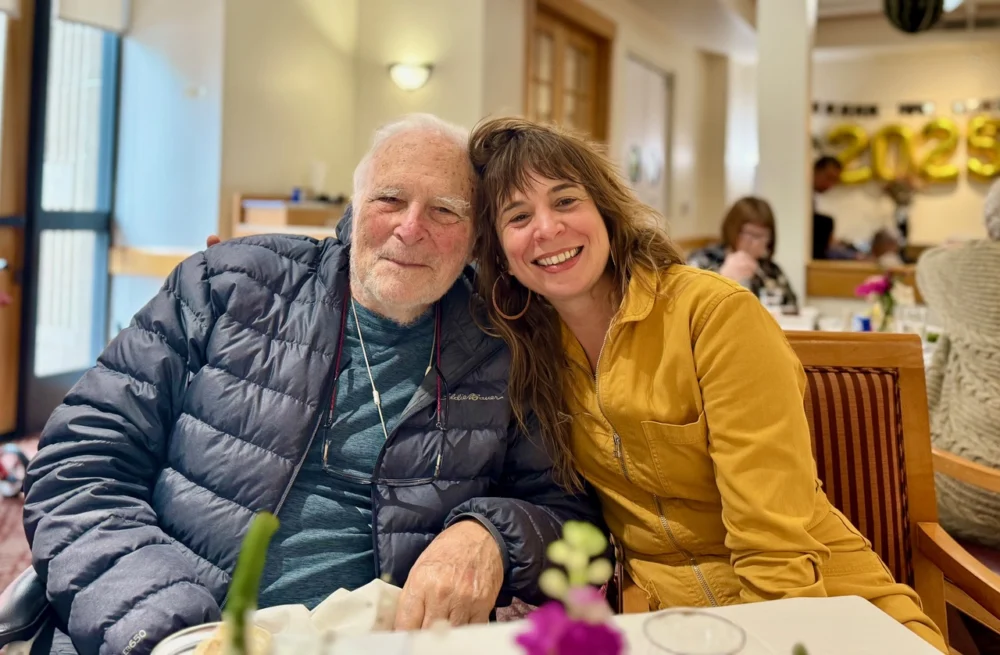
Dr. Paul Ekman, a towering figure in the field of psychology whose groundbreaking research on universal facial expressions of emotion reshaped our understanding of human connection, has been memorialized by his daughter, Eve Ekman, in a poignant reflection that highlights not only his immense scientific contributions but also his profound personal journey of growth and compassion. The tribute, shared on his personal website, offers a comprehensive perspective on a life dedicated to dissecting the complexities of human emotion, from its biological underpinnings to its transformative potential. Dr. Ekman’s passing marks the end of an era in emotion science, leaving behind a legacy that extends far beyond academic journals, influencing fields as diverse as national security, animation, and global efforts to cultivate empathy.
A Life Forged in Resilience and Curiosity
Eve Ekman’s narrative paints a vivid portrait of her father as a man defined by a "huge heart, great humor, and an indelible hunger for life." This inherent zest for living, she reveals, was profoundly shaped by early childhood experiences of "profound trauma and loss." These formative challenges, while deeply personal, became the bedrock of his lifelong scientific inquiry into human emotion. Dr. Ekman’s dedication to becoming the father he never had underscores a commitment to presence, curiosity, love, and unwavering support, qualities he actively cultivated. His relationship with his children evolved into one of genuine friendship and collaboration, characterized by "fierce loyalty and genuine delight."
This deeply personal aspect of his life, marked by his unwavering support for his wife, Eve’s mother, and her own distinguished academic career at UC Berkeley over 41 years of marriage until her death in 2020, provides a crucial counterpoint to his public scientific persona. His enduring joy and surprise that she had "taken a chance on him" after previous marriages speaks to a profound appreciation for their shared life, described as an "absolute blast."
The Dharamsala Turning Point: A Paradigm Shift in Understanding
A pivotal moment in Dr. Ekman’s intellectual and personal evolution occurred in the year 2000 during a seminal meeting in Dharamsala, India. This gathering, which brought together Dr. Ekman, the Dalai Lama, and a distinguished circle of scientists and contemplatives, focused on the theme of "Destructive Emotions." This experience, as described by Eve Ekman, "completely transformed his understanding of the world and of himself." While many of his colleagues were aware of his past struggles with anger, fewer understood the depth of his subsequent transformation.
The encounter in Dharamsala provided Dr. Ekman with an "unmistakable, embodied sense" of what it might feel like to live with reduced reactivity and anger. He frequently spoke of this moment, acknowledging its ineffable nature and its profound impact. The Dalai Lama’s vision, which eschewed special treatment and instead focused on the practical application of Buddhist principles to reduce suffering through emotional understanding and the cultivation of a calm mind, deeply resonated with Dr. Ekman. This alignment between scientific rigor and contemplative wisdom became a defining characteristic of his later work.
Bridging Science and Spirituality: Cultivating Emotional Balance
The profound connection forged with the Dalai Lama and the insights gained from the Dharamsala meeting spurred Dr. Ekman’s scientific endeavors in new directions. This period was not merely an extension of his existing research but a meaningful integration of his decades of work with the ancient contemplative traditions he had come to deeply respect. Eve Ekman’s own background as a clinical social worker in a level-one trauma center provided her with a unique perspective, grounding her commitment to helping individuals through both scientific understanding and practical application.
This collaborative spirit led to the creation of "Cultivating Emotional Balance" (CEB), an evidence-based training program co-developed by Dr. Ekman and Alan Wallace following the 2000 meeting. CEB, designed to enhance emotion regulation and compassion, has been offered globally, demonstrating the tangible impact of their integrated approach. Further testament to this synthesis is the "Atlas of Emotions," a free online tool commissioned by the Dalai Lama in 2016. This project, soon to celebrate its ten-year anniversary with a relaunch, aims to equip individuals with a richer vocabulary for understanding and articulating their emotional experiences. Both CEB and the Atlas of Emotions encapsulate Dr. Ekman’s late-career focus: empowering individuals to understand their emotions to alleviate personal and collective suffering.
Addressing Scientific Discourse and Legacy
Eve Ekman also addressed what she described as a misrepresentation of her father’s work in a New York Times obituary, which she felt framed his contributions through the lens of "controversy" by centering a "single scientist’s opinion" rather than the extensive body of peer-reviewed research that has validated and expanded his findings. She emphasized that disagreement is an inherent and welcomed part of the scientific process, but argued that focusing on selective critiques over the hundreds of studies and dozens of labs that built upon his foundational work misrepresented both his scientific achievements and the broader field of emotion research.
Dr. Ekman’s research, particularly his seminal work on the universality of basic facial expressions of emotion, faced challenges and debates throughout his career. Early in his career, his research, largely conducted in the 1960s and 70s, provided compelling evidence for the existence of universal facial expressions corresponding to emotions like happiness, sadness, anger, fear, surprise, and disgust. Studies conducted across diverse cultures, including isolated preliterate societies like the Fore people of New Guinea, supported his thesis that these expressions were innate and not solely learned social conventions. This was a significant departure from prevailing anthropological views that emphasized cultural relativism in emotional expression.
However, later research, particularly by scholars like Margaret Mead and later scholars such as Carl Ekman himself engaged with, explored the nuances of cultural display rules – the social norms that dictate when, where, and how intensely emotions should be expressed. While Dr. Ekman’s work acknowledged these cultural variations, the debate often centered on the degree to which universality versus cultural specificity held sway. Critics sometimes argued that his methodologies might have inadvertently led participants to express prototypical expressions, or that the focus on a limited set of emotions overlooked the vast spectrum of human emotional experience. The New York Times piece, as interpreted by Eve Ekman, may have amplified these critiques without adequately contextualizing the vast body of research that has replicated, refined, and built upon his core findings.
A Legacy of Service and Personal Growth
The enduring impact of Dr. Ekman’s work extends across numerous disciplines. In psychology and neuroscience, his research laid the groundwork for understanding the biological and cognitive underpinnings of emotion. In medicine, his insights have informed therapeutic approaches for conditions involving emotional dysregulation. Anthropology has benefited from his cross-cultural investigations, challenging ethnocentric assumptions. In the realm of national security, his work has been applied to understanding deception detection and threat assessment. The animation industry has utilized his research to create more realistic and emotionally resonant characters. Ultimately, his contributions have permeated everyday life, fostering a greater understanding of our own emotions and those of others.
Eve Ekman’s tribute concludes by emphasizing her father’s lifelong dedication to science in the service of reducing human suffering. This commitment was manifested not only through meticulous research but also through a sincere desire to foster self-understanding in others. He achieved this by openly sharing his vulnerabilities, actively repairing relationships, and evolving into a man characterized by joy, openness, and generosity. His ability to forge deep, meaningful connections persisted until the final months of his life.
The narrative presented is one of a complex, imperfect, yet profoundly impactful individual. Dr. Ekman is remembered as a scientist of immense influence, a survivor who rebuilt his life from painful beginnings, a man who underwent visible and profound personal change, and a collaborator who masterfully integrated ancient wisdom with modern scientific inquiry. He was, fundamentally, a human being dedicated to understanding emotion and expanding compassion, a journey that involved continuous learning and an unwavering commitment to loving well. The outpouring of well wishes from around the globe serves as a testament to the significant and positive impact his life and work have had on countless individuals.