

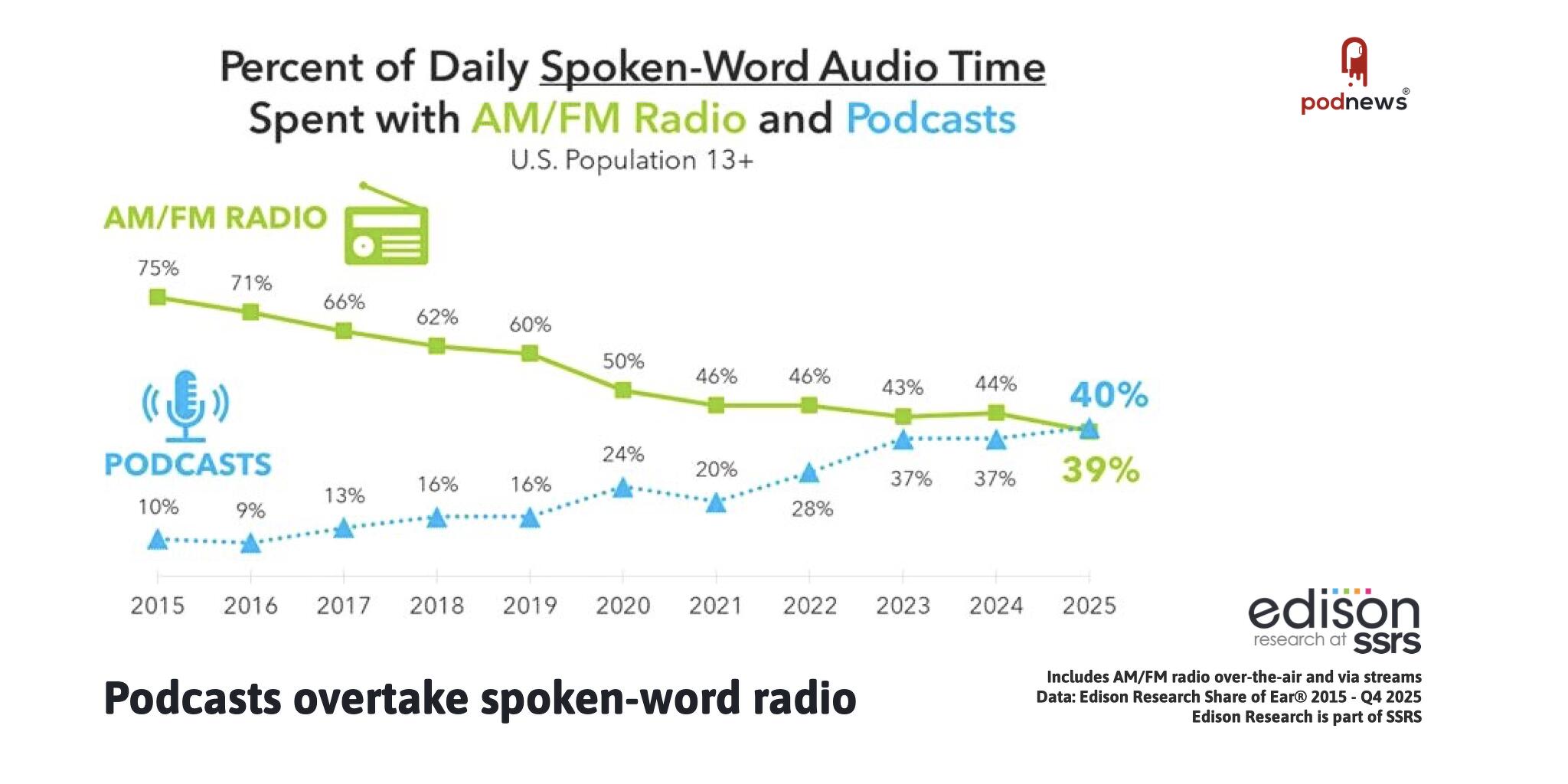
The podcasting industry has officially surpassed traditional radio in terms of spoken-word listening share, a landmark achievement signaling a significant shift in media consumption habits. This development, underscored by recent industry data, highlights the burgeoning influence and widespread adoption of audio-on-demand content. The visual representation of this trend, often depicted through comparative charts, clearly illustrates podcasts claiming a larger portion of the audience’s attention compared to their broadcast radio counterparts. This crossover point is not merely symbolic; it reflects years of sustained growth, technological advancements, and a fundamental change in how consumers access and engage with audio content.
The journey to this point has been a dynamic one, marked by increasing accessibility through smartphones and a diverse array of podcasting platforms. As digital technology has become more integrated into daily life, so too have audio-on-demand services. Listeners now have the unprecedented ability to curate their listening experiences, choosing from an almost infinite library of content that spans virtually every conceivable topic. This personalization, a stark contrast to the fixed schedules and broader appeal of traditional radio, has been a primary driver of podcasting’s ascendancy. Furthermore, the proliferation of high-quality content creators, ranging from independent hobbyists to major media organizations, has continuously expanded the appeal and reach of the medium.
This shift has profound implications for advertisers, content creators, and established media entities alike. For advertisers, it represents a move towards more targeted and engaged audiences. Podcast listeners are often highly invested in their chosen shows, leading to a deeper connection with sponsors and a potentially higher return on investment. For content creators, it signifies a growing opportunity for revenue generation and audience building, transforming passion projects into viable careers. Established radio networks and media companies are also recognizing this paradigm shift, with many investing heavily in their own podcast divisions or acquiring successful independent podcasts to maintain relevance in the evolving audio landscape.
The Rise of Podcasting: A Data-Driven Overview
Recent industry analyses consistently point to podcasts eclipsing radio in spoken-word listening. While precise figures can vary depending on the methodology and scope of the study, the overarching trend is undeniable. Data from reputable market research firms indicates a steady upward trajectory for podcast listenership over the past decade. This growth is not confined to a specific demographic; it spans various age groups, although younger audiences, particularly Gen Z and Millennials, have been at the forefront of this adoption.

The appeal of podcasts lies in their inherent flexibility and the depth of content they offer. Unlike radio, which often requires a fixed listening schedule, podcasts can be downloaded or streamed at the listener’s convenience. This "on-demand" nature perfectly aligns with the busy lifestyles of modern consumers, allowing them to integrate audio content into their commutes, workouts, chores, and leisure time. Moreover, the sheer diversity of subject matter available in podcasting is unparalleled. From in-depth historical narratives and investigative journalism to niche hobbyist discussions and celebrity interviews, there is a podcast for virtually every interest. This granular approach to content creation has allowed podcasts to cater to highly specific audience segments, fostering strong community engagement and loyalty.
A Timeline of Transformation: From Niche to Mainstream

The concept of podcasting, born from the convergence of digital audio technology and the internet, has undergone a significant evolution. The term "podcast" itself was coined in 2004, a portmanteau of "iPod" and "broadcast," reflecting its early association with portable digital media players. Initially, podcasting was a relatively niche pursuit, primarily adopted by tech enthusiasts and independent creators experimenting with new forms of digital storytelling. Early podcasts often featured amateur production quality and limited distribution channels.
However, as internet penetration increased and smartphone adoption became ubiquitous, the accessibility and potential of podcasting grew exponentially. The development of user-friendly podcasting apps and platforms made it easier for consumers to discover, subscribe to, and listen to their favorite shows. Major tech companies, recognizing the potential, began investing in podcasting infrastructure and discovery tools. This period also saw the rise of significant players in the podcasting space, including platforms that facilitated content creation, distribution, and monetization.

The mid-to-late 2010s marked a period of accelerated growth and professionalization. High-profile podcasts began to emerge, attracting massive audiences and garnering significant media attention. Shows like "Serial" and "The Joe Rogan Experience" proved that podcasts could achieve mainstream success, rivaling traditional media in terms of listenership and cultural impact. This success attracted increased investment from advertisers and media conglomerates, further fueling the industry’s expansion. Major media companies, initially hesitant, began launching their own podcast divisions or acquiring successful independent shows.
By the early 2020s, podcasting had firmly established itself as a dominant force in the audio landscape. The COVID-19 pandemic, which saw many people spending more time at home and seeking new forms of entertainment and information, further boosted podcast listenership. Commuting, a traditional peak listening time for radio, diminished for many, but listening during household activities and leisure time increased. This sustained period of growth has culminated in the current scenario where podcasts now command a larger share of spoken-word listening than traditional radio.

Industry Voices and Reactions
The data confirming podcasts’ surpassing of radio has been met with a mixture of acknowledgement and strategic planning from industry stakeholders. Marketers and advertising executives are increasingly reallocating budgets to capitalize on the engaged podcast audience. "We’re seeing a clear shift in where consumers are spending their audio attention," commented Sarah Chen, a media buyer specializing in digital advertising. "Podcasts offer a unique opportunity for brands to connect with listeners on a deeper level, fostering genuine engagement rather than passive consumption. The ability to target niche audiences with precision is a game-changer."

Content creators, many of whom have built their careers on the back of podcasting, view this milestone as validation of their work and the medium’s potential. "This is a monumental moment for the podcasting community," stated Alex Ramirez, host of a popular history podcast. "It shows that independent voices and diverse stories can not only find an audience but can actually lead the conversation. It’s a testament to the power of audio storytelling and the desire for more authentic, in-depth content."
Established radio broadcasters are also responding to the evolving media landscape. While some may view this as a competitive threat, many are embracing the change by diversifying their offerings. "Radio has a long history of connecting with audiences through audio," said David Miller, a program director for a major radio network. "We are actively investing in our digital presence and exploring podcasting as a complementary medium to reach new listeners and deepen our relationship with our existing ones. The core of what we do – compelling audio storytelling – remains relevant, it’s just the delivery method that’s expanding."

Implications for the Future of Audio
The ascendance of podcasting signals a broader transformation in the media consumption ecosystem. The data suggests that listeners are prioritizing personalized, on-demand audio experiences, a trend that is likely to continue. This will likely lead to further innovation in podcast technology, content creation tools, and monetization strategies.

One significant implication is the ongoing evolution of advertising models. As podcast listenership grows, advertisers will continue to refine their strategies, moving beyond simple host-read ads to more sophisticated programmatic advertising and integrated sponsorships. The rich data available from podcast platforms allows for increasingly targeted campaigns, offering brands a more efficient way to reach their desired demographics.
Furthermore, this shift may prompt a re-evaluation of content development across all audio mediums. The success of deeply researched, long-form narrative podcasts could inspire more in-depth programming from traditional broadcasters, while the viral potential of short, engaging audio clips might influence how radio segments are produced and promoted.

The rise of podcasting also has implications for discoverability and curation. As the number of available podcasts continues to grow, effective recommendation algorithms and user-friendly discovery tools will become even more critical. Platforms that can successfully guide listeners to relevant and engaging content will likely gain a competitive advantage.
Finally, the continued growth of podcasting underscores the enduring power of audio as a medium. In an increasingly visual and often overwhelming digital world, audio offers a unique and intimate way to connect with information, stories, and personalities. The ability to consume audio content passively, while multitasking, makes it an ideal companion for many aspects of modern life. As technology continues to advance and creators push the boundaries of what’s possible with sound, the podcasting industry is poised for continued innovation and expansion, solidifying its place as a central pillar of the global media landscape. The era of podcasting’s dominance in spoken-word audio is not just a fleeting trend; it represents a fundamental and lasting shift in how we consume information and entertainment.