

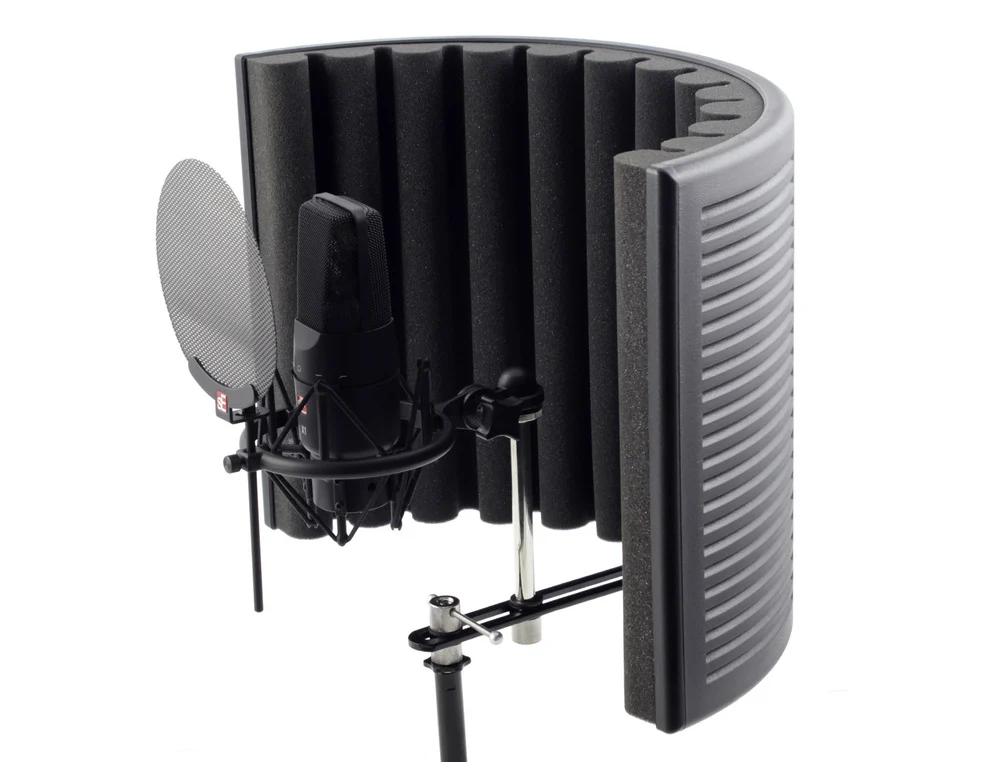
The quest for pristine audio quality in home recording environments has led many aspiring voice artists and producers to ponder the necessity of specialized equipment. Among these, the sound reflection filter has emerged as a frequently discussed, yet often misunderstood, piece of gear. This article delves into the fundamental principles of audio recording, microphone technology, and acoustic treatment to provide a definitive answer to the question that resonates within countless home studios: "Do I need a sound reflection filter?"
Understanding the Core Purpose of a Home Recording Studio
At its heart, a home recording studio, regardless of its scale, aims to create a controlled and consistent environment for capturing audio. This entails achieving several critical objectives: preventing unwanted external sounds from entering the recording space (sound ingress), ensuring that the recorded audio does not leak out and disturb others (sound egress), and, crucially, minimizing the impact of internal sound reflections within the room on the microphone’s pickup. These reflections, often referred to as "room sound" or "reverb," can degrade the clarity and professionalism of a recording, introducing unwanted coloration and diminishing the intelligibility of the primary source. The ultimate goal is to capture a "dry" signal – the pure sound of the voice or instrument – with minimal contamination from the recording space itself.

The Science of Sound Reflection and Microphone Pickup
To truly grasp the efficacy of a sound reflection filter, it’s essential to understand how microphones capture sound and how sound waves behave within an enclosed space.
How Microphones Hear:
Microphones are transducers, converting acoustic energy (sound waves) into electrical signals. Their sensitivity to sound from different directions is described by their polar pickup pattern. This pattern dictates the areas around the microphone where it is most sensitive to sound. Common polar patterns include:
- Omnidirectional: Picks up sound equally from all directions (360 degrees). This pattern captures the most "room sound."
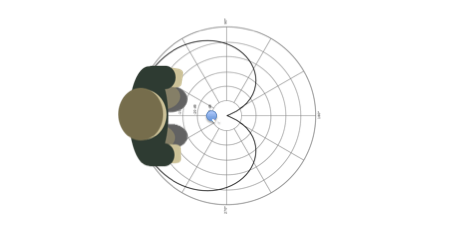
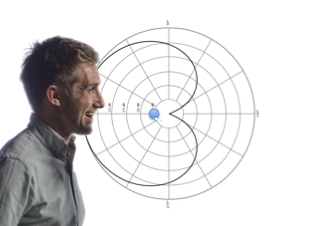
- Cardioid: Picks up sound primarily from the front, with significant rejection from the rear and sides. This is the most common pattern for voice recording due to its ability to isolate the sound source and reduce ambient noise and reflections.
- Figure-8 (Bidirectional): Picks up sound equally from the front and rear, with maximum rejection from the sides.
- Hypercardioid and Supercardioid: These are variations of the cardioid pattern, offering even tighter front pickup but with small lobes of sensitivity at the rear.
Many high-end microphones, such as the renowned Neumann U87, offer switchable polar patterns, allowing users to adapt the microphone’s sensitivity to different recording situations. However, for typical voice-over work or vocal recording, the cardioid pattern is overwhelmingly preferred for its natural ability to reject off-axis sound, including reflections.

The Nature of Sound Reflections:
When sound waves encounter hard, flat surfaces within a room – such as walls, ceilings, floors, or even large furniture – they bounce off, creating reflections. These reflected sound waves travel at different speeds and angles, arriving at the microphone slightly after the direct sound from the source. In an untreated room, these reflections can become a significant component of the recorded audio, leading to a "boxy," "echoey," or "distant" sound.
The principle behind acoustic treatment is to either absorb these sound waves before they can reflect or to diffuse them in a way that prevents strong, discernible echoes. Materials like thick blankets, foam panels, and specially designed acoustic absorbers are employed to achieve this. Even seemingly innocuous objects can influence room acoustics; for example, the soft, irregular surface of a furry pet can absorb and diffuse sound more effectively than a hard, flat monitor screen.
The Role and Perceived Function of Reflection Filters
Sound reflection filters, often seen as semi-circular or cylindrical shields lined with acoustic foam, are designed to be mounted around a microphone. Their visual appearance suggests a direct barrier against sound waves bouncing off the surrounding environment. The marketing and common perception of these devices are that they act as a miniature, portable acoustic treatment solution, effectively isolating the microphone from room reflections.
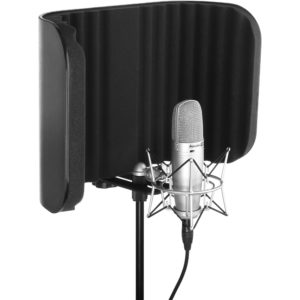
The typical setup involves placing the microphone within the filter, with the filter positioned behind the microphone and extending around its sides. The idea is that the absorbent material within the filter will catch and dissipate any sound waves that might otherwise bounce off nearby surfaces and reach the microphone from the sides or rear.
Examining the Actual Impact: A Deeper Analysis
Despite their intuitive appeal and widespread availability, extensive testing and an understanding of microphone polar patterns reveal a more nuanced reality regarding the effectiveness of sound reflection filters. The critical point lies in how the microphone itself interacts with sound.
Consider a cardioid microphone, the standard for many vocal recordings. Its inherent design means it is already significantly attenuated to sound arriving from the sides and rear. The "sweet spot" for pickup is directly in front of the microphone. When a vocalist speaks into a cardioid mic, the primary sound reaching the microphone is the direct sound from their voice. Reflections that reach the microphone from the sides or rear are already met with a degree of rejection by the microphone’s polar pattern.
Now, let’s introduce the reflection filter. This device is placed behind and to the sides of the microphone. While the absorbent material does absorb some sound, its positioning is crucial. The sound waves that are most likely to be problematic reflections for a cardioid microphone are those arriving from behind and to the sides. However, the cardioid pattern is already designed to minimize pickup from these directions.
Visualizing the Interaction:
Imagine a top-down view of a cardioid microphone setup:
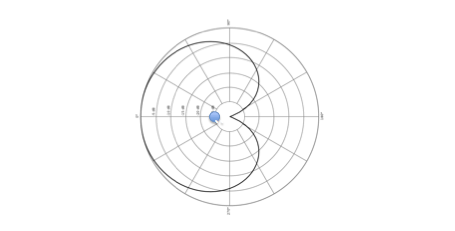
- Direct Sound: The vocalist’s voice travels directly to the front of the microphone, where it is picked up most strongly.
- Room Reflections: Sound waves bounce off walls and other surfaces, traveling towards the microphone from various angles.
- Cardioid Rejection: The cardioid pattern significantly reduces the amount of sound picked up from the sides and rear of the microphone. Therefore, many of the incoming reflections are already being "filtered out" by the microphone’s inherent directional properties.
- Reflection Filter’s Role: The reflection filter, positioned behind and to the sides, attempts to absorb reflections that do reach it. However, because the cardioid microphone is already largely insensitive to sound from these directions, the additional absorption provided by the filter has a minimal, often imperceptible, impact on the overall recorded sound. The reflections that do manage to get past the filter and are strong enough to be picked up would likely have been rejected by the microphone anyway.
Empirical testing, including blind A/B comparisons of recordings made with and without a reflection filter, often yields negligible differences in audio quality. This suggests that the perceived benefits are frequently psychological rather than acoustically significant.
Why the Popularity? Understanding Consumer Behavior in Audio Gear
If reflection filters have such a limited practical impact, why are they so widely purchased and used? Several factors contribute to their enduring popularity:
- Visual Appeal and Marketing: Reflection filters present a professional appearance in a home studio setup. Marketing materials often showcase them as essential components for achieving professional sound, creating a perception of necessity.
- Misunderstanding of Acoustic Principles: Many individuals entering the home recording space lack a deep understanding of acoustics and microphone technology. The intuitive idea of a "filter" blocking sound is appealing and easily grasped, even if technically inaccurate in this context.
- Social Proof and Mimicry: Observing other, often more experienced, producers or voice artists using these devices can lead others to believe they are indispensable. This "social proof" can drive purchasing decisions.
- The "Better Than Nothing" Fallacy: In the absence of proper acoustic treatment, a reflection filter might be seen as a marginal improvement over nothing at all, even if its actual contribution is minimal. This can lead to a false sense of accomplishment.
- Commercial Influence: The audio equipment industry benefits from the sale of such accessories. Manufacturers and retailers promote these products, often emphasizing their purported benefits without fully disclosing their limitations.
The True Path to Professional Sound: Effective Acoustic Treatment
The fundamental issue is that a reflection filter attempts to solve a room-based problem with a localized, microphone-centric solution. True acoustic treatment addresses the room itself, creating an environment where reflections are managed at their source.
Key strategies for effective home studio acoustics include:
- Booth Construction: Building a dedicated vocal booth with sound-isolating materials and internal acoustic absorption is the most comprehensive solution.
- Room Treatment: Strategically placing acoustic panels (absorbers) and diffusers on walls, ceilings, and even floors can significantly tame room reflections. This involves understanding the room’s resonant frequencies and addressing them with appropriate materials and placement.
- DIY Solutions: Creative use of thick blankets, moving blankets, heavy curtains, and strategically placed furniture can offer a more budget-friendly approach to acoustic conditioning.
- Room Selection: Choosing a room with irregular surfaces and minimal parallel walls can naturally reduce problematic reflections. Small, cluttered spaces with soft furnishings tend to perform better acoustically than large, empty, rectangular rooms.
The cost and effort involved in proper acoustic treatment are often underestimated. However, the investment in time, materials, and knowledge for effective room treatment yields far more significant and demonstrable improvements in audio quality than the use of a reflection filter.
Conclusion: A Candid Assessment
Based on the principles of acoustics and microphone directivity, the answer to the question of whether a sound reflection filter is necessary for a home studio is a resounding no. They are, for the most part, an ineffective accessory that offers little tangible benefit to the recorded audio signal when used with directional microphones, particularly those with a cardioid pattern.
The marketing and perception of these devices often outstrip their actual performance. For aspiring audio professionals seeking to elevate their recordings, the focus should be directed towards understanding and implementing fundamental acoustic treatment principles. Investing in knowledge about room acoustics, experimenting with DIY solutions, or considering a more robust booth construction will provide a far greater return on investment in terms of audio quality than the purchase of a reflection filter. While they do not actively harm a recording, they represent a misdirection of resources and effort that could be better applied to creating a truly acoustically controlled recording environment. The pursuit of pristine audio lies not in a shield around the microphone, but in the thoughtful treatment of the space in which it resides.