

New data released by PodSEO, a leading podcast analytics firm, reveals a significant and previously underestimated impact of podcast taglines on discoverability across major listening platforms. An extensive analysis of over 330,000 active English-language podcasts indicates that those employing descriptive taglines within both their title and author fields achieve substantially higher keyword rankings. Specifically, podcasts utilizing this practice experience an average of 6.7 times better keyword rankings on Apple Podcasts and 5.6 times better on Spotify. This finding suggests a potent, yet widely overlooked, optimization strategy for podcast creators aiming to enhance their visibility in a crowded digital landscape.
The study, which analyzed podcast metadata and search performance from January 1, 2023, to December 31, 2023, highlights the crucial role of taglines in how search algorithms interpret and categorize podcast content. Taglines, typically defined as short, descriptive phrases separated by punctuation such as dashes, pipes, or semicolons, provide essential contextual information to search engines. Examples like "Tech Talk – Your Daily Dose of Technology News" or "Jane Smith | Business Strategy Expert" illustrate how these concise additions can clarify a podcast’s subject matter and target audience.
Despite the demonstrable benefits, the PodSEO research unearthed a startling statistic: over 90% of active podcasts do not utilize any form of tagline in their metadata. Furthermore, less than 1% of podcasts optimize both the title and author fields with descriptive taglines. This represents a massive, untapped opportunity for creators seeking to improve their search engine optimization (SEO) and reach a wider audience. The implications of this oversight are profound, suggesting that many podcasts are failing to connect with potential listeners who are actively searching for content within their niche.
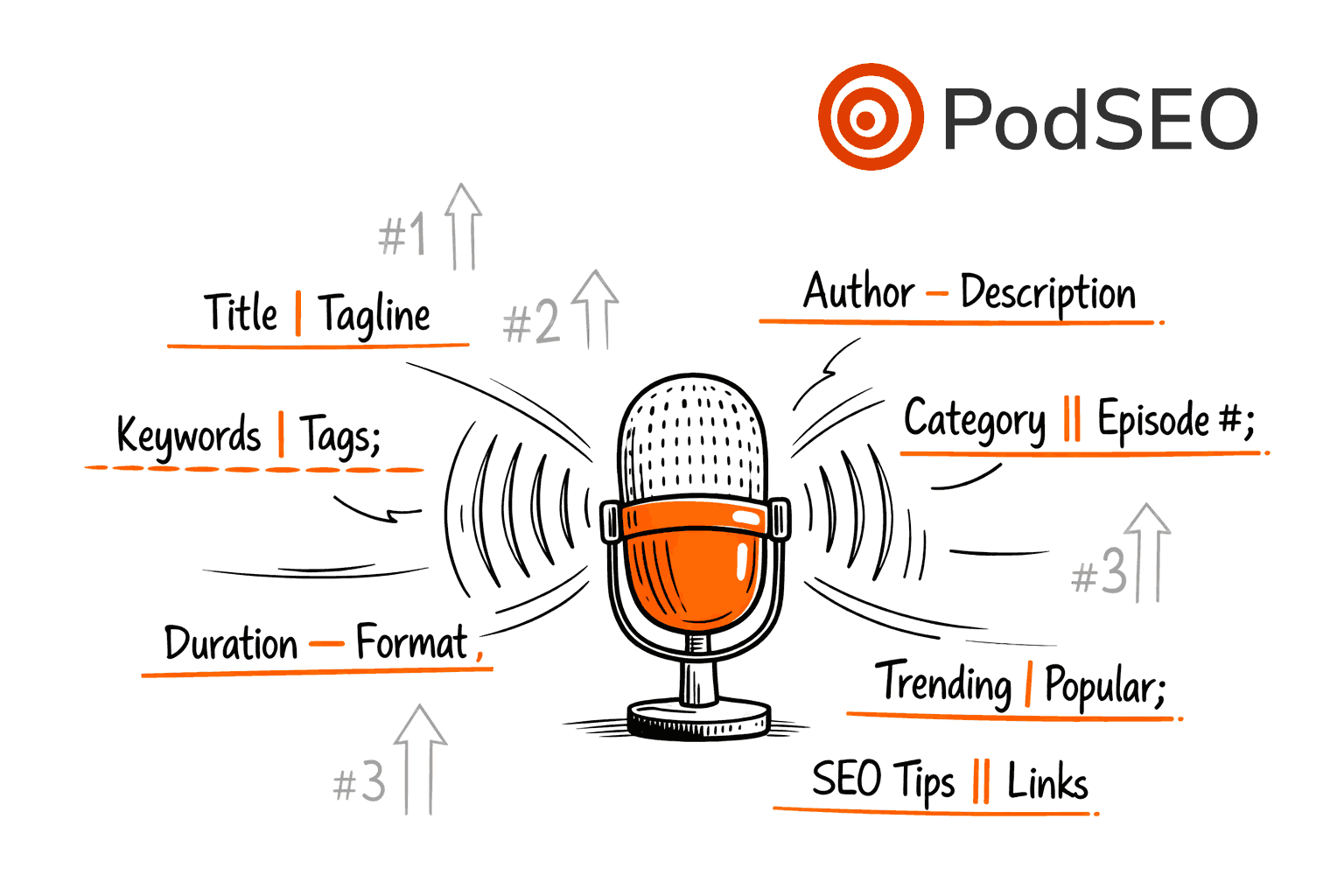
The analysis further revealed that even the implementation of a single tagline, whether in the title or author field, nearly doubles a podcast’s ranking performance. This indicates that a tiered approach to optimization can still yield significant improvements. For podcast creators who may lack the resources or expertise for complex SEO strategies, the simple act of incorporating clear, descriptive taglines into their metadata offers an immediate, actionable, and highly effective method to boost discoverability. This low-barrier-to-entry optimization stands in stark contrast to the more intricate SEO techniques often discussed in the digital marketing space, making it an accessible strategy for a broad spectrum of podcasters.
Background and Methodology

The PodSEO analysis, conducted over a 12-month period, involved a comprehensive sweep of podcast directories on Apple Podcasts and Spotify, two of the dominant platforms in the podcasting ecosystem. The research team extracted metadata for each active podcast, focusing on titles, author fields, and any associated descriptive text. This data was then cross-referenced with keyword search performance metrics, utilizing proprietary algorithms to track ranking positions for a diverse range of relevant search terms. The study specifically examined English-language podcasts to ensure a consistent linguistic and cultural context for analysis.
The definition of a "tagline" was strictly applied: text that follows the primary title or author name, separated by standard punctuation (hyphens, pipes, semicolons) and intended to further describe the podcast’s content or the host’s expertise. Podcasts with generic or repetitive author names, or those lacking any additional descriptive text, were categorized as not using taglines. The study meticulously controlled for other potential ranking factors, such as download numbers, episode frequency, and review volume, to isolate the specific impact of tagline usage.

Key Findings and Data Points
The core findings of the PodSEO study underscore a powerful correlation between tagline implementation and search performance:

- Dramatic Ranking Improvements: Podcasts with taglines in both title and author fields saw 6.7x better keyword rankings on Apple Podcasts and 5.6x better on Spotify. This suggests a synergistic effect when taglines are employed consistently across key metadata fields.
- Significant Untapped Potential: Over 90% of podcasts are missing out on this optimization. Less than 1% are leveraging taglines in both the title and author fields, indicating a vast whitespace for competitive advantage.
- Impact of Partial Optimization: Even implementing a single tagline (either in the title or author field) nearly doubles ranking performance, demonstrating that any descriptive addition is beneficial.
- Keyword Relevance: Taglines act as explicit signals to search algorithms, helping them match relevant user queries to specific podcasts. For instance, a podcast titled "The Daily" might be broadly categorized, but adding "Your Concise Source for Daily News Updates" immediately signals its purpose and target audience, improving its chances of appearing in searches for "daily news podcast."
- Author Field Importance: The author field, often overlooked as mere presenter identification, is revealed to be a critical space for descriptive SEO. Including expertise or content focus here, alongside the host’s name, significantly enhances discoverability.
Contextualizing the Importance of Taglines
In the burgeoning podcast industry, discoverability is paramount. With millions of podcasts now available, listeners often rely on search engines and platform recommendations to find new content. Without effective optimization, even the most compelling podcast can struggle to gain traction. Traditional SEO principles, which emphasize keywords and relevant descriptions, are equally applicable to podcast metadata.

Taglines serve a dual purpose: they provide crucial keywords for search algorithms and offer immediate clarity to potential listeners browsing search results or podcast directories. A well-crafted tagline can differentiate a podcast from similar offerings, enticing users to click and explore further. In the absence of a tagline, a podcast title like "The Show" or "Insights" is too generic to effectively compete in search results for specific topics.
The study’s timing is significant, coinciding with increased platform investment in podcast discovery tools and algorithms. As platforms like Apple Podcasts and Spotify refine their search capabilities, the accuracy and descriptive richness of podcast metadata become increasingly vital. The data suggests that podcasters who fail to adapt their metadata strategies risk falling behind in search rankings, impacting their overall listenership and growth.

Implications for Podcast Creators and Platforms
The findings have direct implications for podcast creators, independent producers, and established networks alike. The ease of implementing tagline optimization makes it an attractive strategy for all levels of podcasters. For independent creators, it offers a cost-effective way to compete with larger, more resourced productions. For established networks, it presents an opportunity to refine their existing catalogs and ensure maximum discoverability for their flagship shows.

The data also suggests that podcast hosting platforms and directories could play a more active role in educating creators about the importance of metadata optimization. Providing clear guidelines, best practices, and perhaps even integrated tools for tagline creation could further amplify the positive impact of this strategy across the industry.
The implications extend to platform algorithms themselves. As search engines become more sophisticated, their ability to parse and understand nuanced metadata like taglines will likely improve. This reinforces the need for creators to provide accurate and descriptive information to ensure their content is correctly indexed and recommended.

Analysis of Missed Opportunities
The statistic that over 90% of podcasts are not using taglines highlights a collective blind spot within the podcasting community. This could stem from several factors:

- Lack of Awareness: Many creators may simply be unaware of the impact of taglines on search rankings.
- Technical Barriers: Some creators might perceive metadata optimization as a technical challenge, particularly if they are not familiar with SEO principles.
- Focus on Content: The primary focus for many podcasters is content creation, with less emphasis placed on the technical aspects of distribution and discoverability.
- Platform Inertia: Some creators may have established their podcasts years ago when the importance of metadata was less understood, and have not revisited their profiles.
The fact that less than 1% are optimizing both fields is particularly striking. This suggests that even among those who recognize the value of taglines, a significant portion are not employing them strategically across all available metadata fields. This indicates a need for more comprehensive guidance on best practices for podcast metadata.
Recommendations for Optimization

Based on the PodSEO findings, here are actionable steps for podcast creators:
- Analyze Existing Metadata: Review your current podcast title and author fields. Identify opportunities to add descriptive text that clearly communicates your podcast’s topic, niche, and value proposition.
- Craft Clear and Concise Taglines: Develop taglines that are informative, keyword-rich, and appealing to potential listeners. Consider using terms that your target audience would likely search for.
- Utilize Both Title and Author Fields: Implement taglines consistently in both your podcast’s title and author fields. This dual approach appears to yield the most significant results. For example, a title could be "Daily Finance Tips | Investing for Beginners" and the author field could be "John Doe | Financial Advisor & Educator."
- Regularly Review and Update: As your podcast evolves or as new keywords emerge, revisit and update your taglines to ensure they remain relevant and effective.
- Experiment and Track: Use podcast analytics tools to monitor changes in your search rankings and discoverability after implementing tagline optimizations.
The Future of Podcast Discoverability

As the podcasting industry continues to mature, discoverability will remain a critical factor for success. The PodSEO study serves as a vital reminder that seemingly minor details in metadata can have a profound impact on a podcast’s ability to reach its intended audience. By embracing the power of descriptive taglines, creators can unlock significant improvements in their search rankings, foster greater listener engagement, and ultimately build a more sustainable and successful podcasting presence. The path forward for podcasters seeking to stand out in a crowded marketplace involves not only compelling content but also strategic optimization of their digital footprint, with taglines emerging as a surprisingly potent tool in their arsenal. The insights provided by PodSEO offer a clear, data-driven roadmap for achieving this crucial visibility.