

In a recent exploration of the intersection between historical narrative and modern corporate strategy, the leadership consultancy Anecdote International released an analysis centered on the life of Tsutomu Yamaguchi, the only person officially recognized by the Japanese government to have survived both the Hiroshima and Nagasaki atomic bombings. In Episode 284 of the "Anecdotally Speaking" podcast, hosts Mark and Shawn dissect Yamaguchi’s harrowing experience not merely as a historical anomaly, but as a profound case study in how the stories individuals tell themselves shape their resilience, leadership capabilities, and professional decision-making. The discussion highlights a critical paradigm in organizational psychology: while the objective facts of a situation remain static, the narrative framework applied to those facts dictates the subsequent meaning and psychological trajectory of the individual and their organization.
The Chronology of an Unprecedented Survival
To understand the leadership implications discussed by Anecdote International, one must first examine the chronological facts of Tsutomu Yamaguchi’s experience during the final days of World War II. In the summer of 1945, Yamaguchi was a 29-year-old naval engineer employed by Mitsubishi Heavy Industries. He had spent three months in Hiroshima on a business trip, working on the design of a new oil tanker. August 6, 1945, was intended to be his final day in the city before returning to his family in Nagasaki.
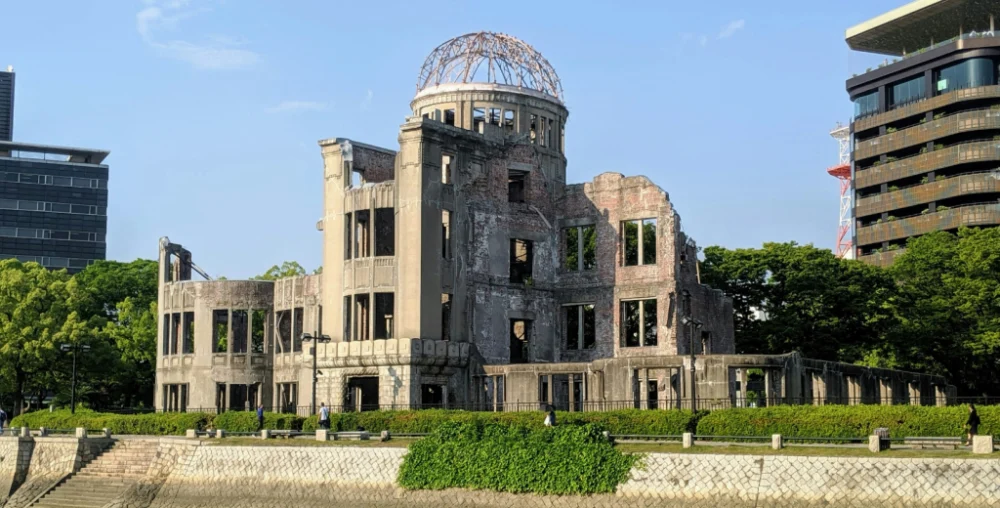
At approximately 8:15 a.m., as Yamaguchi was walking toward the Mitsubishi shipyard, the B-29 bomber Enola Gay dropped the "Little Boy" atomic bomb. The weapon detonated roughly 600 meters above the city center. Yamaguchi was located approximately three kilometers from the hypocenter. The resulting blast produced a blinding flash—later described by survivors as the "pika"—followed by a massive shockwave that threw Yamaguchi into a nearby potato patch. He suffered significant burns to the left side of his upper body, ruptured eardrums, and temporary blindness.
Despite these injuries, Yamaguchi sought shelter and, the following day, navigated the devastated landscape to reach the Hiroshima railway station. In a feat of survival that remains a subject of historical study, he boarded a train filled with other wounded survivors and traveled 300 kilometers west to Nagasaki. He arrived on August 8 and sought medical treatment at a local hospital.
On the morning of August 9, despite his severe burns and bandages, Yamaguchi reported to the Mitsubishi office in Nagasaki to brief his supervisor on the destruction he had witnessed in Hiroshima. Historical records indicate that his superior was skeptical, questioning how a single bomb could level an entire city. At approximately 11:02 a.m., while Yamaguchi was explaining the mechanics of the Hiroshima blast, the second atomic bomb, "Fat Man," was dropped on Nagasaki. Once again, Yamaguchi was approximately three kilometers from the hypocenter. Remarkably, the reinforced office walls protected him from the immediate blast, though he was subjected to a second massive dose of ionizing radiation.
Historical Context and Data: The Hibakusha Legacy
Yamaguchi’s survival is situated within a broader context of catastrophic loss. The Hiroshima bombing resulted in an estimated 140,000 deaths by the end of 1945, while the Nagasaki bombing claimed approximately 70,000 lives. For decades, the Japanese government maintained strict criteria for "hibakusha"—survivors of the atomic bombings entitled to state support. While many individuals were known to have been present in both cities, Yamaguchi was the first to be officially recognized as a "nijyuu hibakusha" (twice-bombed person) for both events.
The data surrounding his long-term health is equally significant for researchers. Despite the extreme radiation exposure, Yamaguchi lived to the age of 93, passing away in 2010. His longevity provides a unique data point in the study of radiation biology, but more importantly for the field of leadership, his life serves as a testament to the psychological concept of "post-traumatic growth."
Narrative Reframing: Luck versus Misfortune
The core of the Anecdote International analysis focuses on the concept of meaning-making. Mark and Shawn pose a fundamental question: was Tsutomu Yamaguchi the unluckiest man in history, or the luckiest? From a purely objective standpoint, being present at the only two nuclear attacks in human history suggests a statistical anomaly of profound misfortune. However, from the perspective of survival, Yamaguchi’s ability to endure both events suggests a level of "luck" that defies calculation.
In the context of leadership, this distinction is vital. The podcast explores how the narrative an individual chooses to adopt—misfortune versus survival—influences their ability to lead others through crisis. Leaders who view setbacks as insurmountable tragedies often struggle with paralysis and risk aversion. Conversely, those who frame challenges as survival opportunities tend to exhibit higher levels of resilience. This is not a denial of facts, but a strategic selection of meaning. Yamaguchi himself eventually embraced his story not as a burden of trauma, but as a "destiny" to advocate for the total abolition of nuclear weapons, famously addressing the United Nations in 2006.

Implications for Modern Leadership and Communication
The Anecdote International discussion extends the Yamaguchi story into the realm of contemporary corporate communication. One of the more complex challenges for modern leaders is the requirement to communicate organizational decisions with which they may personally disagree. Whether it is a restructuring, a pivot in strategy, or a budget cut, leaders often find themselves caught between their personal integrity and their professional obligations.
The podcast suggests that the solution lies in "narrative authenticity." Leaders are encouraged to find a "story" within the decision that they can genuinely stand behind. This involves looking beyond the immediate discomfort of the decision to find the broader "why"—perhaps the long-term sustainability of the company or the protection of the majority of the workforce. By framing the decision within a larger, meaningful context, leaders can maintain their integrity while effectively executing their duties.
Furthermore, the technique of "foreshadowing" is highlighted as a critical storytelling tool for leaders. Just as Yamaguchi’s experience in Hiroshima foreshadowed the events in Nagasaki, leaders can use narrative to prepare their teams for upcoming shifts. By seeding ideas and providing context early, they reduce the shock of change and allow for a more resilient collective response.
Audience Participation and Meaning-Making
A significant portion of the analysis is dedicated to the role of the audience in storytelling. Mark and Shawn argue that meaning is not something a leader "gives" to an audience; rather, it is something the audience creates in response to the story. In the case of Yamaguchi, his story has been interpreted by the global community in various ways: as a cautionary tale of the horrors of war, a miracle of human endurance, or a call for diplomatic peace.
In a business setting, this means that leaders must be intentional about the stories they share. They must account for the diverse perspectives of their employees and stakeholders. Effective leadership storytelling requires leaving enough "space" for the audience to find their own meaning within the narrative, thereby increasing engagement and buy-in. When a leader shares a story of resilience, it invites the team to reflect on their own capacity to overcome obstacles.
Broad Impact and Organizational Resilience
The broader implications of this analysis suggest that organizational culture is essentially a collection of shared stories. Companies that foster a culture of resilience often have a "master narrative" that emphasizes learning from failure rather than punishing it.
The story of Tsutomu Yamaguchi serves as an extreme but effective metaphor for the "shocks" that organizations face—market crashes, technological disruptions, or global health crises. The organizations that survive "double bombings" in the business world are those that can quickly pivot from the shock of the event to a narrative of recovery and adaptation.
Anecdote International’s focus on Yamaguchi underscores a shift in leadership development toward the humanities. By analyzing historical events through the lens of narrative theory, consultants are providing leaders with tools that go beyond data analytics and financial modeling. They are addressing the human element of the workforce—the need for meaning, the power of resilience, and the necessity of authentic communication.
Conclusion: The Weight of the Story
Tsutomu Yamaguchi’s life was defined by two flashes of light that changed the world. However, his legacy was defined by the decades of storytelling that followed. For leaders today, the lesson is clear: you cannot always control the events that occur—the "atomic bombs" of industry and life—but you have total control over the narrative that follows.
As highlighted in Episode 284 of "Anecdotally Speaking," the ability to shape that narrative is perhaps the most potent tool in a leader’s arsenal. It determines whether a team sees itself as a victim of circumstance or as a resilient survivor of a challenging era. In the end, the facts of a career or a company’s history are merely the raw materials; it is the story told about those facts that creates the future. Through the example of Yamaguchi, Anecdote International reminds the professional world that even in the face of the most devastating circumstances, the human capacity for meaning-making remains indestructible.