

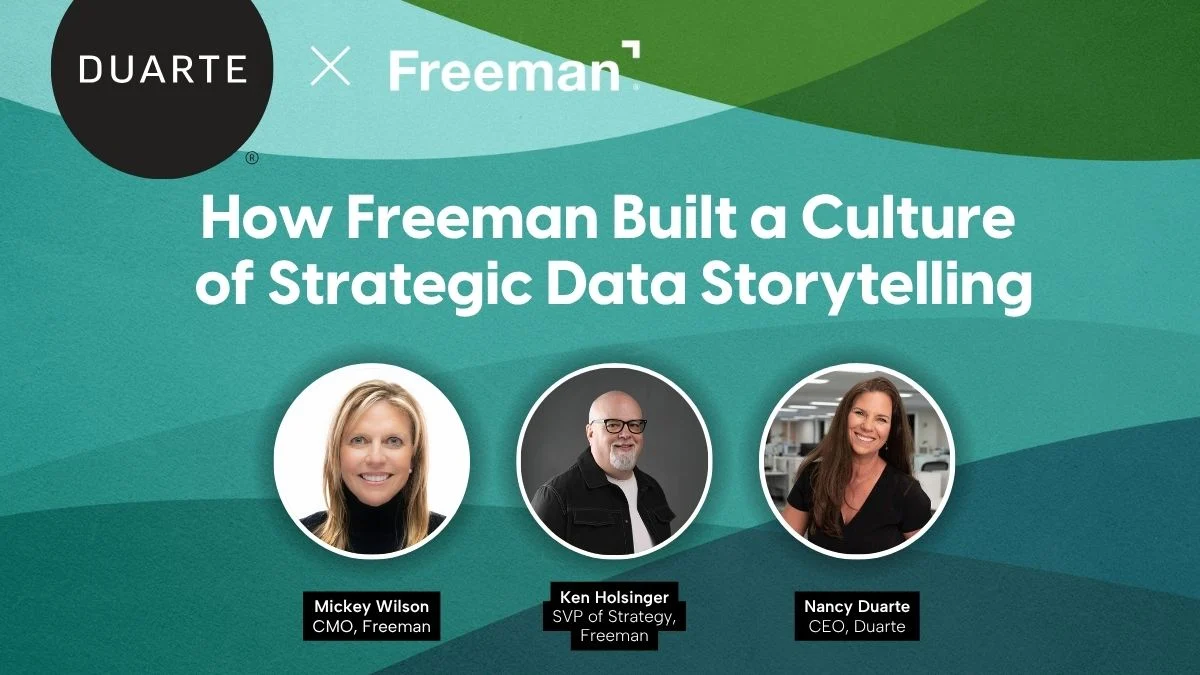
In an era where data increasingly dictates strategic direction, the collaboration between Freeman, a global leader in live events, and Duarte, a pioneer in data storytelling, stands as a testament to the transformative power of narrative-driven insights. This partnership, highlighted in a recent webinar featuring Freeman’s CMO Mickey Wilson and SVP of Strategy Ken Holsinger, underscores a shared methodology aimed at helping companies not just collect data, but effectively communicate its implications to drive actionable decisions and elevate experiences within the dynamic live events sector.
Freeman’s Enduring Mission in a Evolving Landscape
Freeman’s core mission revolves around empowering companies to create impactful moments at live events. This commitment extends beyond logistical execution to a profound understanding of industry trends, consumer psychology, and market dynamics. For decades, Freeman has maintained a vigilant pulse on the events industry, meticulously gathering and analyzing data to provide strategic guidance. This dedication has become even more critical in navigating the seismic shifts witnessed from the "halcyon days" preceding the COVID-19 pandemic through the complexities of its aftermath. The global events industry, valued at an estimated $1.1 trillion in 2019, faced unprecedented disruption, necessitating a rapid evolution in how events are conceived, managed, and measured. As the industry recalibrates and re-emerges, understanding evolving consumer needs and adapting to new expectations is paramount for survival and growth.
Freeman’s quarterly Trends Reports serve as a cornerstone of this intelligence effort. These comprehensive assessments, informed by rigorous data collection, in-depth interviews with industry stakeholders, and on-the-ground observations, unpack data-rich insights designed to enhance the conference and trade show experience for both businesses and attendees. For instance, a hypothetical Q3 2023 report might reveal a 15% increase in demand for interactive workshops over passive presentations, or a 20% rise in attendee preference for direct engagement with subject matter experts over traditional sales pitches. Such granular data is invaluable for companies seeking to optimize their presence and investment in live events.
The Genesis of a Strategic Partnership: Freeman and Duarte
The journey from raw data to actionable insight, however, is not always straightforward. Much like orchestrating a flawless in-person event, strategic data storytelling requires meticulous planning and expert execution. Recognizing this, Freeman sought a lasting thought partner, finding an ideal match in Duarte. Duarte, a firm widely credited with putting data storytelling on the map, specializes in transforming complex data observations into compelling narratives that lead to effective decisions.
Over a sustained period, Duarte has worked closely with Freeman to craft their quarterly Trends Reports. This collaboration has fostered a "kindred appreciation" for data storytelling, shaping a shared methodology that prioritizes clarity, relevance, and impact. The partnership exemplifies the principle that "two heads are better than one," combining Freeman’s deep industry expertise and data acquisition capabilities with Duarte’s unparalleled mastery of narrative structure and communication design. This synergy ensures that Freeman’s findings are not merely presented as facts, but are woven into stories that resonate, persuade, and drive strategic alignment from the ground up within organizations.
Why Strategic Storytelling is Indispensable in Data-Driven Organizations
The historical reliance on "gut feelings," instincts, and anecdotal experience in strategic decision-making has largely given way to a data-first approach. In today’s hyper-connected business environment, nearly every facet of a company’s health and operations can be tracked, measured, and analyzed. This shift has moved organizations away from "grasping in the dark" towards a realm where tactical decisions are made from measured observations. Yet, the sheer volume and complexity of data can be overwhelming. This is precisely where data storytelling becomes critical.
When communicating data—whether to potential buyers, existing customers, internal teams, or in Freeman’s context, event organizers and companies aiming for significant in-person impact—the message’s clarity and urgency are paramount. Data storytelling bridges the gap between raw numbers and human understanding, making abstract figures tangible and relevant. For example, a Freeman Trends Report might identify a significant opportunity for exhibitors to boost lead generation by incorporating immersive technology into their booths. Without a compelling narrative, this insight could easily be overlooked or misunderstood. But when framed within a story that highlights the evolving attendee journey and the competitive imperative, it becomes an urgent call to action.
Freeman’s rigorous analysis consistently reveals what attendees genuinely seek from events: real-time expertise delivered through novel, human-first experiences that eschew traditional sales pitches. Attendees are increasingly sophisticated, desiring authentic engagement and valuable insights rather than static product demonstrations. For companies selling products, services, or even lifestyles, such groundbreaking insights hold immense value. However, without the right "packaging"—a compelling story—these insights risk being lost in a sea of information. Ken Holsinger, Freeman’s SVP of Strategy, embodies this craft, demonstrating how to animate data for quick comprehension and decisive action.
The Pitfalls of Uninspired Presentations: Beyond the Booth
Ken Holsinger’s observation, "If your booth is just a physical version of your website, you’re doing it wrong," extends far beyond the confines of a trade show floor. This principle critiques a pervasive issue in modern business communication: the delivery of static facts devoid of context, relevance, or empathy. Whether through presentations, emails, blog posts, or social media content, many communications fail to answer the fundamental "so what?" question for their audience. Presenting free-floating figures, rattling off product features, or listing service metrics without a compelling narrative leaves audiences feeling detached and uninvested. They struggle to connect the dots to their own experiences, needs, or challenges.
Today’s audiences, regardless of the medium, demand relevance and resonance. This isn’t merely Holsinger’s opinion; it’s a data-backed imperative. Freeman’s 2025 Commercial Trends Report, for example, reveals a striking statistic: 84% of attendees want to talk to a subject matter expert, yet fewer than half of exhibitors prioritize making such experts readily available. This significant disconnect is not just a logistical failing; it’s a profound storytelling problem. When a message fails to acknowledge the audience’s desires and pain points, they disengage. Brands aiming to succeed at events, and indeed in any communication, must transcend the "browser mentality" and engage with human needs. Freeman addresses this by employing a multifaceted approach to messaging, ensuring their story not only sticks but drives change.
Strategic Dissemination: Two Formats, One Cohesive Story
Effective data dissemination requires an understanding of how diverse audiences consume information. Some prefer to listen to a presentation, guided by a speaker who elaborates on the findings. Others prefer to read independently, often skimming for key takeaways initially, then returning for a deeper dive. Freeman’s intelligent data storytelling practice accounts for these varying preferences by developing two distinct versions of their reports:
- The Presentation Deck: Designed for guided delivery, this format leverages visuals, concise text, and speaker notes to facilitate a narrative flow. It’s built for engaging a live audience, allowing for real-time interaction and emphasis on key takeaways.
- The Written Report/White Paper: This format is structured for self-consumption, providing comprehensive detail, supporting data visualizations, and in-depth analysis. It allows readers to absorb information at their own pace, revisit specific sections, and use it as a reference document.
From a data storytelling perspective, broadcasting a message across multiple frequencies maximizes reach and impact. Nancy Duarte emphasizes that despite their different formats, both versions of Freeman’s reports adhere to the same foundational storytelling structure: they lead with empathy, clearly articulate the stakes involved, and guide the audience toward actionable steps. This consistent narrative arc ensures that the core message, regardless of its delivery mechanism, remains coherent and persuasive.
For organizations new to this mindset, building a culture of data storytelling may seem daunting. However, like any skill, it is achievable through practice, dedication, and continuous learning.
Cultivating a Culture of Strategic Storytelling
Building and maintaining a skill, whether it’s learning a foreign language, pursuing fitness, or mastering an art form, demands ongoing engagement. The same holds true for fostering a culture of data storytelling within an organization. It’s not a one-time initiative but an continuous process that requires sustained effort to keep skills and practices at the forefront.
As Mickey Wilson, Freeman’s CMO, articulated during the webinar, Freeman has integrated storytelling into its very fabric: "We take it away from being a subjective conversation to an objective one… and keep educating to build momentum." This commitment to consistency is crucial. It builds trust, not only with external stakeholders like customers and event attendees but also across internal teams. When departments share a common language for interpreting data, understanding its significance, and identifying subsequent actions, efficiency and strategic alignment flourish. Establishing this foundation and setting clear expectations for applying this knowledge across the organization allows data storytelling best practices to take root and thrive.
This journey, however, is often just the beginning. Many organizations require expert guidance to embed data storytelling as an intrinsic part of their operational DNA.
Duarte’s Role in Empowering Data Storytelling Across Industries
Duarte plays a pivotal role in helping organizations like Freeman standardize storytelling as a core communication competency. Through specialized training workshops, such as their renowned DataStory® program, and high-stakes communication consulting, Duarte equips teams with the necessary tools and methodologies. These offerings empower organizations to:
- Clarify Complex Data: Distill intricate datasets into clear, digestible insights.
- Craft Compelling Narratives: Structure data into stories that resonate with diverse audiences.
- Visualize Data Effectively: Design impactful charts and graphs that enhance understanding, not obscure it.
- Drive Actionable Decisions: Translate insights into concrete recommendations that lead to tangible results.
By harmonizing rigorous data analysis with the timeless principles of classical storytelling, teams, customers, buyers, and sellers can unite around universal narrative structures. This shared understanding facilitates a deeper comprehension of emerging trends, their potential impact, and the necessary responses. For organizations seeking to unlock their team’s data storytelling potential or to elevate existing efforts, Duarte offers groundbreaking training workshops designed to instill these critical skills.
Broader Industry Implications and the Future of Events
The collaboration between Freeman and Duarte has significant implications for the events industry and corporate communication at large. As live events continue to evolve, moving beyond mere showcases to become immersive, experiential platforms, the ability to articulate value and insights persuasively becomes a competitive differentiator. The emphasis on "human-first experiences" and direct engagement with experts underscores a broader shift in consumer expectations across all industries. Brands that fail to connect with their audiences on an emotional and intellectual level, backed by credible data, risk being left behind.
The strategic dissemination of data, as exemplified by Freeman’s dual-format reports, sets a new standard for transparency and audience-centric communication. This approach ensures that vital information reaches stakeholders in their preferred format, maximizing comprehension and engagement. Furthermore, the dedication to building an internal culture of data storytelling, as advocated by Freeman, highlights the importance of fostering a common analytical and communicative framework within organizations. This internal alignment is crucial for translating external insights into cohesive internal strategies and actions.
Ultimately, the partnership between Freeman and Duarte is more than just a collaboration; it’s a blueprint for how industries can leverage the power of data storytelling to navigate complexity, seize opportunities, and forge stronger connections in an increasingly data-saturated world. It underscores that while data provides the facts, it is the story that brings those facts to life, inspires action, and ultimately reshapes industries.
For further insights into how strategic data storytelling can be applied in practice, interested parties can access the full Freeman webinar. Additionally, organizations looking to awaken their team’s data storytelling potential or upskill their current efforts are encouraged to contact Duarte to learn more about their training workshops and consulting services.