

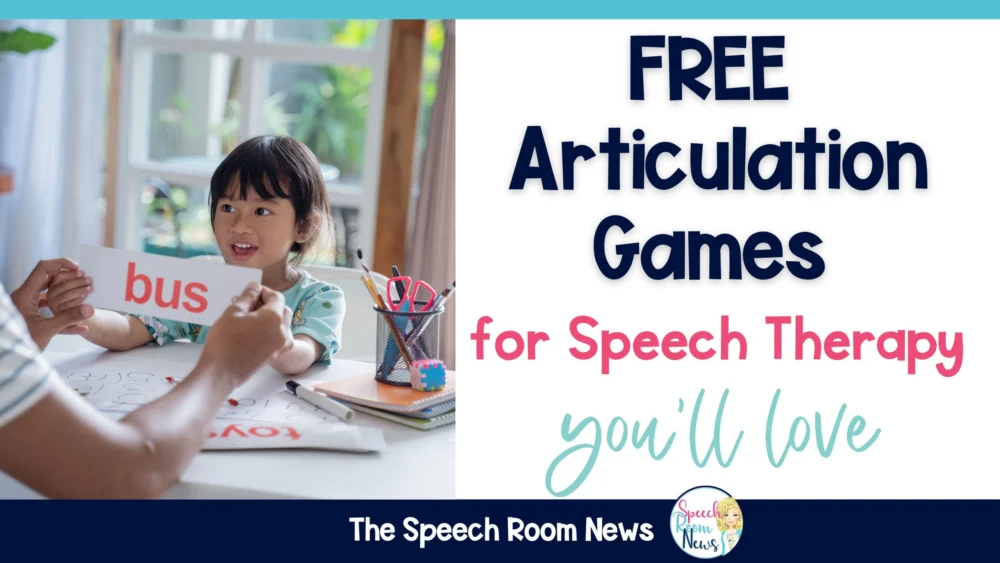
The integration of playful methodologies into speech therapy sessions is increasingly recognized as a cornerstone for enhancing student engagement and optimizing therapeutic outcomes. This approach not only renders the learning process more memorable but also provides invaluable opportunities for children to generalize newly acquired language skills into their daily lives. The appeal of games, particularly among young students practicing speech sounds, is undeniable, fostering an environment where learning feels less like work and more like an enjoyable activity. In an era where therapy sessions can span virtual, in-person, or hybrid formats, the availability of high-quality, cost-free resources is paramount, ensuring accessibility and continuity of care for families and educators alike. This extensive exploration delves into a curated list of complimentary articulation games, encompassing online platforms, printable materials, and even material-free activities, all designed to keep the therapeutic journey engaging and effective without incurring additional financial burdens.
The Foundational Role of Play in Speech-Language Pathology
Articulation disorders, characterized by difficulties in producing specific speech sounds, phonemes, or sound sequences, affect a significant portion of the pediatric population. These challenges can impact a child’s intelligibility, academic performance, and social interactions. Speech-Language Pathologists (SLPs) are at the forefront of addressing these disorders, employing a range of techniques to help children develop clear and accurate speech. Historically, articulation therapy often involved repetitive drills, which, while effective, could sometimes lead to decreased motivation and engagement, particularly in younger children.

The paradigm shift towards play-based therapy acknowledges the inherent learning mechanisms of childhood. Research in developmental psychology and education consistently demonstrates that children learn most effectively when actively engaged in meaningful, enjoyable experiences. Play provides a natural context for language acquisition and skill practice, reducing anxiety associated with structured tasks and fostering intrinsic motivation. When a child perceives therapy as a game, their attention span increases, their willingness to participate improves, and the cognitive load associated with learning new motor patterns for speech production is lessened. This active engagement is crucial for the neural pathways involved in speech motor planning and execution to be effectively reorganized and strengthened. Moreover, the social and communicative aspects of many games inherently encourage the spontaneous use of target sounds in varied linguistic contexts, facilitating the critical process of generalization – the transfer of learned skills from the therapy room to real-world communication.
The Digital Revolution in Articulation Therapy: Online Interactive Games
The advent of digital technology has profoundly transformed the landscape of speech-language pathology, offering unprecedented opportunities for interactive and dynamic therapy. The shift towards teletherapy, significantly accelerated by global events such as the COVID-19 pandemic, has further underscored the necessity and utility of online resources. These platforms provide immediate feedback, engaging visuals, and a level of interactivity that captivates young learners, making the practice of speech sounds both effective and enjoyable. The availability of free online resources is a crucial equalizer, bridging gaps for families with limited financial means or those residing in areas with scarce therapy services.
Among the highly favored online resources are:

- ABCya’s “Alphabet BINGO”: Aimed primarily at younger students, this game offers an engaging method for practicing letter sounds, a foundational skill for articulation. The familiar BINGO format reduces cognitive demands, allowing children to focus on auditory discrimination and initial sound production. Its interactive nature keeps children attentive, and the visual reinforcement of letters and corresponding sounds strengthens phonological awareness, a key precursor to clear articulation.
- Articulation Station App (Lite Version): This mobile application stands out for its comprehensive approach, offering several sound options and interactive games within its free version. Available for download on various devices, it provides portability and convenience, allowing practice anytime, anywhere. The app’s design typically includes high-quality visuals and auditory models, providing clear examples of target sounds and words, which is essential for accurate imitation and self-correction. The gamified elements within the app transform repetitive drills into captivating challenges.
- Language Playroom: This dedicated website offers an expanding collection of free online games specifically focused on articulation. Its commitment to continuous growth, incorporating activities for fluency, language, and social communication, positions it as a valuable multi-faceted resource. Such platforms often feature a variety of game types, from matching games to interactive stories, ensuring that therapists can select activities tailored to individual student needs and preferences, maintaining novelty and engagement over time.
- Phoneme Pop: An online game where children engage in popping bubbles containing words that feature their target sounds. This seemingly simple mechanic is highly effective. The act of "popping" provides immediate visual and auditory feedback, reinforcing correct sound identification and production. It can be adapted to focus on specific phonemes, word positions (initial, medial, final), and even minimal pairs, making it a versatile tool for phonological awareness and articulation drill.
- Boom Cards: These interactive, self-checking digital task cards have rapidly gained popularity within the SLP community. Available on platforms like Teachers Pay Teachers and Boom Learning, a vast array of free decks exists for various articulation sounds. Boom Cards offer a flexible format, suitable for both individual and group therapy, as well as for homework assignments. Their interactive elements, such as drag-and-drop, click-and-reveal, and audio prompts, make them highly engaging. The self-checking feature provides instant feedback to students, empowering them to monitor their own progress and make corrections independently, thereby fostering autonomy in their learning journey.
Tangible Learning: Printable Games for Hands-On Articulation Practice
While digital resources offer undeniable advantages, the value of hands-on, printable games remains significant. These materials cater to different learning styles, reduce screen time, and provide tangible resources that can be easily integrated into traditional therapy settings or sent home for consistent practice. The act of physically manipulating game pieces, coloring, or marking responses can enhance fine motor skills and provide a multi-sensory learning experience that complements digital activities.
Notable printable resources include:
- “Whack-a Sound /S/ Self-Checking Articulation Freebie”: This game is particularly well-suited for preschool through second-grade students, assisting them in identifying the position (initial, medial, or final) where they hear the target sound. Such an activity is crucial for developing phonological awareness and the ability to segment sounds within words, a foundational skill for accurate articulation. The "whack-a" format adds an element of playful competition, maintaining interest.
- Articulation Worksheets from Super Duper Publications: A respected name in educational materials, Super Duper Publications offers a selection of free printable worksheets. These resources often include structured activities like word lists, sentence completion tasks, or picture-based drills that reinforce target sounds. Worksheets provide a consistent format for repetitive practice and can be easily customized or annotated by therapists to suit specific goals, serving as excellent take-home practice materials.
- “Hot Chocolate Articulation Board Game”: This thematic board game, ideal for the winter months, exemplifies how seasonal engagement can boost motivation. Its versatility allows for various adaptations, such as using flashcards with target words. Students roll a die and advance spaces after successfully articulating a word, integrating motor skills with speech practice. Board games inherently promote turn-taking, social interaction, and sustained attention, making them effective for group therapy.
- “100 Trial Challenges” by Peachie Speechie: These printable sheets are designed to facilitate high-repetition practice, a critical component of articulation therapy. By incorporating themes and holidays, these challenges make the often-monotonous task of repeating target sounds engaging and relevant. The goal of completing 100 trials encourages intensive practice, helping to solidify new motor patterns for speech production. Therapists can easily track progress and provide positive reinforcement as students complete their challenges.
- “Color & Play Ocean Articulation Bingo”: This resource combines the appeal of coloring with the structure of Bingo. Printable Bingo cards featuring target words can be used in both group and individual settings. The visual reinforcement of coloring the squares after correct production, coupled with the excitement of Bingo, makes it an enjoyable way to practice. It also allows for customization by selecting target words relevant to each child’s specific articulation goals.
Articulation Beyond the Clinic: Material-Free Games for On-the-Go Practice

Effective articulation therapy extends beyond the confines of the therapy room. Integrating practice into everyday routines and spontaneous moments is crucial for generalization. Material-free games offer an ingenious solution, transforming ordinary situations, such as car rides or waiting times, into valuable therapeutic opportunities. These activities require no preparation, no special equipment, and rely solely on creativity and verbal interaction, making them universally accessible.
Key material-free articulation games include:
- I Spy (Modified): This classic game can be ingeniously modified to focus on specific target sounds. Instead of simply "I spy with my little eye something green," therapists or parents can prompt, "I spy with my little eye something that starts with the /s/ sound," or "something that has the /r/ sound in the middle." This adaptation encourages active listening, phoneme identification, and spontaneous production of words containing the target sound within a natural conversational context.
- 20 Questions: This deductive reasoning game is excellent for encouraging descriptive language, critical thinking, and the sustained use of conversational speech. By framing questions and answers around articulation goals, children can practice their target sounds within a more complex linguistic framework. For instance, if the target sound is /k/, the child might ask, "Is it a kind of animal?" or describe an object, "It’s cold and crunchy." This helps transition articulation skills from isolated words to connected speech.
- Rhyme Time: This activity focuses on phonological awareness and auditory discrimination, vital components of articulation. Taking turns saying words that rhyme with a target word encourages children to manipulate sounds, identify sound patterns, and produce words accurately. For example, if the target word is "cat," children might offer "hat," "mat," "sat," practicing the final /t/ sound or the vowel sound. It also implicitly reinforces vocabulary and sound-symbol correspondence.
- The Alphabet Game: In this structured game, participants go through the alphabet, with each person saying a word that starts with a given letter. This can be adapted to focus on specific articulation targets. For example, if the target sound is /l/, when it’s the ‘L’ turn, the child must think of an /l/ word. This systematic approach ensures practice across a wide range of vocabulary and provides multiple opportunities for producing target sounds in initial positions, while also enhancing letter-sound correspondence.
Expert Perspectives and Broader Implications
Speech-language pathologists consistently highlight the critical need for engaging and accessible resources. Dr. Eleanor Vance, a veteran SLP, often remarks, "The moment a child realizes they are ‘playing’ rather than ‘working,’ therapy becomes exponentially more effective. Free resources are not just a convenience; they are a necessity for ensuring equitable access to consistent practice, especially for families facing economic constraints." Parents frequently report a noticeable increase in their children’s willingness to participate in speech practice when the activities are framed as games. This sentiment underscores the psychological benefits of play-based interventions.

The widespread availability of free articulation games democratizes therapy, extending its reach beyond scheduled sessions. It empowers parents and caregivers to become active participants in their child’s speech development, reinforcing therapy goals in natural, everyday environments. This collaborative approach between therapists, parents, and educators is crucial for accelerating progress and ensuring the generalization of skills.
Looking ahead, the trends indicate a continued evolution in educational technology, with more sophisticated and adaptive learning tools emerging. The integration of artificial intelligence and machine learning could potentially lead to even more personalized and responsive free articulation games that adapt to a child’s specific needs and progress in real-time. However, it is essential for SLPs to provide guidance in selecting appropriate resources, ensuring they are developmentally appropriate, evidence-based, and aligned with individual therapy goals. While the benefits of reduced screen time are acknowledged, the judicious use of digital tools under professional supervision can yield significant therapeutic advantages.
In conclusion, the transformative impact of accessible, play-based articulation games on speech therapy outcomes cannot be overstated. By leveraging a diverse array of free online platforms, printable materials, and spontaneous, material-free activities, therapists and families can create dynamic, engaging, and effective learning environments. These resources not only enhance student motivation and participation but also ensure that the critical journey toward clear and confident communication is both enjoyable and attainable for every child. The future of speech therapy is undeniably intertwined with innovation, accessibility, and the enduring power of play.