

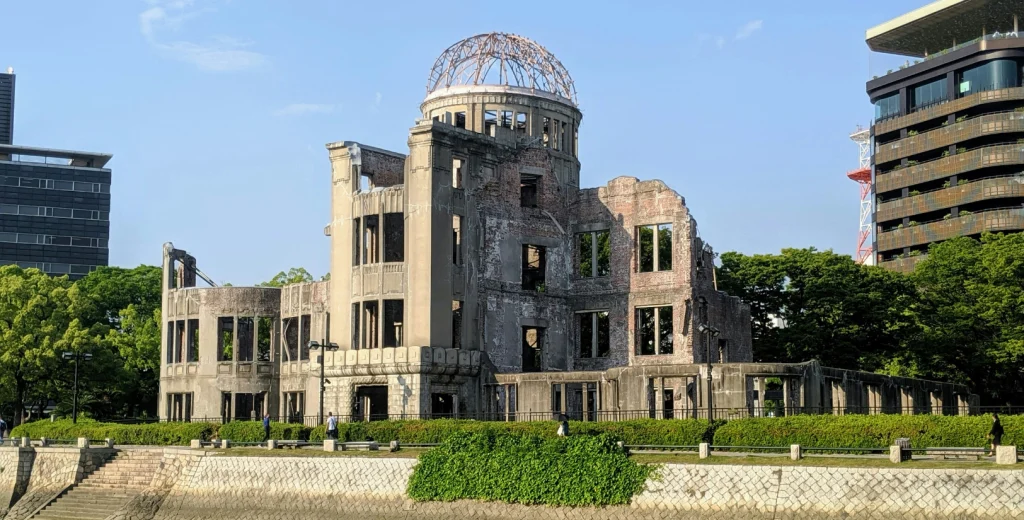
The latest installment of the Anecdotally Speaking podcast, hosted by Mark Schenk and Shawn Callahan of Anecdote International, delves into the profound psychological and professional implications of the stories individuals and leaders construct to interpret reality. Released on February 24, 2026, Episode 284 utilizes the extraordinary historical account of Tsutomu Yamaguchi—the only person officially recognized by the Japanese government to have survived both the Hiroshima and Nagasaki atomic bombings—as a foundational case study for understanding resilience and leadership. The discussion moves beyond mere historical recounting to analyze how the "meaning" assigned to events dictates a leader’s ability to navigate crises and communicate complex organizational changes.
The Dual Survival of Tsutomu Yamaguchi: A Chronology of the Atomic Age
The core narrative of the episode centers on the experiences of Tsutomu Yamaguchi in August 1945. At the age of 29, Yamaguchi was a naval engineer for Mitsubishi Heavy Industries, tasked with designing oil tankers. His presence in both target cities was the result of professional duty and an unfortunate sequence of timing.
On the morning of August 6, 1945, Yamaguchi was preparing to leave Hiroshima after a three-month business trip. While walking toward the shipyard, the first atomic bomb, "Little Boy," was detonated at an altitude of approximately 1,900 feet. Yamaguchi was roughly two miles from the hypocenter. The explosion resulted in a blinding flash, followed by a shockwave that threw him into the air and onto a potato patch. He suffered significant burns to the upper half of his body, ruptured eardrums, and temporary blindness. Despite these catastrophic injuries, he managed to find shelter and, the following day, navigated the destroyed city to reach the Hiroshima railway station, which was still partially operational.
Yamaguchi returned to his hometown of Nagasaki on August 8 to seek medical treatment. On the morning of August 9, despite his wounds, he reported to the Mitsubishi office to provide a report on the devastation in Hiroshima. Records indicate that as he was describing the "blinding flash" to his supervisor—who expressed skepticism regarding the possibility of a single bomb destroying an entire city—the second plutonium-core bomb, "Fat Man," was detonated over Nagasaki. Once again, Yamaguchi was approximately two miles from the blast’s center. He survived this second detonation, making him a "Nijuu Hibakusha," or "twice-bombed person."
Statistical Context and the Rarity of the Nijuu Hibakusha
To understand the weight of Yamaguchi’s story, it is necessary to consider the data surrounding the 1945 bombings. The Hiroshima blast is estimated to have killed between 90,000 and 146,000 people, while the Nagasaki blast killed between 39,000 and 80,000. The survival rate for those within a two-mile radius of the hypocenter was extremely low, making Yamaguchi’s dual survival a statistical anomaly.
While the Japanese government has identified approximately 165 individuals who may have been present in both cities during the bombings, Tsutomu Yamaguchi remains the only person to receive official certification for both. This recognition, granted in 2009—just a year before his death at age 93—highlighted the long-term health implications of radiation exposure. Despite suffering from radiation sickness and later developing various forms of cancer, Yamaguchi’s longevity provided a unique platform for historical testimony.
Narrative Framing: Luck Versus Misfortune
In Episode 284, Mark and Shawn argue that the facts of Yamaguchi’s life are static, but the interpretation of those facts is fluid. From one perspective, Yamaguchi could be viewed as the unluckiest man in history, having been at the epicenter of the only two nuclear attacks in human history. Conversely, he can be viewed as one of the luckiest, having survived both events and lived a long, productive life.
This dichotomy serves as a metaphor for modern leadership. The podcast hosts suggest that the "internal narrative"—the story one tells oneself about a set of circumstances—directly influences resilience. For leaders, this narrative framing is not about denying reality but about choosing a perspective that enables action rather than paralysis. In organizational psychology, this is often referred to as "narrative identity," where individuals form a sense of self by integrating their life experiences into an evolving story that provides the individual with a sense of unity and purpose.

Implications for Modern Leadership and Change Management
A significant portion of the episode is dedicated to how leaders can maintain integrity while communicating decisions they may not personally endorse. In the corporate world, executives are frequently required to implement "top-down" changes, such as restructuring or budget cuts, that may conflict with their personal preferences or previous promises to their teams.
The hosts analyze how storytelling serves as a bridge in these scenarios. By using transparent narratives, leaders can acknowledge the difficulty of a situation while focusing on the long-term "why" behind a decision. This approach prevents the erosion of trust. The discussion emphasizes that authenticity in leadership does not require total agreement with every corporate directive; rather, it requires an honest accounting of the facts and a clear explanation of the path forward.
Storytelling Techniques: Foreshadowing and Meaning-Making
From a technical storytelling perspective, Episode 284 explores the use of "foreshadowing" as a tool for engagement and preparation. In the context of the Yamaguchi story, the first bombing in Hiroshima foreshadows the second in Nagasaki, creating a narrative tension that mirrors the "warning signs" often seen in business cycles or project management.
Furthermore, the role of audience participation in "meaning-making" is highlighted. The hosts suggest that a story is not complete until the listener interprets it. For leaders, this means that the goal of a story is not just to transmit information, but to invite the audience (employees, stakeholders, or clients) to find their own meaning within the narrative. When employees see themselves as protagonists in a story of resilience—much like Yamaguchi—they are more likely to exhibit high levels of engagement and commitment during periods of organizational upheaval.
Professional Background of Anecdote International
The analysis provided in the podcast is supported by the extensive experience of Anecdote International. As a global training and consulting firm, Anecdote has established a network of over 60 partners across 28 countries. Their methodology focuses on "humanizing the workforce" through the strategic use of oral storytelling.
The company’s learning programs, which have been translated into 11 languages, are utilized by multinational corporations to enhance leadership communication and sales enablement. By teaching leaders how to find, tell, and listen to stories, Anecdote aims to move corporate culture away from dry, data-heavy presentations and toward more relatable, impactful communication.
Analysis of Broader Societal Impact
The legacy of Tsutomu Yamaguchi extends beyond the realm of personal resilience. In his later years, he became a vocal advocate for nuclear disarmament, addressing the United Nations and writing memoirs about his experiences. His shift from a private citizen to a public advocate illustrates the final stage of narrative resilience: using one’s story to influence broader societal change.
In a contemporary business context, this mirrors the shift toward "purpose-driven" leadership. Companies are increasingly judged not just on their financial performance, but on the narrative they project regarding their impact on the world. The podcast episode underscores that the most effective leaders are those who can synthesize complex, and sometimes tragic, events into a coherent vision that inspires collective action.
Conclusion
Episode 284 of Anecdotally Speaking serves as a reminder that while individuals cannot always control the external events that befall them—whether they are global conflicts or market shifts—they possess total agency over the narrative interpretation of those events. The story of Tsutomu Yamaguchi provides a stark, high-stakes example of how a narrative of survival and purpose can outweigh a narrative of victimhood and misfortune. For leaders navigating the complexities of the 21st-century workforce, the ability to craft and share these stories remains a critical competency for fostering resilience and maintaining organizational integrity.
