

The landscape of digital search is undergoing a fundamental transformation, shifting from a repository of links to a proactive assistant capable of managing complex real-world logistics. As society pivots away from the digital isolation of the early 2020s, there has been a documented surge in the "touch grass" movement—a cultural trend where individuals prioritize physical presence and authentic social interaction. In response to this shift, Google has unveiled a suite of generative artificial intelligence features within its Search ecosystem designed to alleviate the friction of hosting social gatherings. By integrating multimodal AI models and cross-platform app connectivity, Google Search now offers a comprehensive toolkit for planning dinner parties, ranging from aesthetic design to culinary logistics and atmospheric curation.
The Evolution of Search: From Keywords to Event Coordination
For decades, the process of planning a dinner party via the internet remained largely manual. A host would search for recipes on one site, browse decor inspiration on another, and manually curate music on a third. This fragmented workflow often contributed to "hosting fatigue," a phenomenon noted by consumer behavior analysts where the administrative burden of an event overshadows the social benefit. The integration of AI Mode in Search represents a move toward a unified "concierge" model.
This evolution is rooted in Google’s broader strategy to implement generative AI across its core products. The introduction of "Nano Banana," a specialized AI capability within Search, allows for high-fidelity visualization and creative output that goes beyond text. This technology enables users to generate custom imagery and layouts, effectively acting as a digital interior designer and graphic artist. As search queries related to "dinner party ideas" and "hosting for beginners" have seen double-digit growth over the past fiscal year, these tools arrive at a critical juncture for consumer demand.
1. Visualizing the Aesthetic: Tablescape Design with Nano Banana
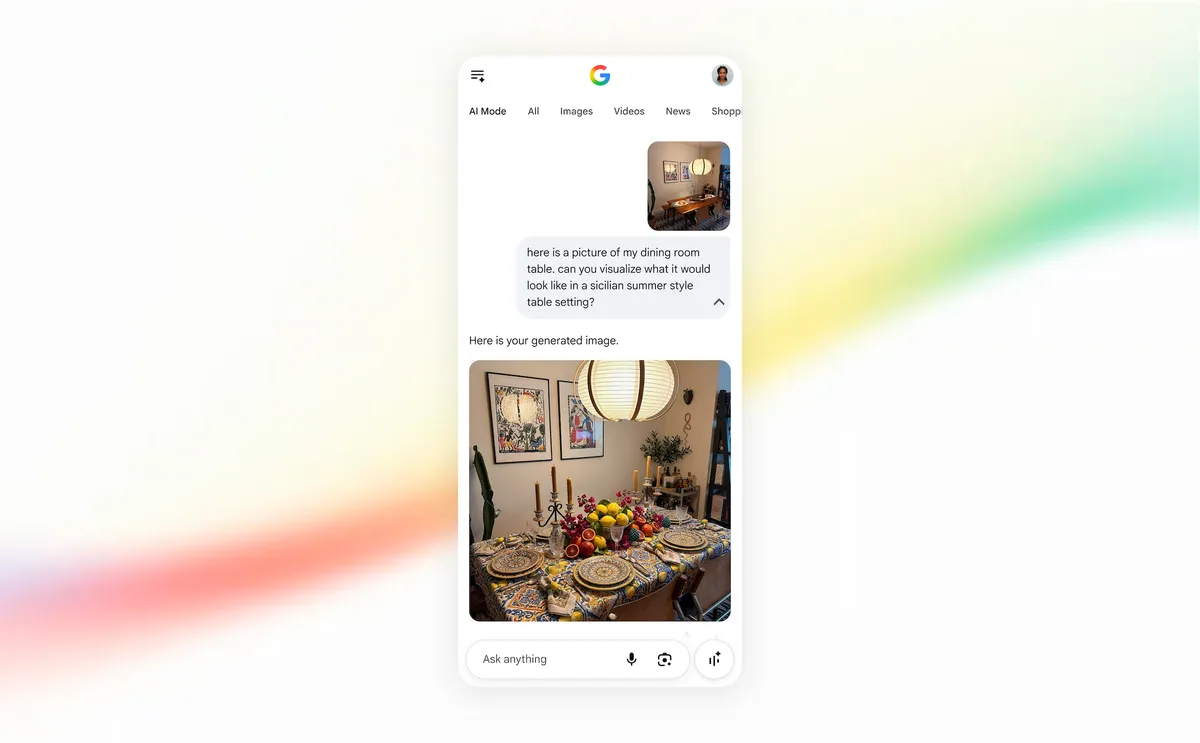
The visual presentation of a dining environment, often referred to as the "tablescape," has become a central element of modern hosting, driven in part by the "aesthetic" culture of social media. However, translating a mental concept into a physical arrangement can be challenging for those without formal design training. Google’s Nano Banana feature within AI Mode addresses this by allowing users to generate high-quality visualizations of their dining space.
By inputting specific themes—such as "mid-century modern harvest" or "minimalist coastal"—users can see a generated image of how their table might look with specific linens, centerpieces, and lighting. This functionality serves as more than just inspiration; it acts as a blueprint. For example, a host can refine a prompt to include specific colors or seasonal flowers, and the AI will adjust the visualization accordingly. This reduce the trial-and-error phase of decorating, allowing hosts to purchase or forage for materials with a clear end-goal in mind.
2. Advanced Menu Discovery and Recipe Integration
The culinary component remains the cornerstone of any dinner party, yet the "recipe fatigue" caused by overwhelming search results often hinders decision-making. Google has updated AI Mode to provide a more streamlined, visual treatment for recipe discovery. Instead of a list of blue links, the search engine now prioritizes prominent cards that highlight key data points: the creator’s reputation, star ratings, ingredient counts, and preparation times.
This structured data allows hosts to compare complex dishes at a glance. Furthermore, the AI can assist in the brainstorming phase by suggesting themes based on seasonal availability or specific dietary restrictions. If a user asks for a "late-summer vegetarian menu that feels elevated," the AI synthesizes disparate culinary traditions into a cohesive three-course plan. This level of curation was previously the domain of professional event planners or specialized cookbooks, but it is now accessible through a standard search query.
3. Intelligent Beverage Pairing and Sommelier Services
One of the more nuanced aspects of hosting is the selection of beverages that complement the flavor profiles of a meal. Traditionally, this required specialized knowledge of viticulture or mixology. Google’s AI Mode now functions as a digital sommelier, providing data-backed recommendations for drink pairings.
When a host inputs their finalized menu, the AI analyzes the chemical and flavor components of the dishes—such as the acidity of a key lime pie or the umami of miso-glazed salmon—to suggest optimal pairings. The system provides not just the "what," but the "why," explaining how the tannins in a specific red wine might cut through the fat of a protein, or why a non-alcoholic botanical spirit would pair well with a specific appetizer. This educational component empowers hosts to speak confidently about their selections, enhancing the overall guest experience.
4. Atmospheric Curation via Connected Apps
The "vibe" of a party is often dictated by its auditory environment, yet managing music while cooking and greeting guests is a common logistical hurdle. Google has addressed this by enabling "Connected Apps" within the Search interface. This feature allows the AI to bridge the gap between planning and execution.
By using AI Mode, a host can request a playlist that matches the specific "vibe" of their event—for instance, "upbeat 1970s jazz for a 50th birthday party." The AI then curates a selection of tracks and, through its connection to YouTube Music, creates a ready-to-play playlist instantly. This integration eliminates the need to jump between apps and manually search for songs, ensuring that the transition from the kitchen to the dining room is seamless. Industry analysts view this as a significant step toward an interoperable ecosystem where Search acts as the central nervous system for various digital services.

5. Bespoke Graphic Design for Printed Menus
The final touch in an "ultimate" dinner party is often the inclusion of physical artifacts, such as printed menus. These items serve as both a guide for the meal and a keepsake for guests. Historically, creating a professional-looking menu required proficiency in graphic design software.
Through Nano Banana in AI Mode, Google now allows users to generate designed menus in seconds. By providing the list of dishes and a desired style, the AI generates a formatted, aesthetically pleasing document that can be printed or shared digitally. This feature democratizes high-end event styling, allowing a home cook to produce the same level of collateral as a boutique restaurant. The ability to visualize and then export these designs represents a shift in AI utility from pure information retrieval to tangible creative production.
Market Context and Data: The Return of the Dinner Party
The release of these features is backed by significant consumer data. According to Google’s own trend reports, there has been a marked increase in queries related to "home entertaining" as consumers seek alternatives to expensive restaurant dining. The "loneliness epidemic," a term used by health officials to describe the decline in social cohesion, has also prompted a resurgence in organized home gatherings.
Data suggests that 72% of Gen Z and Millennial consumers prefer "intimate gatherings at home" over traditional nightlife. However, the same demographic reports high levels of "decision paralysis" when it comes to planning. By automating the logistical and creative hurdles of hosting, Google is positioning its AI as a solution to this social friction.
Broader Implications and Technical Analysis
The integration of these tools into Google Search signals a broader shift in the tech industry: the move toward "Agentic AI." Unlike traditional AI, which simply answers questions, Agentic AI performs tasks across different domains. By designing a menu, curating music, and visualizing decor, Google Search is acting as an agent on behalf of the user.
From a technical perspective, this is made possible by Large Language Models (LLMs) that have been trained on vast datasets of culinary science, interior design principles, and music theory. The "Nano Banana" model specifically highlights Google’s advancements in small-scale, efficient multimodal models that can handle image generation and layout tasks without the latency of larger systems.
However, the rise of AI-assisted hosting also raises questions about the "human touch" in social settings. While the AI handles the logistics, the responsibility of the host remains the emotional and social stewardship of the evening. Critics suggest that over-reliance on AI might lead to a homogenization of social events, where every dinner party begins to look and sound the same. Conversely, proponents argue that by removing the stress of planning, AI allows the host to be more present and engaged with their guests, ultimately leading to deeper connections.
Future Outlook
As Google continues to refine these features, we can expect deeper integrations with other parts of the Google ecosystem, such as Google Maps for ingredient sourcing or Google Calendar for guest management. The current suite of dinner party tools is likely a precursor to a more robust "Event Planning" module that could scale from small dinners to weddings and corporate retreats.
In conclusion, the "5 ways to host the ultimate dinner party" are not merely tips for entertaining; they are a demonstration of how generative AI is being woven into the fabric of daily life. By transforming Search from a tool for "knowing" into a tool for "doing," Google is attempting to reclaim its place as the indispensable assistant in an increasingly complex social world. For the modern host, the "heavy lifting" of event planning is now just a search query away, leaving them free to focus on the primary goal of any gathering: the human connection.
