

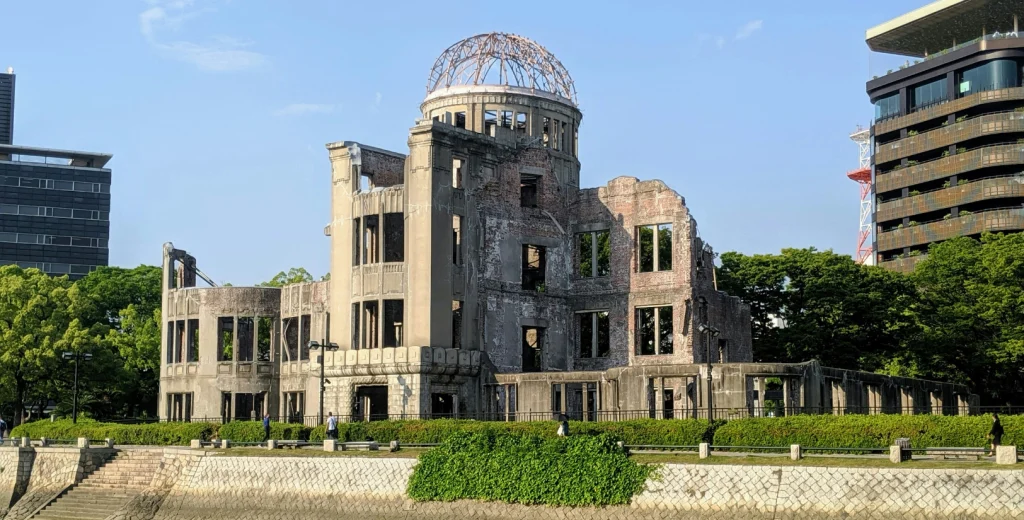
The psychological framework through which individuals interpret catastrophic events often determines their capacity for resilience and their effectiveness as leaders in times of crisis. In a recent analysis presented in Episode 284 of the Anecdotally Speaking podcast, hosted by Mark Schenk and Shawn Callahan of Anecdote International, the extraordinary life of Tsutomu Yamaguchi serves as a primary case study for understanding how narrative construction influences meaning. Yamaguchi, a Japanese engineer, holds the unique historical distinction of being the only person officially recognized by the Japanese government to have survived the atomic bombings of both Hiroshima and Nagasaki in August 1945. The facts of his experience remain static, yet the interpretation of those facts—whether he was the most unfortunate man in history or one of the most fortunate—provides a profound lesson in the power of internal storytelling and its application within modern corporate leadership.
The Historical Context of August 1945
To understand the magnitude of the narrative Yamaguchi constructed for himself, one must first examine the historical gravity of the events he endured. In the summer of 1945, the United States, under the auspices of the Manhattan Project, had developed the world’s first nuclear weapons. By August, the decision was made to deploy these weapons against the Japanese Empire to hasten the end of World War II.
Tsutomu Yamaguchi was then a 29-year-old naval engineer employed by Mitsubishi Heavy Industries. He had spent three months in Hiroshima on a business trip and was preparing to return home to his wife and infant son in Nagasaki. On the morning of August 6, 1945, Yamaguchi was walking toward the Mitsubishi shipyard for his final day of work when the B-29 bomber Enola Gay released the "Little Boy" atomic bomb over the city.
A Chronology of Survival: Hiroshima and Nagasaki
The timeline of Yamaguchi’s survival is a testament to both physical endurance and the sheer randomness of historical events. At approximately 8:15 a.m. on August 6, Yamaguchi observed a "blinding flash" in the sky, which he later described as the sun falling to earth. Despite being only three kilometers from ground zero, he survived the initial thermal blast, though he suffered significant permanent hearing loss and severe radiation burns across the upper half of his body. After seeking refuge in a makeshift shelter and witnessing the total annihilation of Hiroshima—a city where an estimated 140,000 people would eventually perish from the blast and its aftereffects—Yamaguchi managed to reach the railway station the following day.
Against all odds, the rail lines toward southern Japan were still functional in limited capacity. Yamaguchi returned to his hometown of Nagasaki on August 8. Despite his injuries, which required extensive bandaging, he reported to the Mitsubishi office in Nagasaki on the morning of August 9 to brief his supervisors on the devastation he had witnessed in Hiroshima.
In a moment of historical irony that underscores the themes of the Anecdotally Speaking podcast, Yamaguchi was in the middle of explaining the scale of the Hiroshima explosion to his skeptical manager when the second atomic bomb, "Fat Man," was detonated over Nagasaki. His manager had reportedly been questioning how a single bomb could destroy an entire city just as the second flash filled the room. Once again, Yamaguchi was approximately three kilometers from the epicenter. Once again, he survived.
The Narrative Dichotomy: Luck vs. Misfortune
A central theme of the discussion led by Mark and Shawn in Episode 284 is the concept of "meaning-making." When examining Yamaguchi’s life, two distinct narratives emerge from the same set of data points. The first narrative characterizes Yamaguchi as the unluckiest man on Earth: a man who, by pure coincidence, was present at the only two nuclear attacks in human history. This perspective focuses on the trauma, the physical pain of his burns, the long-term effects of radiation sickness, and the psychological burden of witnessing two apocalypses.
The second narrative, however, frames Yamaguchi as a figure of unparalleled luck and resilience. He survived two events that killed over 200,000 people combined. He lived to the age of 93, eventually becoming a vocal advocate for nuclear disarmament and a symbol of peace. This shift in perspective—moving from a victim of circumstance to a survivor with a purpose—is what the experts at Anecdote International identify as a critical tool for leadership. The story one tells oneself about a crisis dictates the subsequent actions taken.

Psychological Implications and Storytelling Techniques
The podcast explores several storytelling techniques that leaders can utilize to shape organizational culture and personal resilience. One such technique is "foreshadowing." In a narrative sense, foreshadowing allows an audience to prepare for a coming shift or to find logic in a sequence of events. For Yamaguchi, his survival in Hiroshima provided the "foreshadowing" or the experiential blueprint that allowed him to react more effectively during the Nagasaki blast.
Furthermore, the role of audience participation in meaning-making cannot be overstated. When a leader shares a story, the meaning is not solely contained within the words spoken; it is co-created by the listeners. In the context of the Yamaguchi story, listeners are forced to grapple with their own definitions of "luck" and "tragedy." For leaders, this highlights the necessity of being intentional with the stories they propagate within their organizations.
Leadership Communication and Authenticity
A significant portion of the analysis in Episode 284 is dedicated to the challenge of communicating decisions that a leader may not personally agree with. In many corporate environments, managers are often required to implement policies or strategic pivots dictated by higher-level executives. The podcast suggests that maintaining integrity and authenticity in these moments requires a sophisticated use of storytelling.
By framing the "why" behind a decision through a narrative lens, leaders can acknowledge the difficulty of a situation while still providing a path forward. This mirrors Yamaguchi’s post-war life; he did not deny the horror of the bombs, but he channeled that horror into a constructive narrative regarding the necessity of global peace. Leaders who can bridge the gap between harsh reality and a meaningful future are more likely to maintain the trust of their teams.
Data and Broader Impact of the "Hibakusha"
The term Hibakusha refers to the survivors of the 1945 atomic bombings. For decades, many survivors faced social stigma in Japan due to fears regarding the contagiousness of radiation sickness or the potential for genetic defects in their offspring. Data from the Radiation Effects Research Foundation (RERF) indicates that while Hibakusha suffered from higher rates of leukemia and various cancers, many, like Yamaguchi, lived long lives, contributing significantly to the biological understanding of radiation effects.
Yamaguchi was not officially recognized as a "double survivor" until 2009, just one year before his death from stomach cancer. The Japanese government had previously only acknowledged his presence in Nagasaki. The official recognition of his status was a landmark moment for historical documentation, providing a factual basis for a narrative that many had previously found too incredible to believe.
Analysis of Implications for Modern Organizations
The work of Anecdote International, which operates through a network of over 60 partners in 28 countries, emphasizes that storytelling is not merely a soft skill but a strategic asset. In the current global economic climate, characterized by rapid technological change and geopolitical instability, the ability to construct a resilient narrative is vital.
- Resilience in Crisis: Organizations that view setbacks as "unlucky" tend to adopt a defensive, reactive posture. Organizations that frame setbacks as "learning opportunities" or "pivotal chapters" in a larger success story tend to innovate more rapidly.
- Sales and Enablement: Storytelling serves as a bridge between technical data and human emotion. Just as the story of Yamaguchi makes the abstract statistics of 1945 tangible, business stories make the value proposition of a product or service relatable to a client.
- Humanizing the Workforce: By utilizing storytelling to "bring humanity back to the workforce," as Anecdote International’s mission statement suggests, companies can combat the alienation often felt in highly digitized or remote work environments.
Conclusion: The Enduring Legacy of the Narrative
Tsutomu Yamaguchi’s life serves as a powerful reminder that while we cannot always control the events that befall us, we possess total agency over the narrative we construct around those events. The facts of the Hiroshima and Nagasaki bombings are etched in history, but the meaning of Yamaguchi’s survival was something he had to define for himself.
For leaders and professionals, the takeaway from Episode 284 of Anecdotally Speaking is clear: the stories told within an organization shape its reality. Whether dealing with a market downturn, a failed product launch, or a successful merger, the narrative framework applied will determine the resilience of the team and the integrity of the leadership. By mastering the art of storytelling, individuals can transform even the most challenging "flashes" of crisis into a lasting legacy of meaning and purpose.
