

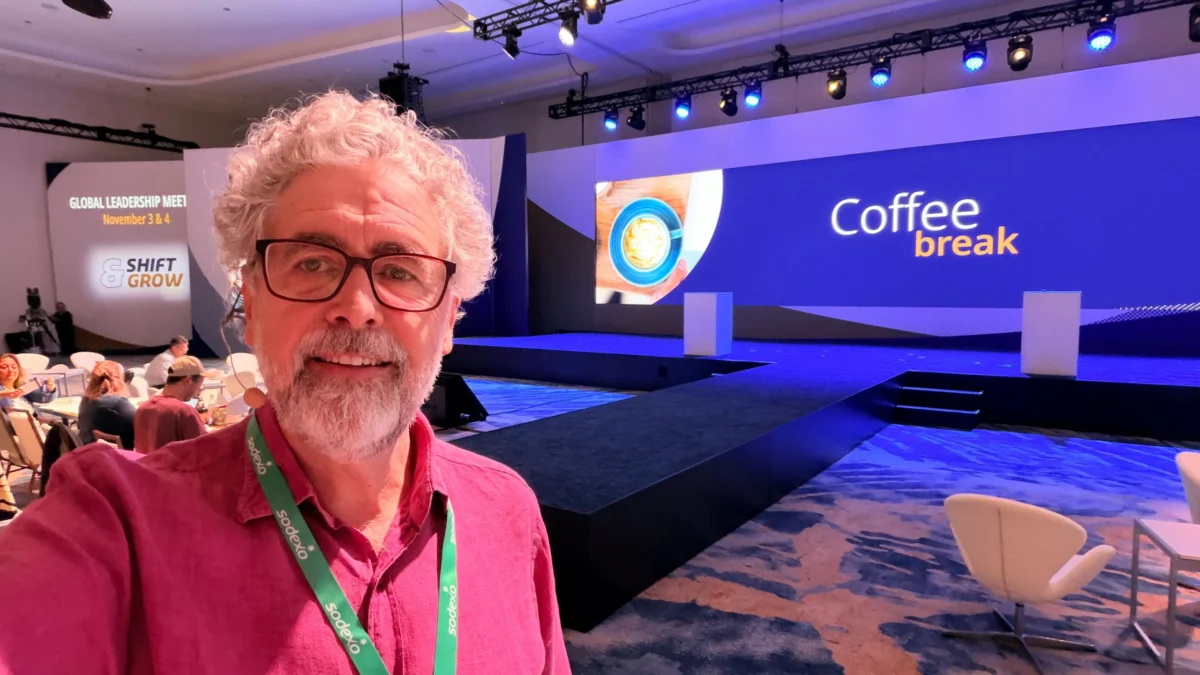
In an era defined by rapid digital transformation and the increasing complexity of global organizational structures, the fundamental ability to communicate strategic intent remains a primary differentiator for high-performing leadership teams. Shawn Callahan, founder of the business storytelling consultancy Anecdote and author of Putting Stories to Work, recently concluded a three-week high-level engagement across the United States, providing strategic counsel to the executive leadership of three distinct corporations. Despite the disparate operational challenges and market pressures facing each entity, a singular, universal recommendation emerged from the consultations: the necessity of institutionalizing a "storytelling habit" within the executive suite.
The professional landscape has long recognized the value of storytelling as a rhetorical tool; however, Callahan’s recent findings suggest a significant gap between theoretical capability and practical application. While many executives demonstrate the ability to construct compelling narratives within the controlled environment of a workshop or a high-stakes keynote, there remains a pervasive tendency to revert to traditional, assertion-based communication in daily operations. This reliance on abstract explanations and data-heavy assertions often results in a disconnect between leadership and the broader workforce, highlighting a critical need for behavioral shifts in corporate communication.
The Chronology of the Narrative Shift
The three-week US consulting tour served as a diagnostic period for observing the communicative friction points within modern enterprises. During the first phase of the engagement, leadership teams were assessed on their ability to articulate strategy through concrete examples. Observations indicated that while leaders could "perform" stories during scheduled training sessions, the habit did not immediately translate to the boardroom or informal managerial interactions.
By the second week, the focus shifted toward identifying why these narrative skills were not being deployed spontaneously. The consensus among participants was not a lack of skill, but rather a lack of a behavioral trigger. Executives reported that the pressures of real-time decision-making often forced a return to "efficient" but less impactful communication styles, such as giving direct advice or stating opinions without contextual evidence.
In the final phase of the engagement, a simplified behavioral intervention was introduced. This involved the adoption of a specific linguistic anchor: "Let me give you an example." This phrase was designed to serve as a bridge between an abstract assertion and a concrete narrative, effectively forcing the speaker to provide the experiential evidence necessary to support their claims.
Behavioral Science and the Habit Loop Framework
To understand why storytelling often fails to take root in corporate environments, it is necessary to examine the mechanics of habit formation. Callahan’s methodology draws a direct parallel between mundane daily routines and high-level communication strategies. Utilizing a framework similar to those popularized by behavioral scientists like Charles Duhigg and James Clear, the storytelling habit is broken down into a three-part cycle: the trigger, the action, and the reward.
In the context of corporate leadership, the "trigger" is identified as the moment an executive expresses an opinion or makes a strategic assertion. Common examples include statements such as "we must prioritize customer retention" or "transparency is our core value." Under the new framework, the realization that an assertion has been made serves as the cue to initiate the "action"—the deployment of the phrase "Let me give you an example," followed by a brief, factual narrative.
The "reward" phase of this cycle is critical for reinforcement. Unlike data-driven presentations, which often elicit passive acknowledgment, narratives typically trigger active engagement, such as clarifying questions, emotional resonance, or the reciprocal sharing of stories. This immediate feedback loop provides the psychological validation necessary to transform storytelling from a conscious effort into an unconscious competence.
Supporting Data: The Efficacy of Narrative in Leadership
The push for narrative integration is supported by a growing body of quantitative and qualitative data from top-tier academic institutions. Research from the Stanford Graduate School of Business indicates that stories are up to 22 times more memorable than facts and figures alone. This is attributed to the way the human brain processes information; while data activates the language processing centers (Broca’s area and Wernicke’s area), a narrative activates additional regions, including the sensory cortex and the motor cortex.
Furthermore, a study conducted by the London School of Business found that when participants were presented with statistics alone, the retention rate sat between 5% and 10%. However, when those same statistics were embedded within a narrative framework, retention rates increased to approximately 65% to 70%. In a corporate setting, this disparity in retention can have profound implications for strategy execution and internal alignment.
Neuroscientific research led by Dr. Uri Hasson at Princeton University also highlights the phenomenon of "neural coupling." When a leader tells a story, the brain activity of the listener begins to mirror that of the speaker. This synchronization fosters a shared understanding and emotional alignment that is rarely achieved through the presentation of spreadsheets or bulleted lists. For Global 1000 companies, this alignment is a critical component of change management and cultural cohesion.
Case Study Analysis: The Reciprocal Nature of Narrative
The practical impact of this habit-based approach was evidenced during a recent product launch presentation involving senior leadership in the US and Canada. An executive, who had recently undergone Callahan’s narrative training, utilized a specific story to illustrate a point regarding product utility. The response was immediate and multi-layered.
First, the US CEO adopted the story’s framework to elaborate on a separate strategic point. Subsequently, the Canadian CEO contributed a personal anecdote that corroborated the original message. This "cascading effect" demonstrates that stories possess a unique viral quality within an organization. By providing a concrete example, the leader invited participation rather than just observation. This transition from a monologue to a collaborative narrative discourse represents a shift in power dynamics, where leadership becomes a shared experiential process rather than a top-down directive.
Implementation Strategies: The "Time Marker" Technique
For organizations looking to implement these findings, the methodology emphasizes simplicity over complexity. A key tactical recommendation is the use of "time markers" to ground stories in reality. Phrases such as "Last Tuesday," "Three months ago," or "When I was in the Chicago branch" serve a dual purpose.
First, they signal to the listener that the speaker is moving from the abstract to the specific, which naturally increases the listener’s attention span. Second, they act as a cognitive constraint for the speaker, preventing them from drifting into generalities or "pseudo-stories"—explanations that are dressed up as examples but lack characters, conflict, or a specific resolution.
The engagement also highlighted the importance of avoiding the "perfection trap." Many leaders mistakenly believe that business storytelling requires the production value of a polished keynote. However, the data suggests that small, everyday anecdotes—often referred to as "micro-stories"—are more effective for building trust and clarity in daily operations. As noted by industry veterans like Lorne Michaels, the value of a communication is often found in its timeliness and authenticity rather than its level of rehearsal.
Broader Impact and Organizational Implications
The institutionalization of storytelling habits carries significant implications for long-term organizational health. Beyond the immediate benefits of clarity and retention, a narrative-rich environment fosters "psychological safety"—a concept identified by Harvard’s Amy Edmondson as a key driver of team performance. When leaders share stories of past failures or lessons learned, they signal to the workforce that experience and reflection are valued over the appearance of infallibility.
From a strategic standpoint, the ability of a leadership team to find and tell stories of their strategy is essential for navigating market volatility. In companies like Shell, IBM, and Microsoft—where Callahan has previously applied these methodologies—the narrative serves as the "connective tissue" that binds diverse departments to a central mission.
In conclusion, the findings from the three-week US engagement suggest that the future of corporate communication lies not in more sophisticated data visualization, but in the return to the fundamental human habit of narrative. By adopting simple triggers like "Let me give you an example," leaders can bridge the gap between knowing their strategy and ensuring their teams actually understand and remember it. The transition from assertion to example is a small linguistic shift, but its impact on organizational alignment, employee engagement, and strategic clarity is substantial. As businesses continue to face an increasingly noisy information environment, those who can master the habit of storytelling will be best positioned to lead with influence and impact.
