

Career-defining events resonate throughout history, creating indelible marks that distinguish a ‘before’ from an ‘after’ for both artists and their audiences. Think of The Beatles electrifying Shea Stadium, Queen’s legendary performance at Live Aid, or Prince’s iconic Super Bowl halftime show. These apex moments were not merely spectacles; they were meticulously crafted experiences that elevated expectations and redefined possibilities. In the corporate realm, organizations aspiring to host successful events that stand out with vision and impact must adopt a similarly holistic and strategic approach. Every keynote address, mainstage presentation, breakout session, and showroom attraction must meticulously capture the energy, essence, and excellence of a brand through expertly curated event storytelling.
The challenge for corporate entities is to evoke a similar sense of awe and connection without the inherent star power of global icons. While a C-suite might not feature rock legends or pop prodigies, the pressure on organizations to meet diverse audience needs and capture attention in an always-on information ecosystem is immense. For Fortune 50 companies and global brands aiming to reshape industry narratives and solidify customer commitments through their event programming, the stakes are high. The options often appear stark: etch themselves into history with a "Woodstock"-level triumph, bear the shame of an "Altamont"-style failure, or simply fade into obscurity, unacknowledged by their target audiences.
Fortunately, there exists a proven pathway to event storytelling success, one that transcends mere logistics to forge deep, lasting connections. Drawing on decades of experience in helping leaders and visionaries command in-person, virtual, and hybrid stages, experts in presentation strategy and event design understand how to weave disparate programming elements into one cohesive and compelling experience. From this specialized perspective, the precise alignment of messaging, visuals, and delivery skills can ignite palpable excitement that attendees carry with them long after the event concludes. A key framework for successful corporate events centers on keeping four critical "I’s"—inclusivity, immersion, inspiration, and intimacy—at the forefront of all programming decisions.
Fostering Inclusivity: Accessibility in Manner and Messaging
A truly successful corporate event ensures that all attendees feel comfortable, valued, and genuinely welcome. While event planners routinely prioritize logistical inclusivity—addressing seating arrangements, amenities, ADA compliance, and dietary accommodations—these vital considerations often fall under the purview of physical event planning. However, an exclusive focus on these practicalities overlooks high-value opportunities to approach inclusivity through the lens of event storytelling.
Strategic inclusivity means crafting a narrative that resonates with the audience at every level, ensuring that regardless of their background or origin, attendees feel a sense of belonging from the moment they engage with the event. This journey of belonging begins with pre-event communications and onboarding, extends through every session and interaction, and culminates in post-event follow-ups and feedback mechanisms. Each touchpoint presents an opportunity to reinforce a sense of community. Effective event storytelling, therefore, begins with a profound understanding of what attendees need and expect from the experience.
Key questions guide the development of inclusive corporate events: What shared language or experiences bind this diverse audience? What common goals or challenges unite them? How can the event’s narrative acknowledge and celebrate the varied perspectives present while forging a collective identity? By tapping into these shared threads—be it company lore, industry-specific acronyms, or overarching strategic objectives—organizations can create an "in-group" that everyone feels a part of. Messaging, visuals, and programming must then be meticulously crafted to align with and reinforce this shared identity.

In instances where audience commonalities are not immediately apparent, specialized tools like audience needs maps can provide invaluable guidance. These tools help pinpoint attendees’ hopes, fears, dreams, and aspirations, offering a North Star for tailoring event storytelling to specific demographic and psychographic profiles. Research indicates that events perceived as inclusive significantly boost attendee satisfaction, with a reported 20% increase in willingness to recommend the event to peers and a 15% increase in perceived brand value.
A notable example of successful inclusive event storytelling can be seen at HubSpot’s 2022 INBOUND conference. Here, a presentation strategy firm helped nurture an inclusive event experience by adopting an audience-first perspective in its messaging. Designers distilled the entire event experience down to a singular focal point: a simple dot. This omnipresent symbol, whether dynamically animating during keynote presentations or populating materials throughout the venue, served as a universal signifier: "You are here, and you’re in the right place." This elegant design choice visually grounded attendees, creating a shared, intuitive understanding of their position within the event’s ecosystem. This common thread allowed INBOUND’s event storytelling to remain agile and relevant to the diverse pain points and aspirations of marketers and sellers—the primary demographic of HubSpot enthusiasts. Attendees were thus primed to engage with product demonstrations and emerging features that promised to remove barriers and boost productivity, feeling inherently connected to the solutions presented. Beyond its simplistic elegance, the dot’s ubiquity helped to punctuate messaging and create an immersive experience at scale, seamlessly leading into the second "I": Immersion.
Cultivating Immersion: A 360-Degree Experience
Modern corporate events are far more than passive observatories. Companies invest substantial learning and development (L&D) budgets and allocate valuable employee travel time with the expectation of delivering immersive, hands-on experiences that draw participants directly into the action. Industry reports consistently underscore this expectation. For instance, Freeman’s 2025 Trends Report revealed that when attendees do not receive a hands-on experience, they are 42% more likely to seek solutions from another brand. Conversely, when attendees encounter an immersive event experience, their engagement metrics soar, leading to a 30% increase in perceived value and a 25% greater likelihood of making a purchase decision. While these statistics highlight the buyer’s journey, the principles apply equally to organizations aiming to reinforce their brand image or deepen trust with shareholders and stakeholders. This immersive approach must permeate every aspect, from the physical environment and breakout sessions to the corporate event presentations themselves.
But what defines an immersive event beyond mere interactivity? Immersion in a corporate context transcends purely physical or sensory engagement; it signifies a meticulously curated environment designed to transport visitors into a different state of mind, making them feel integral to a story unfolding in real-time. Organizations can approach immersion from several strategic angles:
- Narrative Arc Integration: Structuring the entire event around a compelling story, with each session contributing to its progression.
- Experiential Learning: Incorporating hands-on workshops, simulations, and interactive demonstrations that allow attendees to actively participate and apply concepts.
- Technological Integration: Utilizing augmented reality (AR), virtual reality (VR), or advanced audiovisuals to create dynamic, responsive environments.
- Sensory Design: Thoughtful use of lighting, soundscapes, scents, and textures to enhance the event’s theme and atmosphere.
- Personalized Pathways: Offering customizable agendas or content streams that allow attendees to tailor their immersive journey to their specific interests and needs.
Consider the world-building found in theme parks, attractions, or even themed restaurants, where every detail aims to transport visitors. A truly immersive corporate event, however, must go beyond superficial theatrics. Attendees should feel like active participants in a narrative that unfolds around them, influencing their understanding and engagement.
A prime example of successful immersive storytelling is Salesforce’s 2023 Dreamforce conference. For this event, a specialized presentation strategy firm collaborated with Salesforce’s corporate marketing team to craft a keynote experience that brought their latest AI enhancements vividly to life. To capture the paradigm shift brought by AI, the traditional keynote format was turbocharged with the visual heft of an Unreal Engine 3D gaming environment. This resulted in a richly detailed digital landscape that not only demonstrated CRM capabilities but also personified their Einstein AI as a playable character, integrated seamlessly across various event materials. For attendees, the overarching message was clear and impactful: "With AI, new worlds are possible." Immersion was achieved through a fully realized digital world, consistent design elements mirroring a gaming experience, and the undeniable thrill of being present at a pivotal moment for both Salesforce and the broader SaaS CRM industry. Dreamforce attendees departed feeling inspired by the tangible promise of an AI-enabled future, their experience laying the groundwork for the third "I": Inspiration.
Igniting Inspiration: A Story They Can Believe In
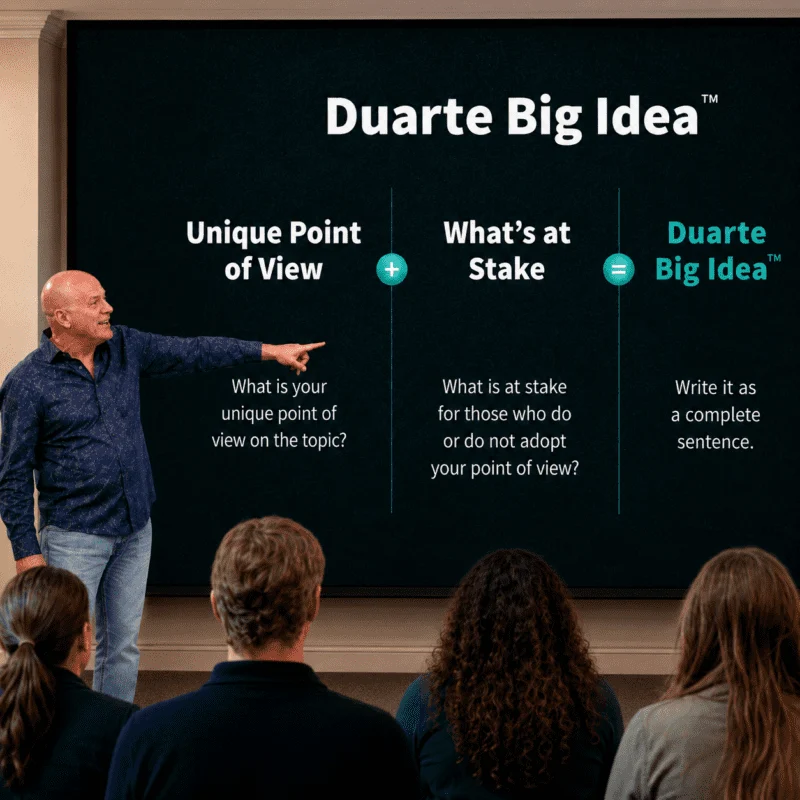
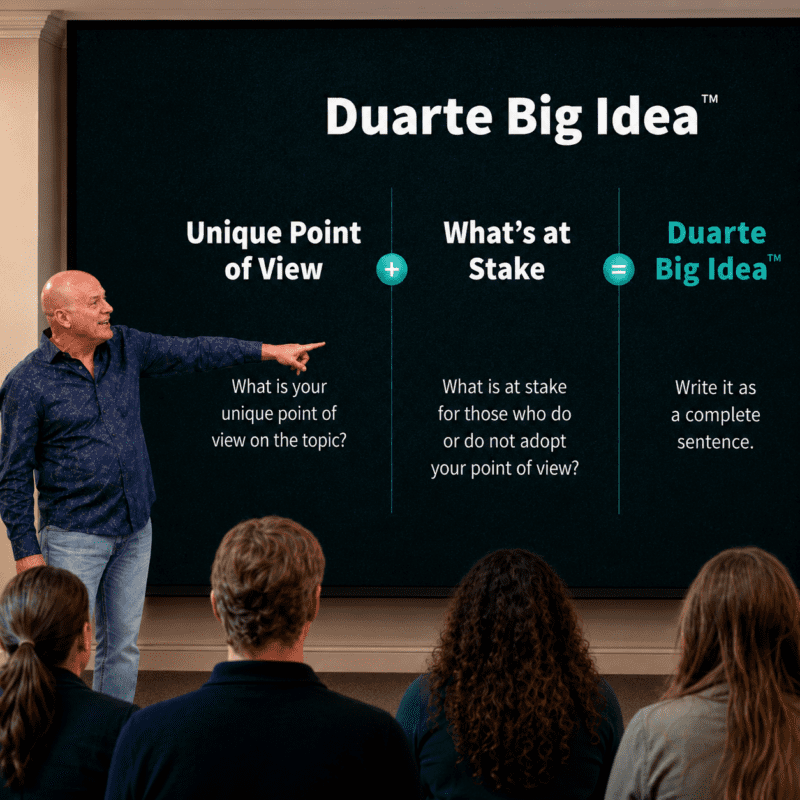
To infuse a corporate event with the powerful force of inspiration, it requires a compelling and focused story—one that is easily repeatable and consistent across leadership keynotes, subject matter expert panels, and breakout programming. Distilling event storytelling down to a singular "Big Idea" can effectively align conferences of any size around a central, unifying takeaway. This concept often involves a strategic framework that combines an organization’s unique point of view with a clear articulation of what is at stake for the audience.
Before delving into design or detailed event narratives, organizations can benefit from walking through such a framework. If the event’s focus is launching a new product or service, consider how it embodies the organization’s unique industry perspective. What distinguishes this offering or approach from competitors? If the organization is undergoing a rebrand, announcing a significant partnership, or experiencing new ownership, the narrative must paint a vivid picture of this next chapter. This forms the "unique point of view" component of the "Big Idea."
Next, articulate what is at stake for attendees who embrace this point of view, and, conversely, for those who do not. For a new product or service, what tangible gains can early adopters expect? What are the risks of opting for a competitor’s solution? For organizations entering a new phase, why is this evolution significant for customers? What new benefits or opportunities will arise, and what might be lost by failing to support this progression? By boiling these elements down to a single, concise sentence—one that synthesizes the unique point of view and the stakes for the audience—the "Big Idea" emerges. This provides a succinct, audience-first message that makes the desired next steps feel intuitively obvious.
A well-crafted "Big Idea" can fuel keynotes, mainstage events, and breakout sessions, while also directing designers to create stunning, immersive visuals that perfectly match the narrative. Together, these ingredients spark inspiration at every event touchpoint, ensuring attendees leave with the same essential takeaway firmly imprinted in their minds. Research suggests that inspirational content can increase audience retention by up to 40% and boost post-event action rates by 25%.
VMware’s rebranding of its annual customer event provides a compelling case study in inspirational storytelling. In 2022, VMware stood at a precipice of change, having recently been acquired by Broadcom and with several new products slated for release. The company recognized that its annual customer conference needed to evolve dramatically to meet this moment and showcase a bold vision for the future. They partnered with a presentation strategy firm to help audiences envision what lay ahead with their AI-enabled product suite. The long-standing VMworld conference was rebranded to VMware Explore, signaling a new phase in the company’s development. The event needed to herald VMware’s expanding role as a multi-cloud service provider and an innovator at the frontier of future technologies. Experts worked closely with VMware executives to create a comprehensive "walking deck" that served as the definitive source of truth for the entire event’s narrative. To evoke a sense of awe and forward momentum, designers captured feelings of flight and limitless possibility with a vibrant palette of blues, pinks, and purples, while speakers inspired attendees to look skyward toward new horizons. At this pivotal juncture in VMware’s progression, tight messaging and complementary visuals moved attendees deeply, reinforcing the core takeaway: "The future is bright at VMware, and we can’t wait to bring you along." While the promise of a brighter tomorrow is powerful, instilling lasting trust requires more; it calls for infusing intimacy into the conference experience.
Cultivating Intimacy: Making Large-Scale Events Feel Personal
The fourth "I," intimacy, is arguably the most challenging to capture, particularly within the vast, often impersonal settings of large corporate events. In cavernous convention halls, fostering a sense of closeness can seem paradoxical. However, this is precisely where forging a genuine emotional connection bridges the gap. Speakers who project polish, confidence, and an inviting demeanor, who can conjure authentic empathy and warmth, or disarm their audiences with well-placed humor, can make a room of tens of thousands feel as intimate as a fireside chat.
With adequate preparation, ensuring presenters possess exceptional executive presence or undergo specialized speaker coaching can enable them to connect effectively across greater distances during high-stakes moments. In today’s always-on media environment, many Fortune 50 companies and global brands regularly invest in these skills through ongoing training programs, recognizing that the ability to connect authentically is a critical leadership competency.
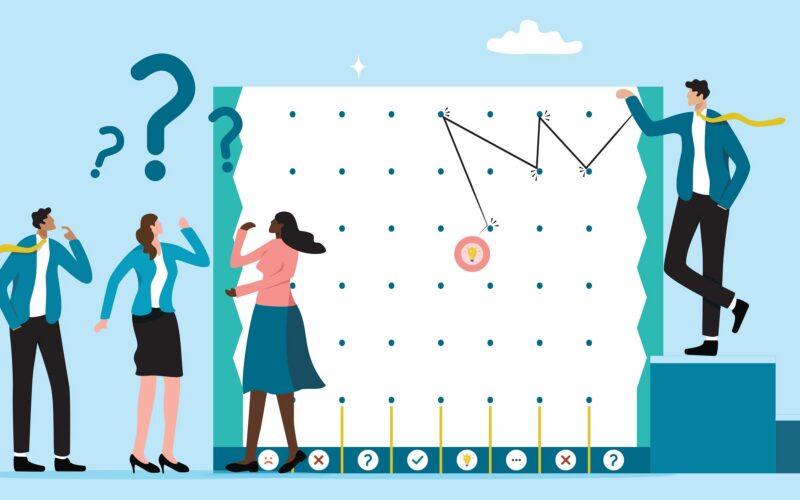
Whether leaders are on-screen or in the spotlight, appearing human and relatable is non-negotiable. The good news is that everyone has the capacity to build executive presence and expand their speaker skillset. The challenge often lies in identifying where to begin. Tools such as executive presence skill gap assessments can gauge current capabilities and pinpoint areas where speakers could benefit from additional support. Such interventions can align messaging with the organization’s story, ensuring a consistent and authentic voice. Studies show that speakers who establish an intimate connection with their audience achieve a 20% higher recall rate for their key messages and generate 15% more positive sentiment toward the brand.
Toshiba’s resurrection of its flagship sales conference offers a compelling illustration of how to infuse intimacy into large-scale corporate event storytelling. After a five-year absence, Toshiba America Business Solutions’ LEAD Beyond sales conference was returning to host the company’s global leadership in Las Vegas. President & CEO Larry White recognized the need to bridge regional and cultural differences after such a long hiatus. He collaborated with presentation strategy experts to fine-tune messaging and ensure impeccable delivery. Leaning into the "everything-goes" mentality of Las Vegas, the collaboration loosened the reins of a typical keynote, strategically incorporating humor to break the ice and put audience members at ease. Larry worked with speaker coaches ahead of the event, sprinkling in jokes that organically connected to Toshiba’s growth, progress, and future vision. The payoff was immediate: the room relaxed into laughter, creating pathways for intimacy and trust. In this corporate event setting, shared joy effectively dismantled barriers that might otherwise have siloed the audience’s experience, fostering a powerful feeling of togetherness that encouraged attendees to connect with one another. When combined with a charismatic and authentic delivery, the bond forged becomes synonymous with the message itself. The choice of a partner to brief and coach keynote speakers is therefore critical to their success. When the four "I’s" are correctly applied, they transcend individual elements to fuse into one cohesive, deeply impactful experience.
The Synergistic Power of the Four I’s
While the examples above highlighted individual elements, successful events like HubSpot INBOUND, Salesforce Dreamforce, VMware Explore, and Toshiba LEAD Beyond exemplified all four "I’s" in concert to secure their profound impact. This is because when event storytelling, design, and delivery are strategically aligned from an audience-first perspective, the components are mutually reinforcing. Inclusivity naturally promotes intimacy by making everyone feel welcome and understood. Immersion, by drawing attendees into a shared narrative, sparks inspiration and a sense of shared purpose. Each "I" reaches out to and elevates the others, creating a powerful, integrated experience.
It is this synergistic application that transforms corporate gatherings from routine assemblies into memorable, career-defining events—the kind that audiences talk about long after the final applause. They become moments that transcend mere information dissemination to create deep emotional connections, foster loyalty, and inspire collective action. To ensure your next corporate event earns its place in the history books, rather than fading into the sands of time, a strategic approach centered on these four pillars of inclusivity, immersion, inspiration, and intimacy is paramount. By prioritizing sophisticated event storytelling, organizations can craft messages that are not only heard but deeply felt, making their brand’s narrative truly unforgettable.
