

Annual Sales Kickoff (SKO) events stand as critical junctures in the corporate calendar, serving as much more than mere meetings; they are foundational rites of passage that christen new sales cycles, galvanize teams, and align strategic objectives. Much like the ceremonial smashing of a champagne bottle on a ship’s hull heralds its maiden voyage, a well-orchestrated SKO defines the trajectory and ambition for an organization’s sales force in the year ahead. These meticulously planned gatherings, demanding significant investment in reflection, foresight, and a compelling narrative, are designed to reinvigorate sales professionals, launch new initiatives, and build an unstoppable momentum that resonates throughout the fiscal year. The stakes are high: a successful SKO can translate directly into enhanced performance, improved morale, and a cohesive approach to market challenges.
The Strategic Imperative of Annual Sales Kickoffs
In the increasingly complex and competitive global marketplace, the annual Sales Kickoff has evolved from a simple target-setting session into a sophisticated strategic event. Companies recognize that an engaged and unified sales team is their most potent asset. With average annual spending on sales training and development, including SKOs, often ranging from hundreds to thousands of dollars per sales representative, the financial commitment underscores the perceived value. Industry analysis consistently indicates that companies with robust sales enablement programs, of which SKOs are a cornerstone, achieve higher win rates and improved quota attainment. For instance, studies by the Sales Enablement Society suggest that organizations with mature enablement strategies, including comprehensive kickoffs, experience up to 10-15% higher sales productivity.
The modern SKO, typically a multi-day event held either virtually, in-person, or in a hybrid format, is a crucial platform for disseminating vital information, fostering team cohesion, and equipping sellers with the tools and mindset required for success. It’s a prime opportunity to address market shifts, introduce product innovations, and reinforce brand values. The absence of a clear, compelling direction, or a poorly executed event, can lead to widespread disengagement, misaligned efforts, and ultimately, missed revenue targets. Therefore, the planning and execution of an SKO are not merely logistical exercises but strategic imperatives that demand meticulous attention to detail and a profound understanding of the audience.
Foundational Pillars of an Impactful SKO

To ensure an SKO truly energizes and equips its participants, industry leaders and communication experts like Duarte advocate for four essential elements. These pillars move beyond traditional corporate presentations, emphasizing engagement, clarity, narrative, and authentic connection.
I. Audience-Centric Design: Understanding the Sales Professional’s Mindset
A common pitfall in corporate communications, particularly at high-stakes events like SKOs, is a top-down approach where leadership’s concerns—primarily financial projections, market share, and operational efficiencies—dominate the agenda. While these are undeniably crucial for organizational health, presenting them without filtering through the lens of the sales professional can lead to disengagement. Sales professionals are on the front lines, grappling daily with client demands, competitive pressures, and fluctuating market conditions. Their motivations, fears, and aspirations are often distinct from those of senior management.
To truly resonate, an SKO must first and foremost be designed with the audience—the sales team—at its heart. This requires a deep dive into their current headspace: What challenges did they face last year? What are their anxieties about new targets or technologies? What excites them about the product roadmap? What support do they genuinely need to excel?
- Pre-Event Insights: Before drafting any content, conducting pre-event surveys, focus groups, or one-on-one interviews with a representative sample of sales professionals can provide invaluable insights. Sales managers consistently report that events designed with direct input from their teams yield significantly higher engagement and retention of key messages. These conversations can reveal prevailing sentiments, highlight areas of confusion, and identify potential resistance to upcoming changes. For example, if a company plans to roll out a new AI-enabled sales workflow, understanding sellers’ reservations about job displacement, learning curves, or data privacy concerns is paramount.
- Tailored Content and Delivery: Armed with these insights, leaders can craft messaging that articulates company goals in terms relatable to sellers. Instead of merely stating "this AI tool will increase productivity," a more audience-centric approach would emphasize "this AI tool will save you 8-10 hours a week on clerical tasks, freeing you to nurture high-value client relationships and pursue more strategic deals." The delivery method is equally critical. Incorporate interactive workshops, peer-to-peer learning sessions, and hands-on demonstrations rather than passive lectures. Ensure adequate breaks, networking opportunities, and comfortable environments—whether virtual or physical—to maintain energy and engagement throughout the event. This approach fosters a sense of ownership and demonstrates that leadership values their perspective, transforming a mere presentation into a shared journey.
II. The Singular Vision: Crafting a ‘Big Idea’ for Unwavering Focus
In an era of information overload, clarity is king. Many SKOs suffer from an overabundance of topics, attempting to cover everything from detailed financial reports and intricate product roadmaps to broad industry outlooks. While each topic may hold individual importance, their cumulative effect without a unifying thread can overwhelm and dilute the core message. The "Duarte Big Idea™" framework offers a powerful antidote to this fragmentation: distilling the entire message into a single, clear, and concise takeaway that every attendee can grasp and remember.
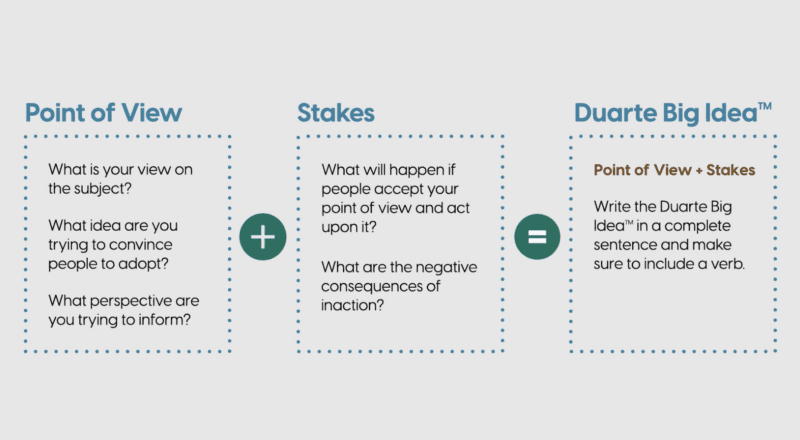
This "Big Idea" is a scalable framework articulated as a single, digestible sentence that combines the organization’s unique Point of View (POV) on a subject with the Stakes involved for the audience.
- Point of View (POV): What is the central assertion or belief that the organization wants its sales team to adopt? What new perspective or strategy is being introduced?
- Stakes: What are the positive outcomes if the audience embraces this POV and acts upon it? Conversely, what are the negative consequences of inaction or resistance?
For instance, if the new AI workflow is the focus, the "Big Idea" might be: "Embracing our new AI-powered sales platform will fundamentally transform your daily workflow, reducing administrative burden by 20% and empowering you to forge deeper, more profitable client relationships." This sentence clearly states the POV (AI will transform workflow and empower sellers) and the stakes (reduced admin burden, deeper client relationships).
This singular "Big Idea" acts as the organizational North Star for the entire SKO. Every keynote speech, breakout session, and supporting material should directly serve or reinforce this central theme. Anything that does not contribute to the "Big Idea" should be re-evaluated for inclusion, potentially relegated to post-event documentation or other communication channels. Industry experts concur that a well-articulated "Big Idea" drives collective action and fosters accountability, providing a memorable anchor for all the information shared.
III. Narrative Architecture: Employing the Three-Act Structure for Engagement
Humans are inherently wired for stories. From ancient myths to modern blockbusters, the three-act narrative structure—beginning, middle, and end—is universally understood and emotionally resonant. Applying this timeless framework to an SKO’s messaging can transform a collection of facts into a compelling journey that captivates and persuades. Academic research in communication consistently demonstrates that narrative structures significantly enhance information recall and emotional connection compared to purely factual presentations.
- Act I: The Current Reality and the Hero’s Journey (The Beginning): This act sets the stage, acknowledging the current landscape and the audience’s role within it. It validates their experiences, recognizing the challenges they’ve faced, the market conditions they operate in, and the aspirations they hold. The sales team is positioned as the protagonist, the hero of this narrative, ready to embark on a transformative journey. It’s where the "What Is" of the present state is clearly defined.
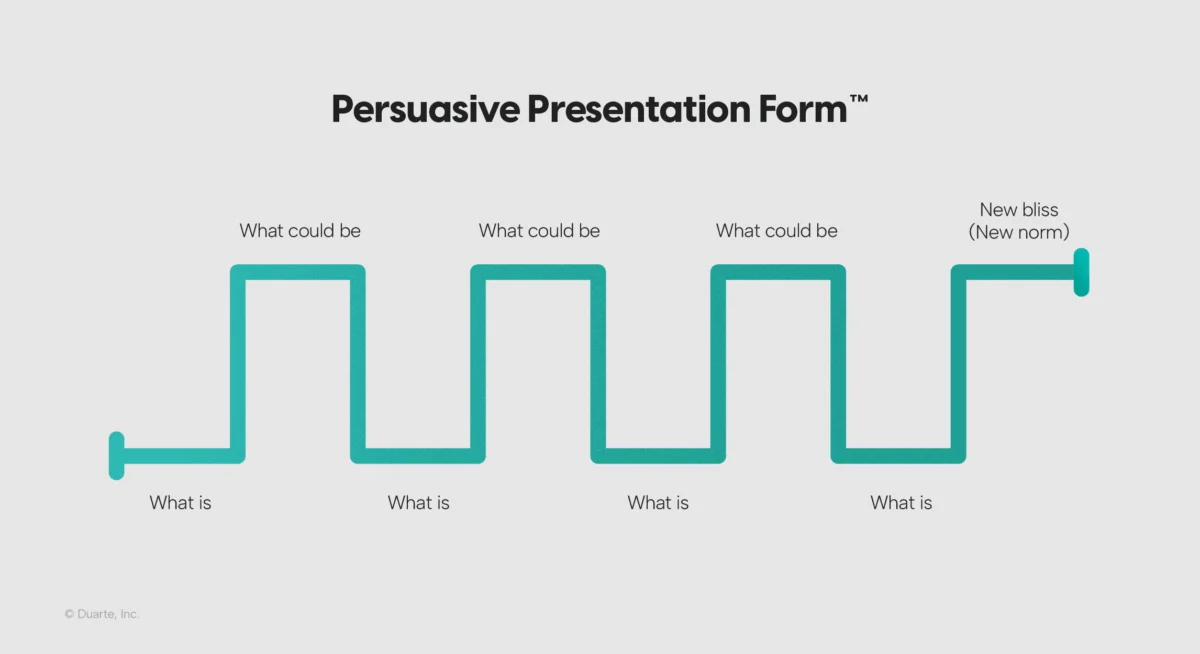
- Act II: Navigating the ‘Messy Middle’: Challenges and Transformation: This is where the core action unfolds. New strategies, product launches, or technological shifts (like the AI workflow) are introduced not just as mandates, but as solutions to the challenges identified in Act I. This act should openly address potential roadblocks, learning curves, and resistance, rather than glossing over them. The "Persuasive Presentation Form™," moving between "What Is" (current problems, difficulties) and "What Could Be" (the potential solutions, benefits), creates a dynamic tension. For instance, acknowledging that "we know some sellers likely have reservations about this new AI-enabled workflow; change is hard, and there will be bumps along the way" is then balanced with "but with adoption, you’ll find more space in your day to nurture high-value accounts and build meaningful relationships." This back-and-forth builds a persuasive case, showing empathy while guiding the audience towards the desired future.
- Act III: The New Horizon: Achieving the Vision (The End): The final act brings resolution and transformation. The hero (the sales team) emerges equipped and empowered, ready to embrace the new reality. This act showcases the envisioned future state, celebrating the collective potential and reinforcing the "Big Idea." It concludes with a clear call to action, outlining specific steps and support mechanisms available to ensure the new vision becomes reality. This provides closure and instills confidence, leaving attendees inspired and prepared.
IV. The Human Connection: Integrating Authentic Personal Narratives

Even with a clear "Big Idea" and a compelling narrative structure, corporate messaging can sometimes feel impersonal. Weaving in personal stories or anecdotes can bridge this gap, injecting authenticity and emotional resonance into the SKO. This doesn’t require deep vulnerability but rather a genuine glimpse into the speaker’s personal experience that connects to the event’s core message. Many successful CEOs and sales leaders attest to the power of personal anecdotes in transforming abstract corporate goals into tangible, relatable aspirations for their teams.
- Building Relatability and Trust: A well-placed personal story humanizes leadership, making them more approachable and relatable. It demonstrates that leaders understand the daily realities and emotional landscape of their teams. This fosters trust and opens channels for more genuine communication.
- Making the Abstract Concrete: Complex or abstract concepts, such as the benefits of a new AI tool, can become tangible through a personal narrative. For example, a sales leader sharing how the new AI workflow freed up their evenings to spend quality time with family, rather than working late, makes the "productivity gain" a personal, aspirational benefit. "While testing this new workflow over the past several months, something unexpected happened. My son was entering his terrible-twos, and my wife and I were exhausted. I was working late every night. But as my understanding of these tools grew, my days started ending earlier. Now we all go to the park every day after daycare, and we’re all sleeping a little better.” This anecdote immediately connects the technological change to a universal human desire for work-life balance.
- Enhancing Memorability: Emotions are powerful anchors for memory. Stories evoke emotion, making the information more memorable than dry facts or figures alone. Attendees are more likely to recall a personal anecdote and the message it conveys long after the event concludes.
- Fostering Shared Purpose: When leaders share a piece of themselves, it cultivates a sense of shared humanity and collective purpose, reinforcing that everyone is part of the same team, working towards common goals.
Operational Excellence: Beyond Content
Beyond these four pillars of content and delivery, the operational excellence of an SKO cannot be overlooked. Logistics, such as the timing of sessions, quality of food and beverages, and opportunities for informal networking, significantly contribute to the overall experience. For virtual or hybrid events, ensuring seamless technology, interactive platforms, and clear communication channels is paramount. The goal is to create an environment where participants feel valued, comfortable, and fully supported, allowing them to absorb the message and engage actively.
Measuring Success and Future Outlook
The effectiveness of an SKO should be rigorously measured. Post-event surveys can gauge immediate attendee satisfaction, clarity of message, and perceived value. More importantly, tracking key performance indicators (KPIs) in the subsequent quarters—such as sales growth, quota attainment, adoption rates of new tools, and employee retention—provides concrete data on the SKO’s return on investment. The long-term impact extends to team cohesion, skill development, and the organization’s agility in adapting to market changes.
As sales landscapes continue to evolve with technological advancements, economic shifts, and changing customer behaviors, the Sales Kickoff remains a vital strategic tool. By reflecting on the audience, committing to a singular "Big Idea," structuring the narrative powerfully, and weaving in authentic personal stories, organizations can ensure their next SKO is not just an event, but a truly transformative experience that propels their sales teams toward unprecedented success.
