

Our emotional lives, often perceived as a tempest of unpredictable reactions, can be demystified by understanding the fundamental process through which they unfold. While the immediate surge of an emotion might feel spontaneous, research indicates that every emotional experience follows a discernible, sequential pattern. This framework, known as the Emotional Episode Timeline, offers a powerful lens through which individuals can gain earlier recognition of their emotions, cultivate more skillful responses, and ultimately, reshape ingrained patterns that may no longer serve their well-being. This understanding is not merely academic; it provides practical tools for navigating the complexities of human feeling, fostering greater self-awareness and emotional resilience.
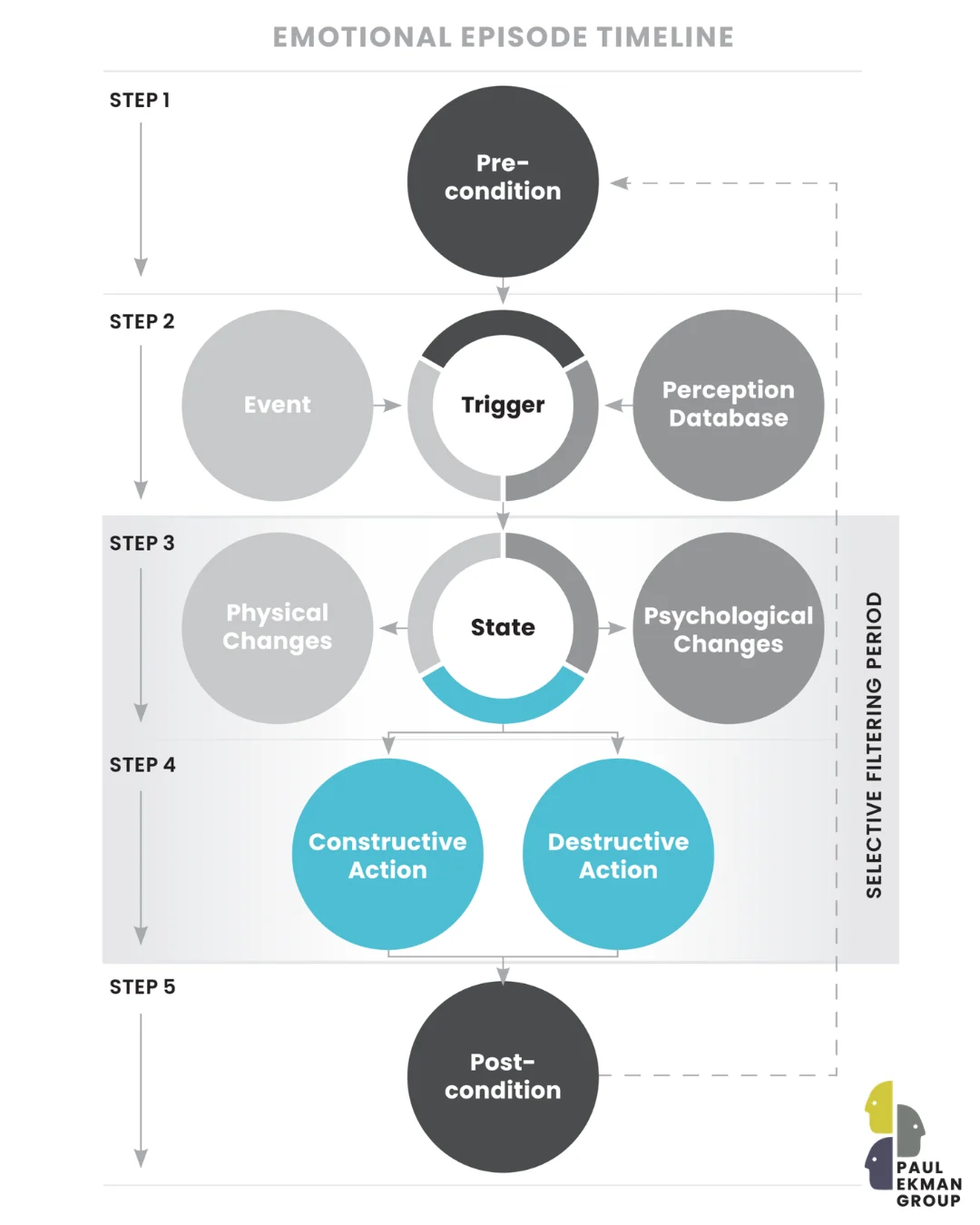
The core of emotional experience can be simplified into a three-step sequence: Trigger, Experience, and Response. This fundamental cycle plays out countless times each day, often in micro-episodes that pass largely unnoticed. Consider the minor frustration of misplacing keys or a phone. While these instances may seem trivial, they contain valuable insights into our habitual reactions and underlying psychological patterns. Do we immediately resort to blaming others, or do we tend to self-criticize? The Emotional Episode Timeline expands upon this basic sequence, breaking down the process into five distinct stages to illuminate the more nuanced dynamics at play.
The Five Stages of an Emotional Episode
The journey from stimulus to action is a dynamic interplay of internal states and external events. By dissecting this process, we can gain a more comprehensive understanding of our emotional landscape.
Step 1: Pre-condition – The Emotional Starting Point
The initial stage, the "pre-condition," establishes the baseline state of an individual before any specific emotional trigger is encountered. This encompasses both the physical and psychological context that an individual brings into any given moment. Think of it as the emotional canvas upon which the subsequent events will be painted. Factors contributing to one’s pre-condition are manifold and can include physical states such as fatigue from insufficient sleep, hunger, or the lingering effects of physical exertion. Psychological stressors, like those stemming from demanding work environments or personal anxieties, also significantly influence this initial state. Conversely, positive external stimuli, such as receiving good news or experiencing moments of joy, can create a pre-condition of heightened positive affect. In essence, the pre-condition is the sum of our current physical and mental disposition, setting the stage for how readily and intensely an emotion may arise. A neutral or at-ease pre-condition may mean that a subsequent trigger has less immediate impact, whereas a pre-existing state of stress or exhaustion can lower the threshold for emotional activation.
Step 2: Trigger – Event and Perception Database Interplay
The "trigger" is the catalyst that initiates an emotional response. It is not a singular event but rather a complex interplay between an external or internal occurrence and an individual’s unique internal interpretation of that event. This interpretation is heavily influenced by what can be termed the "perception database."
The Event: External Stimuli and Internal Landscapes
An event, in this context, is any occurrence that impinges upon our awareness, whether through external sensory input or internal cognitive processes. This can manifest in a myriad of ways: the presence of a specific person, a particular place, a complex situation, or even a spontaneous thought, memory, or imaginative scenario. Our sensory channels—sight, sound, smell, taste, and touch—are constant conduits for information that can serve as triggers.
Crucially, our minds are perpetually engaged in a process of "automatic appraisal." This is a rapid, often unconscious evaluation of incoming information, assessing its potential for opportunity or threat. This automatic appraisal system is designed for survival, preparing us to act swiftly in response to perceived dangers or advantages. For instance, the sudden, instinctive swerve of a car to avoid a pedestrian or animal on the road is a prime example of automatic appraisal in action, triggering an immediate physiological and emotional response without conscious deliberation. Similarly, the perceived sting of rejection after a delayed response to a text message from a new acquaintance can also act as a trigger, even if the other person’s delay is entirely benign.
The Perception Database: Our Internal Emotional Compass
Each individual possesses a unique "perception database," an internal repository of past emotional experiences, learned associations, and innate predispositions. This database acts as an "emotional alert system," enabling our brains to quickly ascertain the significance of incoming events. It is shaped by a lifetime of learning and experience, influencing how we interpret and react to the world around us. This database draws from two primary sources:
- Learned Experiences: Past encounters and their associated emotional outcomes form a significant part of this database. If a particular situation has consistently led to negative emotions, future similar situations are more likely to trigger a similar response. Conversely, positive past experiences can create a predisposition for positive emotional reactions.
- Innate Predispositions: Emerging research in psychology and neuroscience suggests that individuals may also possess innate predispositions towards certain emotional responses, influenced by genetics and early developmental factors. These innate tendencies can provide a foundational layer for how we process and react to stimuli.
The interplay between the event and the perception database is critical. The same external event can elicit vastly different emotional responses in different individuals, or even in the same individual at different times, depending on the contents and current activation of their perception database.
Step 3: State – The Embodied Emotion
The "state" represents the actual experience of the emotion itself. This is the subjective, felt sense that arises following the trigger, encompassing both physiological and psychological changes. It is the embodiment of the emotional episode.
Physical Changes: The Body’s Emotional Language
When we experience an emotion, our bodies undergo a series of characteristic physiological alterations. These changes are not random; they are finely tuned to prepare us for action. For instance, experiencing fear often triggers an increase in heart rate, a surge of adrenaline, heightened respiration, and muscle tension, all designed to facilitate a "fight or flight" response. Anger can manifest as facial flushing, a tightening of the jaw, and increased blood pressure. Joy might be accompanied by a lightness in the chest and a spontaneous smile. These physical manifestations are often the first conscious indicators that an emotional process is underway, even if the initial trigger was not consciously perceived. Research has identified distinct physiological patterns associated with universal emotions, providing a biological underpinning for our subjective feelings. These changes can be subtle or pronounced, but they are integral to the emotional experience.
Psychological Changes: The Subjective Felt Sense
Parallel to the physical shifts are the psychological changes, which constitute the subjective "felt sense" of the emotion. This is the internal coloring of our conscious experience. Sadness, for example, might be perceived as a heavy, dragging sensation, while anger can feel hot, sharp, and expansive. Each emotion possesses a unique "flavor," influencing our thoughts, perceptions, and overall mental landscape. This subjective experience is what we typically identify as "feeling" an emotion. It is the internal narrative that accompanies the physiological arousal, shaping our understanding and interpretation of the event.
Step 4: Action – The Expression of Emotion
Emotions are inherently action-oriented. They propel us towards a particular course of behavior, whether overt and external or subtle and internal. The nature of this action is not predetermined but rather hinges on a crucial distinction: whether the response is constructive or destructive.
Rather than categorizing emotions as inherently "positive" or "negative," a more functional approach is to evaluate the actions they inspire. A constructive action is one that ultimately promotes well-being, problem-solving, or growth for oneself and others. A destructive action, conversely, leads to harm, regret, or escalation of conflict.
For example, while anger is often perceived negatively due to its association with aggressive behavior, "constructive anger" can be a powerful motivator for positive change. It can fuel assertiveness in advocating for one’s rights or prompt action to address injustice. The key lies in how this energy is channeled. Similarly, sadness, while often associated with withdrawal, can also be a catalyst for introspection and seeking support, leading to personal growth. The action stage represents the crucial juncture where conscious choice can influence the outcome of an emotional episode, moving beyond automatic reactions to deliberate and skillful responses.
Step 5: Post Condition – The Lingering Echoes and Future Seeds
Every emotional episode leaves a residue, a "post-condition" that shapes subsequent experiences. The immediate aftermath of an action can have ripple effects. If an outburst of anger leads to reciprocal anger from another person, this can create a new trigger for further anger. If anger was suppressed, the underlying irritation may linger, potentially resurfacing later.
These post-conditions are not merely the end of a cycle; they are also potential starting points for new emotional episodes. The lingering irritation might spark another argument, the fear of someone’s reaction could fuel anxiety, or regret over past behavior might lead to self-recrimination. However, these post-conditions also offer a vital opportunity for reflection and learning. By pausing to consider the sequence of events, the emotions experienced, and the actions taken, individuals can gain valuable insights into their emotional patterns. This conscious processing allows for the identification of maladaptive responses and the cultivation of more adaptive strategies for future emotional challenges.
The Selective Filtering Period: An Interwoven Process
It is important to note that a critical phenomenon, the "selective filtering period," occurs not as a distinct step but as an interwoven aspect of Steps 3 (State) and 4 (Action). When an emotion is actively being experienced, our perception undergoes a narrowing effect. We tend to filter incoming information to align with the prevailing emotional state. For example, during a period of fear, an individual’s attention becomes hyper-focused on potential threats, both real and imagined, while less threatening stimuli are overlooked. Similarly, in anger, the focus often narrows to the frustrating aspects of a situation, while positive elements are disregarded. This filtering mechanism, while essential for survival by prioritizing perceived dangers, can also lead to a distorted perception of reality if not recognized. Awareness of this selective filtering is crucial for objective assessment and balanced decision-making.
Implications and Broader Impact
Understanding the Emotional Episode Timeline provides a powerful framework for enhancing emotional intelligence. By recognizing the pre-condition, individuals can proactively manage their physical and psychological states to build resilience. Acknowledging the multifaceted nature of triggers—event and perception database—allows for a deeper understanding of why certain situations evoke strong reactions. Differentiating between the physical and psychological components of an emotional state can aid in identifying emotions earlier and more accurately.
Crucially, the emphasis on the action stage empowers individuals to move beyond reactive behavior. The ability to choose constructive responses, rather than succumbing to destructive impulses, is central to personal growth and healthy relationships. The concept of the post-condition highlights the importance of reflection and learning, transforming each emotional experience into an opportunity for development.
The implications of this understanding extend beyond individual well-being. In interpersonal dynamics, recognizing these stages can foster empathy and improve communication. In professional settings, it can lead to more effective leadership and conflict resolution. The science of emotion, as elucidated by researchers like Paul Ekman and his collaborators, offers practical tools for navigating the complexities of human interaction and cultivating a more mindful and adaptive approach to life’s emotional currents.
The development of resources like "The Feelings Field Guide" and the "Atlas of Emotions" underscores the growing recognition of the importance of emotional literacy. These tools, which incorporate the Emotional Episode Timeline, provide individuals with accessible pathways to explore the science of emotion, engage in practical exercises, and build their capacity for emotional awareness. As research in this field continues to evolve, the insights gained from understanding the intricate process of emotional experience will undoubtedly play an increasingly vital role in promoting individual and collective well-being.
