

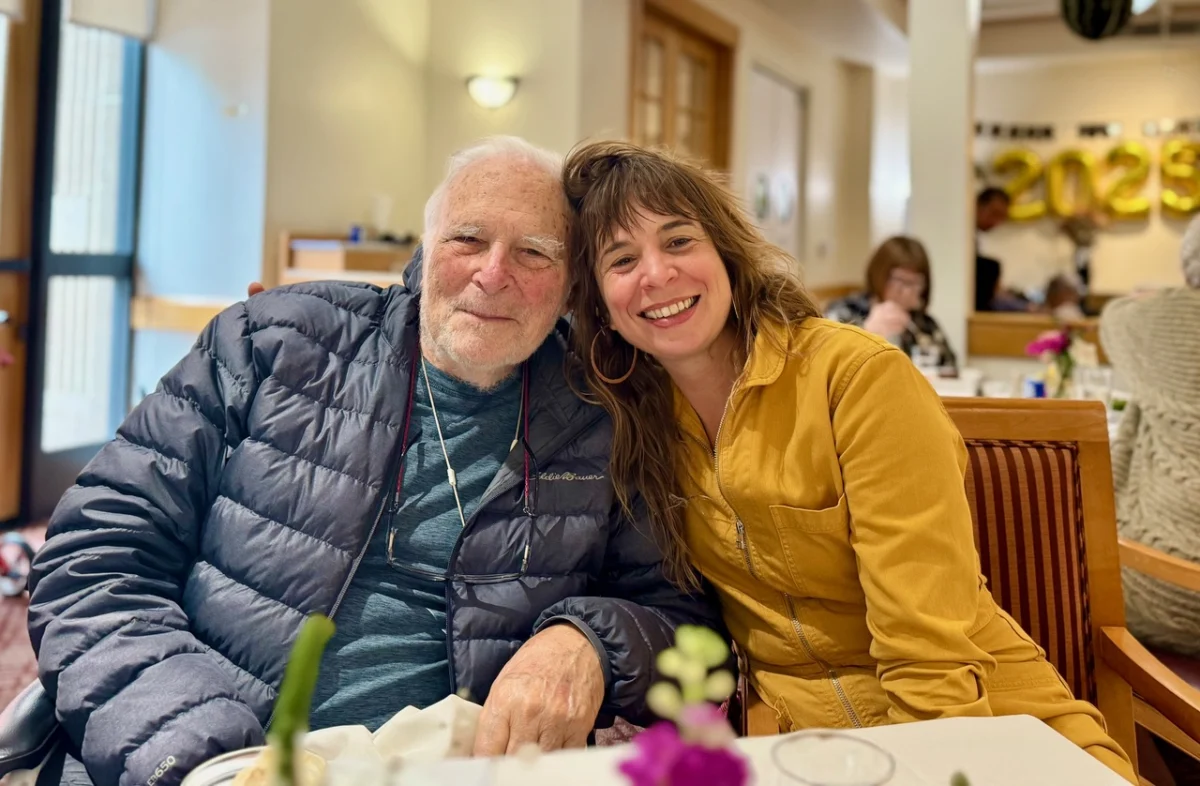
The passing of Dr. Paul Ekman, a titan in the field of emotion research, marks the end of an era characterized by groundbreaking scientific inquiry, profound personal evolution, and a deep commitment to alleviating human suffering. His daughter, Eve Ekman, shared a poignant remembrance, painting a portrait of a man who was not only a distinguished scientist but also a loving father, devoted husband, and a testament to the human capacity for change. Dr. Ekman’s extensive career, spanning decades of meticulous research into human emotions, facial expressions, and their universalities, leaves an indelible mark on psychology, neuroscience, and beyond.
Early Life and the Genesis of a Scientific Calling
Born into circumstances marked by significant childhood trauma and loss, Paul Ekman’s early experiences profoundly shaped his intellectual trajectory. These formative years instilled in him a deep empathy and a lifelong quest to understand the complexities of human emotion, particularly the ways in which individuals cope with and express their internal states. His commitment to becoming the father he never had underscored his dedication to fostering strong, supportive relationships, a value he extended to his family and his professional life. Eve Ekman described her father as a man who poured himself into being present, curious, loving, and supportive, not just as a parent but as a true friend and collaborator, a “co-conspirator” in life’s journey. He imparted crucial life lessons, including the importance of maintaining an open heart, rigorous critical thinking, dedicating oneself to service, and appreciating the nuances of life, from parallel parking on steep hills to a deep love for music.
Dr. Ekman’s marriage to Eve’s mother, a distinguished academic herself at UC Berkeley, was a cornerstone of his life. Their 41-year union, which ended with her passing in 2020, was characterized by mutual admiration and support for their respective academic pursuits. He often expressed his profound gratitude for her choosing him, a sentiment that highlighted the depth of their shared life and the joy they found in their partnership.
The Dharamsala Turning Point: A Paradigm Shift in Understanding
A pivotal moment in Dr. Ekman’s career, and indeed in his personal life, occurred in the year 2000. A landmark gathering in Dharamsala, India, brought together Dr. Ekman, His Holiness the Dalai Lama, and a diverse group of scientists and contemplatives. The objective was to explore the nature of "Destructive Emotions." This immersive experience proved to be a profound turning point, fundamentally transforming Dr. Ekman’s understanding of himself and the world.
For many who knew him professionally, Dr. Ekman was recognized for his scientific rigor. However, fewer were privy to his personal struggles with anger earlier in his life. The Dharamsala meeting provided him with an unmistakable, embodied sense of what it might feel like to live with reduced reactivity and anger. He frequently spoke of this moment, acknowledging its ineffable quality and its deep impact on his perspective. The Dalai Lama’s consistent message of reducing suffering by understanding emotions, cultivating a calm mind, and embracing kindness resonated deeply with Dr. Ekman. He embraced this philosophy not merely as a personal revelation but as a scientific imperative, driven by his innate curiosity and rigor to explore how others might achieve similar freedom from emotional distress.
Bridging Science and Contemplation: Cultivating Emotional Balance
The synergy born from the Dharamsala meeting and Dr. Ekman’s subsequent personal transformation led to a powerful integration of his decades of scientific research with ancient contemplative traditions. This fusion was not simply an academic exercise; it manifested in practical applications designed to foster emotional well-being globally.
Working alongside her father during this transformative period, Eve Ekman, with her background as a clinical social worker in a level-one trauma center, became instrumental in translating these insights into tangible tools. Together, they developed "Cultivating Emotional Balance" (CEB), an evidence-based training program that merges emotional regulation techniques with compassionate practices. CEB, co-created with Alan Wallace, has been offered worldwide, impacting countless individuals by providing them with practical strategies for managing their emotions and fostering empathy.
A further significant collaboration was the creation of the "Atlas of Emotions," a free online resource commissioned by the Dalai Lama in 2016. This project aimed to build a richer vocabulary for describing the vast spectrum of human emotional experience, empowering individuals to better understand their inner lives. The Atlas is slated for a relaunch to mark its ten-year anniversary, a testament to its enduring relevance and Dr. Ekman’s commitment to making emotional literacy accessible. Both CEB and the Atlas of Emotions stand as powerful embodiments of Dr. Ekman’s core belief in the late stages of his career: that understanding emotions is paramount to reducing suffering for oneself and for others.
Addressing Scientific Discourse and Legacy
Eve Ekman expressed her disappointment with a recent New York Times obituary that framed her father’s work through the lens of "controversy," particularly by highlighting a single scientist’s critique rather than the extensive body of peer-reviewed research that has validated and expanded upon his foundational findings. While acknowledging that scientific discourse often involves disagreement, she emphasized that Dr. Ekman welcomed such debate. However, she argued that misrepresenting his life’s work by centering a selective critique over hundreds of studies and the contributions of dozens of laboratories built upon his work distorts both his scientific legacy and the broader field of emotion research.
Dr. Ekman’s contributions have had a far-reaching impact, transcending academic disciplines. His research has informed fields as diverse as psychology, neuroscience, medicine, anthropology, national security, animation, and everyday human interaction. His foundational work on the universality of certain facial expressions associated with basic emotions, though subject to ongoing scientific refinement, laid crucial groundwork for understanding cross-cultural emotional communication. Data from numerous studies have consistently replicated and expanded upon his findings, demonstrating the biological underpinnings of emotion and its expression. For instance, research in comparative psychology has identified similar expressions in primates, suggesting deep evolutionary roots for these emotional signals. Furthermore, advancements in neuroimaging have provided further evidence for the brain’s intricate mechanisms in processing and expressing emotions, often aligning with the foundational theories Dr. Ekman helped establish.
A Life Dedicated to Service and Transformation
Paul Ekman’s life was a testament to his dedication to science in the service of reducing human suffering. This commitment was expressed not only through his meticulous research but also through a genuine desire to foster self-understanding in others. He achieved this by openly sharing his own vulnerabilities, actively working to repair relationships, and evolving over the years into a man characterized by joy, open-heartedness, and generosity. He maintained deep, meaningful connections with loved ones until the final months of his life, a testament to his enduring capacity for human connection.
The narrative of Paul Ekman is one of a scientist of immense influence, but it is also the story of a father who navigated and rebuilt himself from painful early experiences. He was a man who underwent profound and visible personal transformation, a collaborator who masterfully synthesized ancient wisdom with modern scientific inquiry, and a human being who dedicated his final decades to understanding, practicing, and embodying a life characterized by less anger and more compassion.
A Comprehensive Legacy: Science and Humanity
Dr. Ekman was, like all individuals, complex and imperfect. Yet, he was also kind, brave, humorous, endlessly curious, and deeply committed to improving the world. Eve Ekman hopes that this more complete narrative—one of significant scientific impact alongside profound personal transformation—will be held alongside other accounts of his life. Above all, it is the story of a human being who devoted his existence to understanding emotion and expanding the reach of compassion, and who never ceased learning how to love more fully.
The outpouring of well wishes from near and far is a testament to the profound impact Dr. Ekman and his work have had on numerous individuals and communities. His legacy is not confined to academic journals but is woven into the fabric of countless lives touched by his research, his teachings, and his personal journey of growth and compassion. The ongoing relevance of projects like the Atlas of Emotions and the enduring impact of Cultivating Emotional Balance underscore the lasting significance of his contributions to a more emotionally intelligent and compassionate world.
