

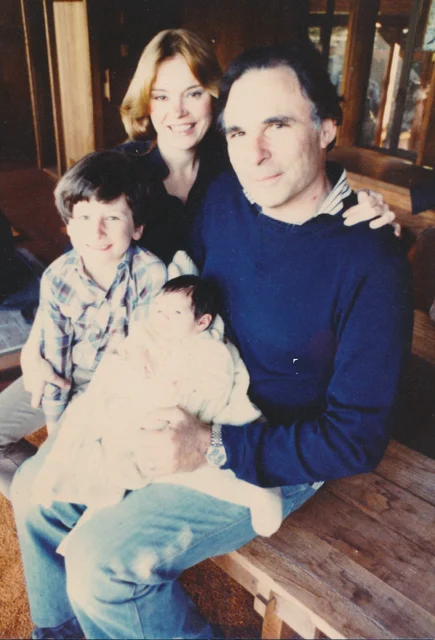
San Francisco, CA, November 17, 2025 – The world of psychology and emotional science mourns the loss of Dr. Paul Ekman, a towering figure whose groundbreaking research illuminated the complexities of human emotion, facial expressions, deception, and compassion. Dr. Ekman passed away peacefully at his home in San Francisco, surrounded by his family, at the age of 91. His passing marks the end of an era for a scientist whose work not only reshaped academic understanding but also profoundly influenced public perception and practical applications across numerous fields.
For over six decades, Dr. Ekman dedicated his formidable intellect and unwavering curiosity to unraveling the universal language of human affect. His pioneering laboratory and extensive field-based research, conducted in diverse and often remote corners of the globe, provided compelling evidence for the universality of certain facial expressions and the accompanying physiological signatures of emotion. This seminal work challenged prevailing notions and ignited a revolution in the study of emotion, establishing a robust foundation for future investigations. His contributions have left an indelible mark on psychology, anthropology, education, law enforcement, and countless other disciplines worldwide, fostering a deeper appreciation for the intricate tapestry of human emotional experience.
A Lifelong Journey of Discovery and Understanding
Born in Brooklyn, New York, in 1934, Paul Ekman displayed an early aptitude for observation and a keen interest in human behavior. His academic journey led him to Adelphi University, where he earned his Bachelor of Arts degree, and subsequently to New York University, where he obtained his Ph.D. in Psychology in 1958. His early work, including his doctoral dissertation on the effect of suggestion on behavior, foreshadowed his lifelong fascination with the subtle cues that betray our inner states.
Dr. Ekman’s professional career was primarily associated with the University of California, San Francisco (UCSF), where he served as a professor emeritus of psychology. It was at UCSF that much of his groundbreaking research took shape, often in collaboration with colleagues who recognized the profound significance of his investigations. His early studies on facial expressions, particularly in the 1960s, began to lay the groundwork for what would become his most celebrated contributions.
The Universality of Emotion: A Paradigm Shift
One of Dr. Ekman’s most significant contributions was his empirical validation of the universality of basic human emotions and their associated facial expressions. In an era where cultural relativism often dominated discussions of human behavior, Ekman’s research, inspired by the work of Charles Darwin and later by the anthropological investigations of Margaret Mead, sought to identify a common emotional lexicon shared across humanity. His cross-cultural studies, famously conducted with subjects in Papua New Guinea, the United States, Japan, Brazil, and other nations, demonstrated that individuals from vastly different cultural backgrounds could accurately identify and express a set of core emotions – happiness, sadness, anger, fear, surprise, and disgust. This finding was revolutionary, suggesting an innate, biological basis for these fundamental emotional experiences.
His meticulous methodology involved presenting photographs of facial expressions to participants and asking them to label the emotions depicted. The remarkable consistency in their responses across cultures provided powerful evidence for universal emotional signaling. This research not only solidified his reputation but also opened up new avenues for understanding intergroup communication, social bonding, and the very essence of what it means to be human. The implications of this discovery were far-reaching, impacting fields from cross-cultural psychology to international relations.
The Facial Action Coding System (FACS): A Universal Language for the Face
Building upon his research into universal facial expressions, Dr. Ekman, in collaboration with Wallace Friesen, developed the Facial Action Coding System (FACS). This groundbreaking system provides a comprehensive, anatomically based method for describing all observable muscular movements of the face. FACS breaks down complex facial expressions into their constituent “action units” (AUs), allowing for objective and reliable measurement of facial behavior. Each AU corresponds to the contraction or relaxation of specific facial muscles.
The development of FACS was a monumental undertaking, requiring years of detailed observation and anatomical study. It provided researchers, clinicians, and law enforcement professionals with an unprecedented tool for objectively analyzing and quantifying facial expressions, moving beyond subjective interpretations. FACS became the gold standard for studying facial behavior, enabling the detailed analysis of subtle expressions, microexpressions, and the intricate ways in which emotions are conveyed nonverbally. Its applications have spanned diverse areas, from the diagnosis of neurological disorders to the training of individuals in detecting deception.
Microexpressions: Unveiling the Unseen
Dr. Ekman’s research also shed light on the phenomenon of microexpressions – fleeting, involuntary facial expressions that last for a fraction of a second. These rapid flashes of emotion often occur when individuals attempt to conceal their true feelings or when they experience a sudden, intense emotional response. His work revealed that these microexpressions, though brief, can provide invaluable insights into a person’s underlying emotional state, even when they are consciously attempting to mask their feelings.
The development of Micro Expression Training Tools by Dr. Ekman and his colleagues has empowered individuals across various professions to recognize and interpret these subtle facial cues. This training has been particularly impactful in fields such as law enforcement, intelligence gathering, and psychology, where the ability to detect deception and understand hidden emotions can be critical. The widespread adoption of these tools underscores the practical utility of his scientific discoveries.
Deception and the Science of Truth
The study of deception became a cornerstone of Dr. Ekman’s later work. Recognizing that the ability to detect lies is crucial for maintaining social order and ensuring justice, he dedicated significant effort to understanding the behavioral indicators of dishonesty. His research explored not only the facial cues associated with deception but also other nonverbal behaviors, such as body language and vocal patterns, that can signal a lack of truthfulness.
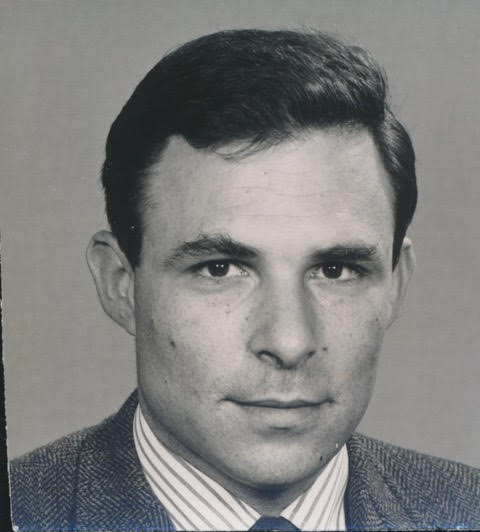
His seminal book, "Telling Lies: Clues to Deceit in the Marketplace, Politics, and Marriage," became a bestseller, bringing the science of deception detection to a broad audience. This work, along with his continued research, has informed investigative techniques used by law enforcement agencies and has contributed to a more nuanced understanding of the psychological processes involved in lying and truth-telling. The development of training programs designed to enhance the ability to detect deception has been a significant outcome of this research, with applications in criminal justice, security, and human resources.
Compassion and the Cultivation of Well-being
In the latter part of his distinguished career, Dr. Ekman increasingly focused on the application of his scientific insights to promote human well-being and foster a more compassionate world. This shift in focus was deeply influenced by his profound respect for and long-standing friendship with His Holiness the Dalai Lama. Their collaborations explored the scientific underpinnings of compassion and the potential for cultivating it through practice.
Together, they co-authored "Emotional Awareness: The Path to Wisdom and Compassion" and developed initiatives aimed at promoting emotional intelligence and ethical behavior. This work led to the creation of the interactive online tool, the Atlas of Emotions, an ambitious project designed to expand emotional vocabulary and enhance emotional insight. Furthermore, the Cultivating Emotional Balance (CEB) program, co-founded by Dr. Ekman, offers training in mindfulness and emotional regulation, drawing on both scientific research and contemplative traditions. These initiatives reflect a commitment to translating scientific knowledge into practical tools for personal growth and societal betterment.
Dr. Eve Ekman, his daughter and a contemplative social scientist herself, has been instrumental in carrying forward this aspect of his legacy. Her leadership at the Paul Ekman Group has ensured the continued development and dissemination of programs focused on emotional awareness, empathy, and truthfulness.
Broader Impact and Cultural Resonance
Dr. Ekman’s influence extended beyond academic circles and professional applications, reaching a wide public audience through his bestselling books and his involvement in popular media. The acclaimed television series "Lie to Me," loosely based on his research on microexpressions and deception detection, brought the complexities of his work to millions of viewers worldwide. His role as a scientific advisor for Pixar’s animated film "Inside Out" further demonstrated his commitment to making the science of emotion accessible and engaging for audiences of all ages.
Robert W. Levenson, Ph.D., of the Department of Psychology at the University of California, Berkeley, eloquently captured the essence of Dr. Ekman’s impact: "Paul brought his remarkable intellect, observational skills, and unflagging energy to illuminate the ways we express and feel our emotions and how they are embodied in our physiology. His research, theorizing, and ideas for how emotions could be harnessed in service of the greater good galvanized what was a small niche area of research into a vibrant and thriving research area that will continue to be hugely influenced by his work and vision."
Eve Ekman, Ph.D., shared a deeply personal reflection on her father’s enduring qualities: "My dad’s commitment to rigorous science, love of discovery, and dedication to alleviating pain from destructive emotions were at the very core of his brilliant mind and accomplishments. However, his huge heart and ability to vulnerably share his own struggles with emotions were what made him beloved by so many. He was an incredibly loving dad – a lover of life and unrelentingly curious."
A Lasting Legacy
The Paul Ekman Group, now under the leadership of Dr. Eve Ekman, will continue to advance Dr. Ekman’s mission of making emotional awareness, empathy, and truthfulness accessible worldwide through science-based education and training. His legacy endures not only in the countless researchers, practitioners, and individuals whose lives have been touched by his work but also in the ongoing development of tools and programs that promote emotional intelligence and understanding.
Dr. Ekman is survived by his children, Eve Ekman and Tom Ekman, and a wide circle of cherished friends and colleagues who formed a surrogate family.
Honoring Dr. Ekman’s Life and Legacy
In remembrance of Dr. Ekman’s profound contributions, a documentary celebrating his life and scientific legacy is currently in development. Those wishing to support the completion of this film can find more information and contribute at https://www.wmm.com/sponsored-project/emotions-revealed-the-life-and-work-or-dr-paul-ekman/.
The Paul Ekman Group is also compiling reflections, stories, photographs, and messages of appreciation from colleagues, students, and readers worldwide for a memorial page dedicated to celebrating his life and enduring influence.
Dr. Paul Ekman’s passing is a significant loss to the scientific community and beyond. His pioneering work has irrevocably shaped our understanding of the human emotional landscape, providing invaluable insights that will continue to guide research and practice for generations to come. His dedication to rigorous science, coupled with a profound commitment to human well-being, leaves an extraordinary legacy that will continue to inspire and inform.
