

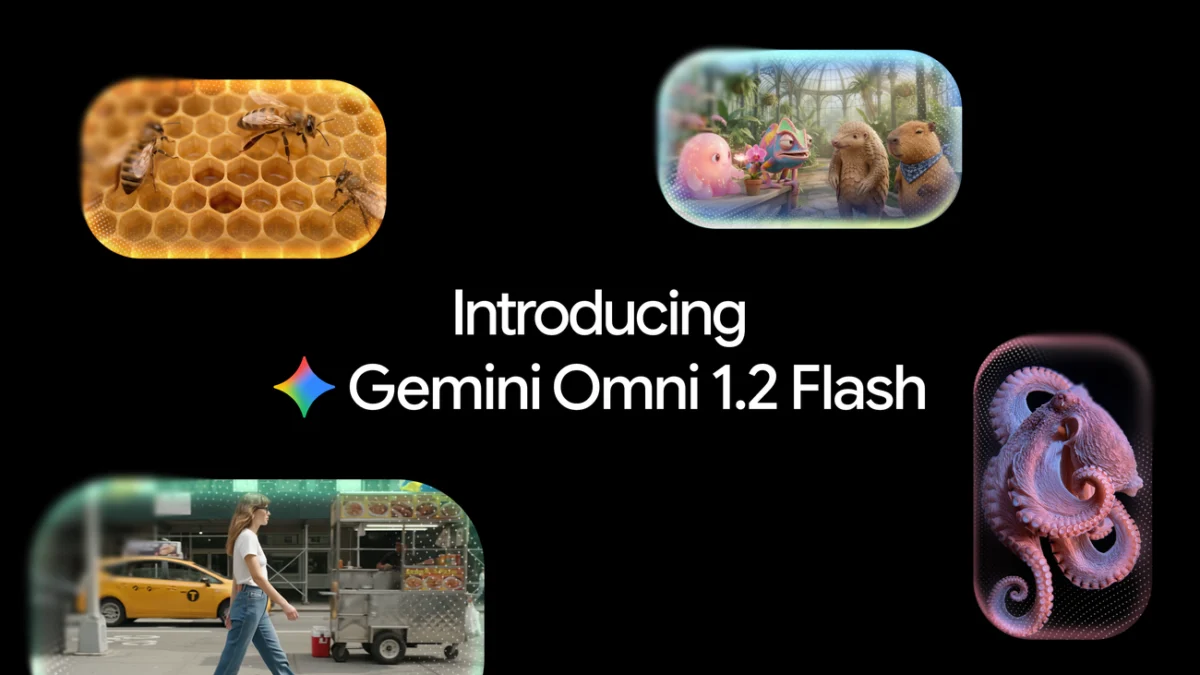
The release of Gemini Omni 1.2 Flash arrives at a critical juncture in the generative AI landscape, as the industry shifts from experimental research to scalable, commercial applications. While early generative video models were often relegated to short, disjointed clips with high "visual drift," Google’s latest update focuses on the pragmatic needs of the enterprise market: lower latency, reduced costs, and the ability to refine content without restarting the generation process from scratch.
A New Standard for Generative Video Economics
One of the most impactful components of the 1.2 Flash update is the aggressive restructuring of its pricing model. Google has reduced the cost of video generation by 30% compared to Gemini Omni 1.1, bringing the price down to $0.07 per second for 720p resolution video. This pricing strategy is clearly aimed at high-volume users—such as marketing agencies and e-commerce platforms—who require the ability to iterate rapidly without incurring prohibitive cloud computing costs.
The model’s workflow is specifically engineered for cost-efficiency. Users are encouraged to draft initial concepts at lower resolutions, such as 360p or 720p, to test movement and composition. Once a draft is finalized, the system allows for multi-turn conversational editing to fix specific details. Only after the content is perfected do users need to commit the resources to upscale the final product to 1080p or 4K. This tiered approach to production mimics traditional post-production pipelines, where low-resolution "proxies" are used for editing before the final "online" render.
Technical Chronology: From Experimental Research to Gemini 1.2
The trajectory of Google’s video generation technology has moved at a blistering pace over the last 24 months. The journey began with research-oriented models like Imagen Video and Phenaki, which proved that text-to-video was possible but lacked the resolution and temporal consistency required for professional use. Following the consolidation of Google Brain and DeepMind into Google DeepMind, the company accelerated its efforts, leading to the unveiling of the Gemini Omni series.
Gemini Omni 1.1 established the foundation for multimodal interaction, allowing the model to process and generate audio, video, and text simultaneously. However, version 1.1 was limited to 10-second clips and often struggled with complex character consistency across long durations. The transition to version 1.2 Flash addresses these specific pain points. By increasing the native clip length to 15 seconds—a 50% increase—Google is catering to the "social-first" era of content, where 15 seconds is the standard duration for Instagram Stories, TikTok ads, and YouTube Shorts.
Enhancing Visual Consistency and Reference Adherence
A recurring challenge in AI video generation is the "identity shift" problem, where a character’s face, clothing, or the environment subtly changes from frame to frame. Gemini Omni 1.2 Flash introduces enhanced reference following to mitigate this issue. The model can now ingest specific reference images—such as a character sheet, a product photograph, or a brand style guide—and maintain those details throughout the entire 15-second generation.
In practical terms, this allows for sophisticated "virtual try-on" applications. An e-commerce brand can upload a photo of a model and a flat lay of a garment; the model can then generate a 15-second clip of that model wearing the garment, performing a 360-degree turn. The 1.2 Flash update ensures that the drape of the fabric, the placement of buttons, and the model’s facial features remain consistent regardless of the camera angle.
Furthermore, the model now supports "multi-turn conversational editing." This feature allows a user to provide feedback to the AI in a natural language format. If a generated scene features a character walking through a park, but the user wants the setting to be a rainy city street, they can simply type the instruction. The AI modifies the existing clip rather than generating an entirely new one, preserving the character’s performance and the camera’s framing while altering the background, lighting, and weather conditions.
Advancements in Audio and Cinematic Control
Beyond the visual realm, Gemini Omni 1.2 Flash improves the "multimodal" aspect of the Omni architecture. The model now produces more natural-sounding dialogue and significantly improved lip-syncing. This is achieved through better multi-speaker conditioning, where the AI can sample distinct voices and accurately route them to the correct characters within a scene. This capability is integrated into tools like Google Vids and Gemini for business, enabling the creation of explainers and narrated presentations that look and sound cohesive.

From a cinematography perspective, the update provides users with more granular control over camera movements. The model can execute complex, continuous shots—such as First-Person View (FPV) drone flights, dramatic orbits, and "crash zooms"—with a marked reduction in unwanted jump cuts. This "cinematic look" is essential for creators looking to blend AI-generated footage with traditionally filmed content.
Enterprise Security and Ethical Safeguards
As generative AI becomes more pervasive, concerns regarding deepfakes and intellectual property have intensified. Google has addressed these concerns by backing Gemini Omni 1.2 Flash with Google Cloud’s enterprise-grade infrastructure. All video outputs generated by the model carry a SynthID watermark. Developed by Google DeepMind, SynthID is an imperceptible digital watermark embedded directly into the pixels of the video. It is designed to be robust against common editing techniques such as cropping, resizing, or color adjustments, allowing platforms and users to verify the AI-generated origin of the content.
The general availability of the model also means it is now subject to Google Cloud’s standard data privacy and security protocols. For corporate clients, this ensures that the data used to train specific prompts or the reference images uploaded for brand consistency are protected under enterprise-level service-level agreements (SLAs).
Industry Implications and Market Analysis
The release of Gemini Omni 1.2 Flash places Google in a highly competitive position against other major players in the AI video space, including OpenAI (with its Sora model), Runway (Gen-3 Alpha), and Luma AI (Dream Machine). While some competitors focus on high-fidelity "artistic" shots that can last up to a minute, Google’s strategy emphasizes utility, speed, and integration.
By making the model "Flash"—a designation Google uses for its most efficient, low-latency models—the company is targeting the "prosumer" and developer market. The ability to generate a 15-second clip in seconds rather than minutes is a major differentiator for developers building third-party applications.
Market analysts suggest that the implications for the advertising and marketing sectors are profound. Traditional video production for a simple 15-second social media ad can cost thousands of dollars and take days of post-production. With Gemini Omni 1.2 Flash, a marketing team can generate dozens of variants of the same ad—customized for different regions, languages, or demographics—in a fraction of the time and at a cost of roughly $1.00 per generation.
Challenges and Future Directions
Despite the advancements in version 1.2, Google DeepMind acknowledges that the technology is still evolving. In its technical notes, the company noted that development is ongoing to improve the rendering of fast-paced sports action, complex physics (such as fluid dynamics or shattering glass), and rapid script changes that require high-density information processing.
However, the current iteration is positioned as a "production-ready" tool for a wide array of use cases. As the model rolls out across Google AI Studio and Vertex AI, the focus will likely shift toward how users combine these video capabilities with other Gemini models to create fully autonomous content creation pipelines—where an AI agent writes a script, generates the storyboard, produces the video, and optimizes the final cut for various social platforms.
Gemini Omni 1.2 Flash represents a shift in the generative AI narrative from "what is possible" to "what is practical." By prioritizing consistency, cost, and conversational control, Google is attempting to turn generative video into a standard utility for the modern digital economy.
